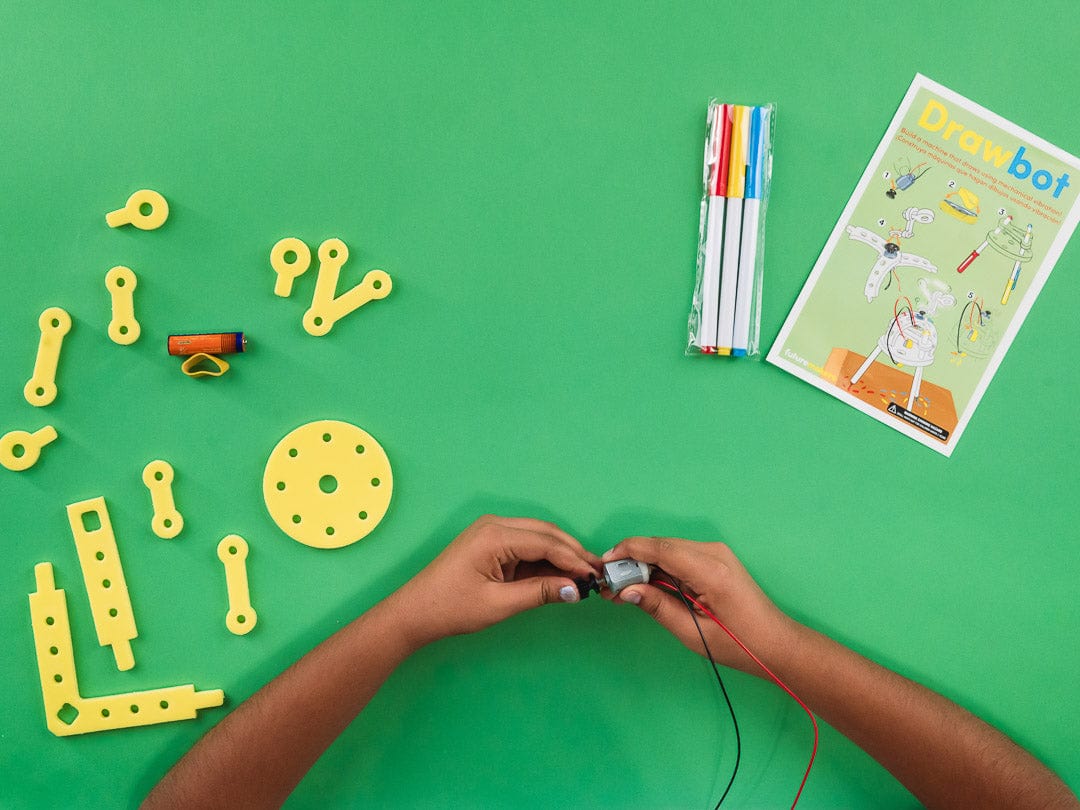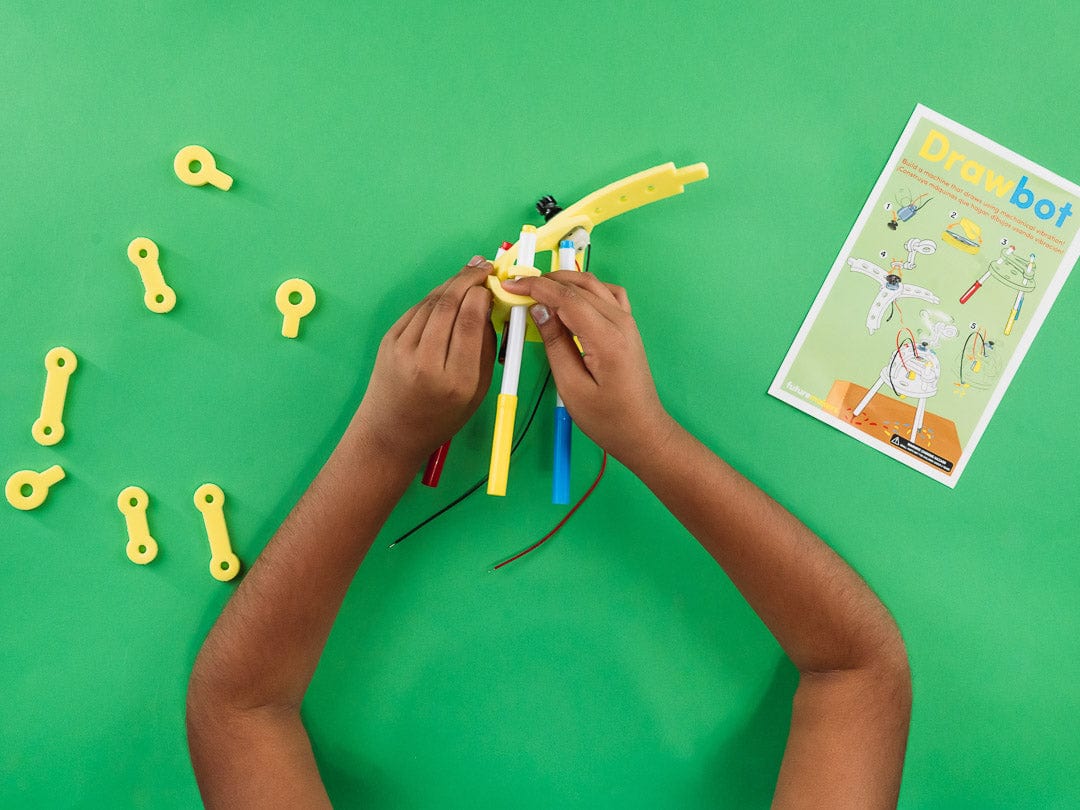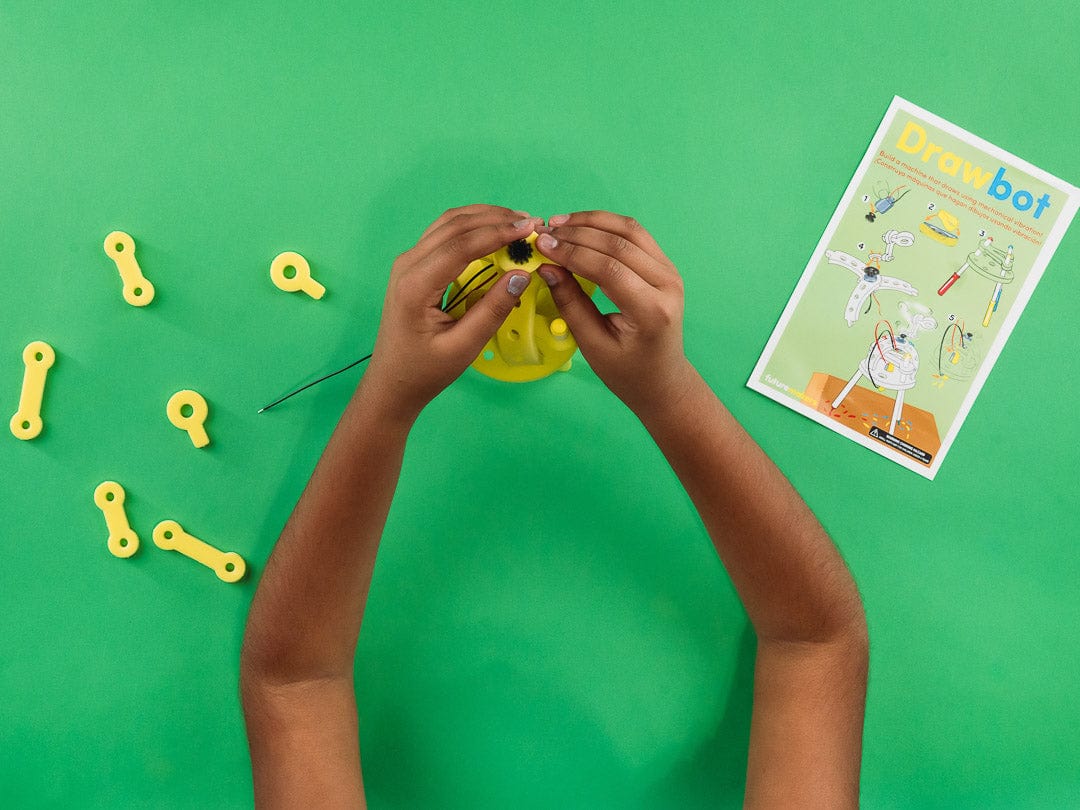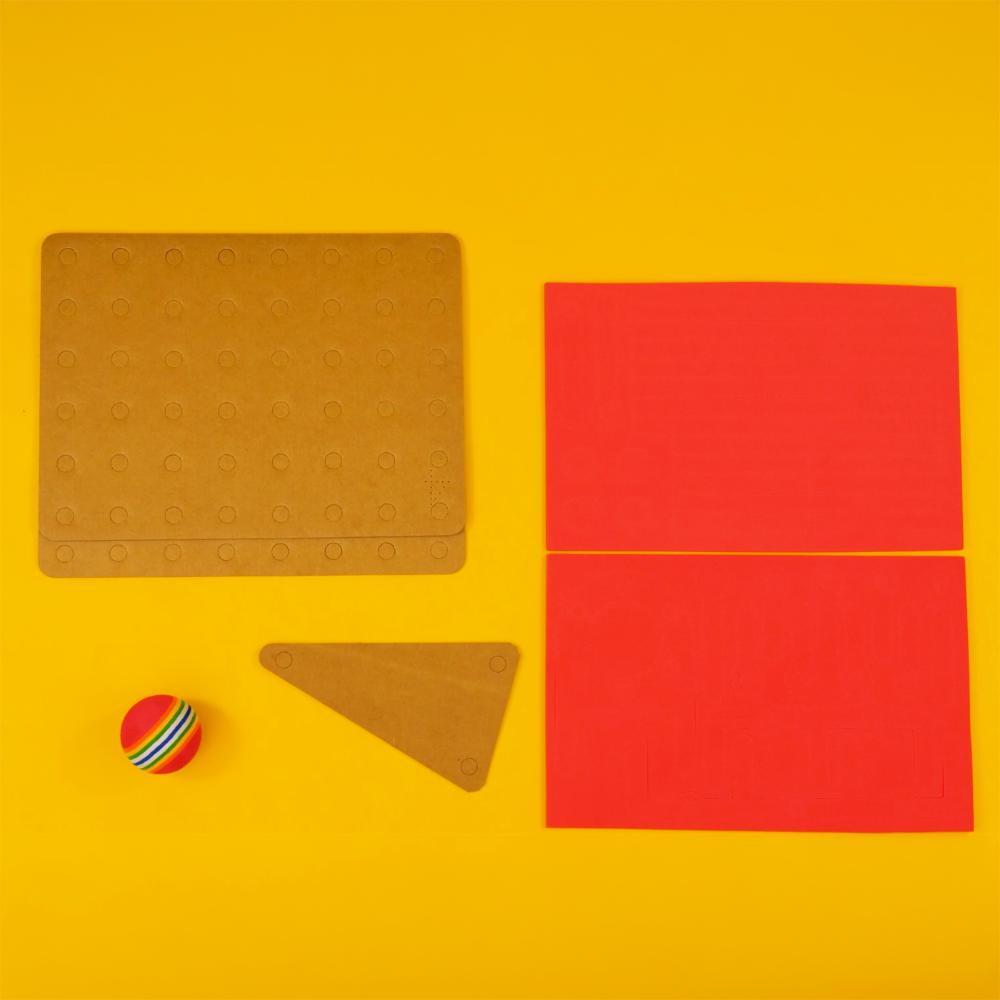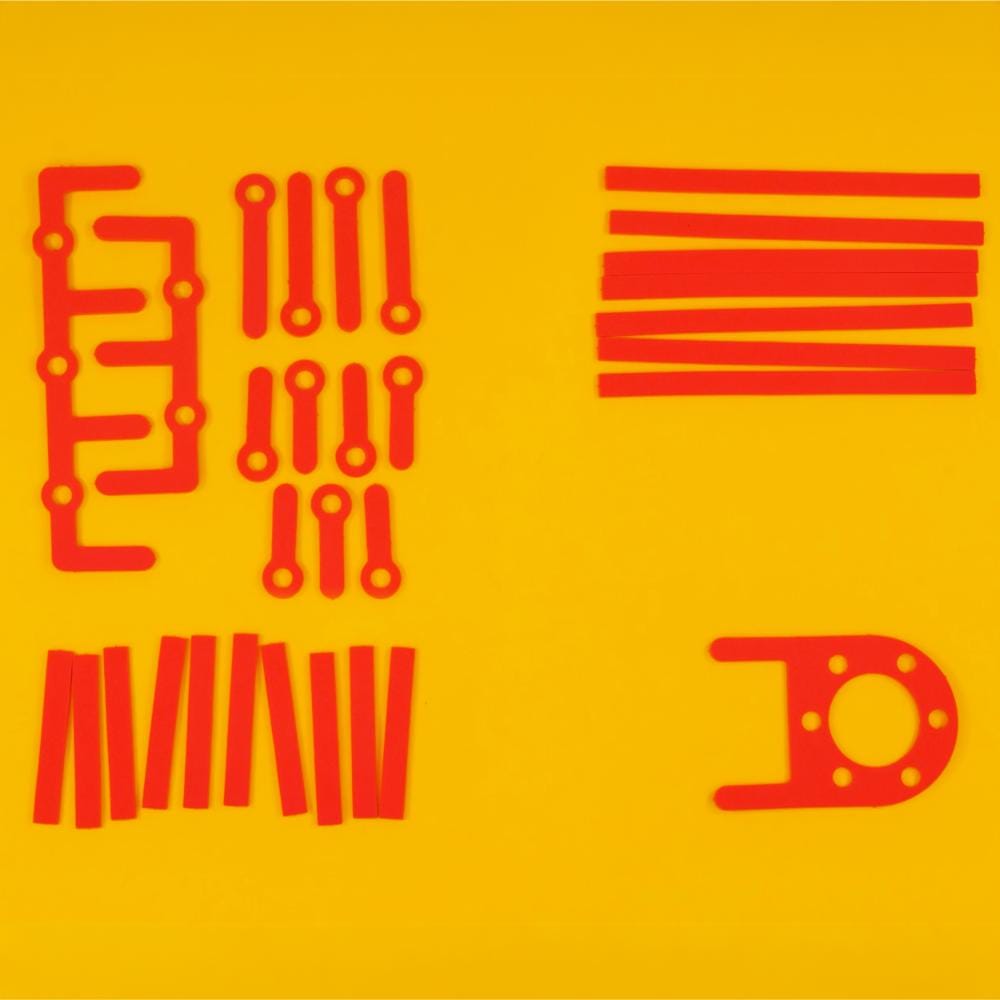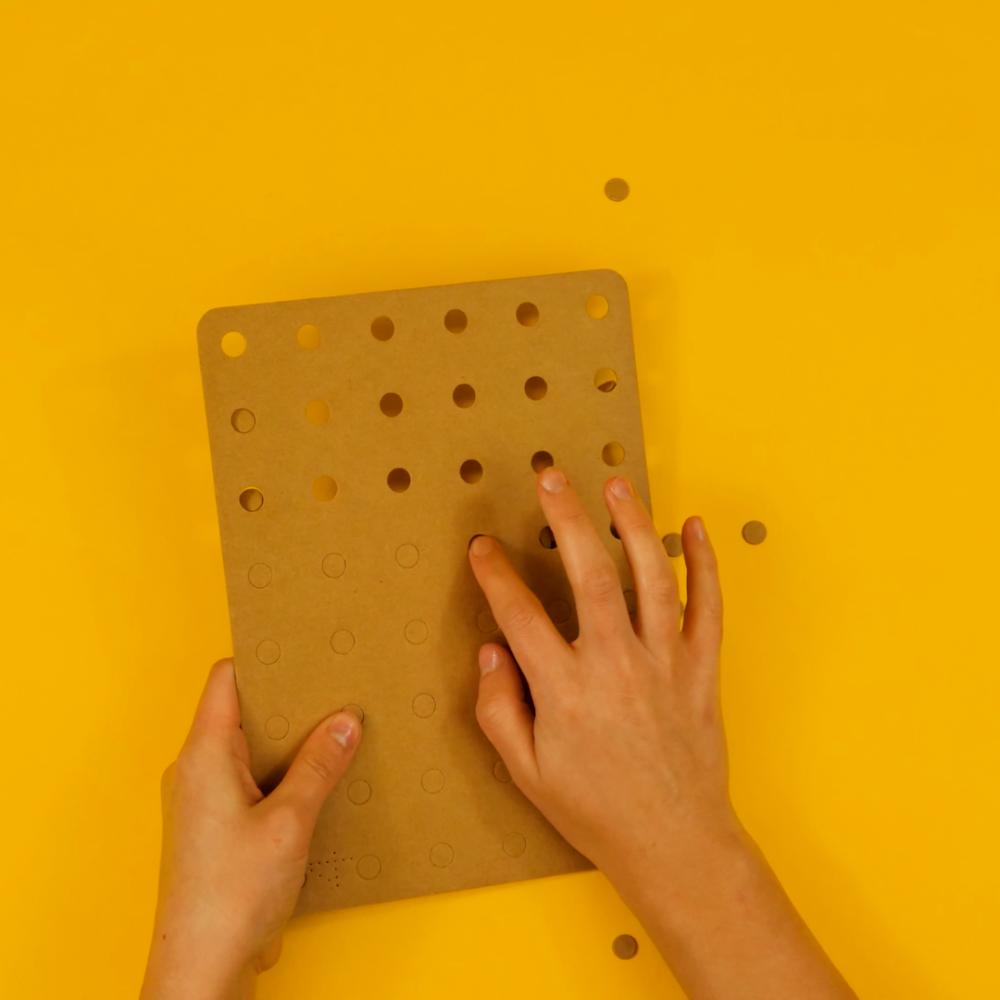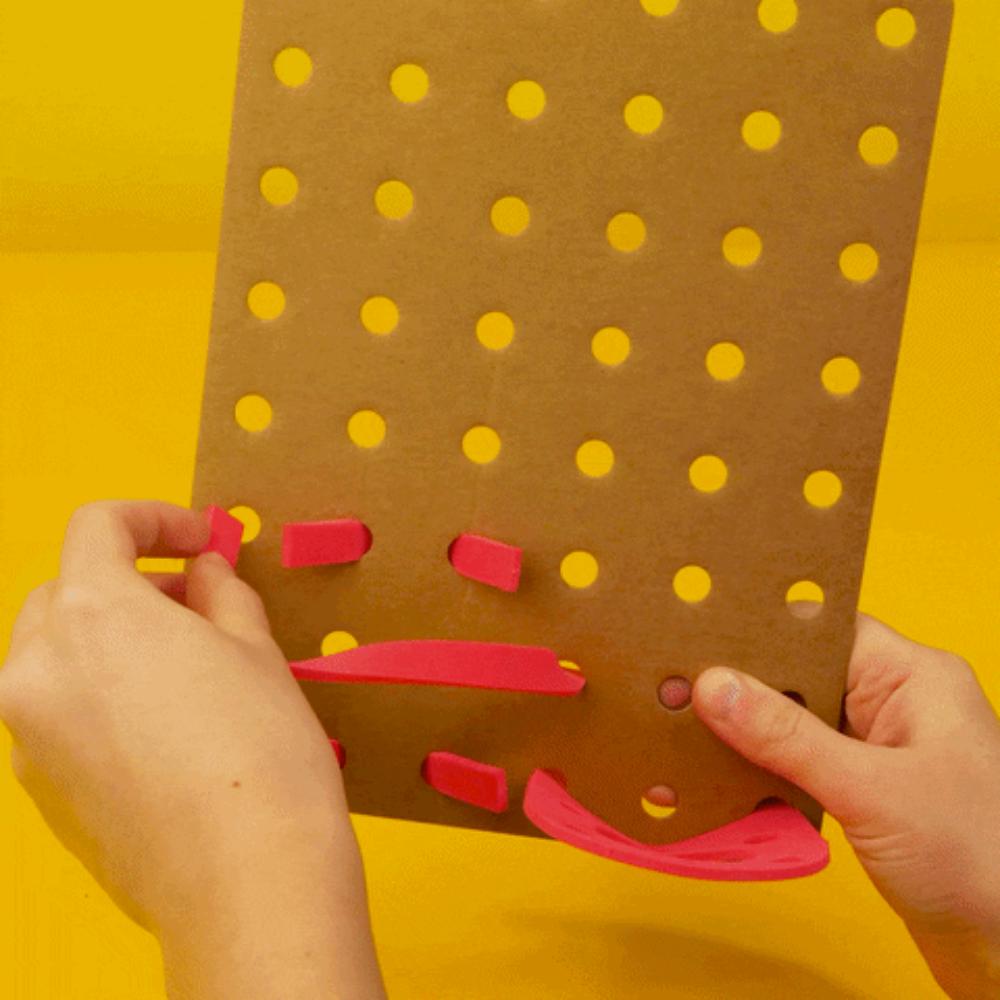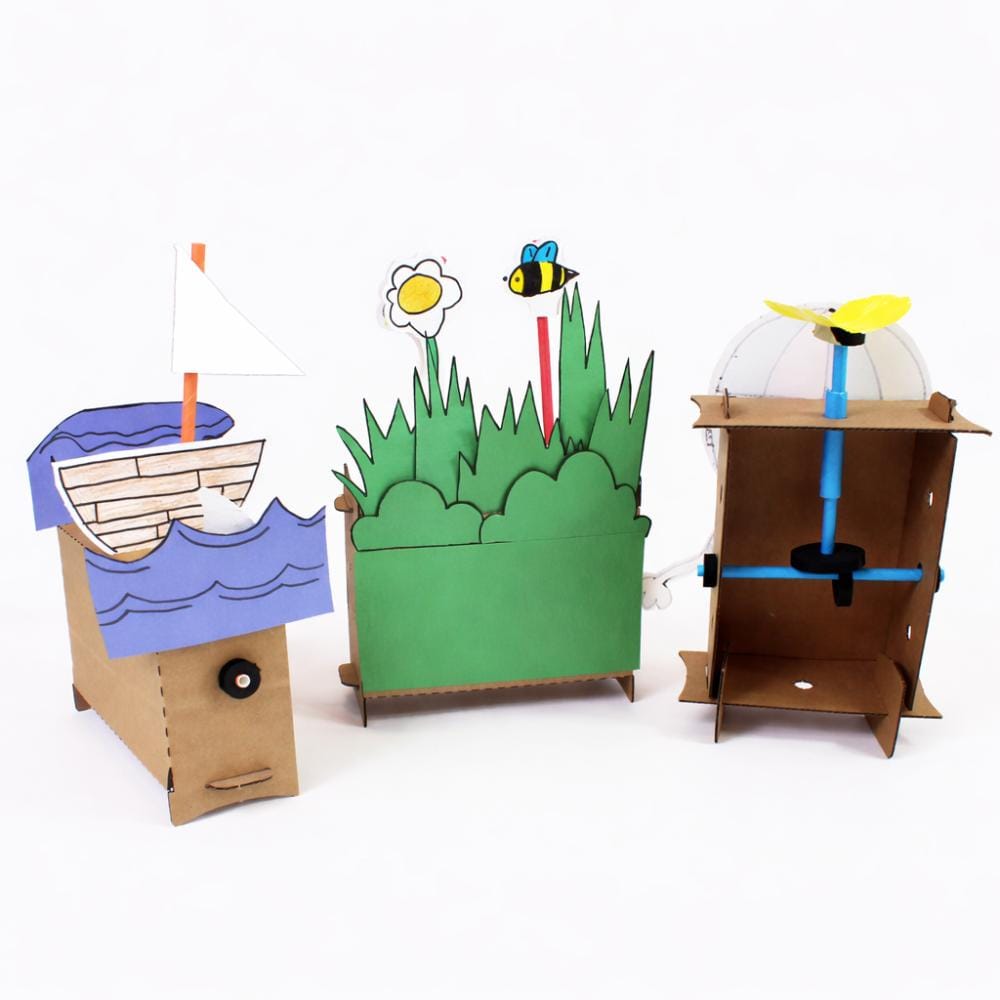
Hands-on and screen-free
Campers build real machines with levers, gears, motors and circuits. There are no apps, logins or devices. Each Spark takes 30 to 60 minutes, so it fits a session your program already runs.
Playful engineering kits, where every participant builds a working project that's made to keep.
Campers build real machines with levers, gears, motors and circuits. There are no apps, logins or devices. Each Spark takes 30 to 60 minutes, so it fits a session your program already runs.
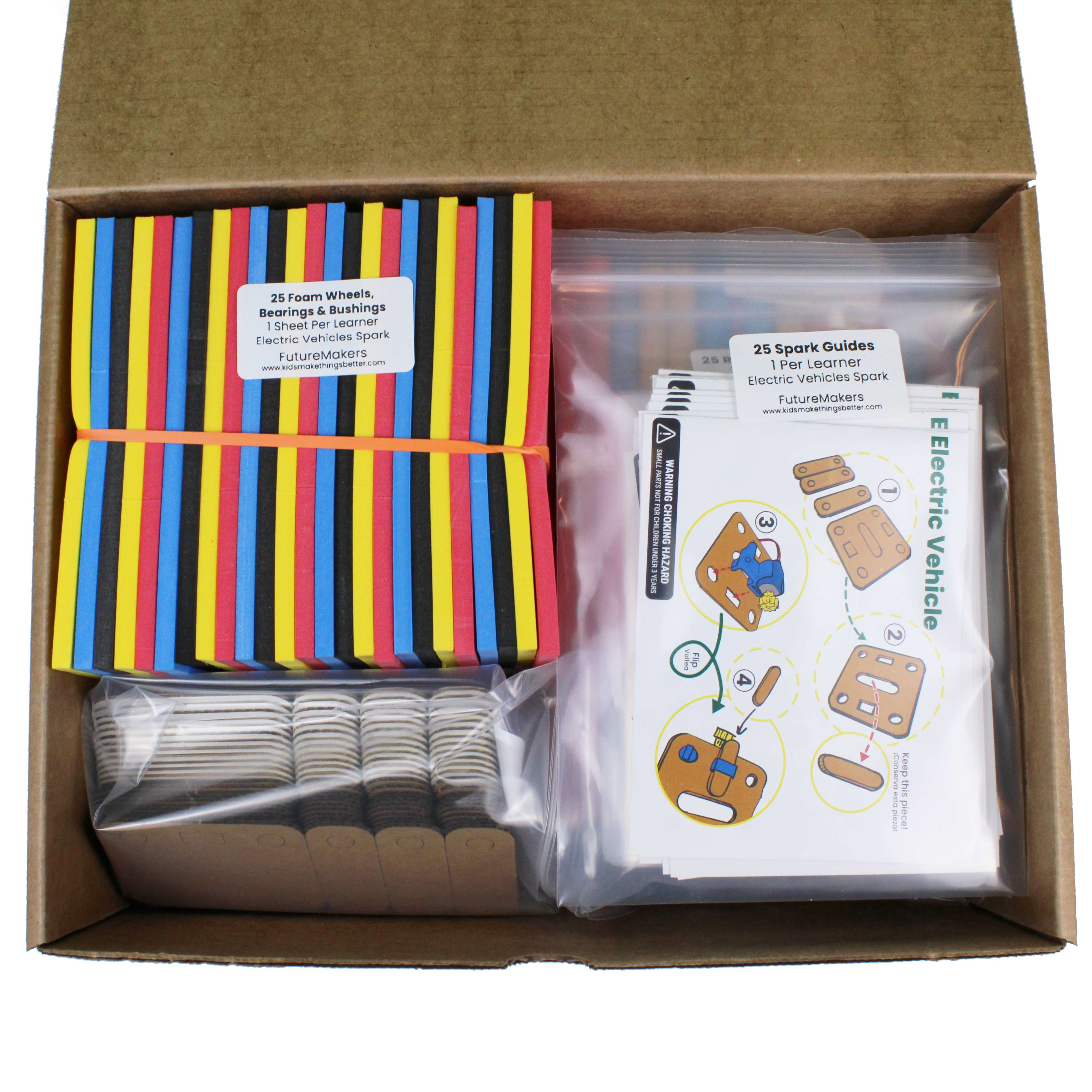
Every camper gets their own kit, builds their own project and takes it home. Caregivers see what their camper made, and the build keeps going after camp.
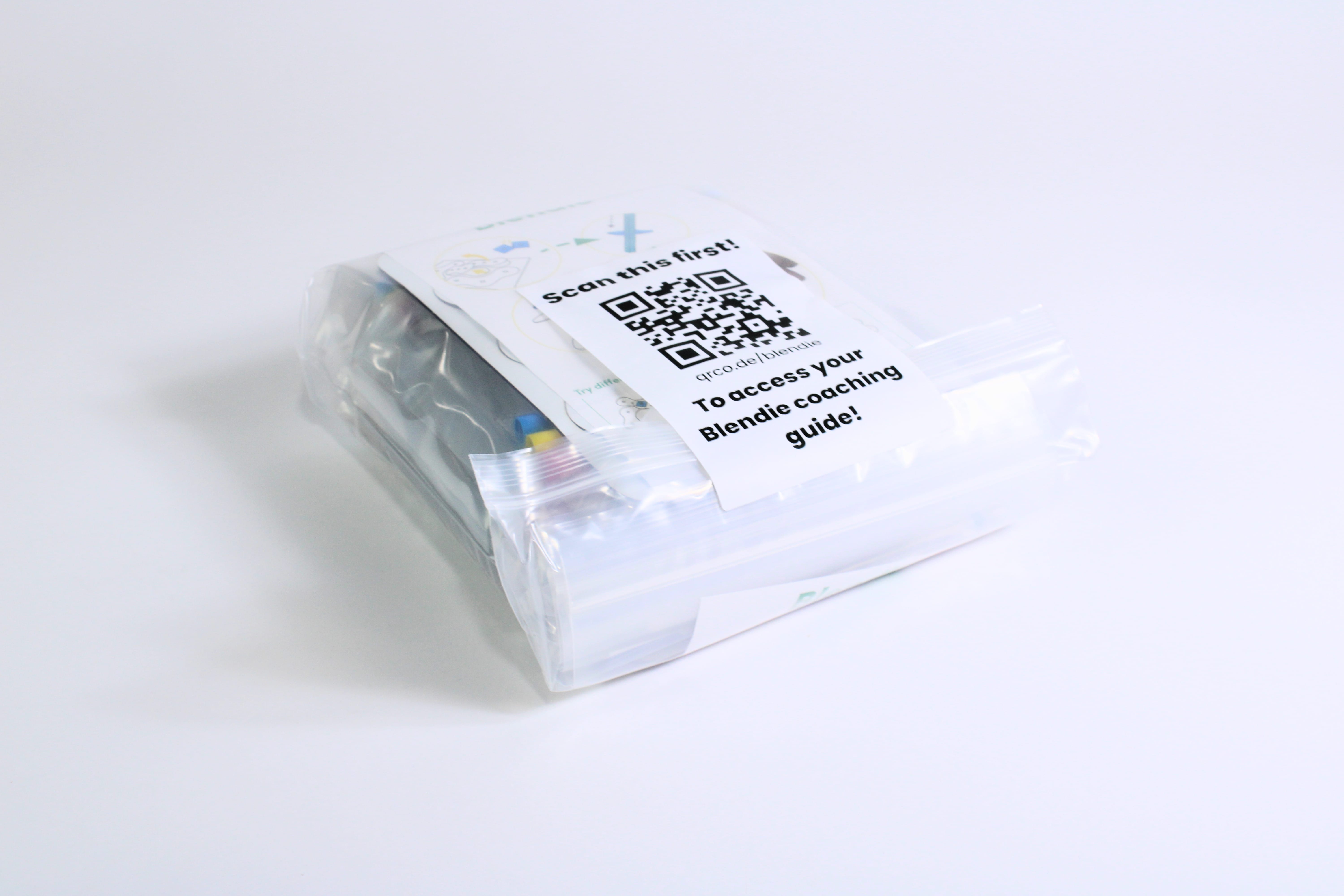
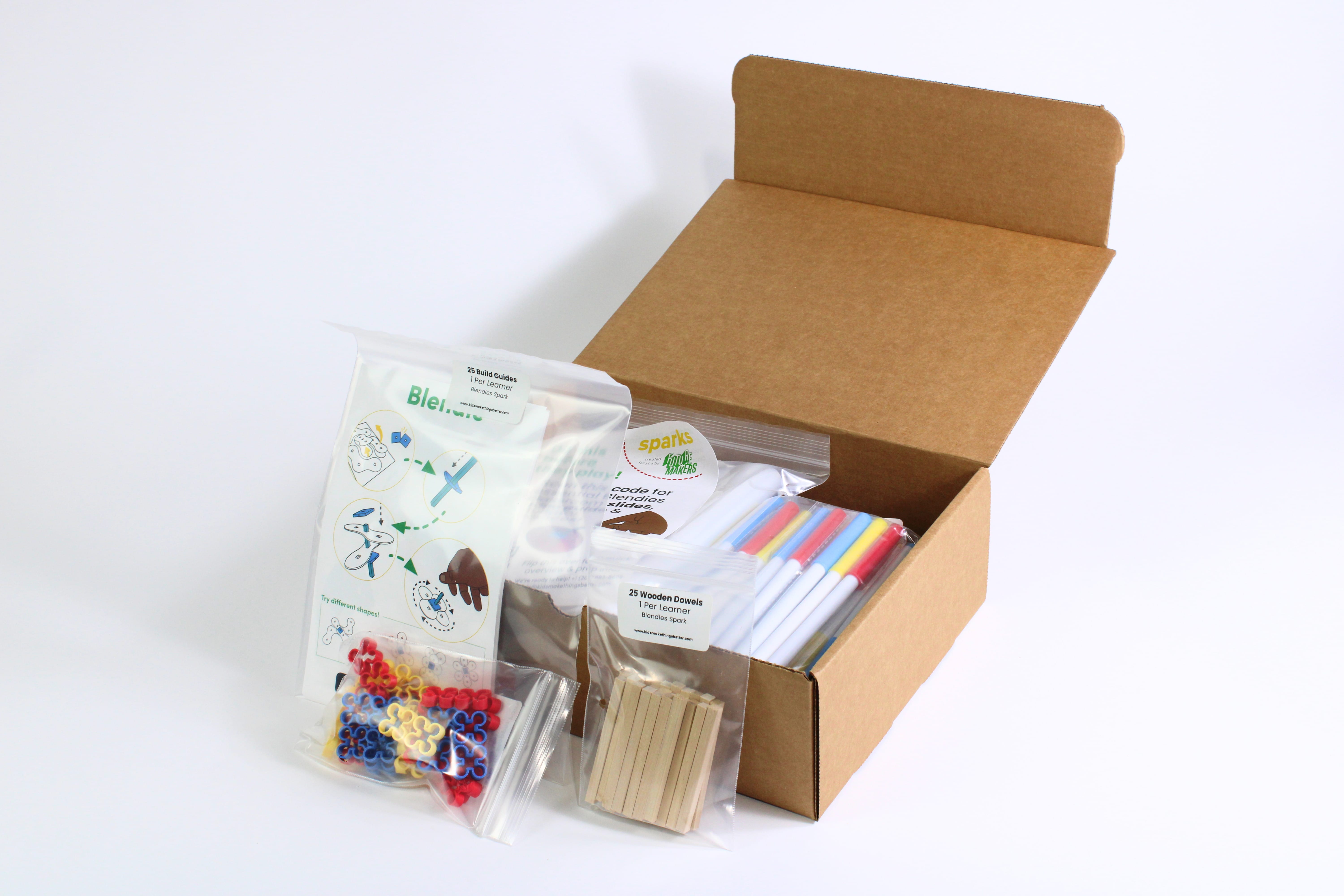
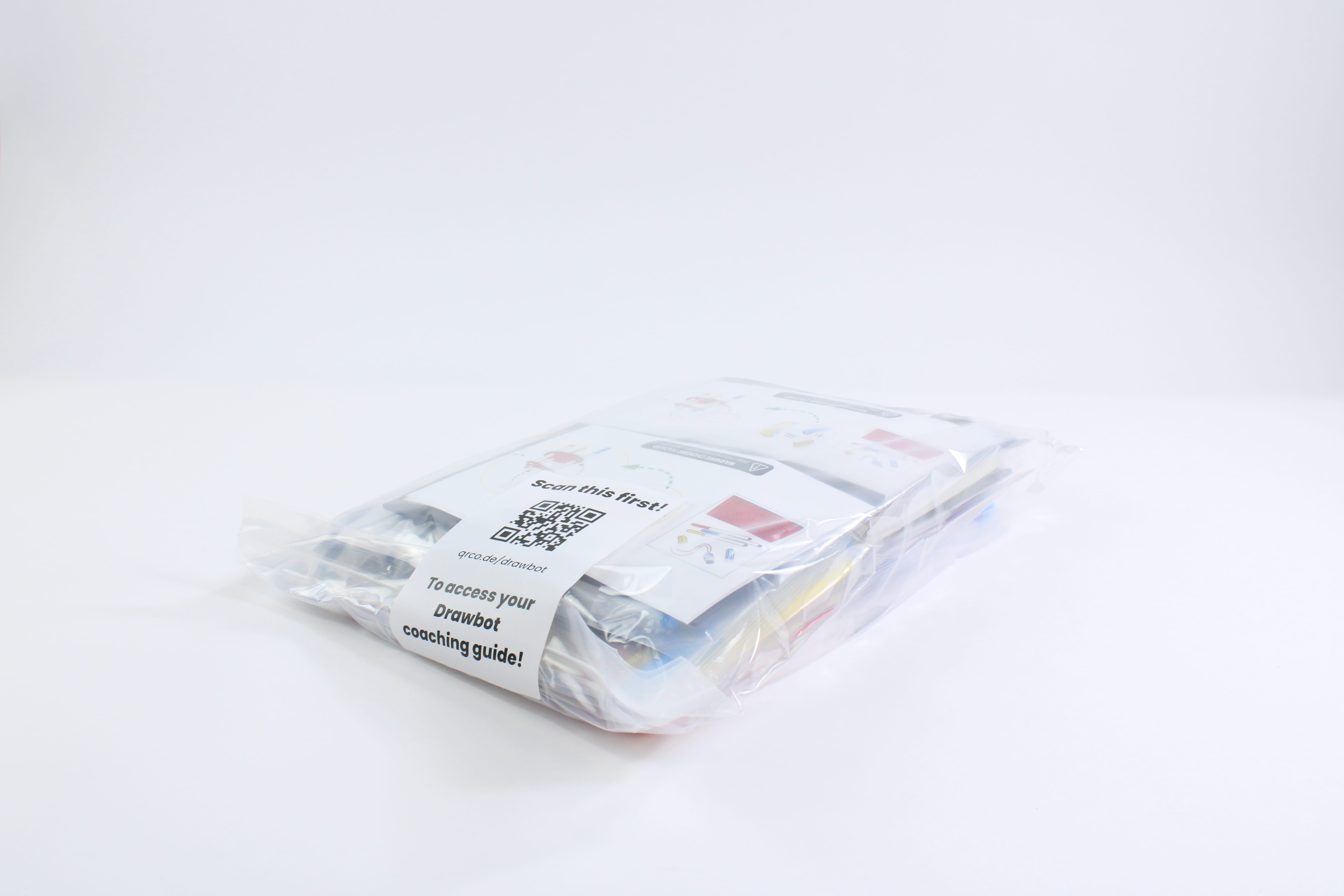
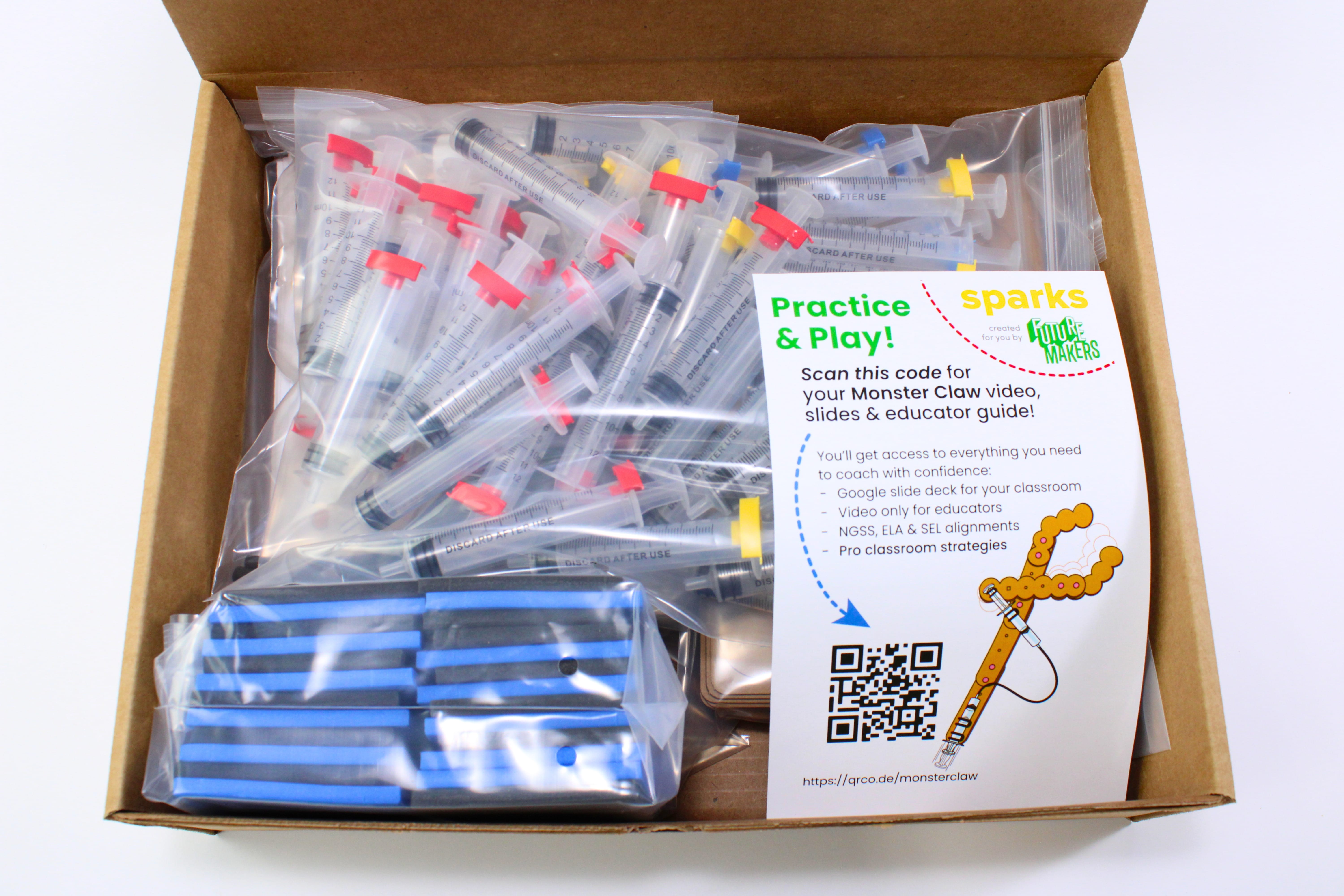
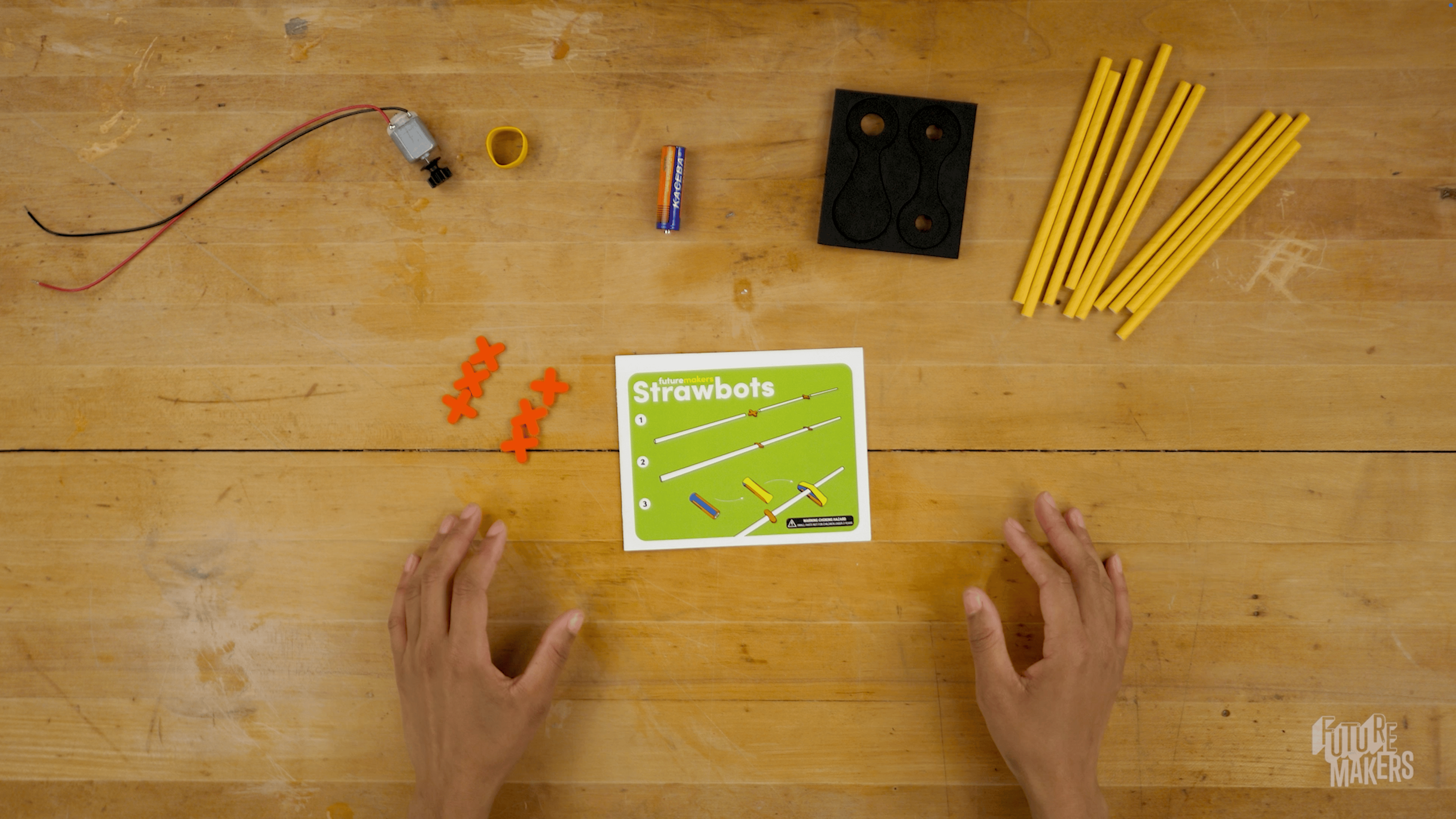
Built for camp counselors, youth workers and program staff. Every Spark has an online educator guide with a how-to video, slides and step-by-step tips, and campers follow a printed picture guide.
Caregivers see your program at drop-off and pickup, every day. Pickup is where they decide what their camper's day was worth.
“Nothing. We played with blocks.”
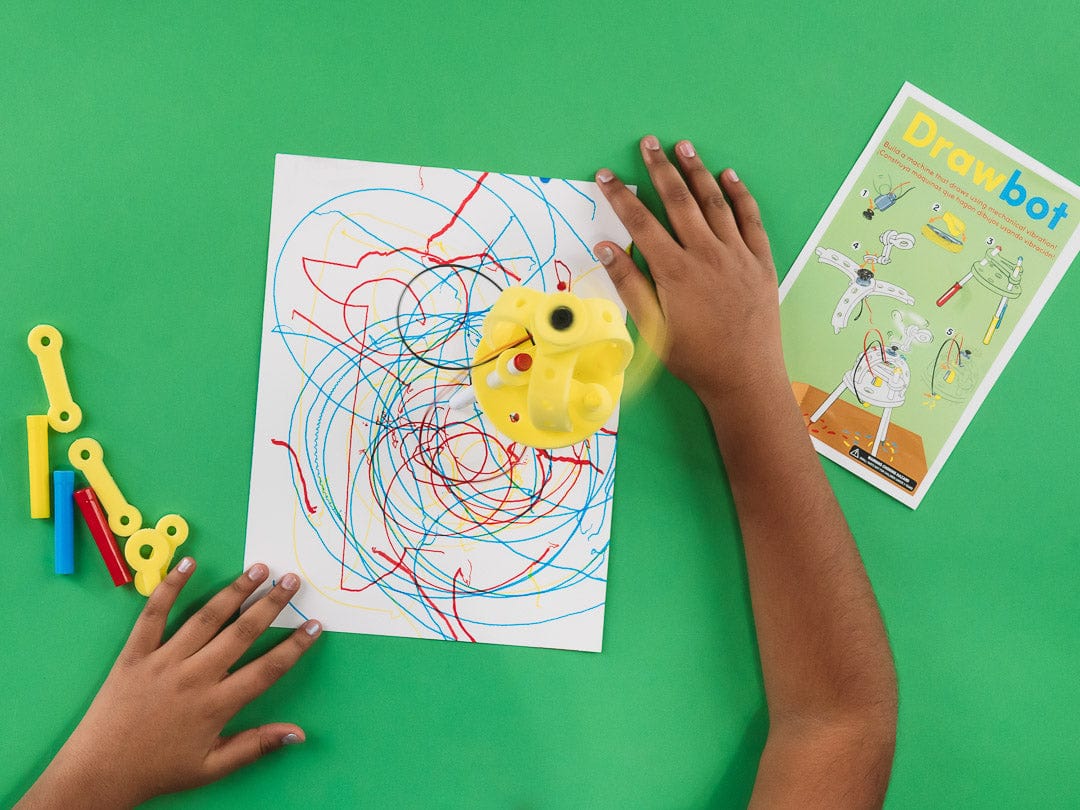
“I invented a machine that draws. It's mine. Want to rebuild it with me?”
Every camper builds their own Spark and carries it out the door. It's a real project they can explain, and the conversation keeps going at home.
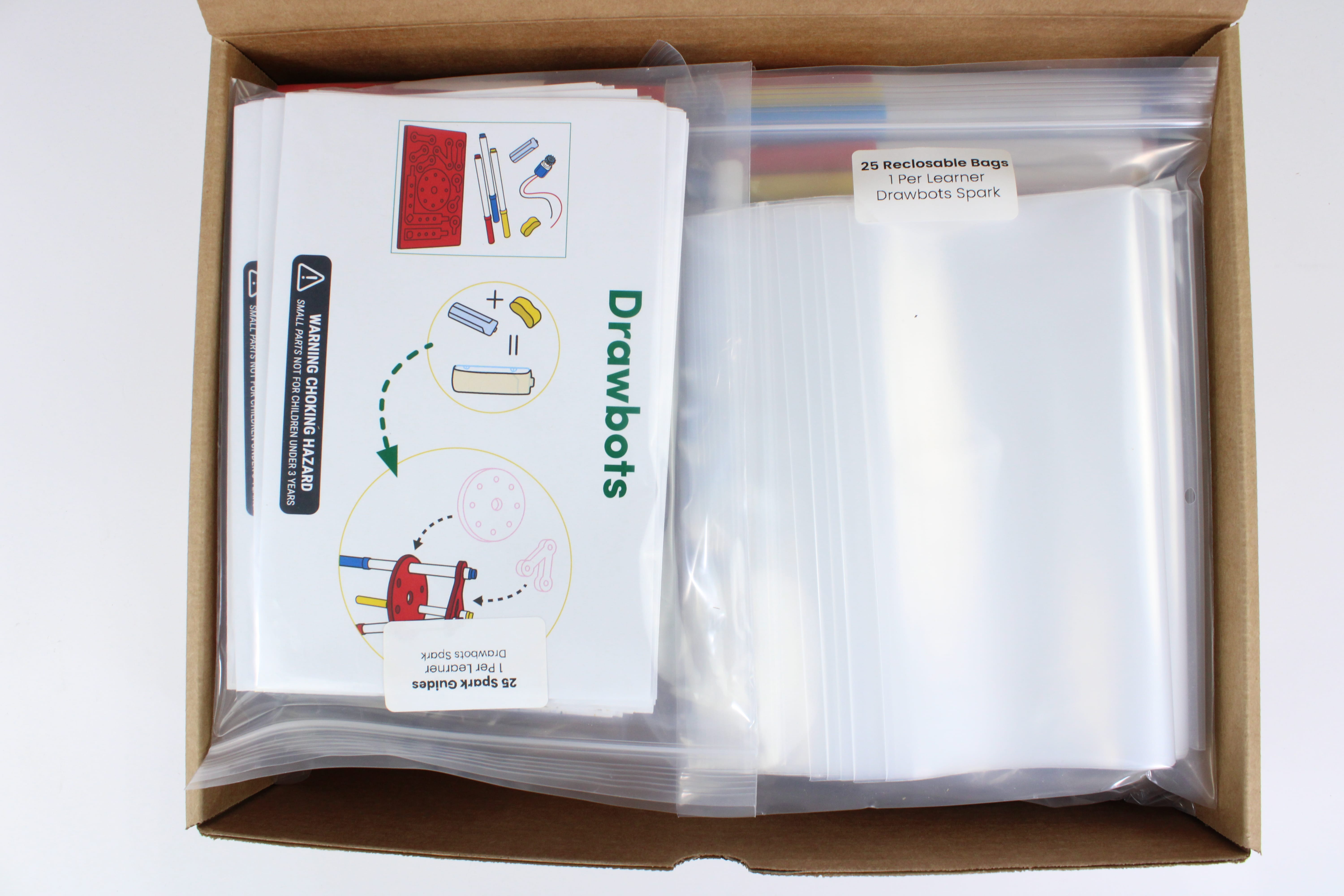
Campers arrive and leave at different times. Each one has their own kit and a picture guide, so a late arrival starts right away and an early pickup takes the project home to finish with family.
Keep a box of packs on the shelf. When the field closes, every camper gets a kit and the afternoon has a plan. No devices, no logins, just tables.
Every Spark has a how-to video (5 to 13 minutes) and a step-by-step educator guide. A counselor can watch it during setup and lead the group the same day.
Grades and activity times are the ones in each Spark's educator guide.
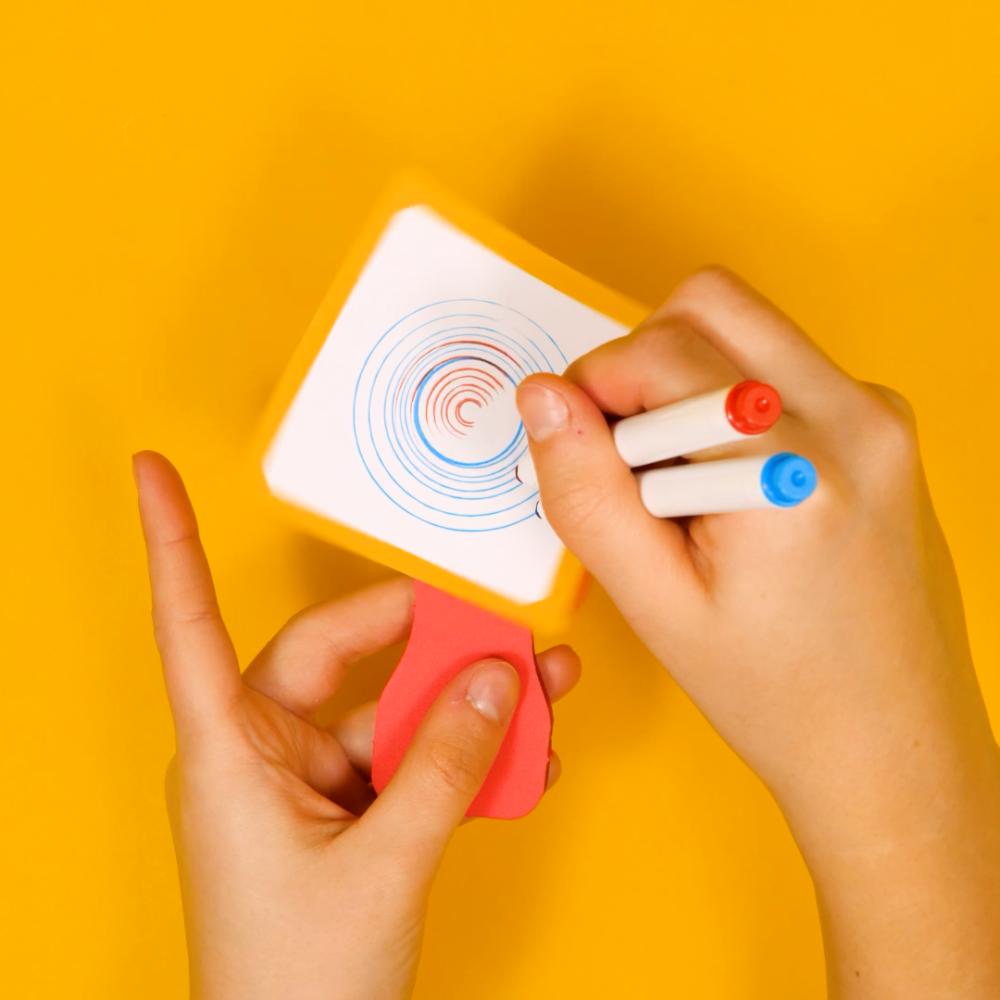
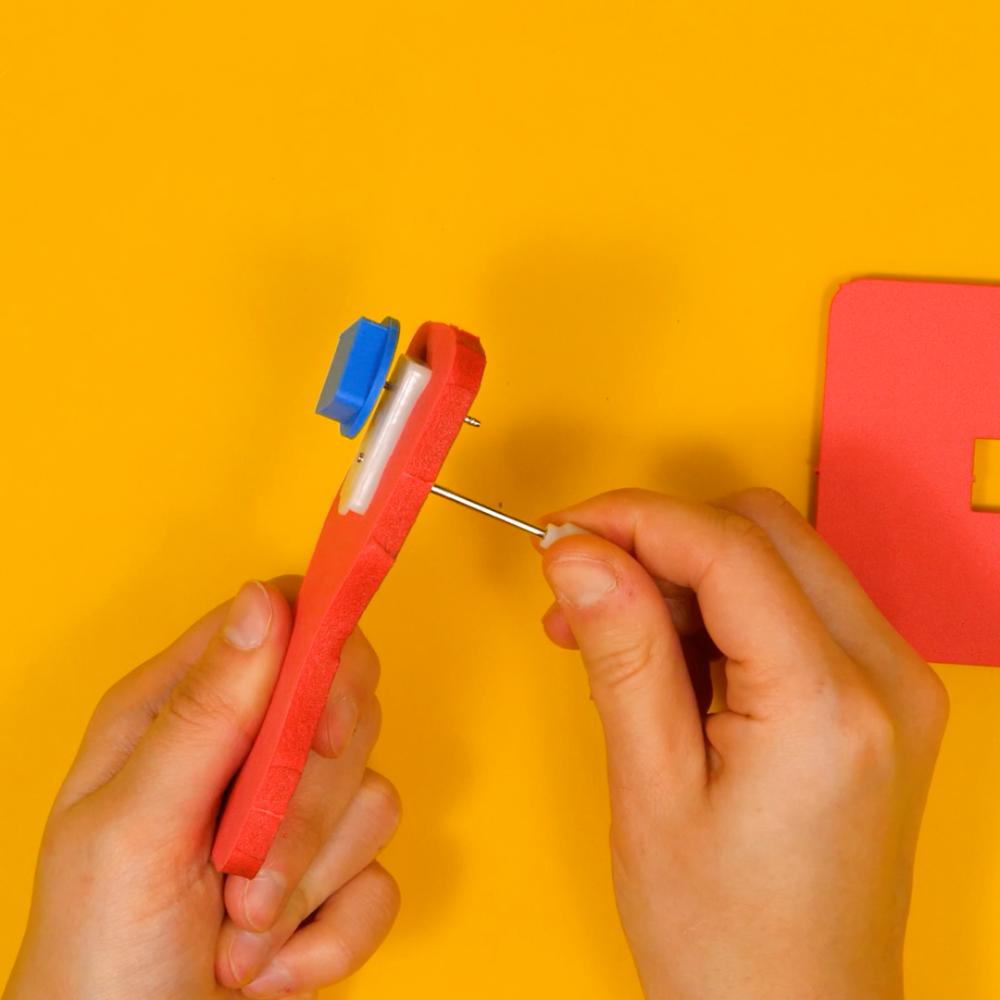
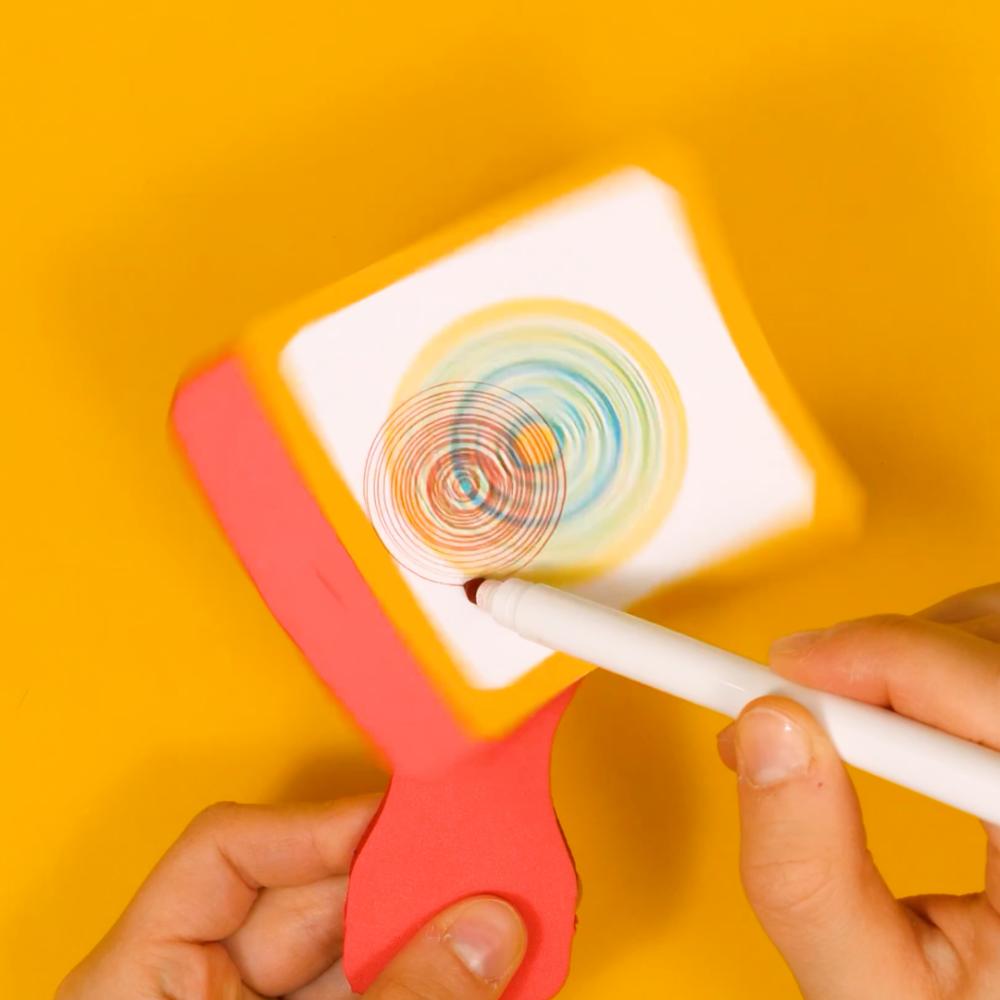
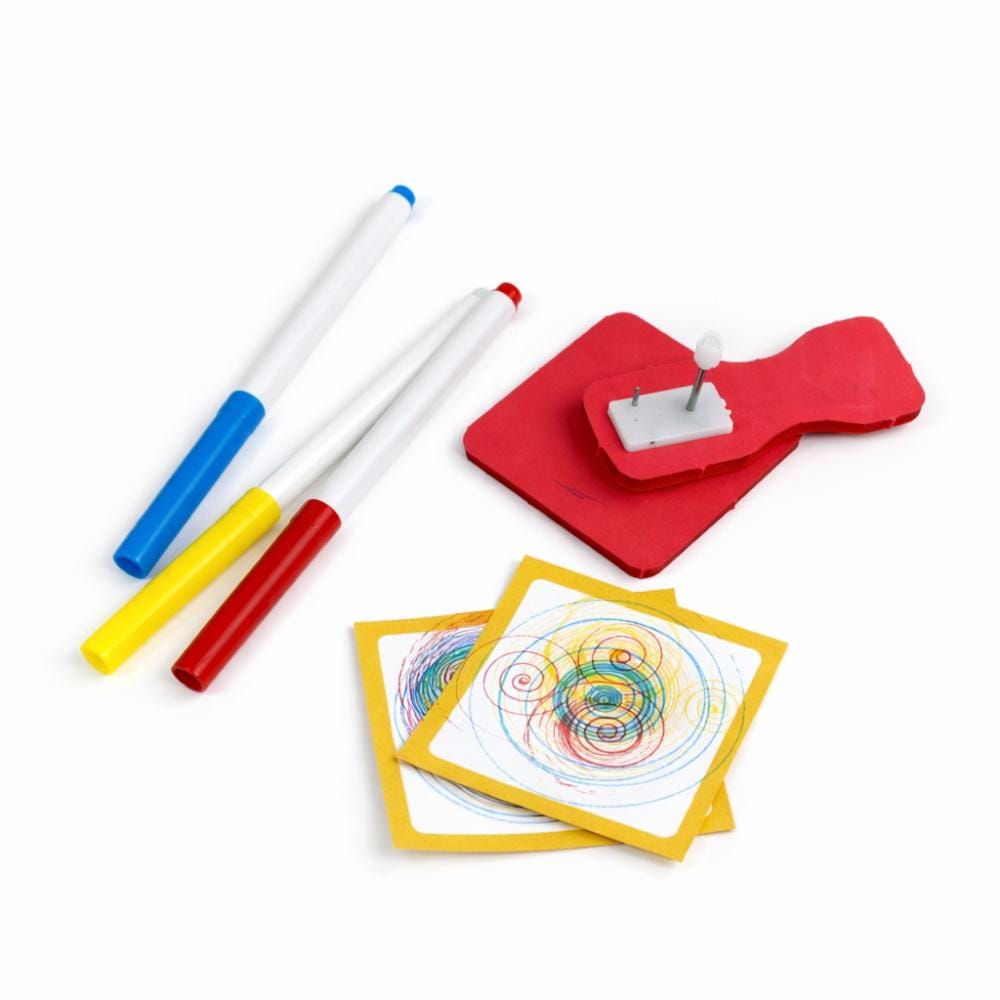
Participants make: A spring-driven spinning platform that turns a marker touch into colorful spirals and Moiré patterns.
See this Spark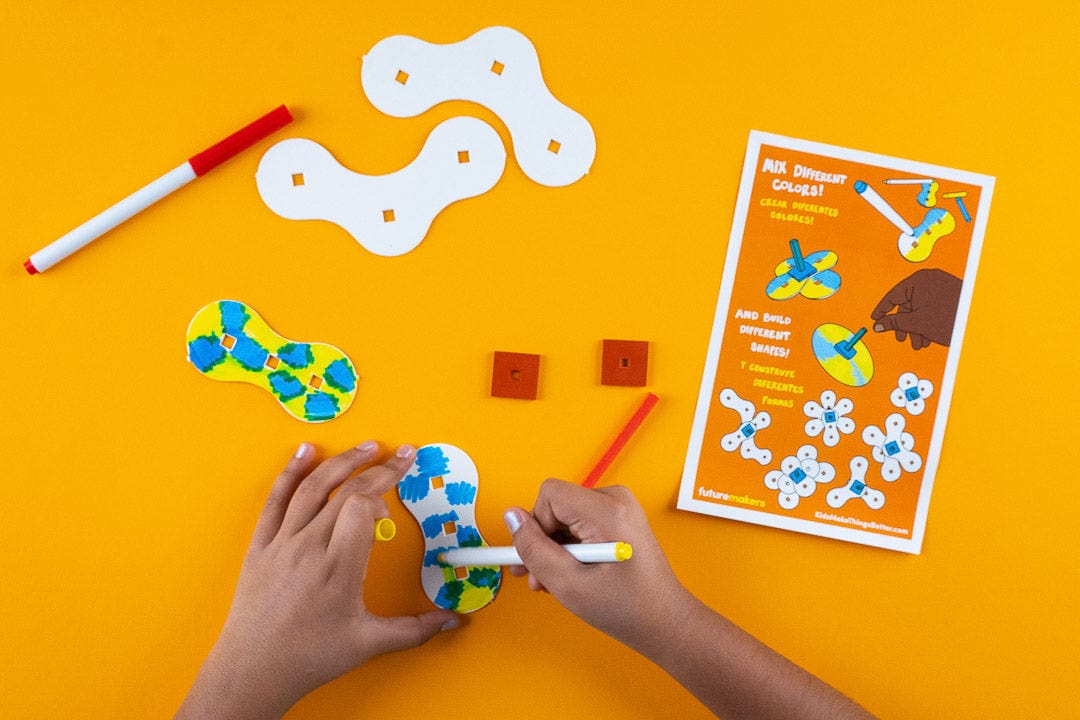
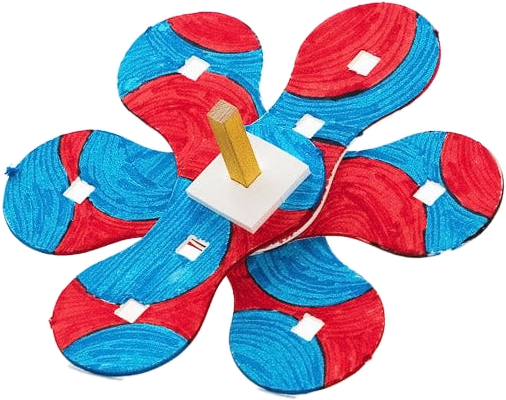
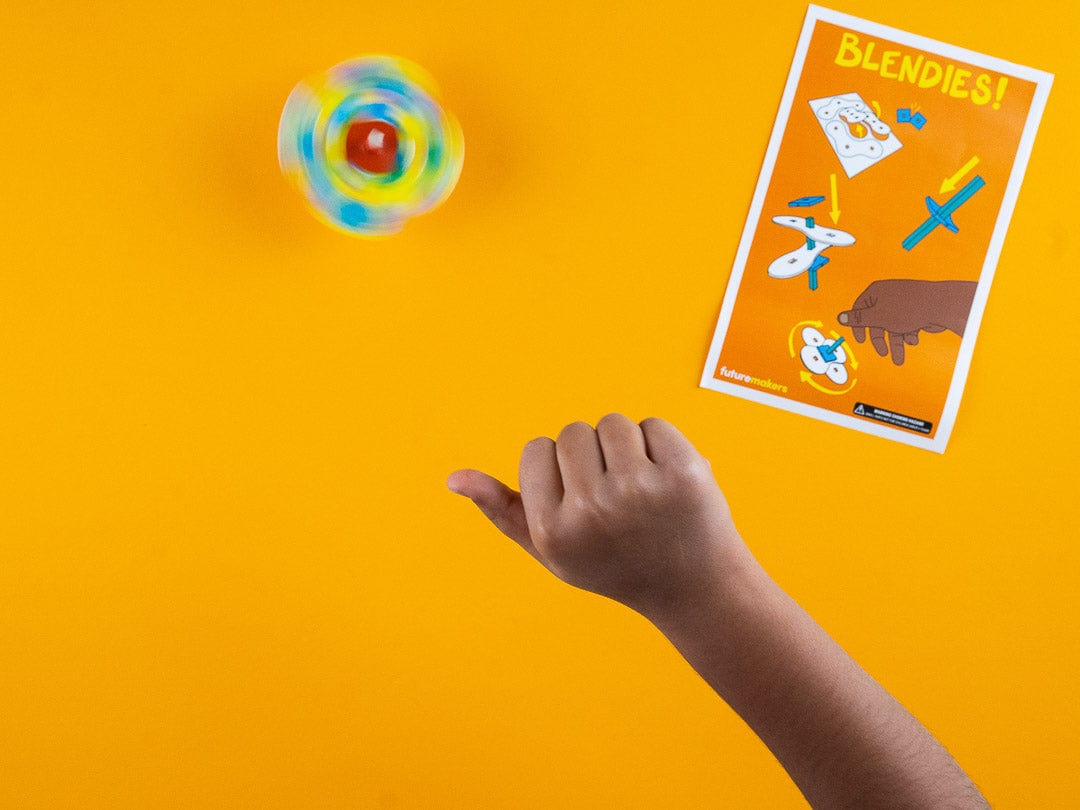
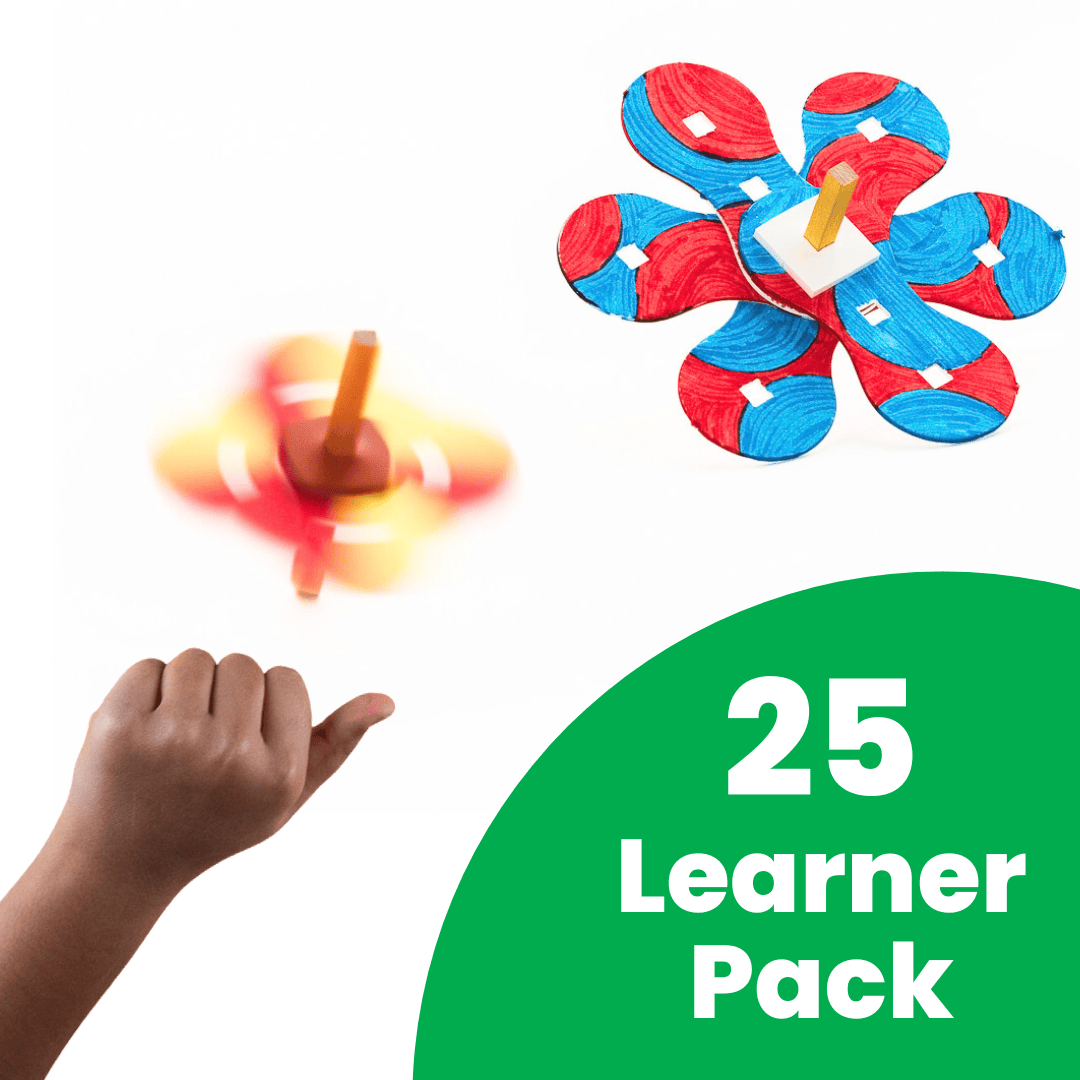
Participants make: A durable wooden spinning top, colored with primary markers so it blends into secondary colors as it spins.
See this Spark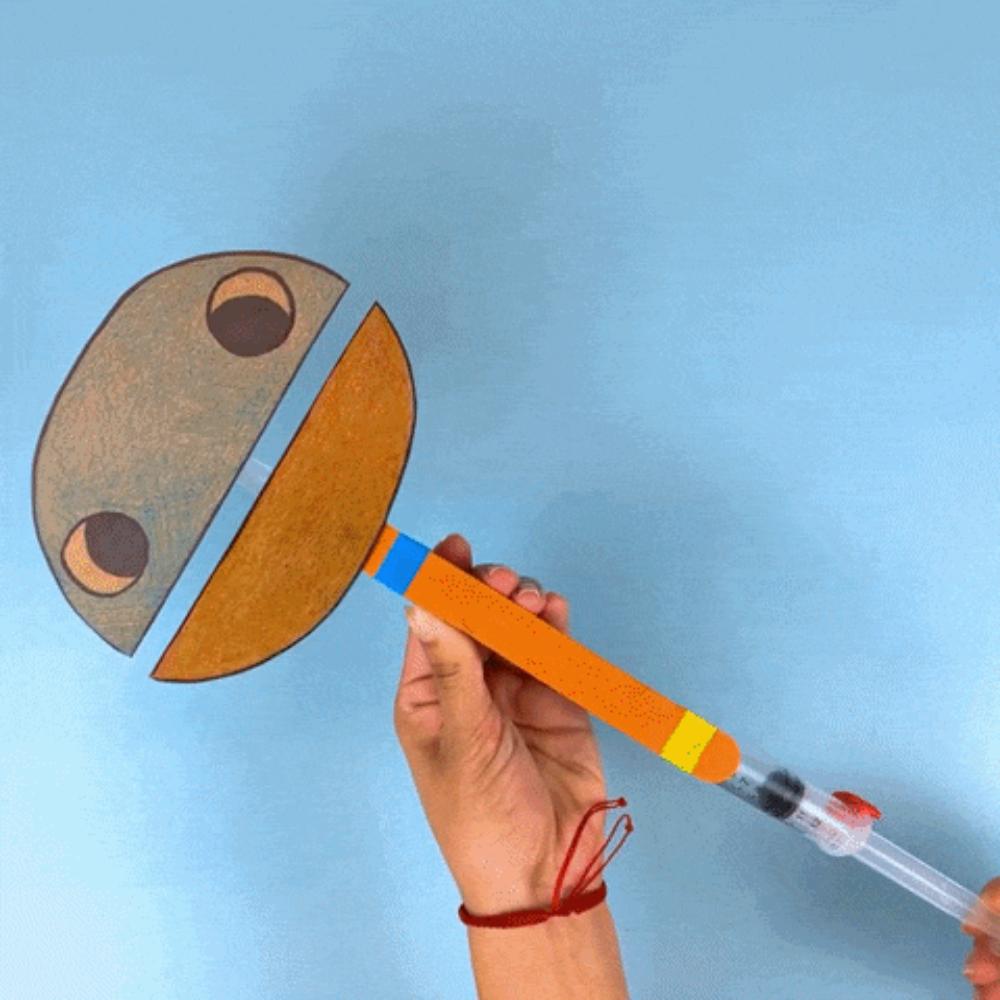
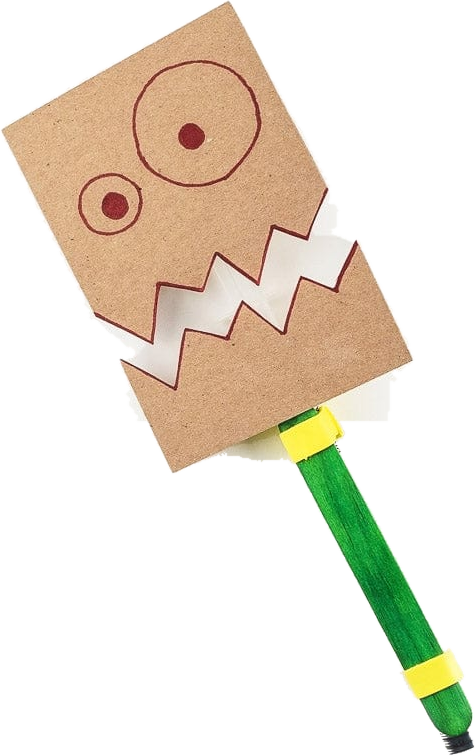
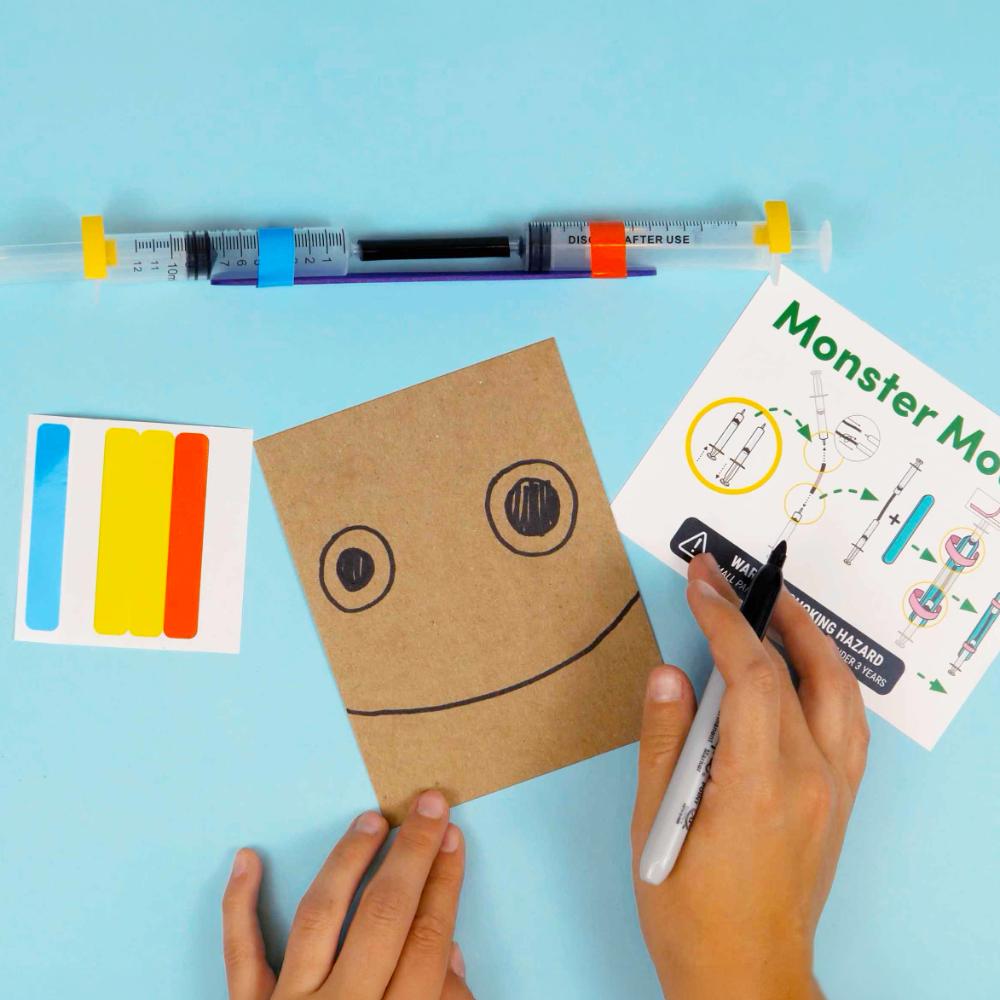
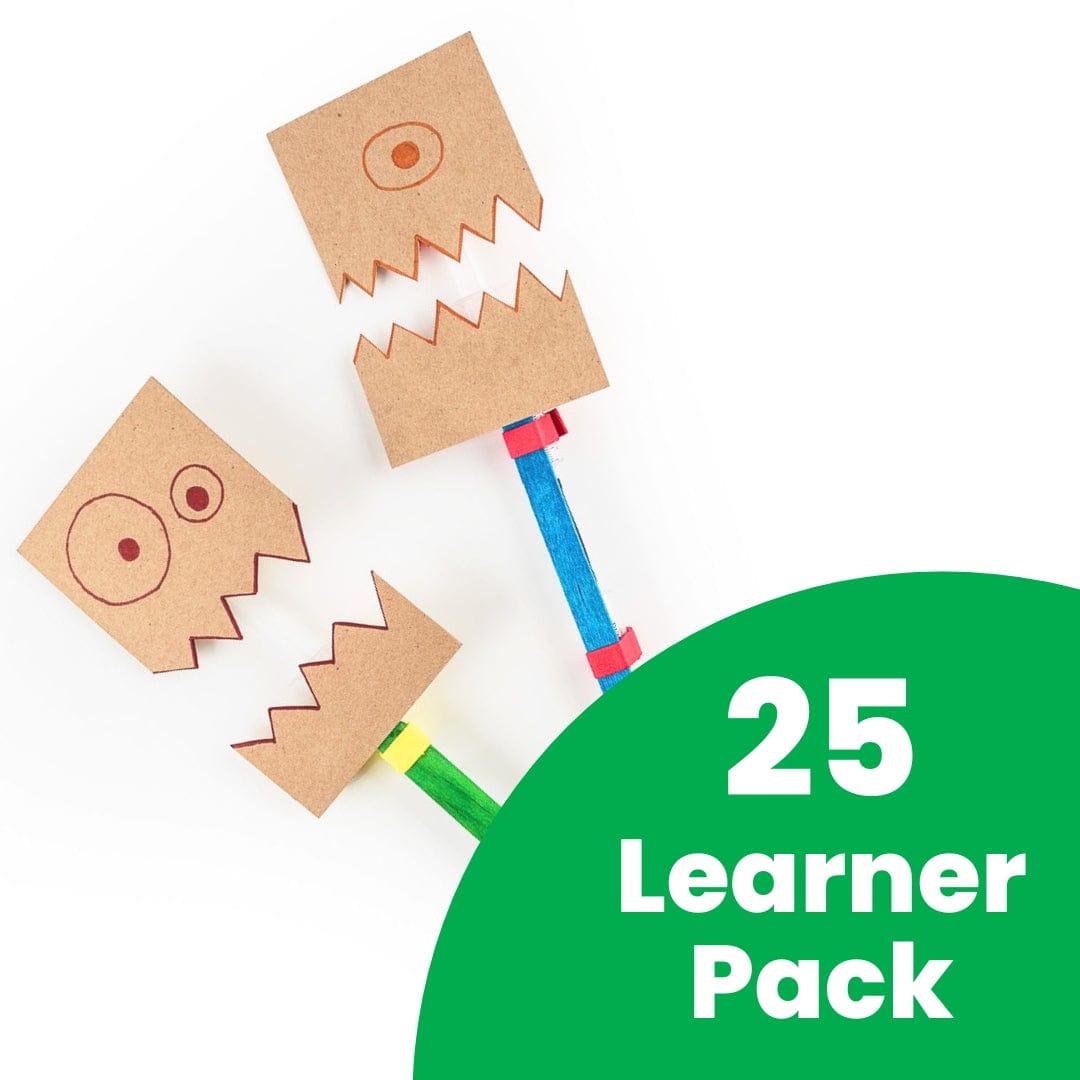
Participants make: A monster face on a craft stick whose mouth opens and closes when learners push and pull air through two pistons.
See this Spark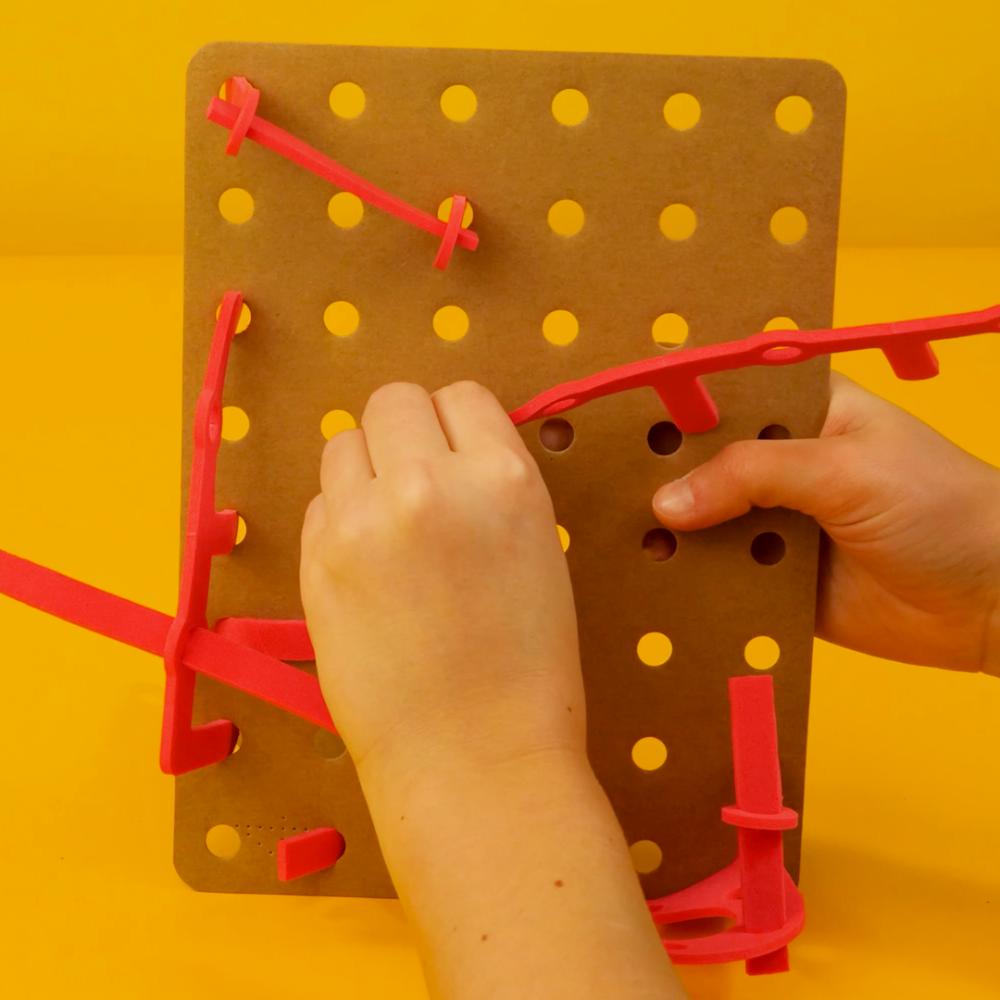
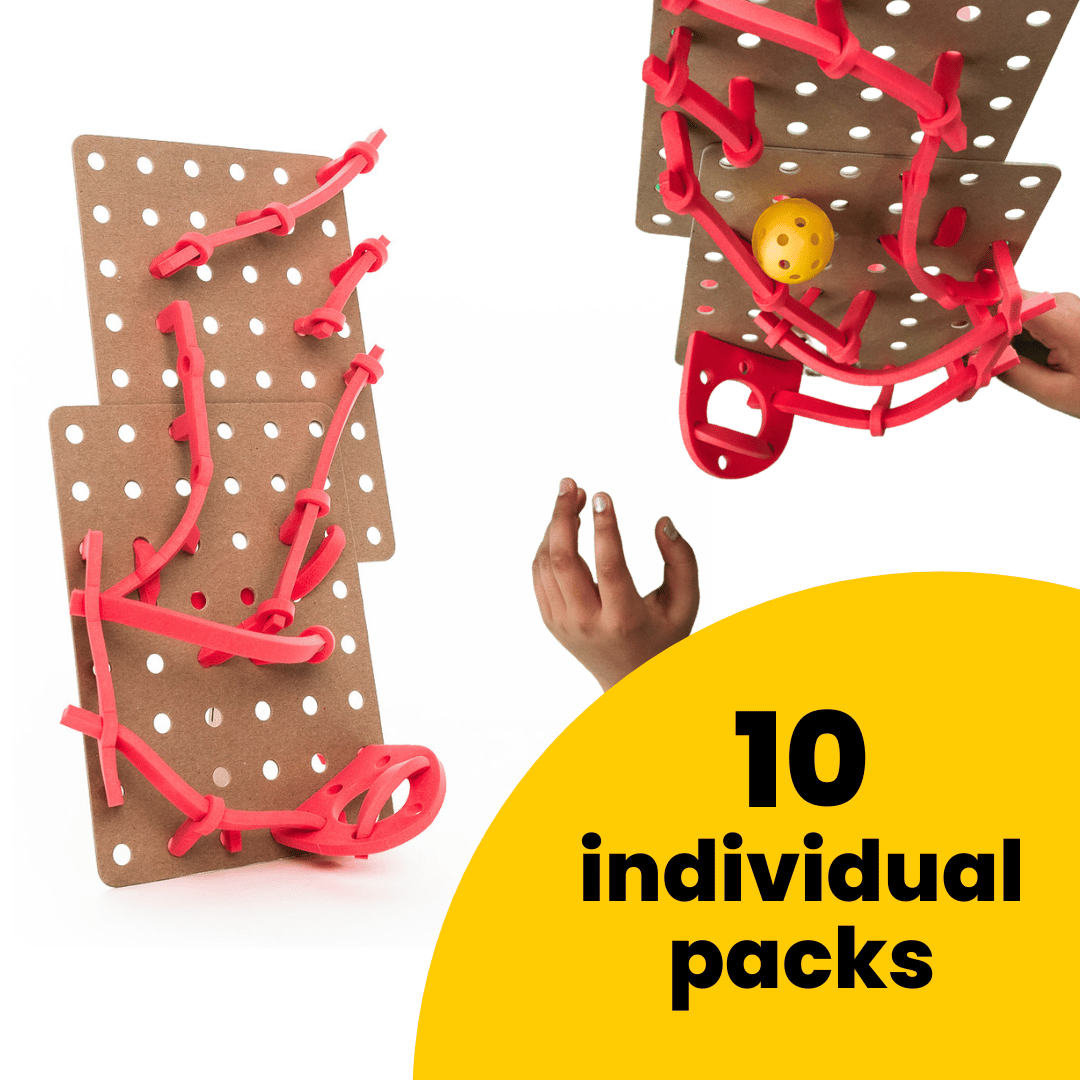
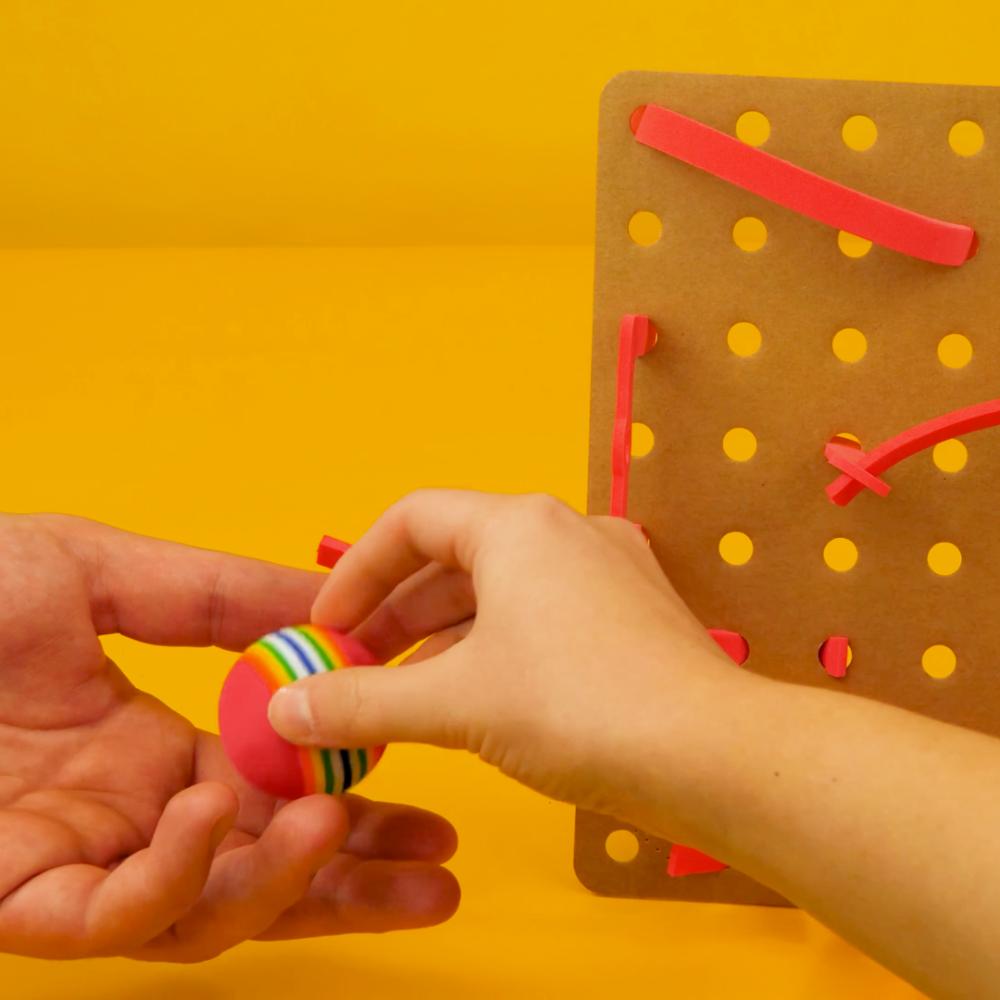
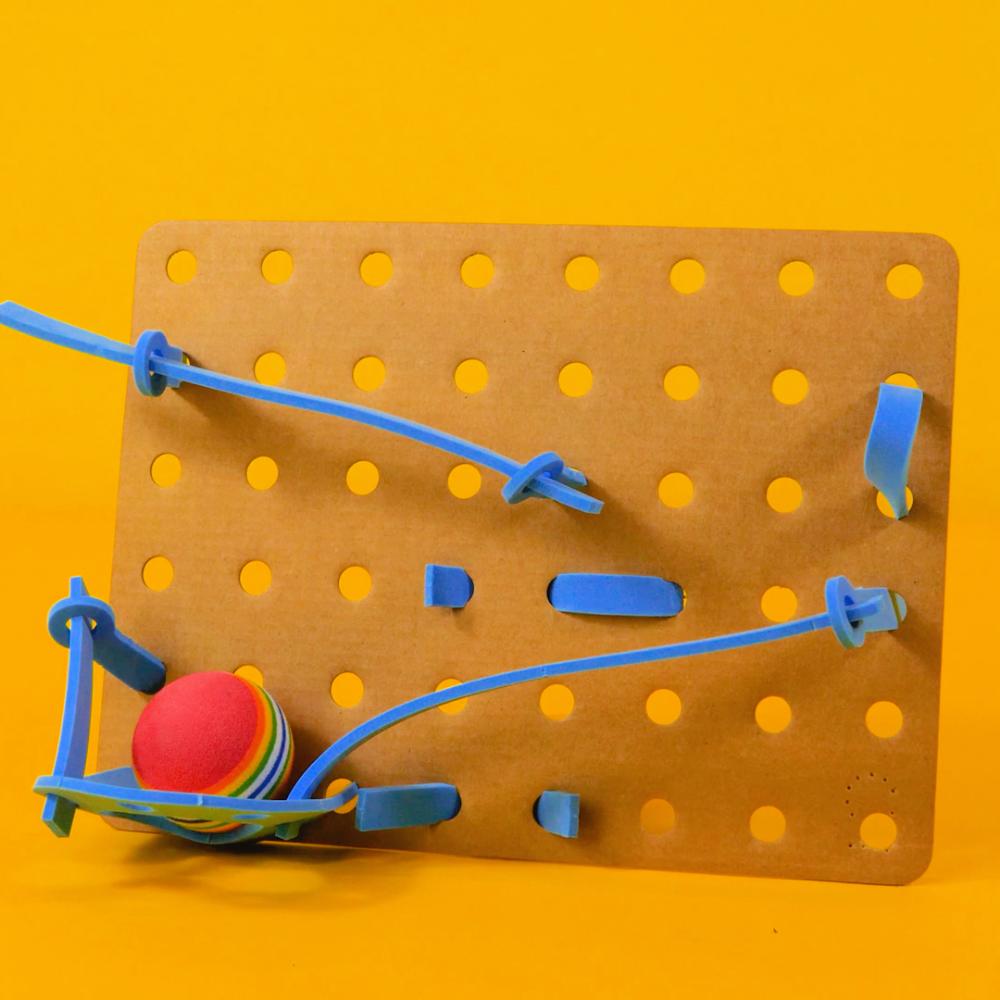
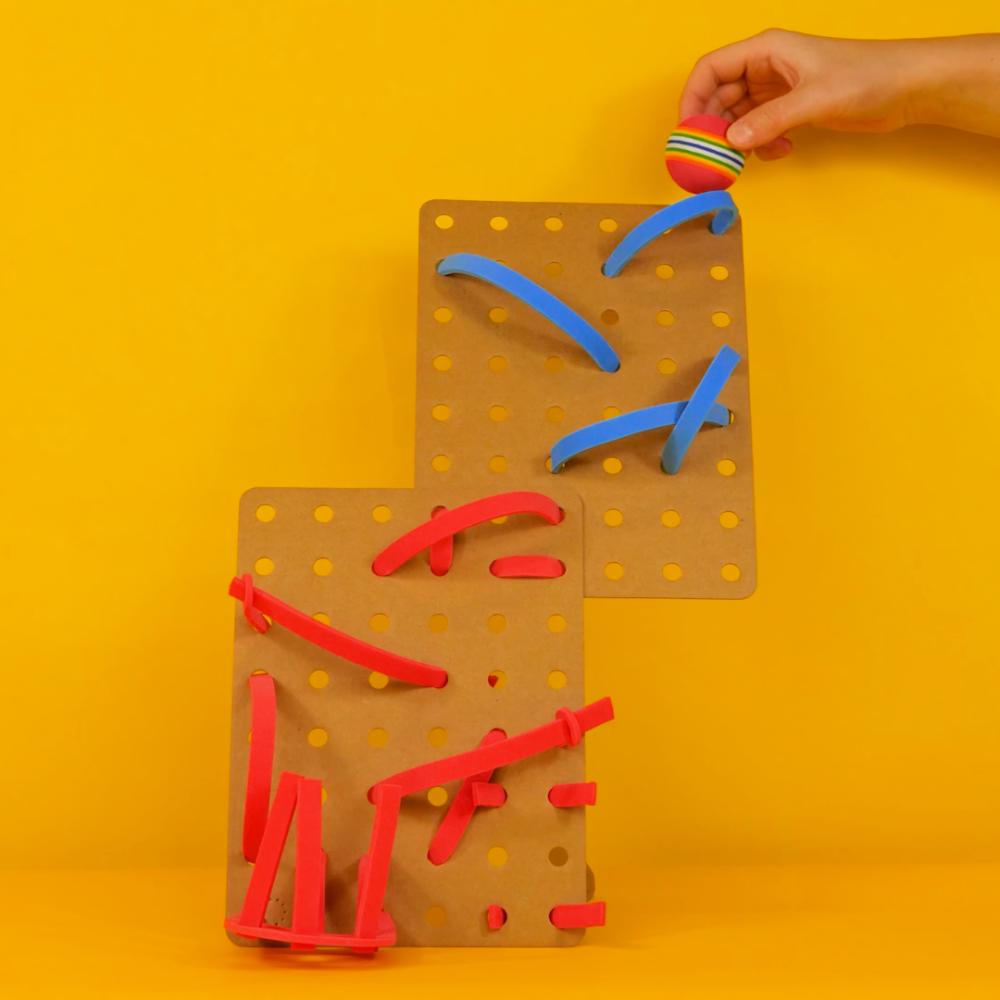
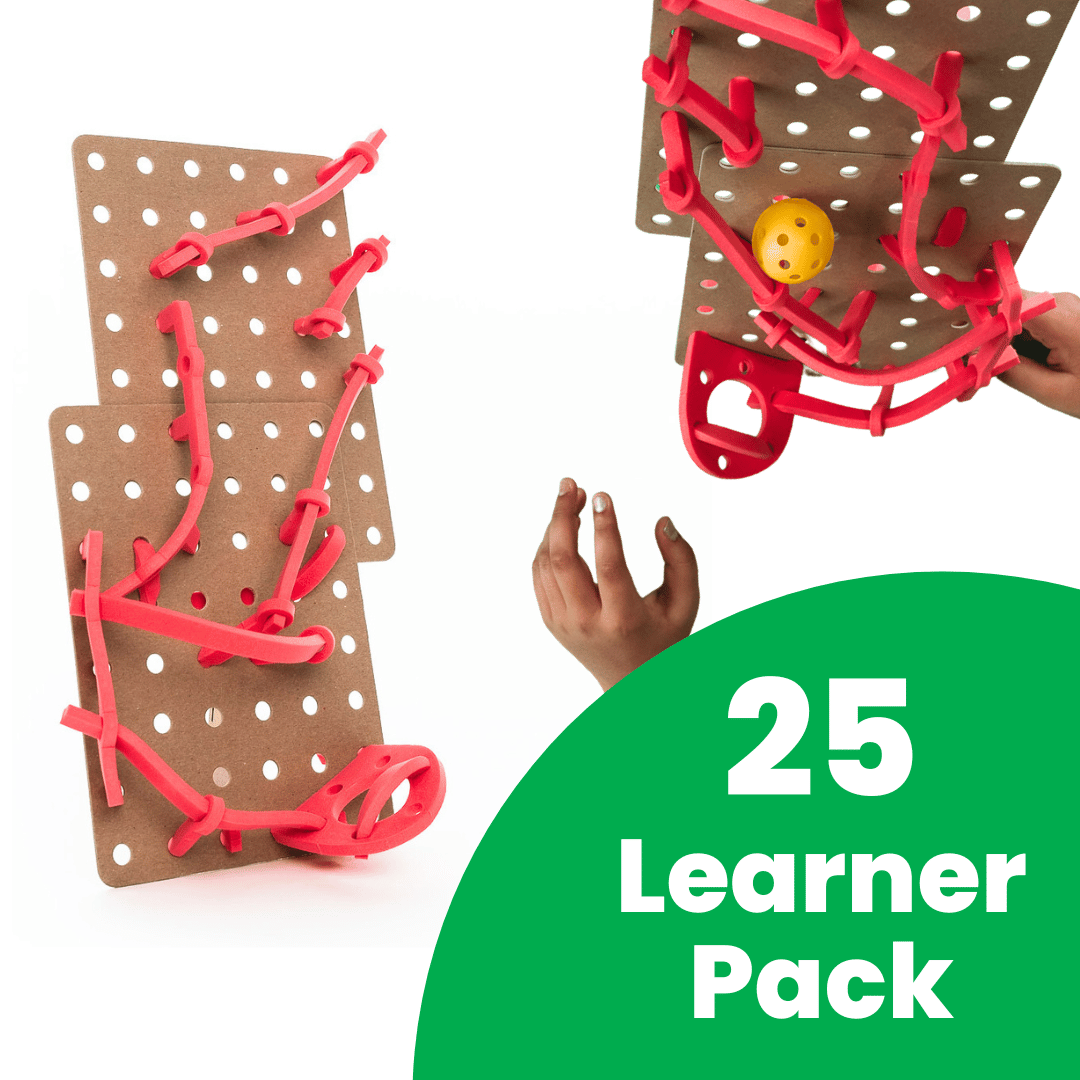
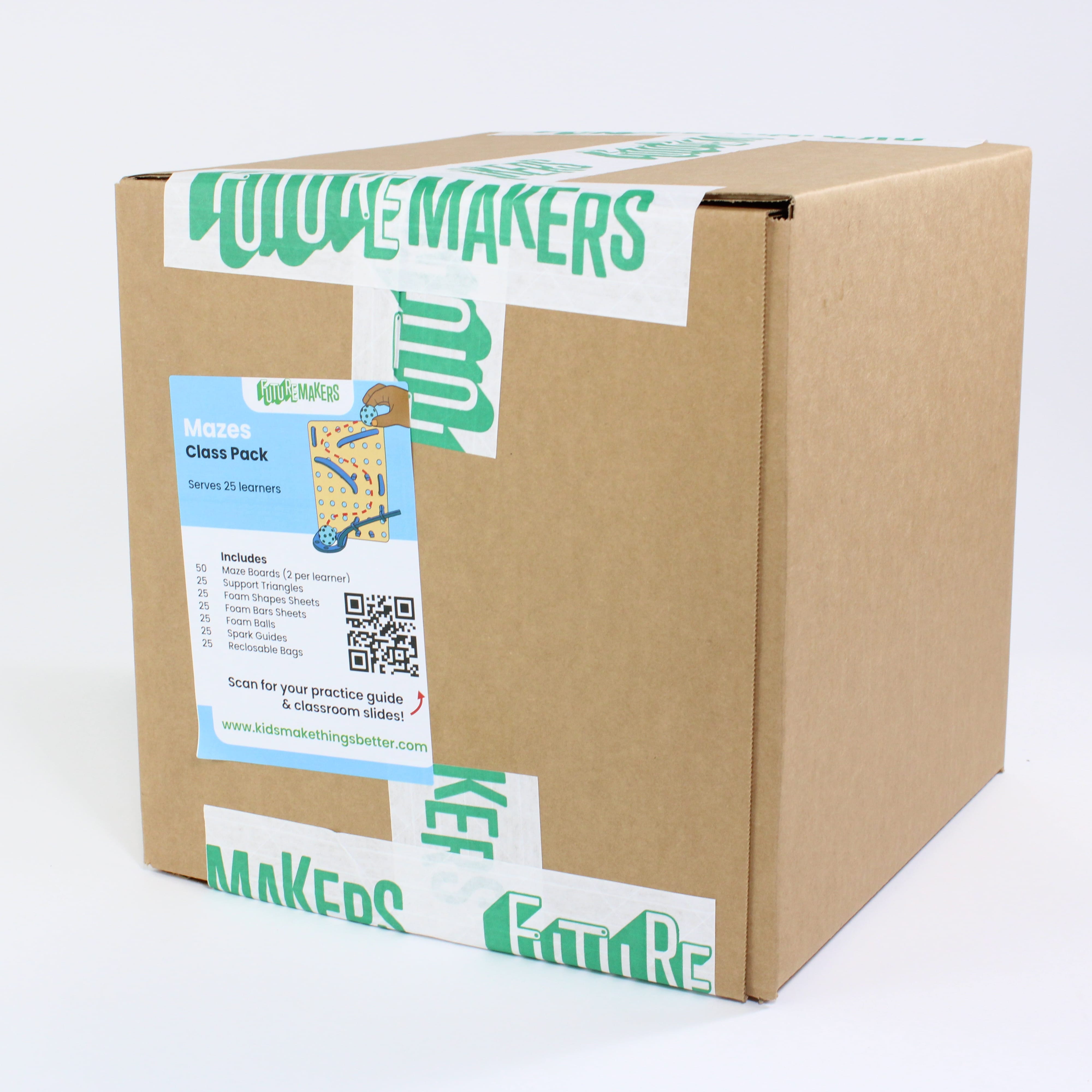
Participants make: An adjustable ball maze of foam ramps on a cardboard wall board that can join other learners' mazes into one shared path.
See this Spark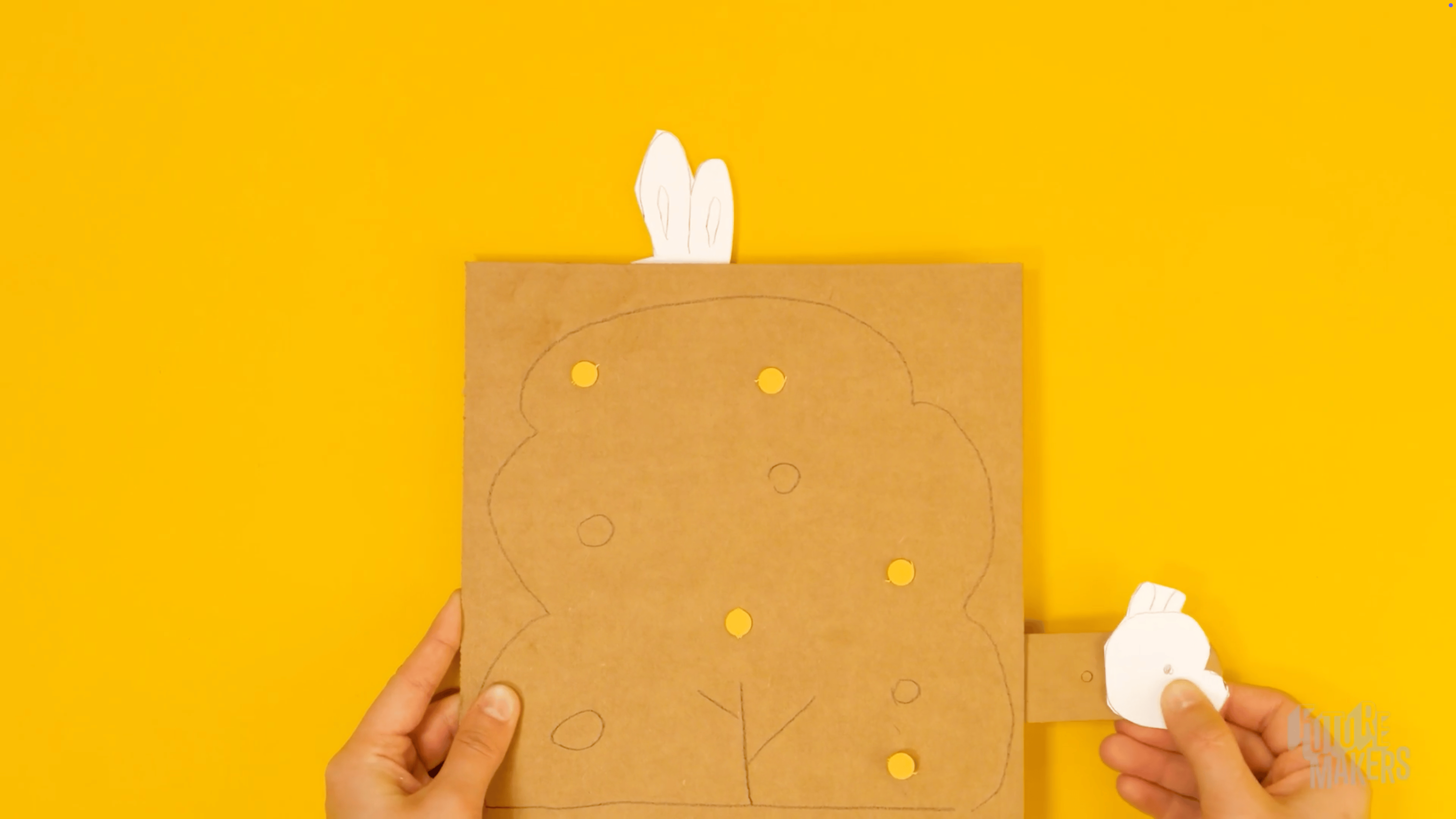
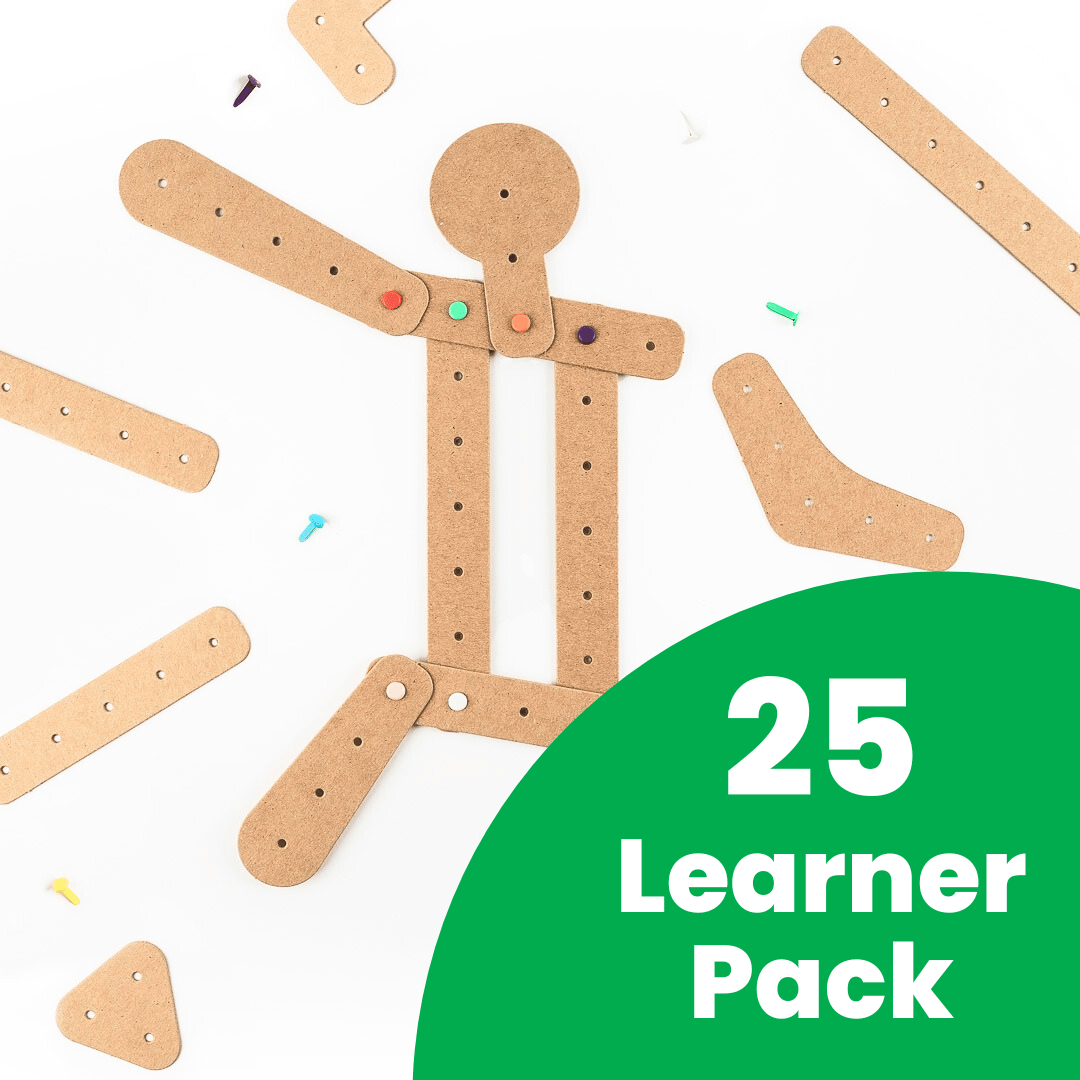
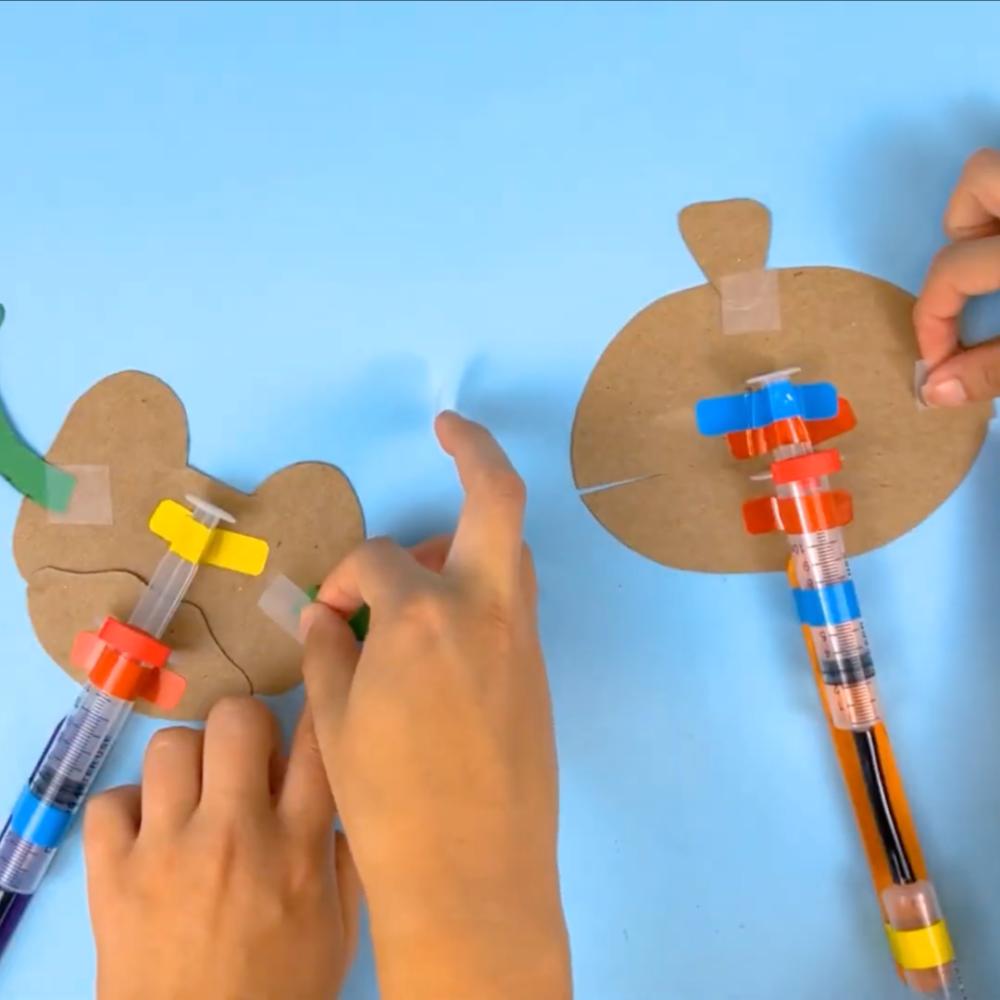
Participants make: A moving cardboard contraption built from four classic linkage types, disguised as an animal or machine.
See this Spark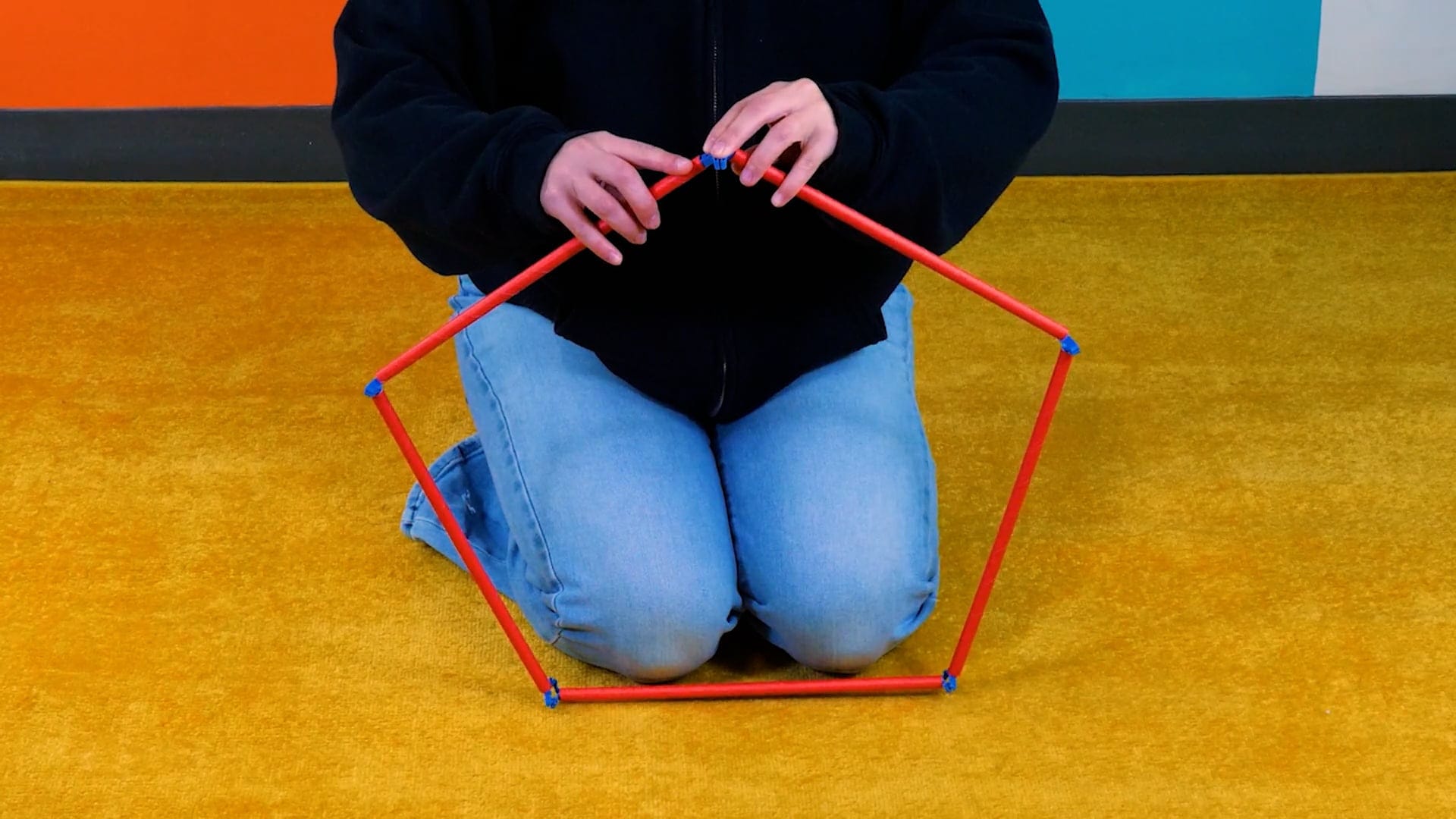
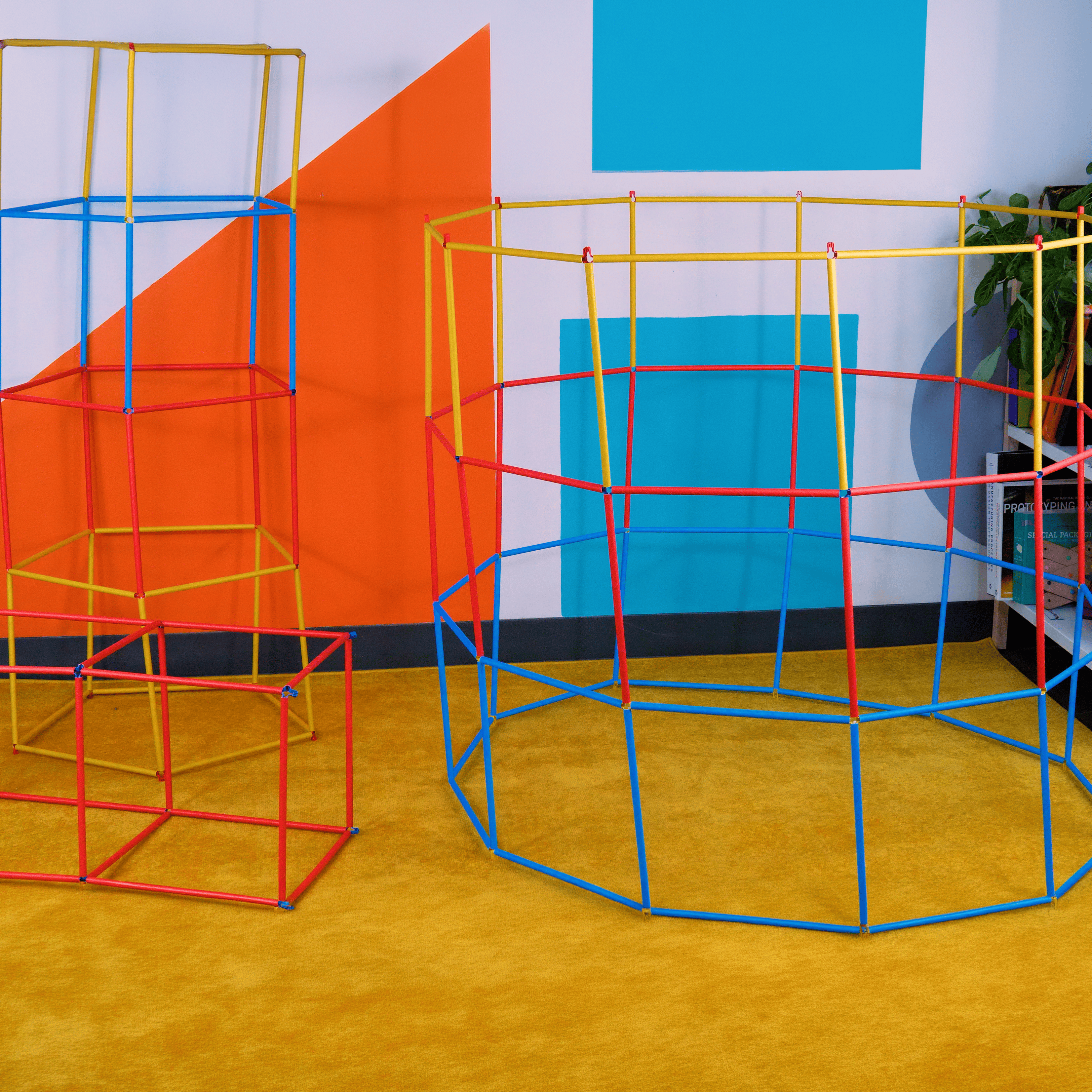
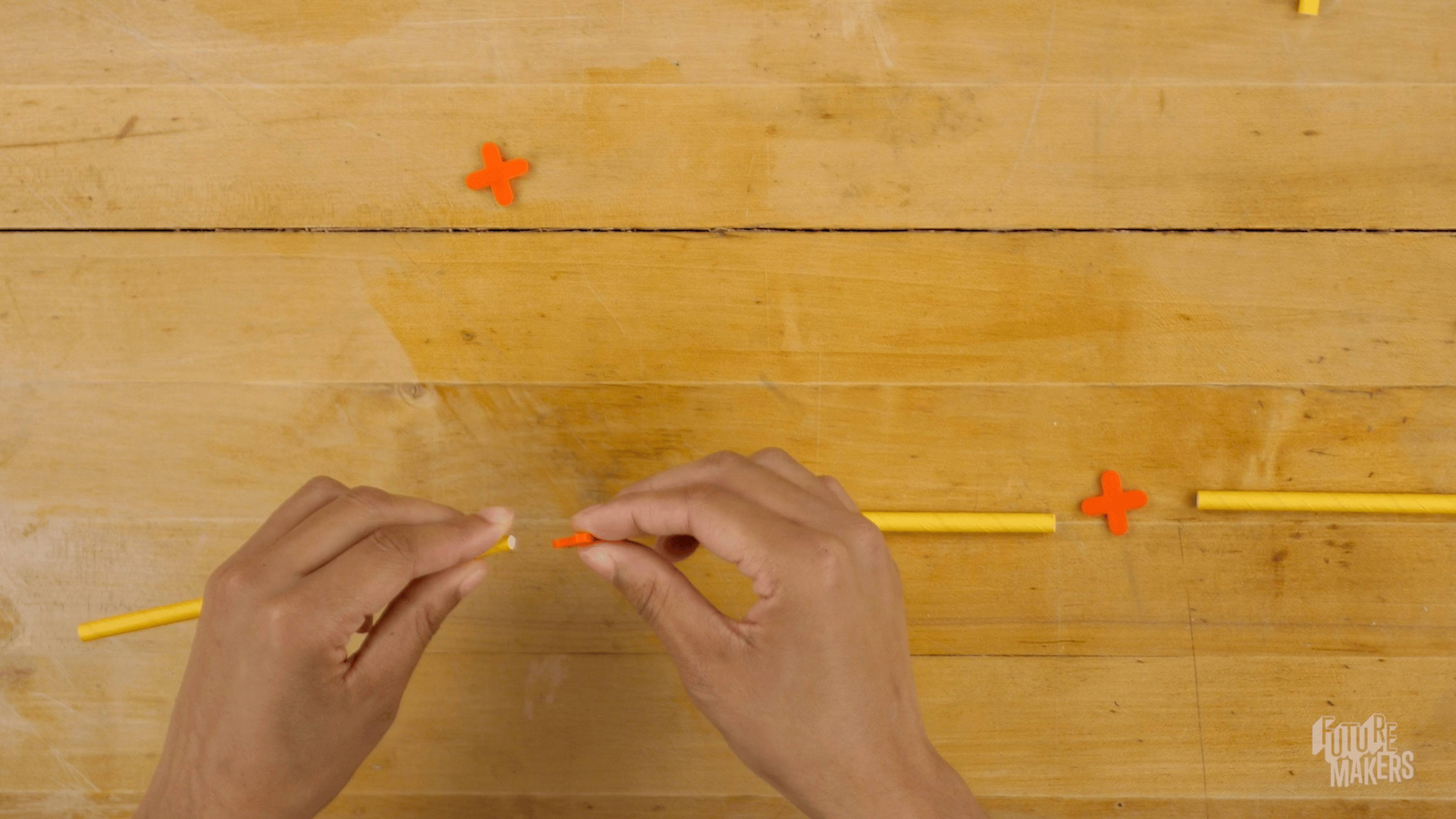
Participants make: Rebuildable 3D structures from 60 jumbo paper straws and flexible connectors, tall enough to reach the ceiling with a partner.
See this SparkGrades and activity times are the ones in each Spark's educator guide. Also an option for this age group: Art Machines. For older learners, swap in any Spark from the full list.
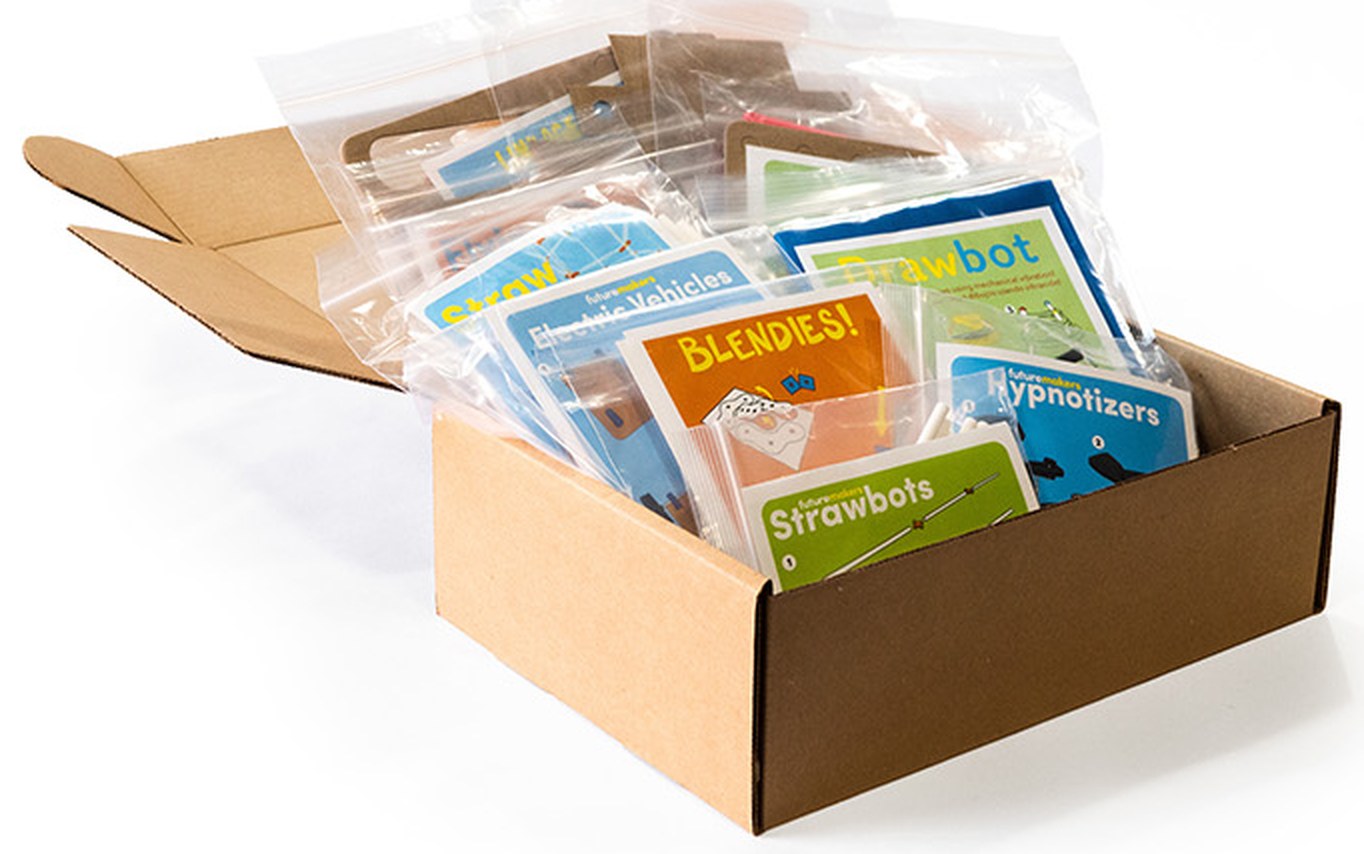
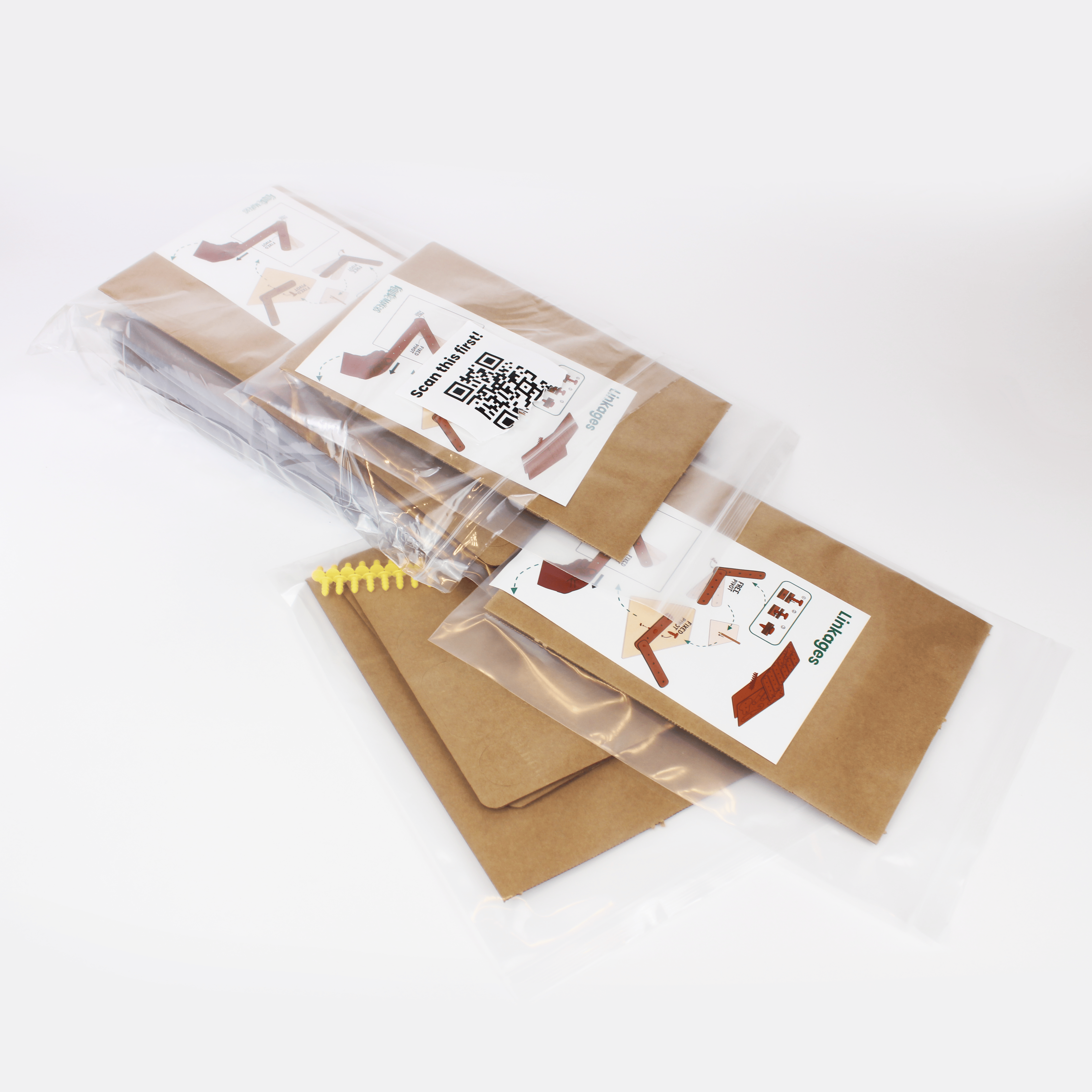
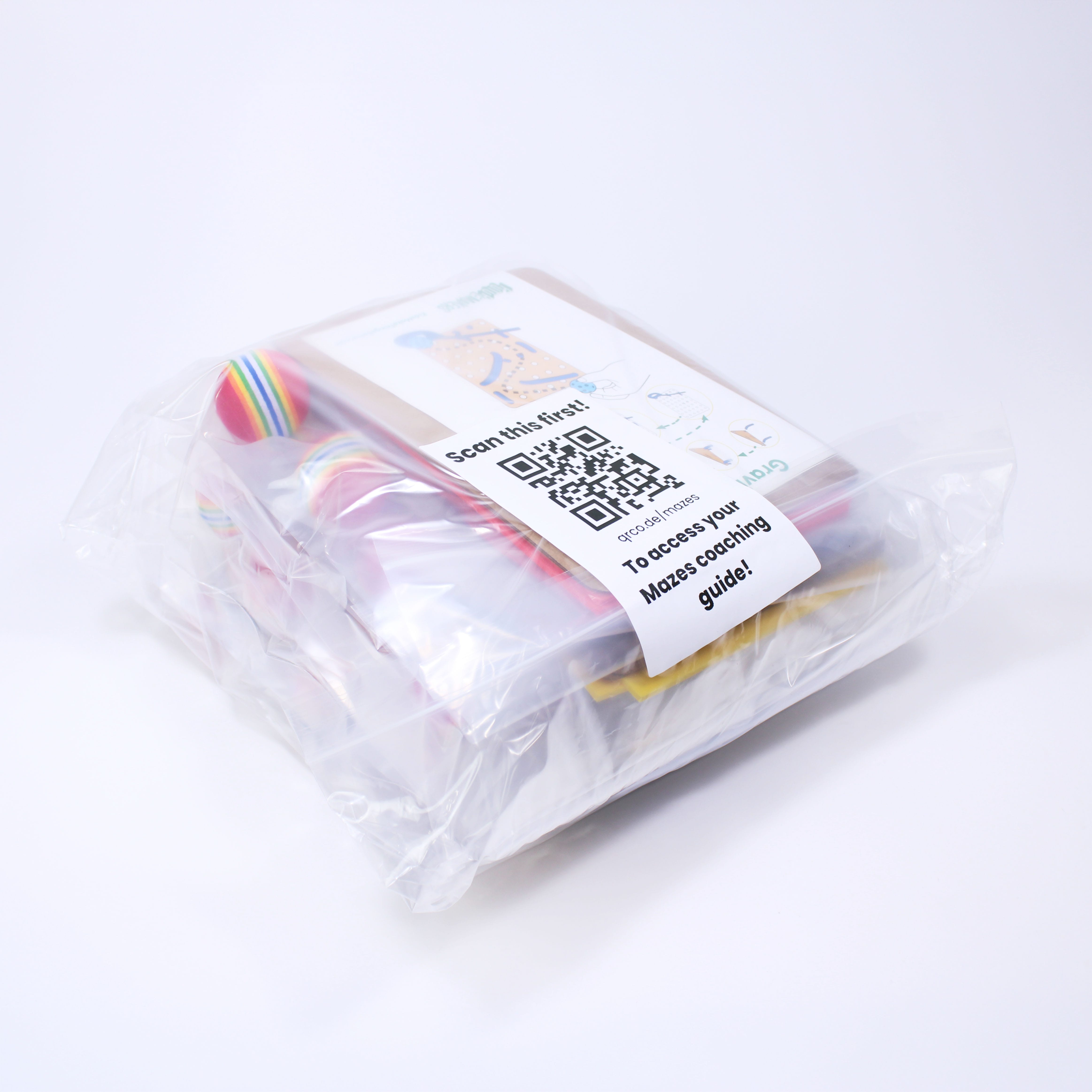
We send your team our sample box: Sparks for Pre-K through grade 8, each in its own bag, so you can build them before you plan your season. Tell us where to ship it.
Prefer the full-page form? Open it on kidsmakethingsbetter.com.
Sparks can be branded to match your programs. Campers and their caregivers see your name on the kit, the instructions and the printed guide.
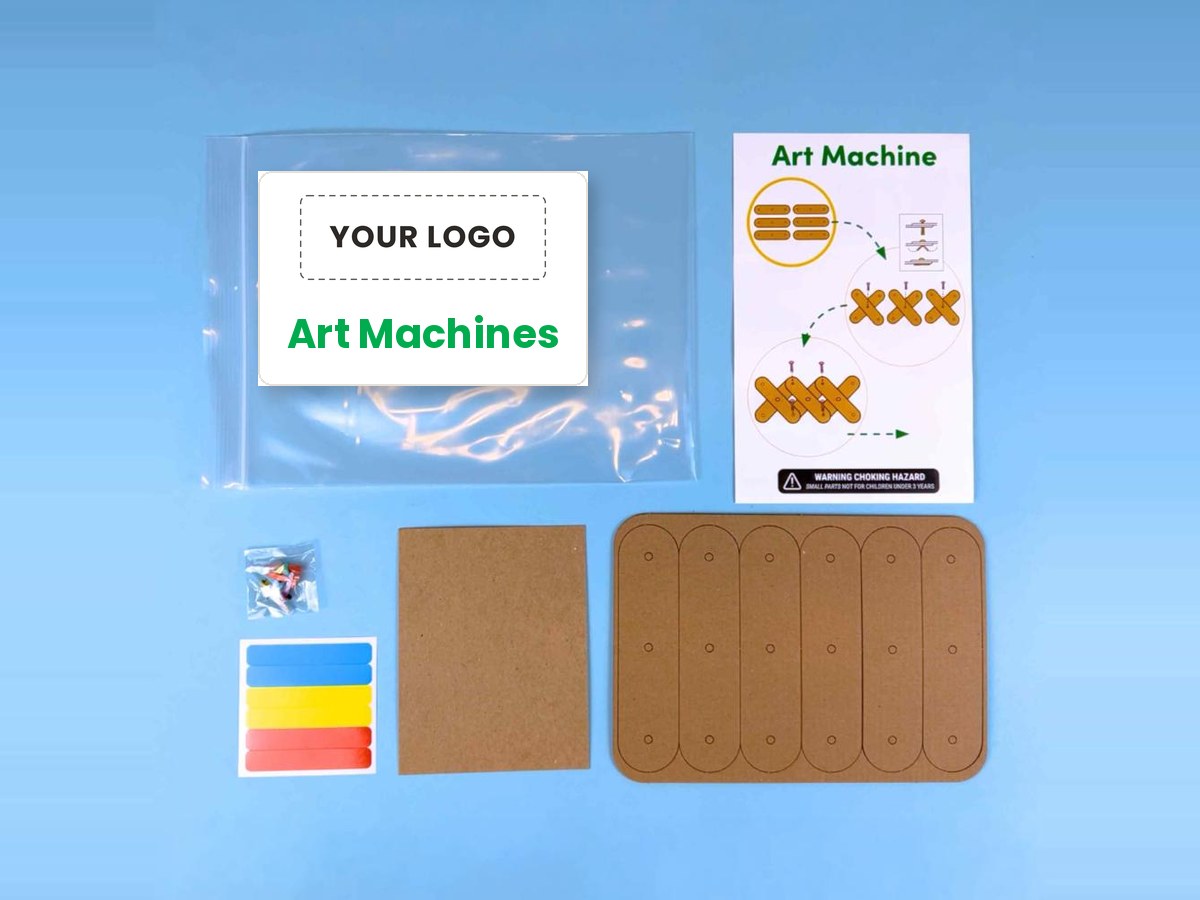
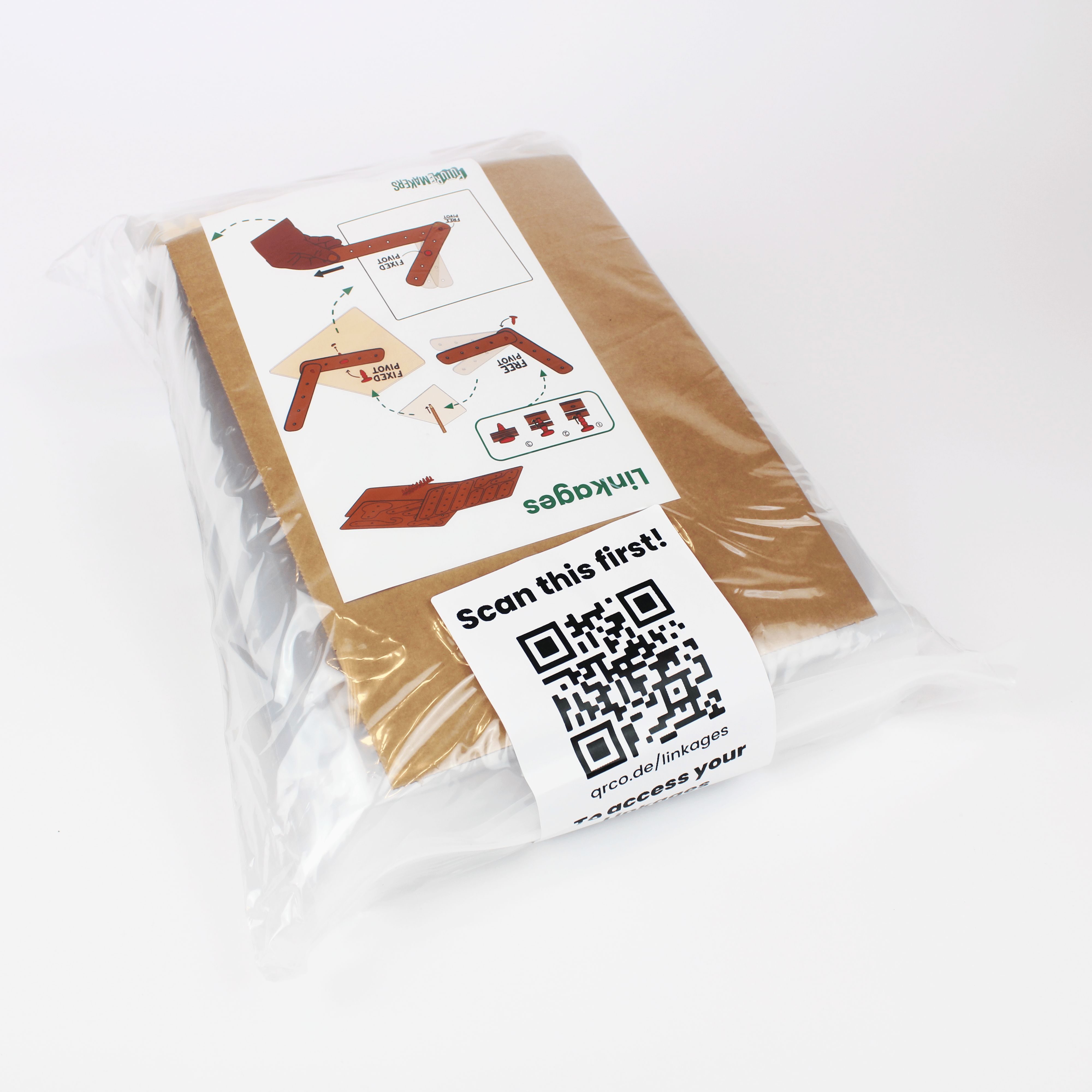
Your logo goes on the label of every bag, so campers and caregivers see your name on the kit.
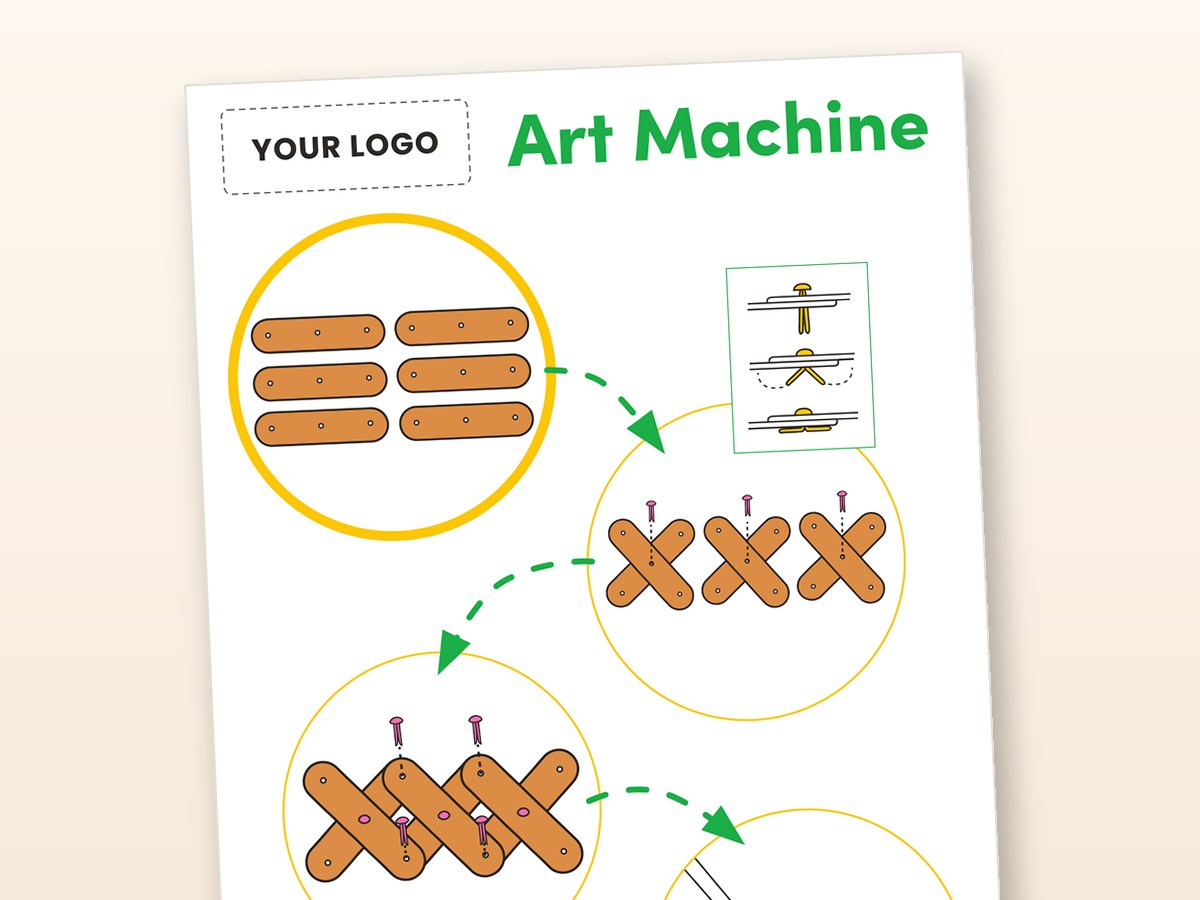
A printed visual guide with your logo, so most campers can build without written directions.
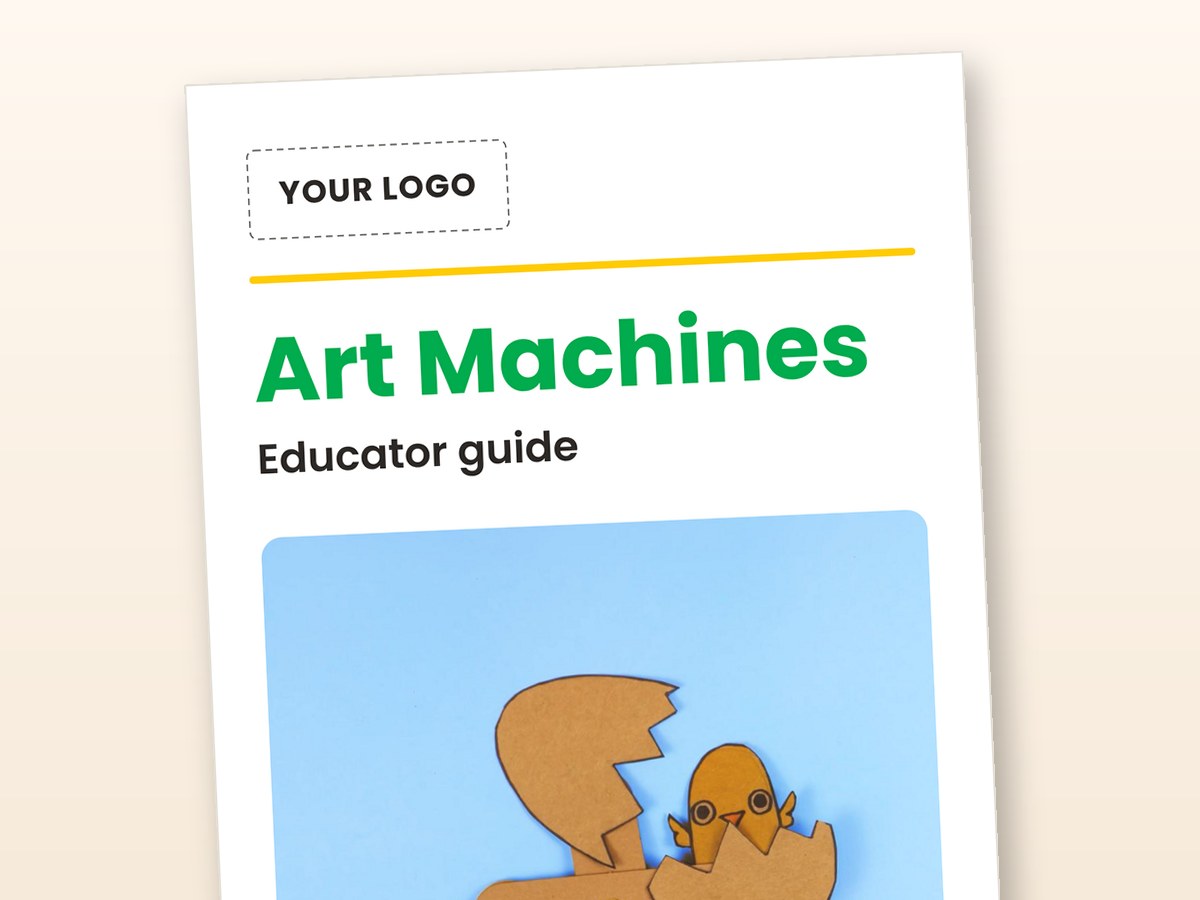
We print the educator guide for your program with your logo on the cover.
We can put your logo on everything we print or make custom for your program, such as bag labels, instruction sheets, printed educator guides, slide decks and other printed materials.
How the artwork gets approved
No setup fee
White label prices for every pack are in the price list (CSV and XLSX), at every order level and for both central inventory and drop ship orders. There is no setup fee.
When you want something of your own, such as a co-branded kit for a camp season or a sponsor, send it to us. We make it and ship it to your warehouse or, on a drop ship order, to each host site.
What we can customize
Lead time
Customized items (custom printing, marked or custom-shaped parts) typically take 15 to 20 days.
Capacity
Our shelf stock of every Spark covers 2,000 learners, and a typical day is 1,000 kits, so a large order is routine for us.
Flyers, a one-page overview, product descriptions, the price list and videos, ready for your camp catalog and your team.
One-page flyers
A printable flyer for each Spark: a photo of it in use, what participants make, grades, pack sizes, and QR codes to the educator video and guide.
See all 17 flyersSparks at a glance
One page for your team: which Spark for which grade, where Sparks fit, the weekly example, pack prices at three order levels, and how ordering works.
At a glanceProduct descriptions
Descriptions, kit contents, SKUs and UPCs for all 34 packs, ready to paste into catalog listings.
Price list
Every pack and component set with SKU, UPC, central inventory, drop ship and white label prices at all three order levels in US dollars, plus packed weights and box sizes.
Videos for your camp pages
Every Spark's how-to video is public, so you can put it on your camp catalog page. Each Spark below has its video link.
Each Spark's videoEverything at once
Text, flyers, standards charts, the educator guide excerpt, the price list and every product photo in one zip.
Download everything (148.5 MB)Prices in US dollars, November 2026. Larger season orders pay less. Your cost per camper depends on how many campers you order for the season.
From $2.73 per camper at 1,000+ campers
Under 250 campers
Central inventory: from $3.57 per camper
Drop ship: from $3.78 per camper
250 to 999 campers
Central inventory: from $3.15 per camper
Drop ship: from $3.36 per camper
1,000+ campers
Central inventory: from $2.73 per camper
Drop ship: from $2.94 per camper
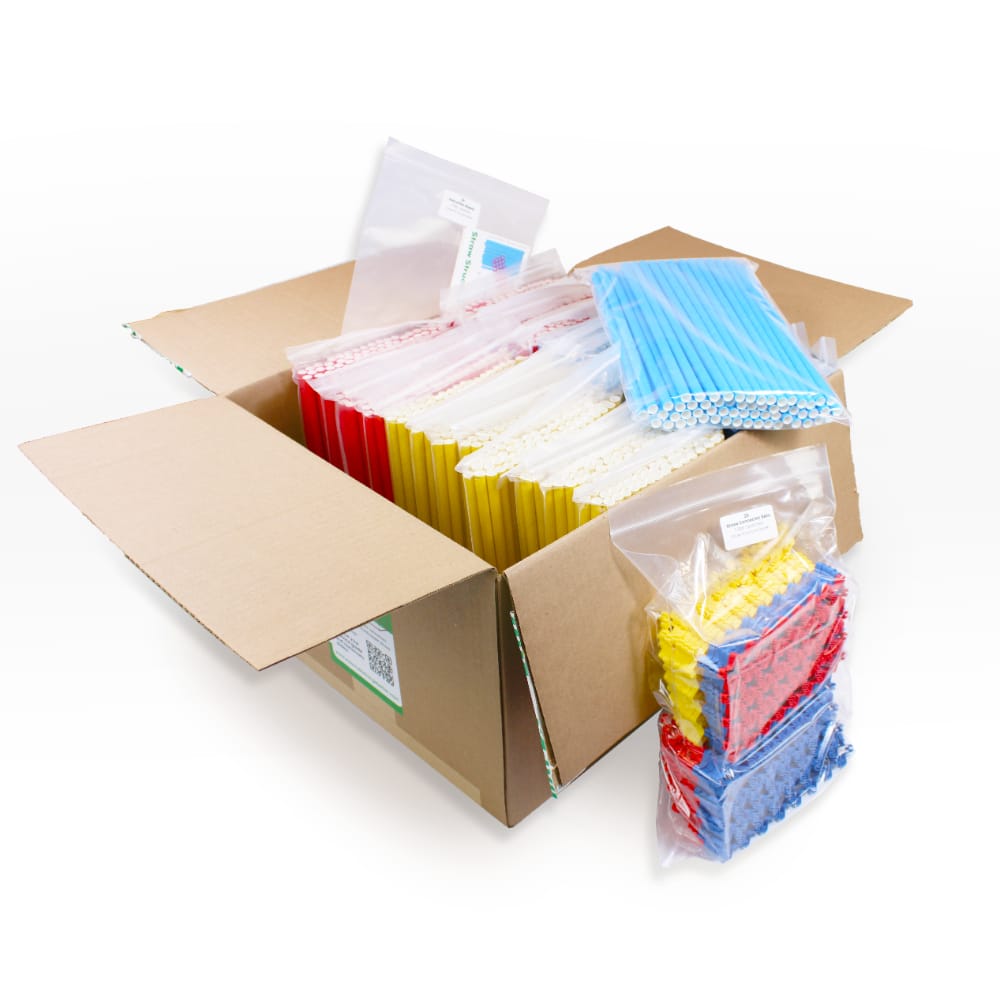
Per camper prices are for the lowest priced Class Pack (25 campers). Every Spark's own price, at every pack size, is in the full price list.
Central inventory prices are per pack, FOB Baltimore, before freight. Drop ship freight is quoted per order. See Two ways to order for how each ships.
Count every camper on your season order, across all your sites. Orders for one summer that are placed together count together. Each Small Group Pack counts 10 campers and each Class Pack counts 25. Component sets do not count toward the camper total; they are priced at the same level as the rest of your order.
The columns are the campers on your whole season order. Per camper is the pack price divided by the campers in the pack, to the cent.
Swipe the table sideways to see every column.
| Spark | Small Group Pack (10) | Class Pack (25) | ||||
|---|---|---|---|---|---|---|
| Under 250 | 250 to 999 | 1,000+ | Under 250 | 250 to 999 | 1,000+ | |
| Art Machines | $50.58 $5.06 per camper | $44.63 $4.46 per camper | $38.68 $3.87 per camper | $89.25 $3.57 per camper | $78.75 $3.15 per camper | $68.25 $2.73 per camper |
| Blendies | $59.08 $5.91 per camper | $52.13 $5.21 per camper | $45.18 $4.52 per camper | $103.70 $4.15 per camper | $91.50 $3.66 per camper | $79.30 $3.17 per camper |
| Crankie Contraptions | $59.08 $5.91 per camper | $52.13 $5.21 per camper | $45.18 $4.52 per camper | $103.70 $4.15 per camper | $91.50 $3.66 per camper | $79.30 $3.17 per camper |
| Drawbots | $59.08 $5.91 per camper | $52.13 $5.21 per camper | $45.18 $4.52 per camper | $103.70 $4.15 per camper | $91.50 $3.66 per camper | $79.30 $3.17 per camper |
| Electric Vehicles | $59.08 $5.91 per camper | $52.13 $5.21 per camper | $45.18 $4.52 per camper | $103.70 $4.15 per camper | $91.50 $3.66 per camper | $79.30 $3.17 per camper |
| Eyelusions | $59.08 $5.91 per camper | $52.13 $5.21 per camper | $45.18 $4.52 per camper | $103.70 $4.15 per camper | $91.50 $3.66 per camper | $79.30 $3.17 per camper |
| Flying Machines | $50.58 $5.06 per camper | $44.63 $4.46 per camper | $38.68 $3.87 per camper | $89.25 $3.57 per camper | $78.75 $3.15 per camper | $68.25 $2.73 per camper |
| Hypnotizers | $59.08 $5.91 per camper | $52.13 $5.21 per camper | $45.18 $4.52 per camper | $103.70 $4.15 per camper | $91.50 $3.66 per camper | $79.30 $3.17 per camper |
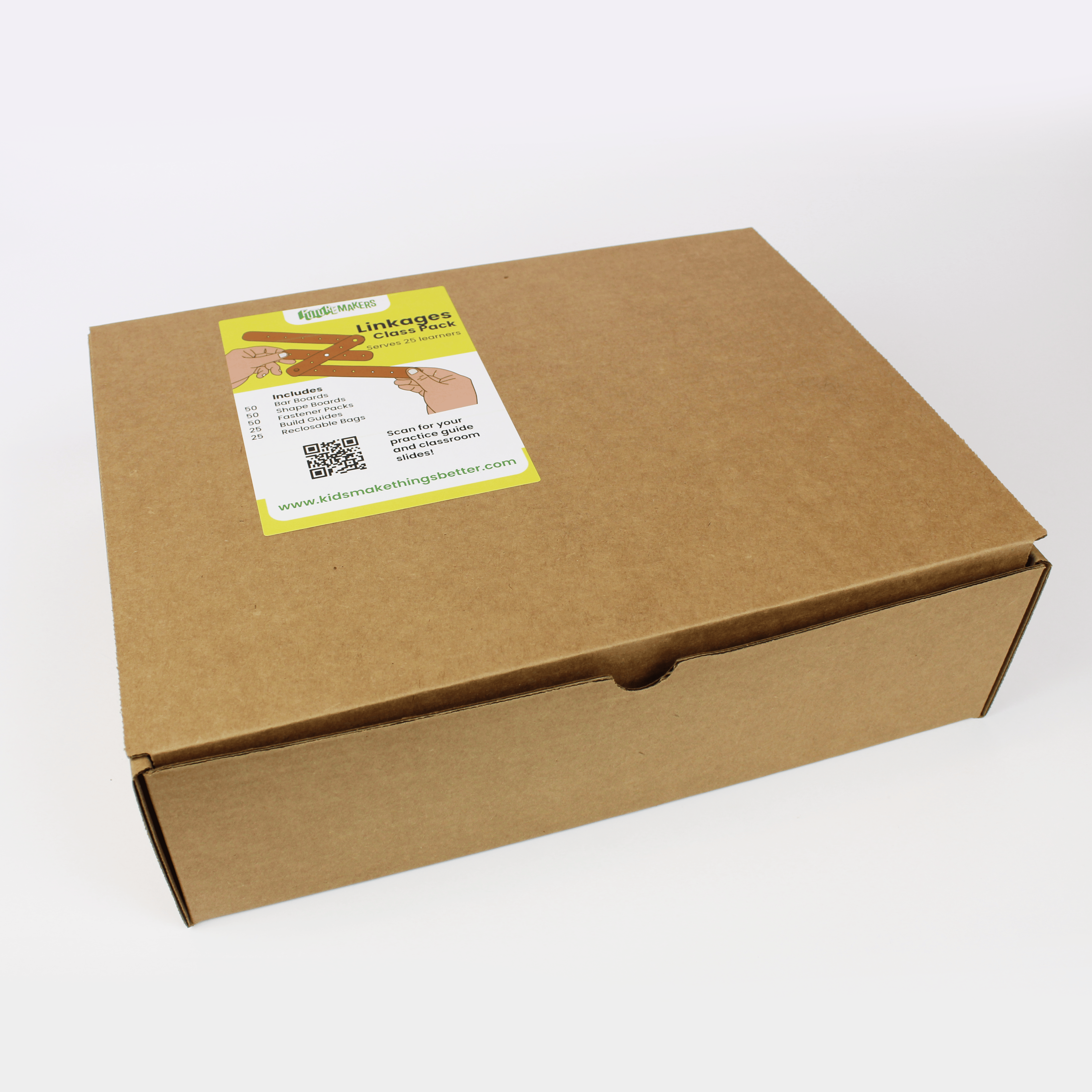
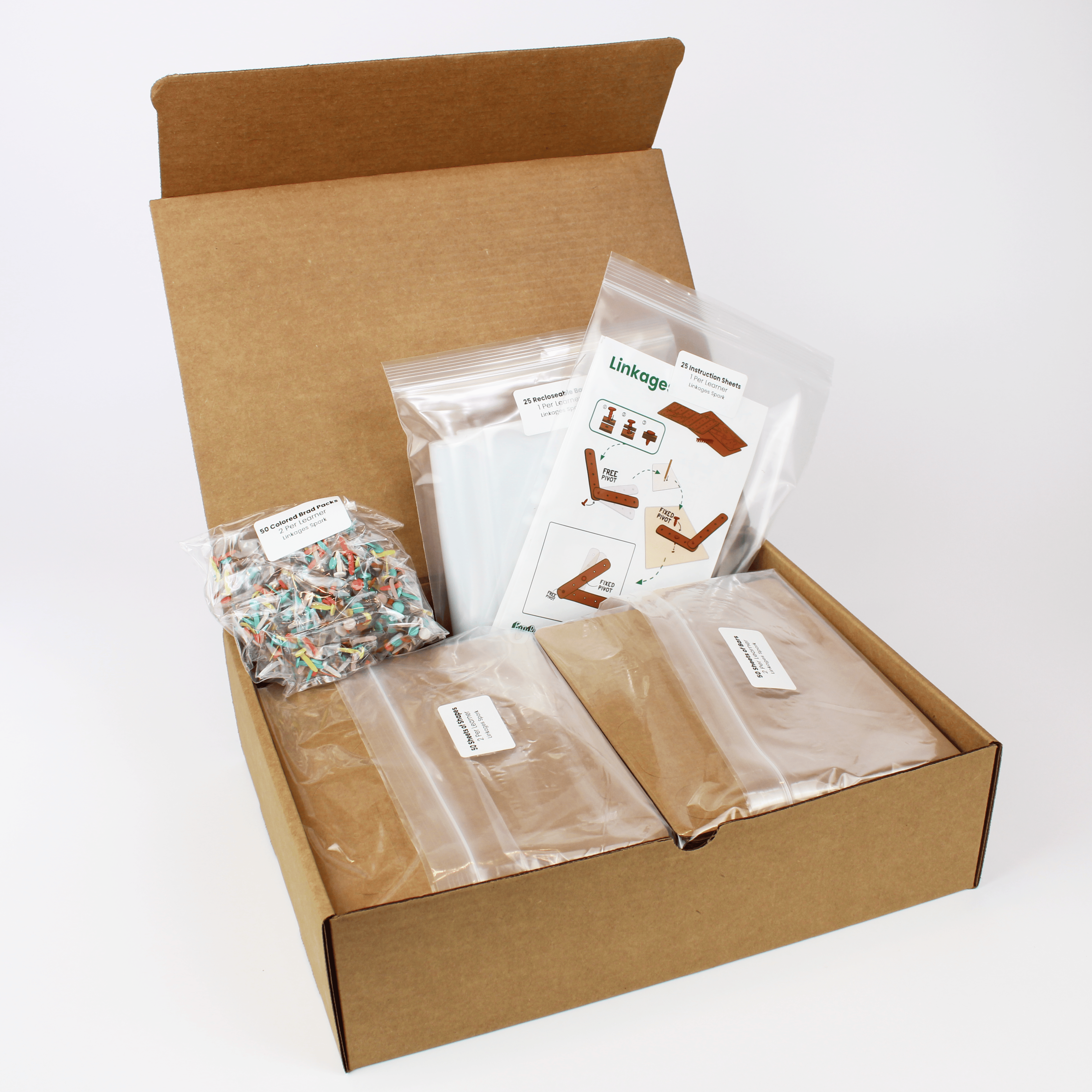
| Linkages | $59.08 $5.91 per camper | $52.13 $5.21 per camper | $45.18 $4.52 per camper | $103.70 $4.15 per camper | $91.50 $3.66 per camper | $79.30 $3.17 per camper |
| Mazes | $59.08 $5.91 per camper | $52.13 $5.21 per camper | $45.18 $4.52 per camper | $103.70 $4.15 per camper | $91.50 $3.66 per camper | $79.30 $3.17 per camper |
| Monster Claws | $59.08 $5.91 per camper | $52.13 $5.21 per camper | $45.18 $4.52 per camper | $103.70 $4.15 per camper | $91.50 $3.66 per camper | $79.30 $3.17 per camper |
| Monster Mouths | $50.58 $5.06 per camper | $44.63 $4.46 per camper | $38.68 $3.87 per camper | $89.25 $3.57 per camper | $78.75 $3.15 per camper | $68.25 $2.73 per camper |
| Scene Machines | $50.58 $5.06 per camper | $44.63 $4.46 per camper | $38.68 $3.87 per camper | $89.25 $3.57 per camper | $78.75 $3.15 per camper | $68.25 $2.73 per camper |
| Screen Machines | $50.58 $5.06 per camper | $44.63 $4.46 per camper | $38.68 $3.87 per camper | $89.25 $3.57 per camper | $78.75 $3.15 per camper | $68.25 $2.73 per camper |
| Straw Structures | $59.08 $5.91 per camper | $52.13 $5.21 per camper | $45.18 $4.52 per camper | $103.70 $4.15 per camper | $91.50 $3.66 per camper | $79.30 $3.17 per camper |
| Strawbots | $59.08 $5.91 per camper | $52.13 $5.21 per camper | $45.18 $4.52 per camper | $103.70 $4.15 per camper | $91.50 $3.66 per camper | $79.30 $3.17 per camper |
| Wind-Up Vehicles | $50.58 $5.06 per camper | $44.63 $4.46 per camper | $38.68 $3.87 per camper | $89.25 $3.57 per camper | $78.75 $3.15 per camper | $68.25 $2.73 per camper |
| Spark | Small Group Pack (10) | Class Pack (25) | ||||
|---|---|---|---|---|---|---|
| Under 250 | 250 to 999 | 1,000+ | Under 250 | 250 to 999 | 1,000+ | |
| Art Machines | $53.55 $5.36 per camper | $47.60 $4.76 per camper | $41.65 $4.17 per camper | $94.50 $3.78 per camper | $84.00 $3.36 per camper | $73.50 $2.94 per camper |
| Blendies | $62.55 $6.26 per camper | $55.60 $5.56 per camper | $48.65 $4.87 per camper | $109.80 $4.39 per camper | $97.60 $3.90 per camper | $85.40 $3.42 per camper |
| Crankie Contraptions | $62.55 $6.26 per camper | $55.60 $5.56 per camper | $48.65 $4.87 per camper | $109.80 $4.39 per camper | $97.60 $3.90 per camper | $85.40 $3.42 per camper |
| Drawbots | $62.55 $6.26 per camper | $55.60 $5.56 per camper | $48.65 $4.87 per camper | $109.80 $4.39 per camper | $97.60 $3.90 per camper | $85.40 $3.42 per camper |
| Electric Vehicles | $62.55 $6.26 per camper | $55.60 $5.56 per camper | $48.65 $4.87 per camper | $109.80 $4.39 per camper | $97.60 $3.90 per camper | $85.40 $3.42 per camper |
| Eyelusions | $62.55 $6.26 per camper | $55.60 $5.56 per camper | $48.65 $4.87 per camper | $109.80 $4.39 per camper | $97.60 $3.90 per camper | $85.40 $3.42 per camper |
| Flying Machines | $53.55 $5.36 per camper | $47.60 $4.76 per camper | $41.65 $4.17 per camper | $94.50 $3.78 per camper | $84.00 $3.36 per camper | $73.50 $2.94 per camper |
| Hypnotizers | $62.55 $6.26 per camper | $55.60 $5.56 per camper | $48.65 $4.87 per camper | $109.80 $4.39 per camper | $97.60 $3.90 per camper | $85.40 $3.42 per camper |
| Linkages | $62.55 $6.26 per camper | $55.60 $5.56 per camper | $48.65 $4.87 per camper | $109.80 $4.39 per camper | $97.60 $3.90 per camper | $85.40 $3.42 per camper |
| Mazes | $62.55 $6.26 per camper | $55.60 $5.56 per camper | $48.65 $4.87 per camper | $109.80 $4.39 per camper | $97.60 $3.90 per camper | $85.40 $3.42 per camper |
| Monster Claws | $62.55 $6.26 per camper | $55.60 $5.56 per camper | $48.65 $4.87 per camper | $109.80 $4.39 per camper | $97.60 $3.90 per camper | $85.40 $3.42 per camper |
| Monster Mouths | $53.55 $5.36 per camper | $47.60 $4.76 per camper | $41.65 $4.17 per camper | $94.50 $3.78 per camper | $84.00 $3.36 per camper | $73.50 $2.94 per camper |
| Scene Machines | $53.55 $5.36 per camper | $47.60 $4.76 per camper | $41.65 $4.17 per camper | $94.50 $3.78 per camper | $84.00 $3.36 per camper | $73.50 $2.94 per camper |
| Screen Machines | $53.55 $5.36 per camper | $47.60 $4.76 per camper | $41.65 $4.17 per camper | $94.50 $3.78 per camper | $84.00 $3.36 per camper | $73.50 $2.94 per camper |
| Straw Structures | $62.55 $6.26 per camper | $55.60 $5.56 per camper | $48.65 $4.87 per camper | $109.80 $4.39 per camper | $97.60 $3.90 per camper | $85.40 $3.42 per camper |
| Strawbots | $62.55 $6.26 per camper | $55.60 $5.56 per camper | $48.65 $4.87 per camper | $109.80 $4.39 per camper | $97.60 $3.90 per camper | $85.40 $3.42 per camper |
| Wind-Up Vehicles | $53.55 $5.36 per camper | $47.60 $4.76 per camper | $41.65 $4.17 per camper | $94.50 $3.78 per camper | $84.00 $3.36 per camper | $73.50 $2.94 per camper |
Refills and parts so campers can keep building after the kits are gone. UPCs, packed weights and box sizes for component sets are still being set up.
| Component set | SKU | Pieces | Under 250 | 250 to 999 | 1,000+ |
|---|---|---|---|---|---|
| Simple Lever Pack | CP LEVR 025 | 25 | $8.46 $0.338 per piece | $7.46 $0.298 per piece | $6.47 $0.259 per piece |
| Linkage Levers & Shapes Pack | CP LINK 025 | 25 | $19.51 $0.780 per piece | $17.21 $0.688 per piece | $14.92 $0.597 per piece |
| Cardboard Connectors Pack | CP CONN 400 | 400 | $8.46 $0.021 per piece | $7.46 $0.019 per piece | $6.47 $0.016 per piece |
| Blendie Board Pack | CP BLND 025 | 25 | $8.46 $0.338 per piece | $7.46 $0.298 per piece | $6.47 $0.259 per piece |
| Crankie Scroll Sheet Refill Pack | CP SCRL 025 | 25 | $8.46 $0.338 per piece | $7.46 $0.298 per piece | $6.47 $0.259 per piece |
| Colossal Building Tube Pack | CP TUBE 180 | 180 | $8.46 $0.047 per piece | $7.46 $0.041 per piece | $6.47 $0.036 per piece |
| Jumbo Straw Connector Pack | CP JSTC 025 | 25 | $11.01 $0.440 per piece | $9.71 $0.388 per piece | $8.42 $0.337 per piece |
| Die-Cut Gravity Maze Boards | CP GMBR 050 | 50 | $16.96 $0.339 per piece | $14.96 $0.299 per piece | $12.97 $0.259 per piece |
| Foam Gravity Maze Components | CP GMFO 050 | 50 | $21.21 $0.424 per piece | $18.71 $0.374 per piece | $16.22 $0.324 per piece |
| Vibrating Motor Class Pack | CP VMTR 025 | 25 | $42.46 $1.70 per piece | $37.46 $1.50 per piece | $32.47 $1.30 per piece |
| Pneumatic Class Pack | CP PNEU 025 | 25 | $42.46 $1.70 per piece | $37.46 $1.50 per piece | $32.47 $1.30 per piece |
| Component set | SKU | Pieces | Under 250 | 250 to 999 | 1,000+ |
|---|---|---|---|---|---|
| Simple Lever Pack | CP LEVR 025 | 25 | $8.96 $0.358 per piece | $7.96 $0.318 per piece | $6.97 $0.279 per piece |
| Linkage Levers & Shapes Pack | CP LINK 025 | 25 | $20.66 $0.826 per piece | $18.36 $0.734 per piece | $16.07 $0.643 per piece |
| Cardboard Connectors Pack | CP CONN 400 | 400 | $8.96 $0.022 per piece | $7.96 $0.020 per piece | $6.97 $0.017 per piece |
| Blendie Board Pack | CP BLND 025 | 25 | $8.96 $0.358 per piece | $7.96 $0.318 per piece | $6.97 $0.279 per piece |
| Crankie Scroll Sheet Refill Pack | CP SCRL 025 | 25 | $8.96 $0.358 per piece | $7.96 $0.318 per piece | $6.97 $0.279 per piece |
| Colossal Building Tube Pack | CP TUBE 180 | 180 | $8.96 $0.050 per piece | $7.96 $0.044 per piece | $6.97 $0.039 per piece |
| Jumbo Straw Connector Pack | CP JSTC 025 | 25 | $11.66 $0.466 per piece | $10.36 $0.414 per piece | $9.07 $0.363 per piece |
| Die-Cut Gravity Maze Boards | CP GMBR 050 | 50 | $17.96 $0.359 per piece | $15.96 $0.319 per piece | $13.97 $0.279 per piece |
| Foam Gravity Maze Components | CP GMFO 050 | 50 | $22.46 $0.449 per piece | $19.96 $0.399 per piece | $17.47 $0.349 per piece |
| Vibrating Motor Class Pack | CP VMTR 025 | 25 | $44.96 $1.80 per piece | $39.96 $1.60 per piece | $34.97 $1.40 per piece |
| Pneumatic Class Pack | CP PNEU 025 | 25 | $44.96 $1.80 per piece | $39.96 $1.60 per piece | $34.97 $1.40 per piece |
White label prices for every pack and component set, at every order level, are in the price list, with no setup fee. The CSV and XLSX also give each price per learner, which is the pack price divided by the learners in the pack.
Pick from 17 screen-free projects, Pre-K through grade 8. Each has photos, an educator video, a flyer and a standards chart.
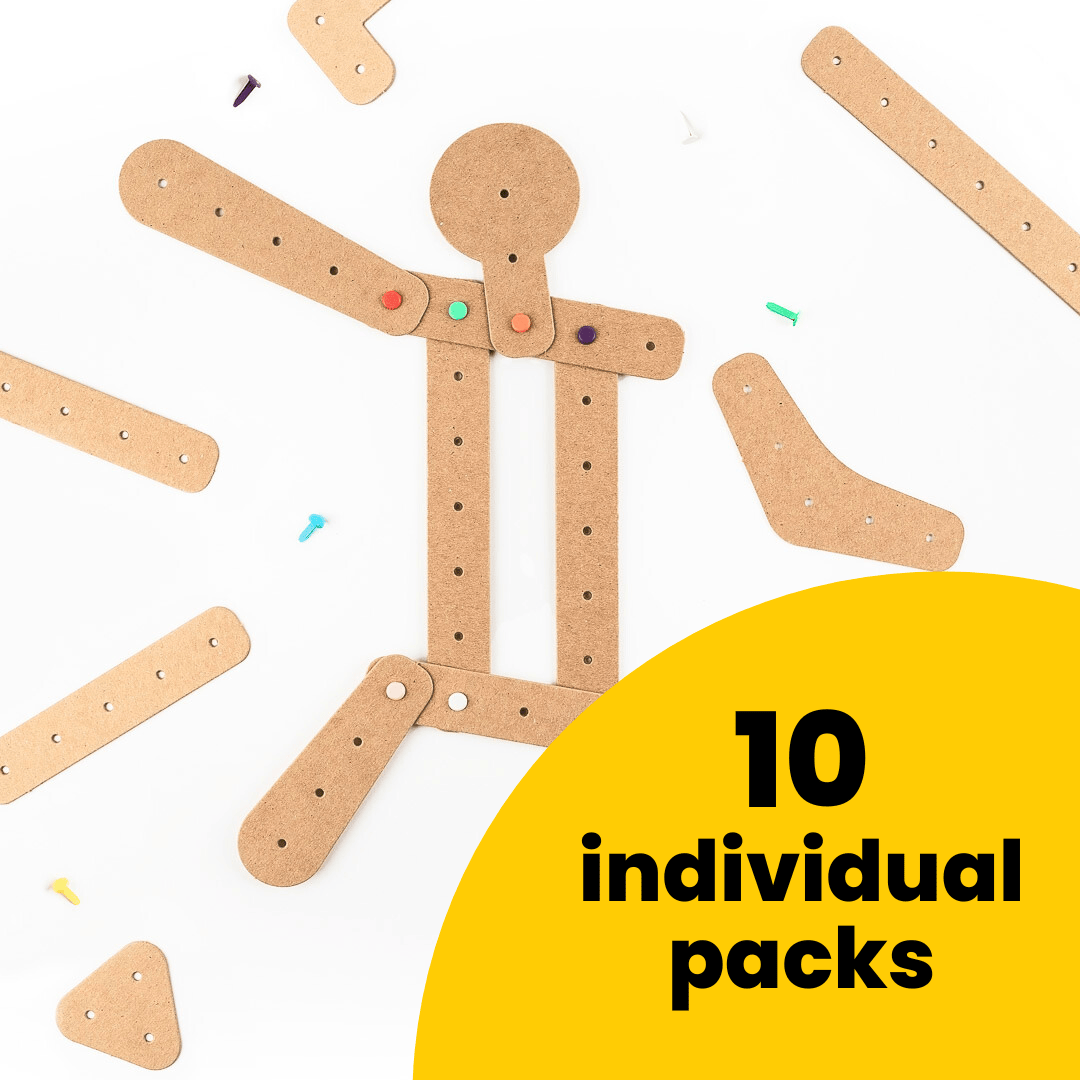
Build a moving kinetic sculpture from connected levers.
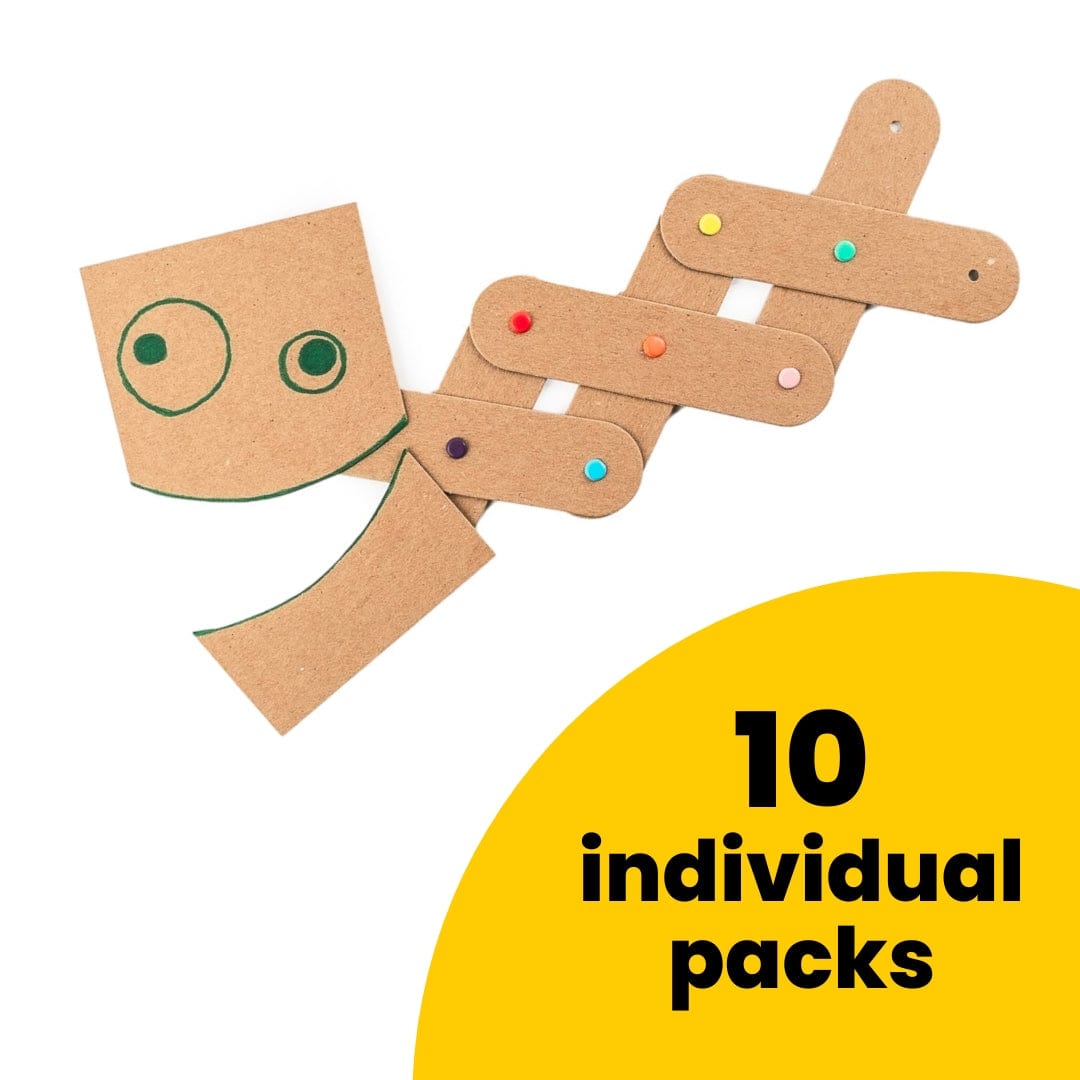
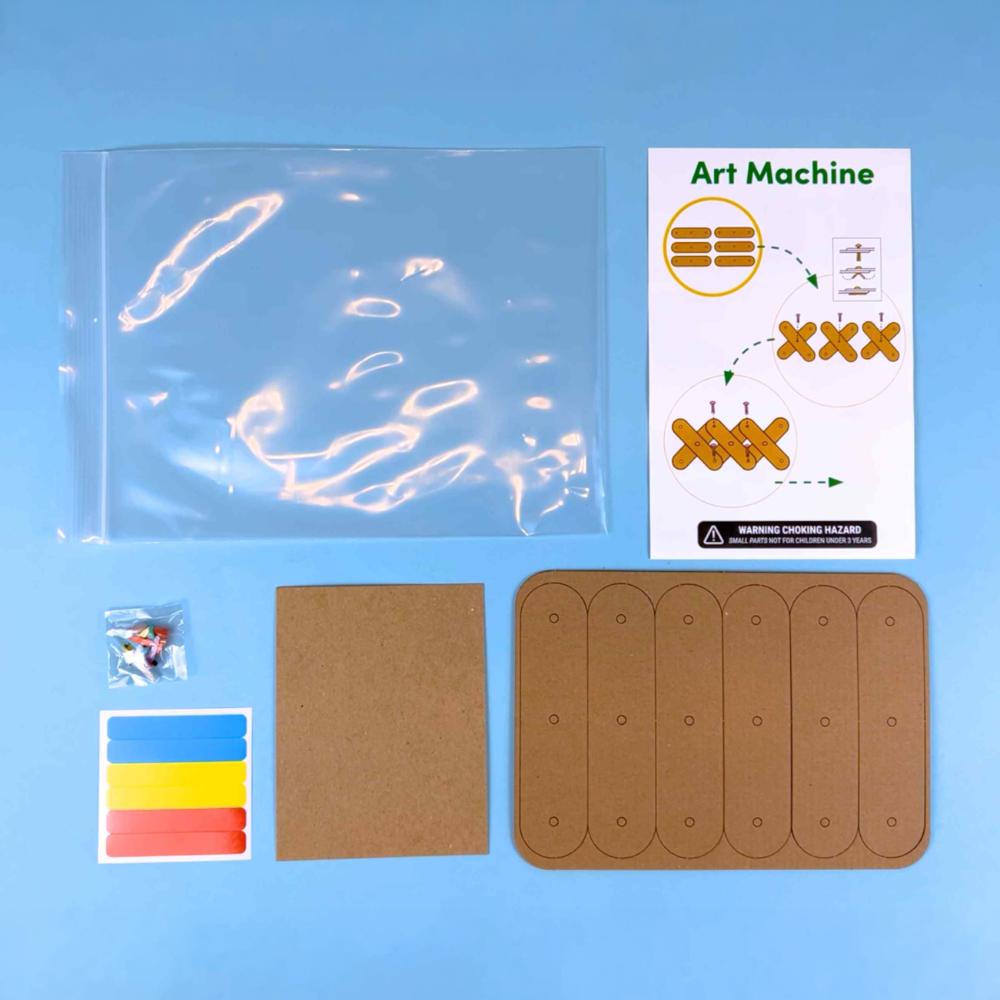
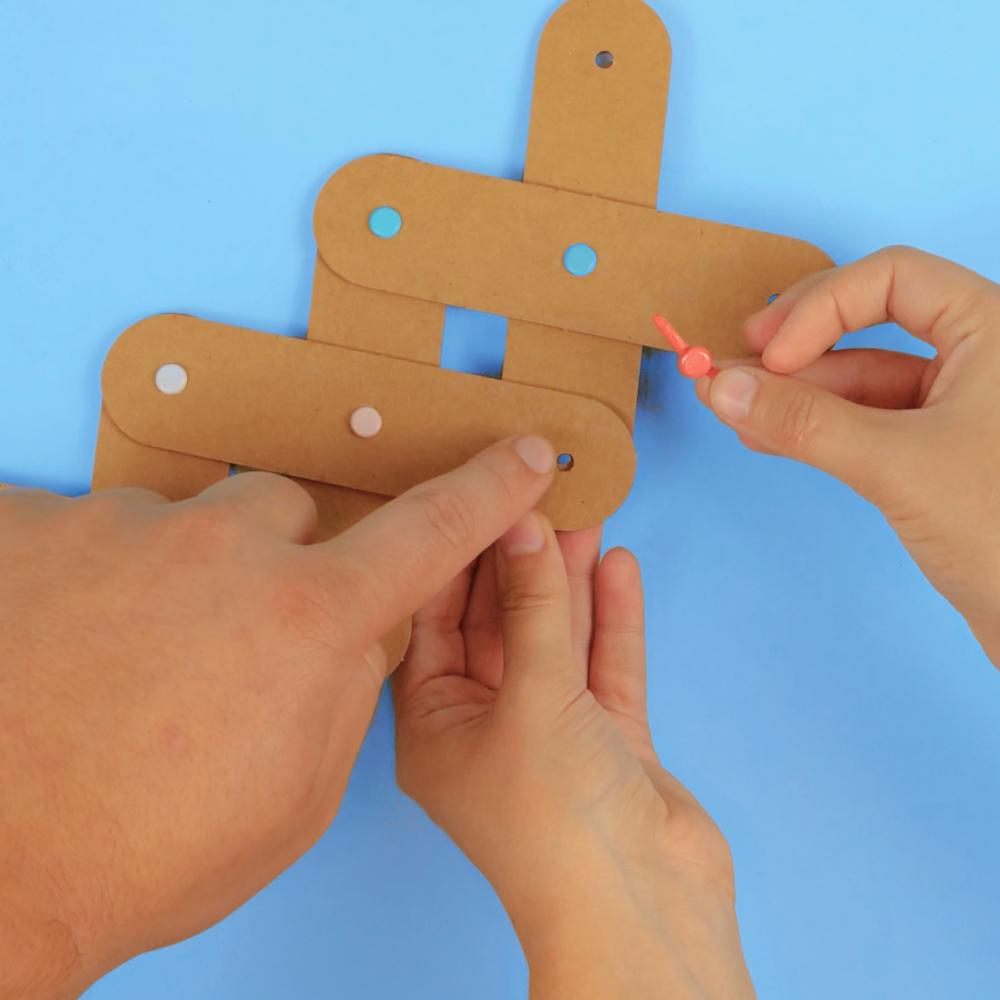
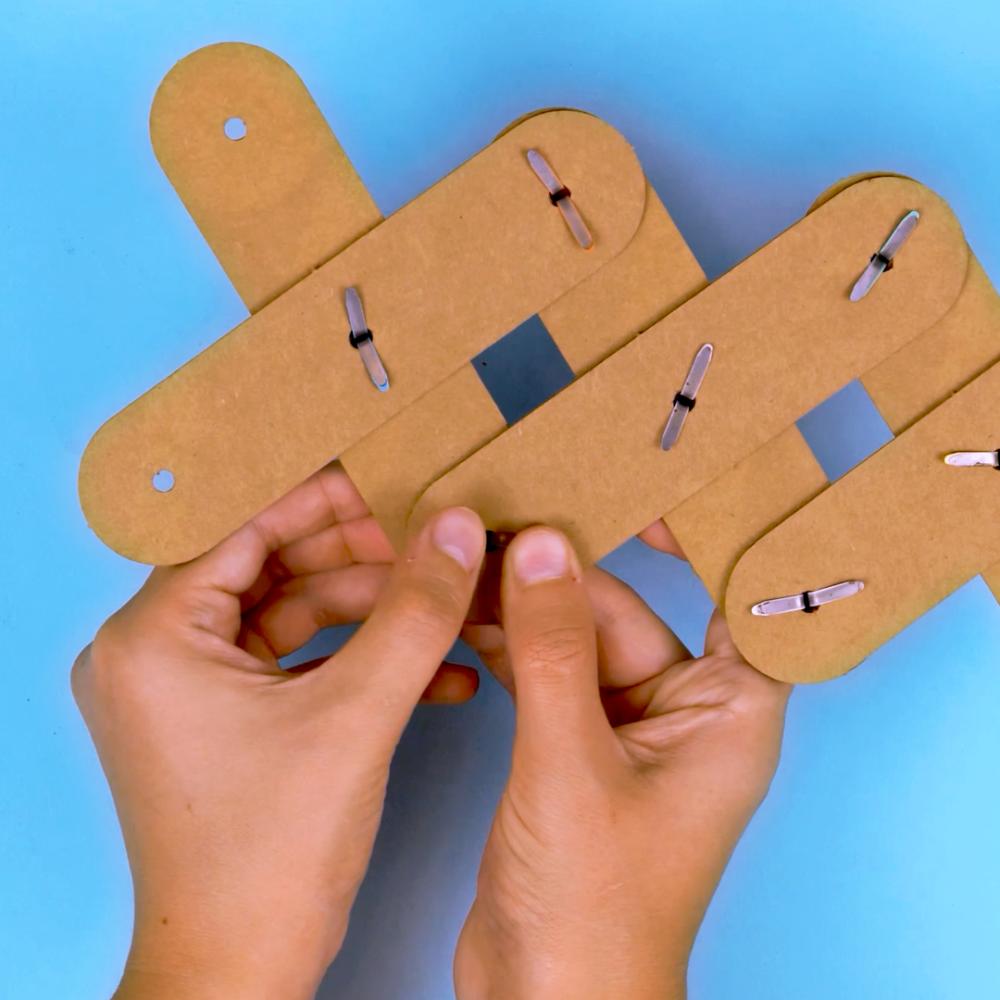
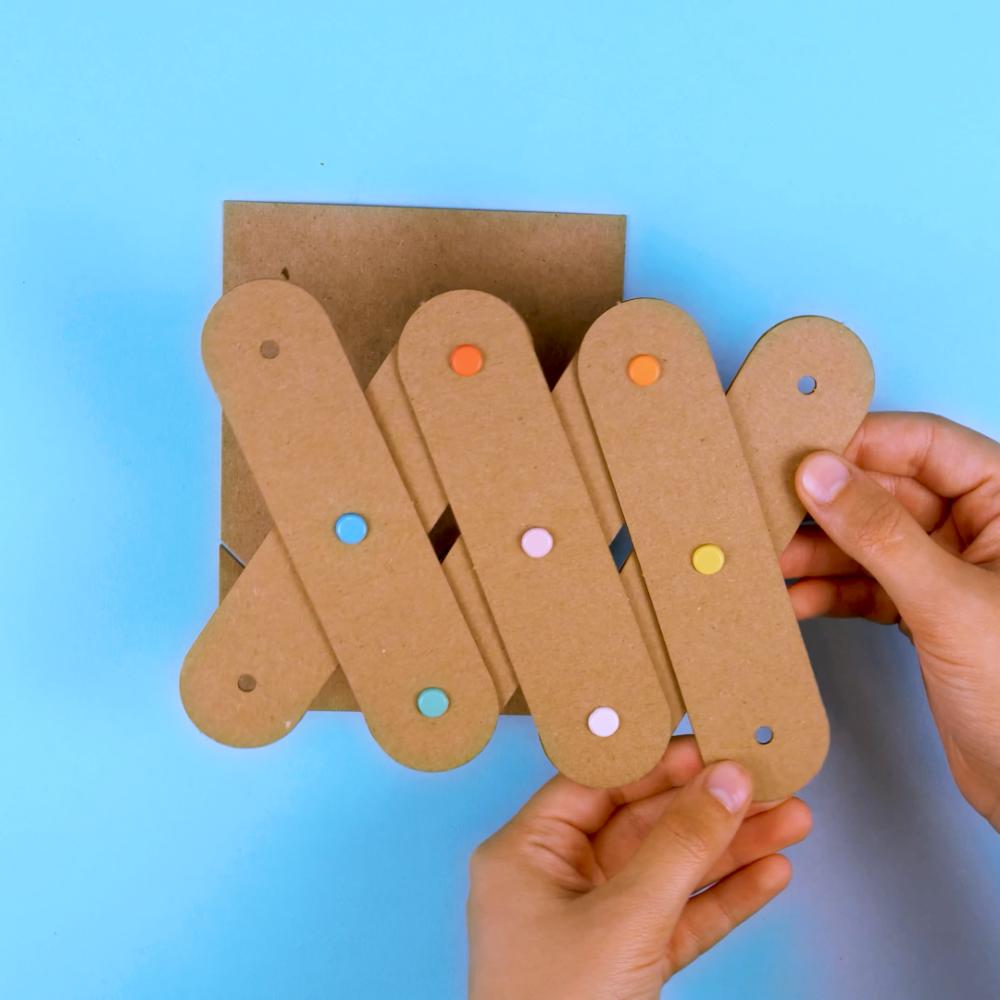
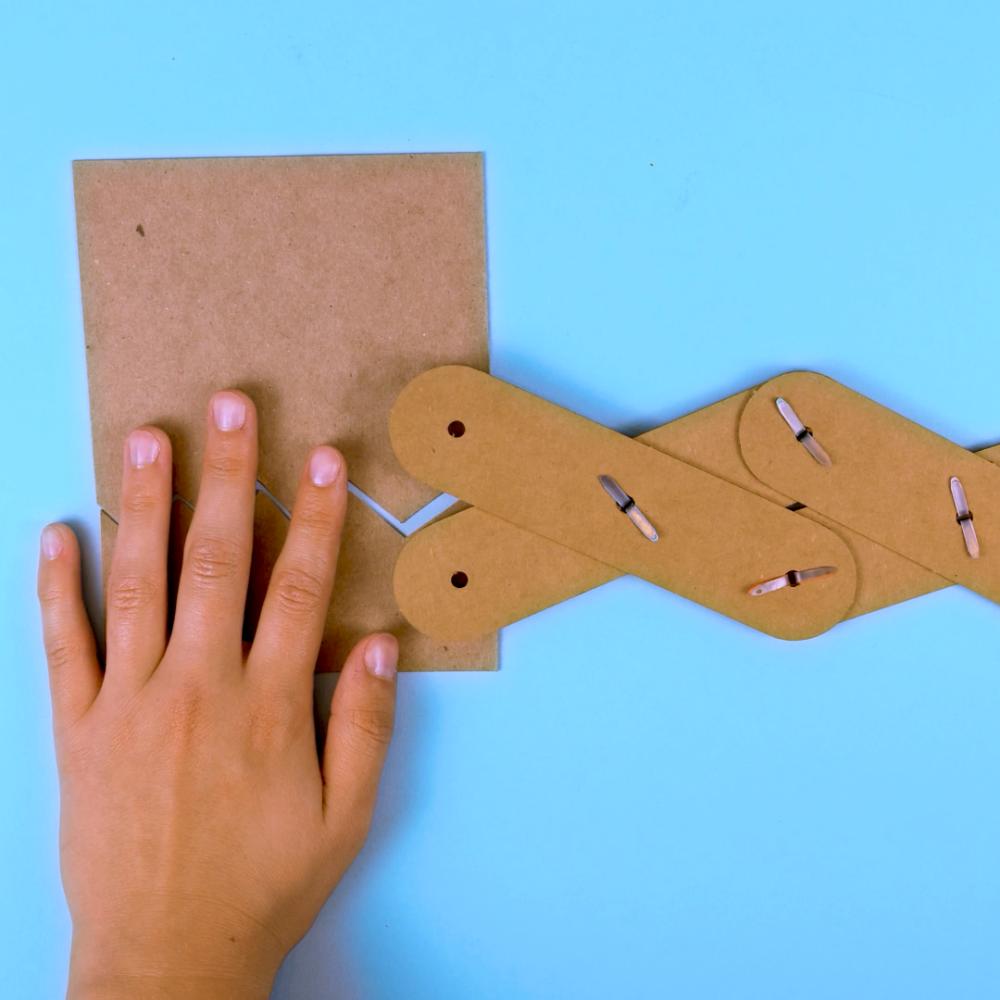
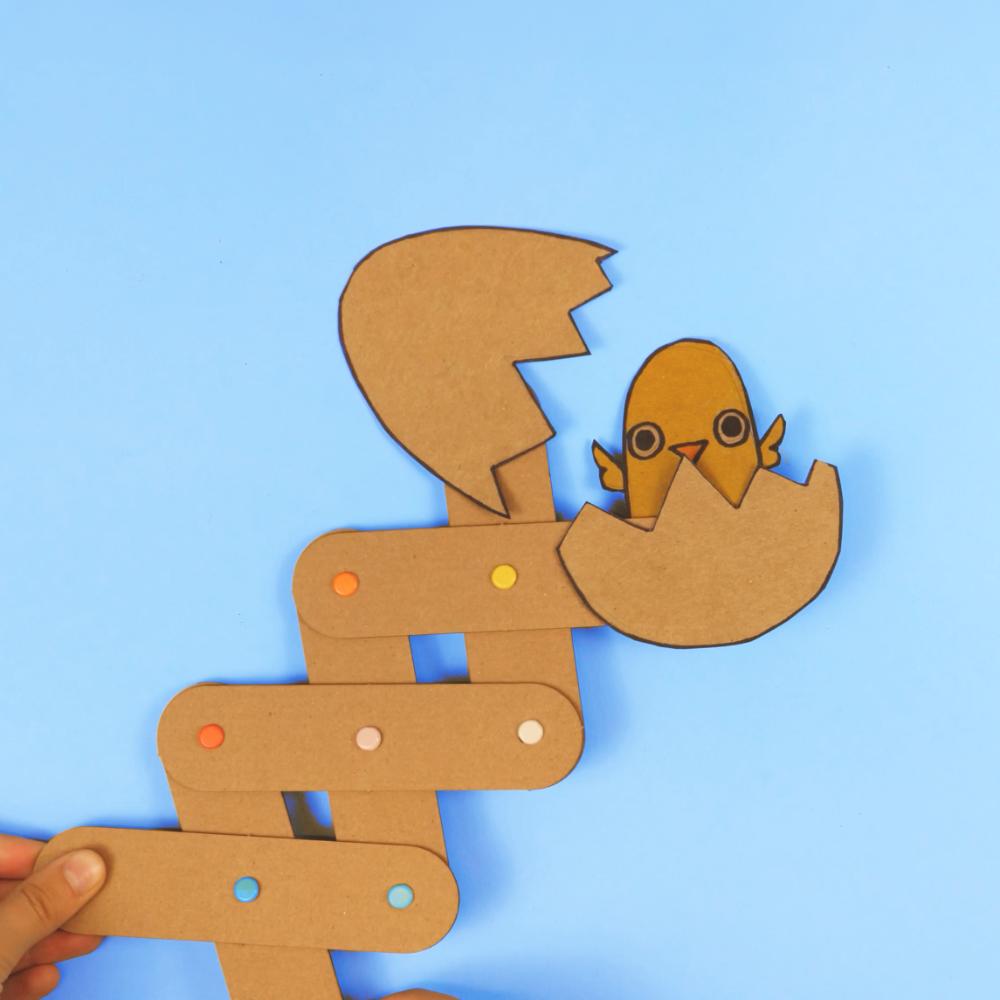
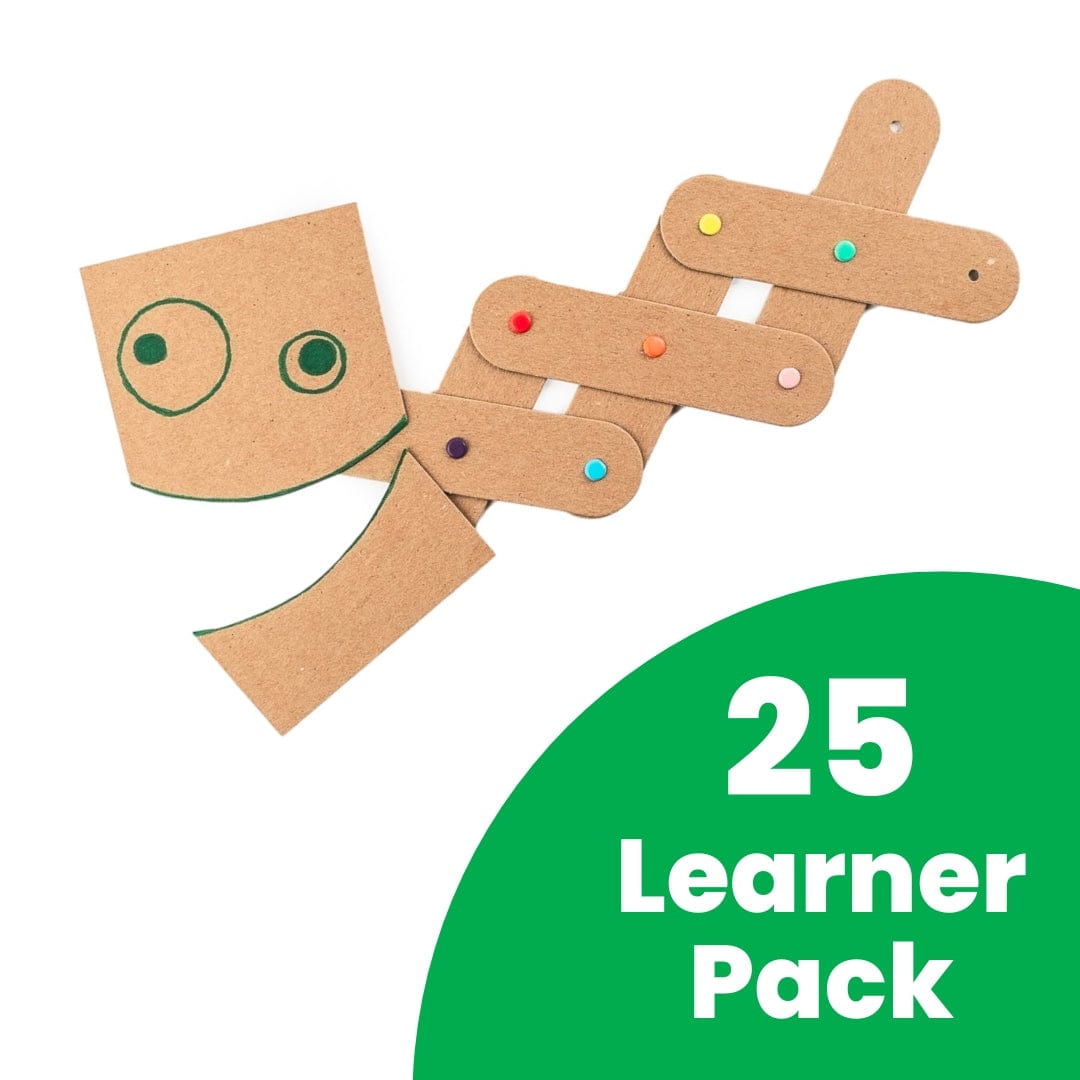
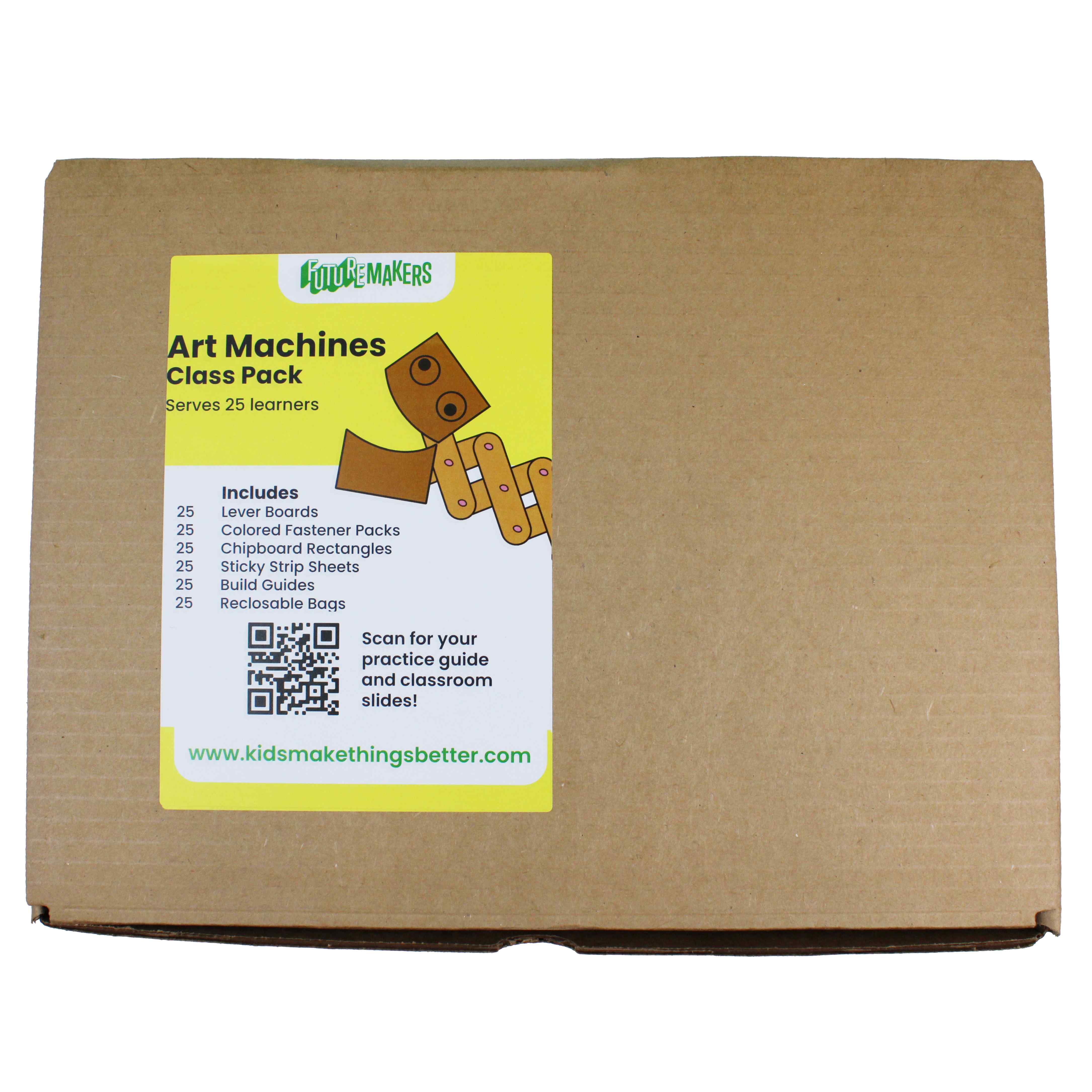
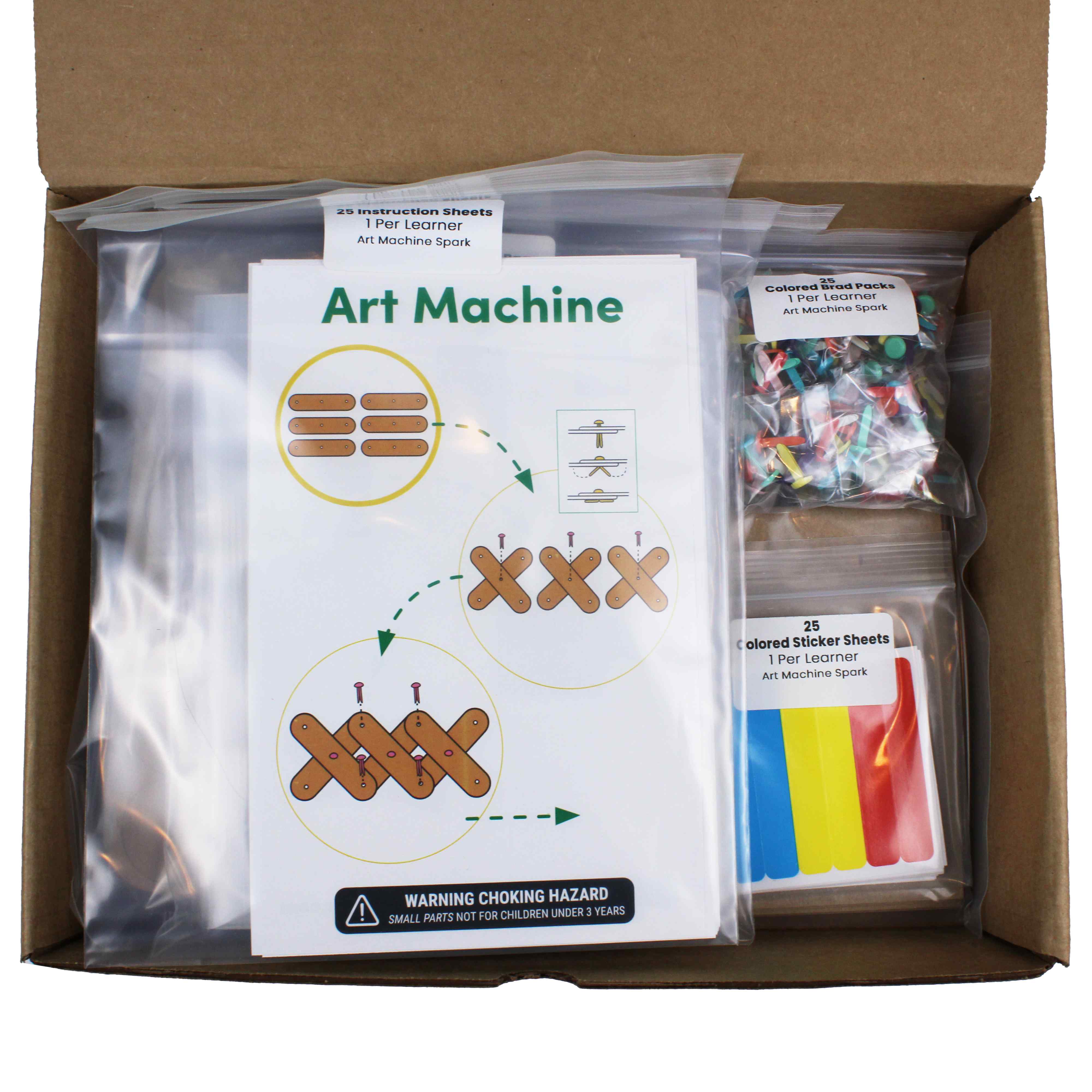
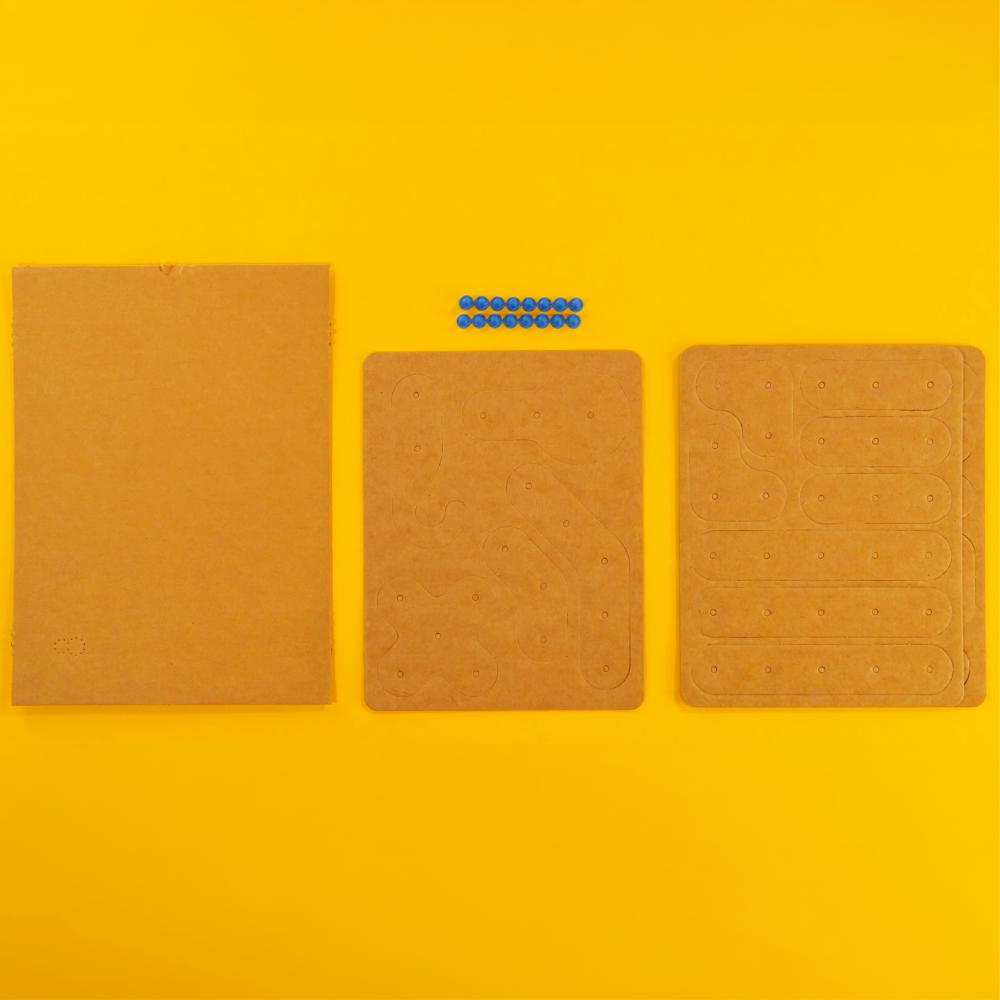
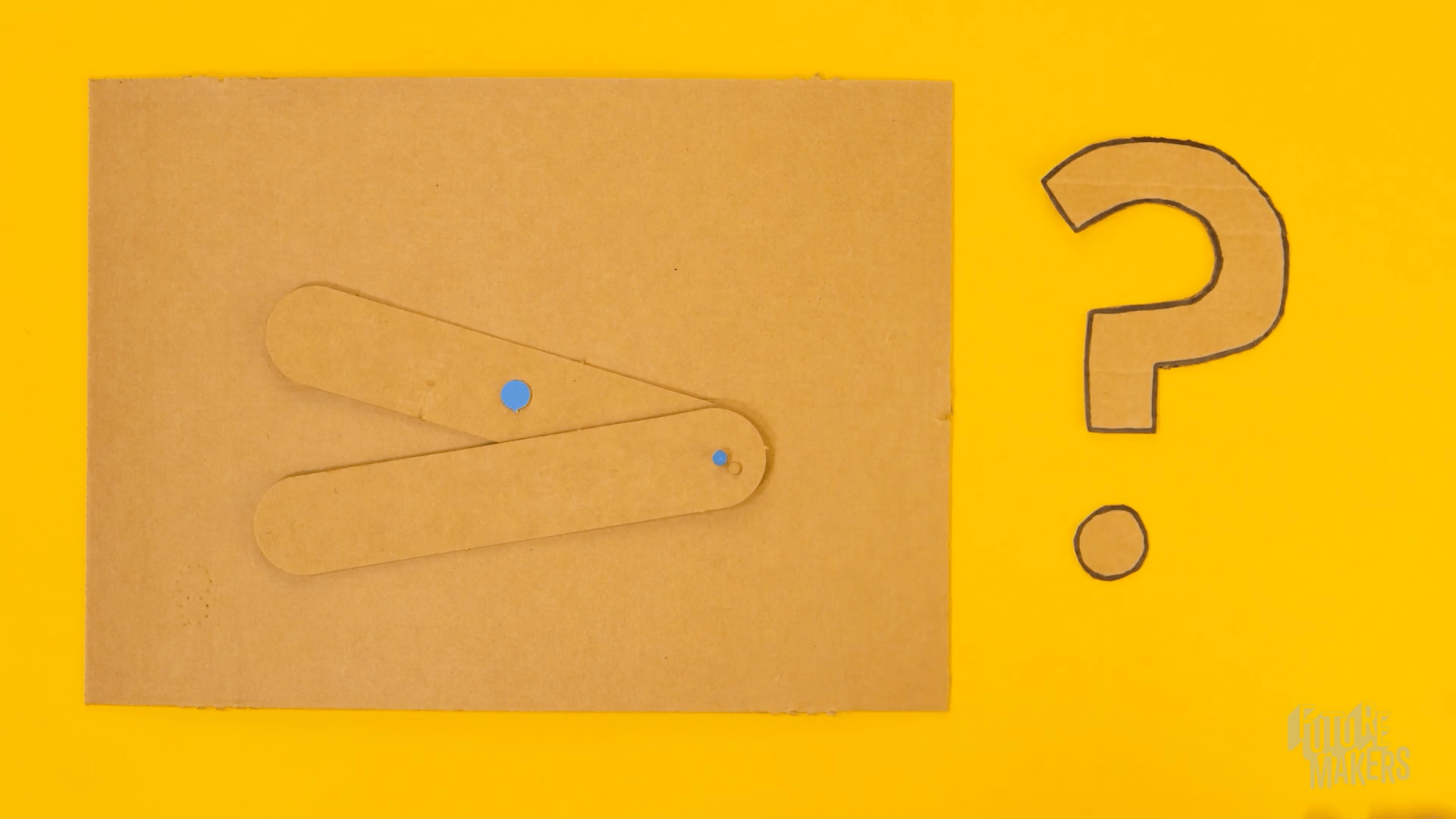
Learners connect cardboard levers with fulcrum fasteners into three linked X shapes, so the whole machine extends and retracts together. Then they design a face or feature that opens and closes as the machine moves, and keep redesigning it into claws, wings, or anything they imagine. Kindergartners do well with an adult building alongside, and it goes deep enough for upper elementary engineering talk about fulcrum placement and systems.
What participants make: A compound machine of linked levers that stretches and folds in one motion, finished as a creature or invention with its own story.
| Pack | Learners | SKU | UPC | Page |
|---|---|---|---|---|
| Small Group Pack | 10 | G1 ARTM 010 | 850061324016 | View |
| Class Pack | 25 | CL ARTM 025 | 850061324054 | View |
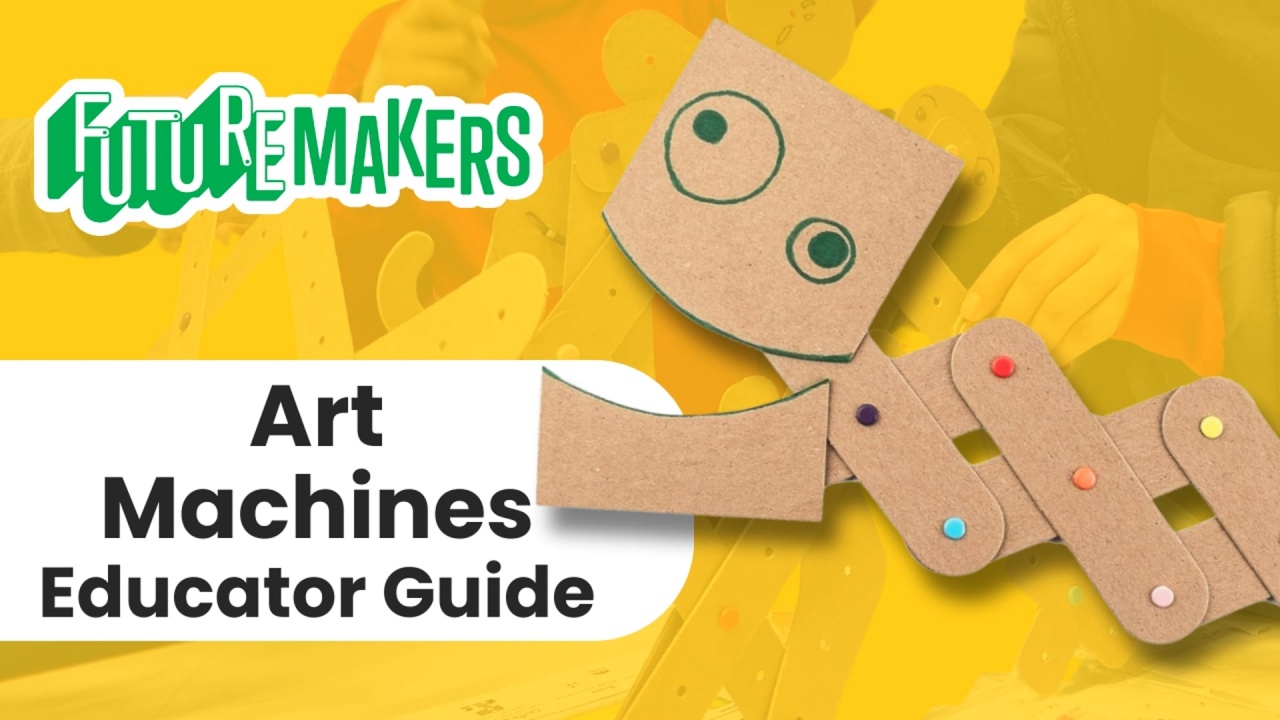 Educator guide video, 8:23
A rebuildable spinning top that mixes colors before your eyes.
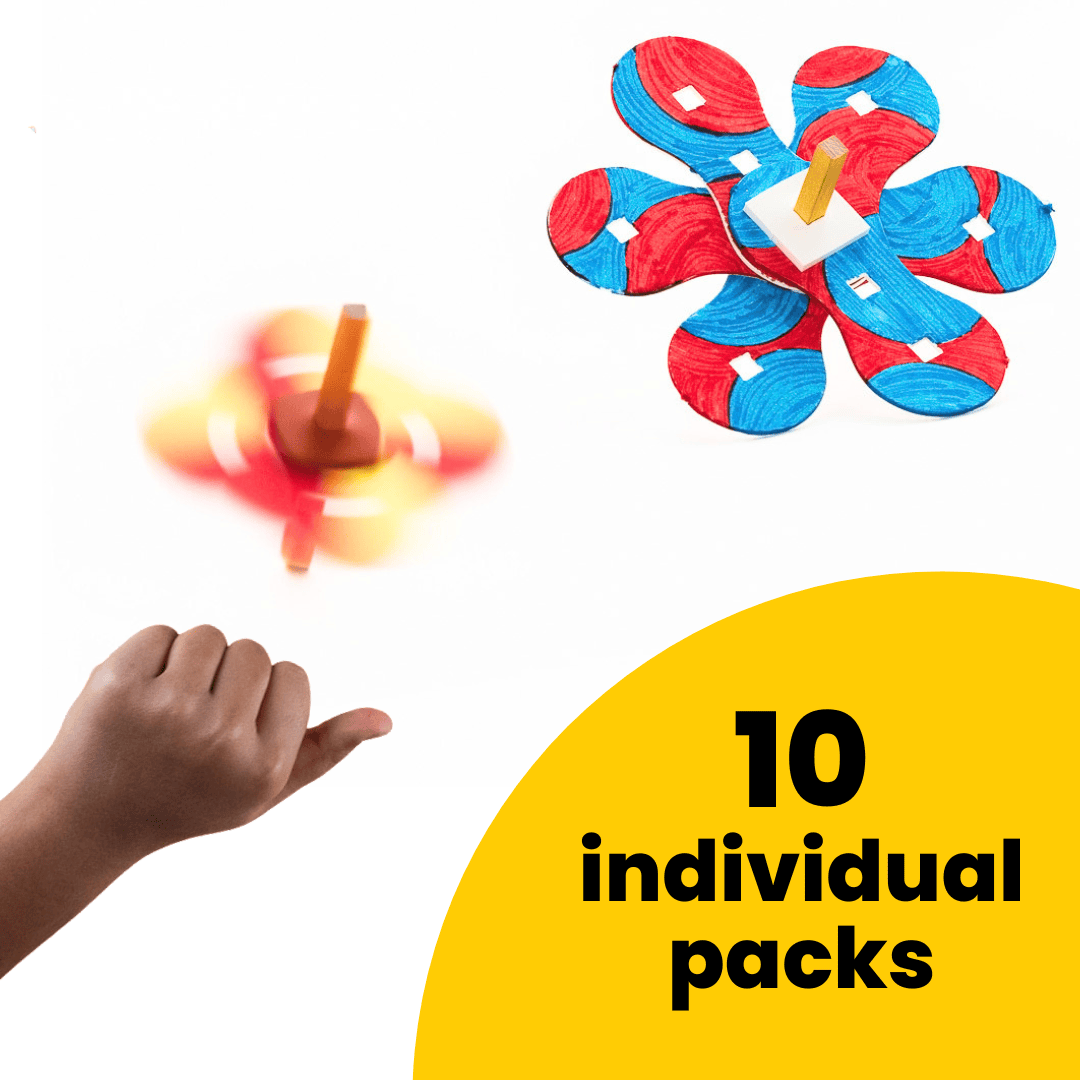
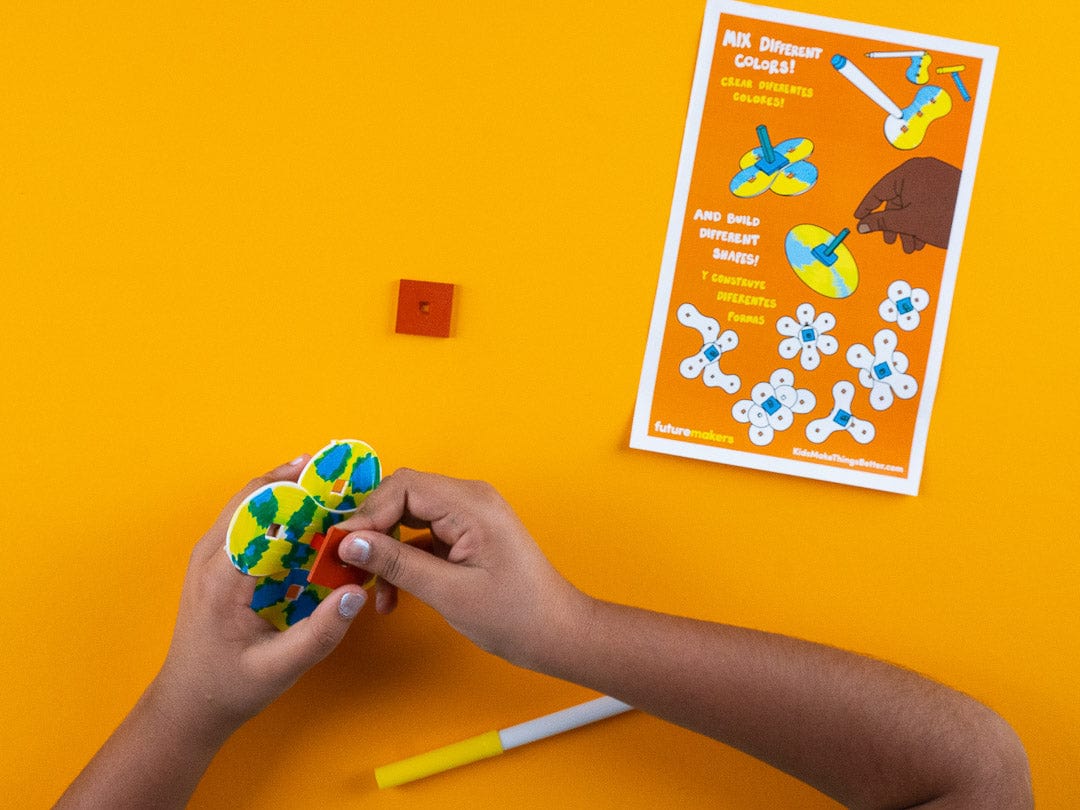
Learners assemble punch-out wooden parts on a square dowel with rubber stoppers, then test symmetrical and lopsided builds to see what spins best. Coloring the parts red, yellow, and blue lets them watch orange, green, and purple appear as the Blendie spins. It covers symmetry, balance, and optical color mixing, and works from Pre-K through middle school.
What participants make: A durable wooden spinning top, colored with primary markers so it blends into secondary colors as it spins.
| Pack | Learners | SKU | UPC | Page |
|---|---|---|---|---|
| Small Group Pack | 10 | G3 BLEN 010 | 850061324009 | View |
| Class Pack | 25 | CL BLEN 025 | 850061324061 | View |
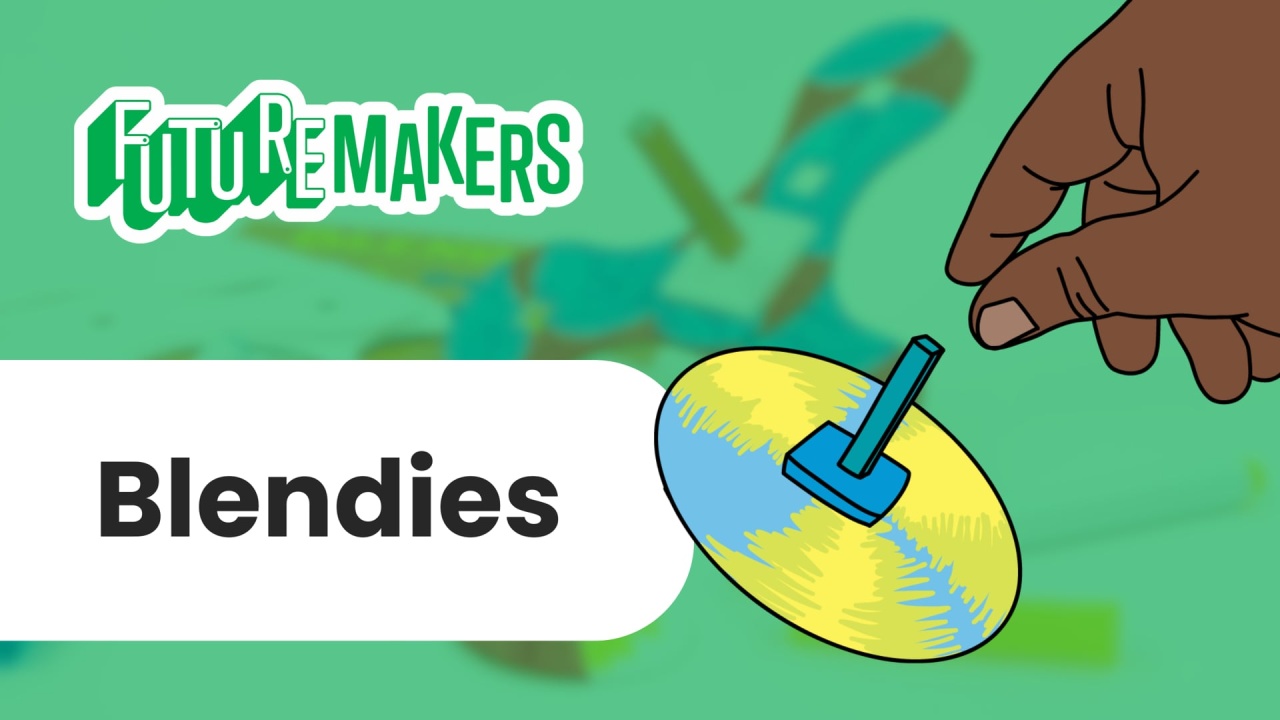 Educator guide video, 12:59
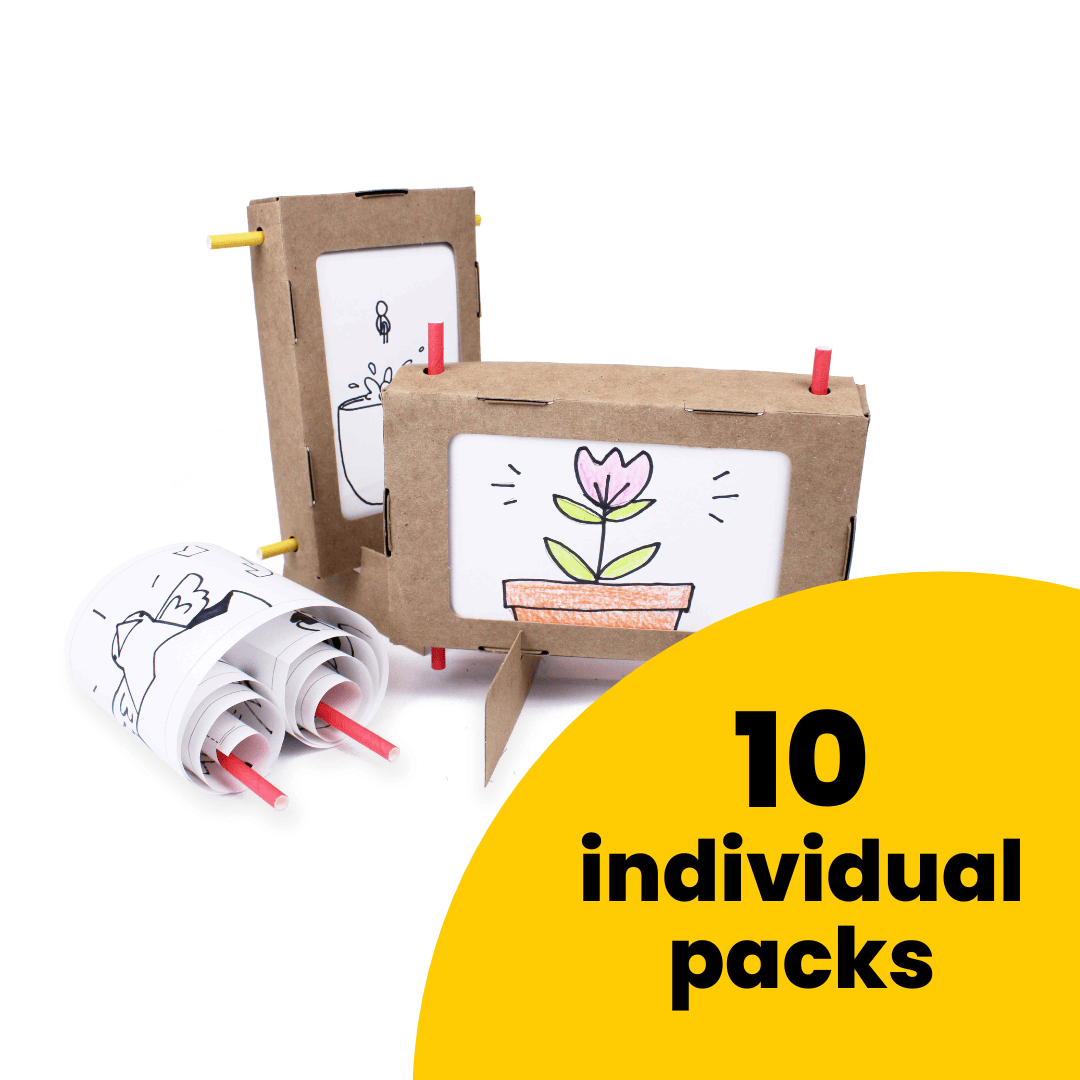
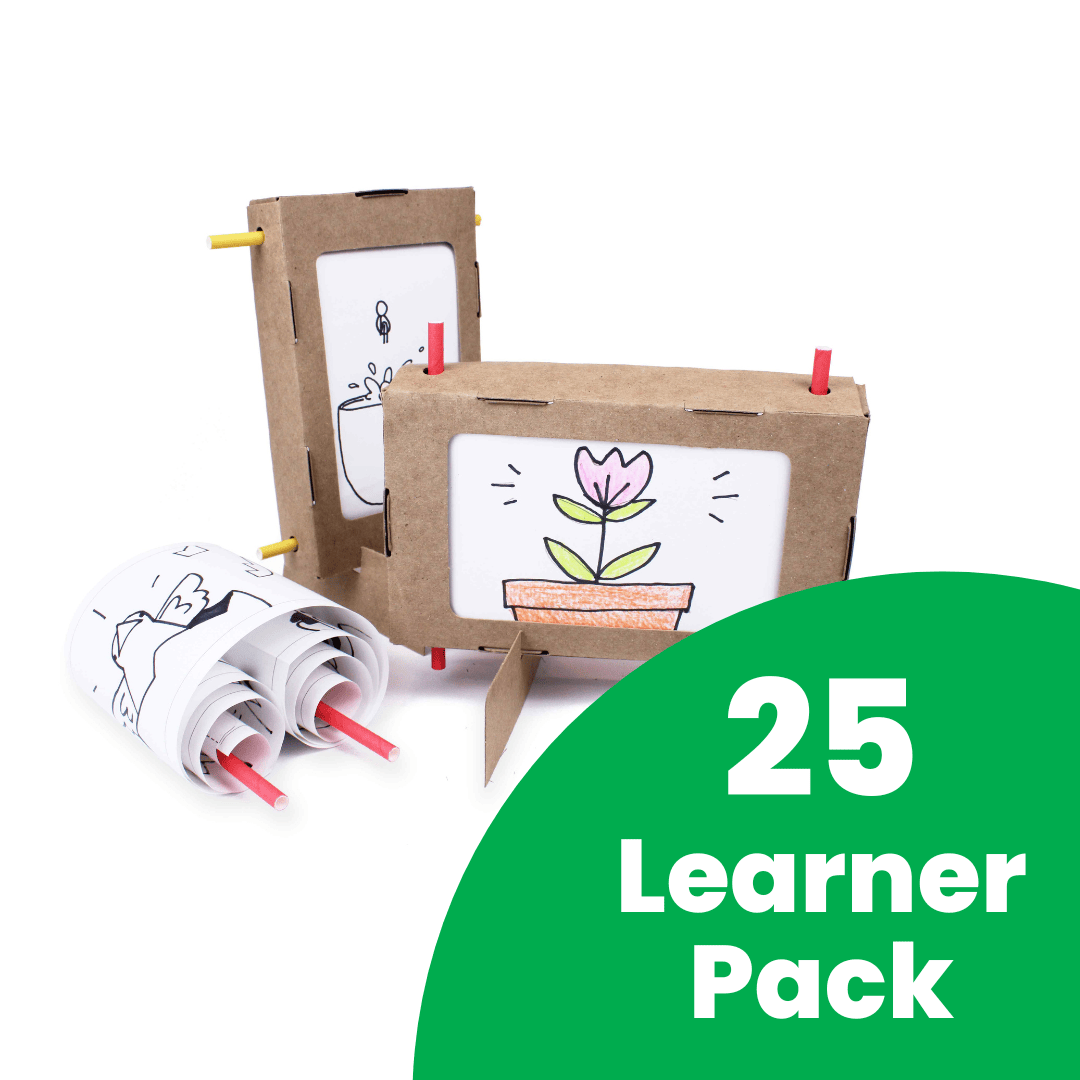
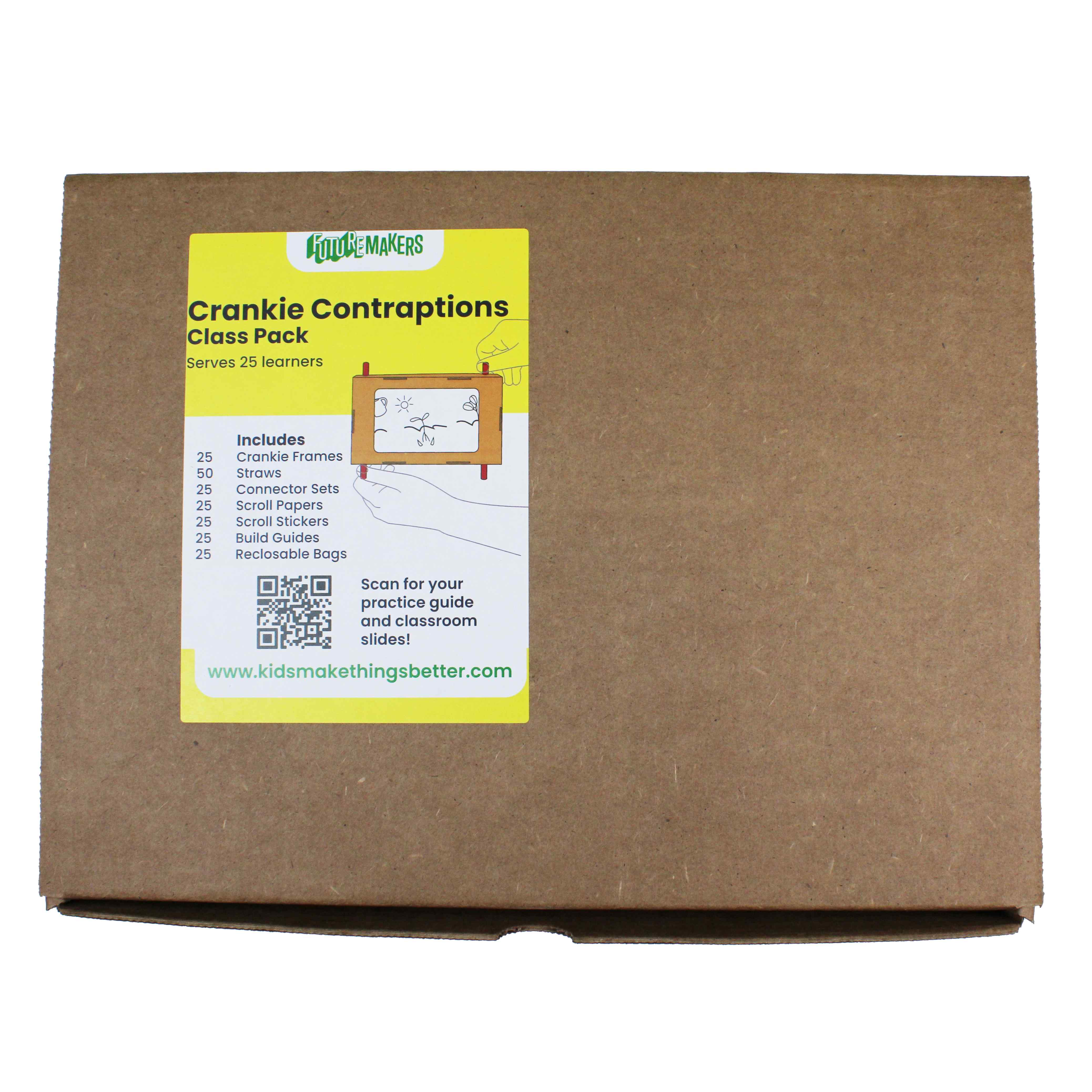
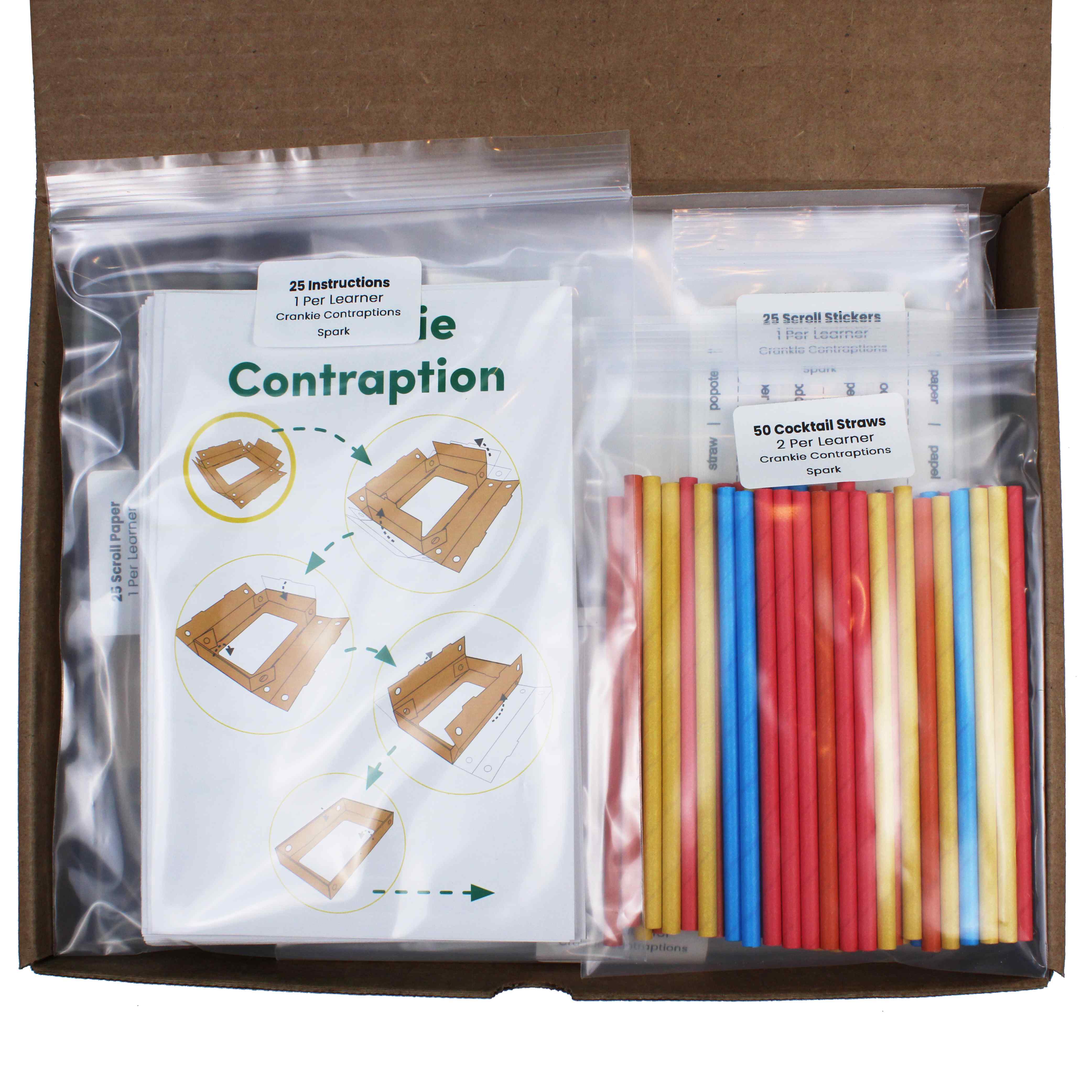
A hand-cranked scrolling story, like a tiny theater.
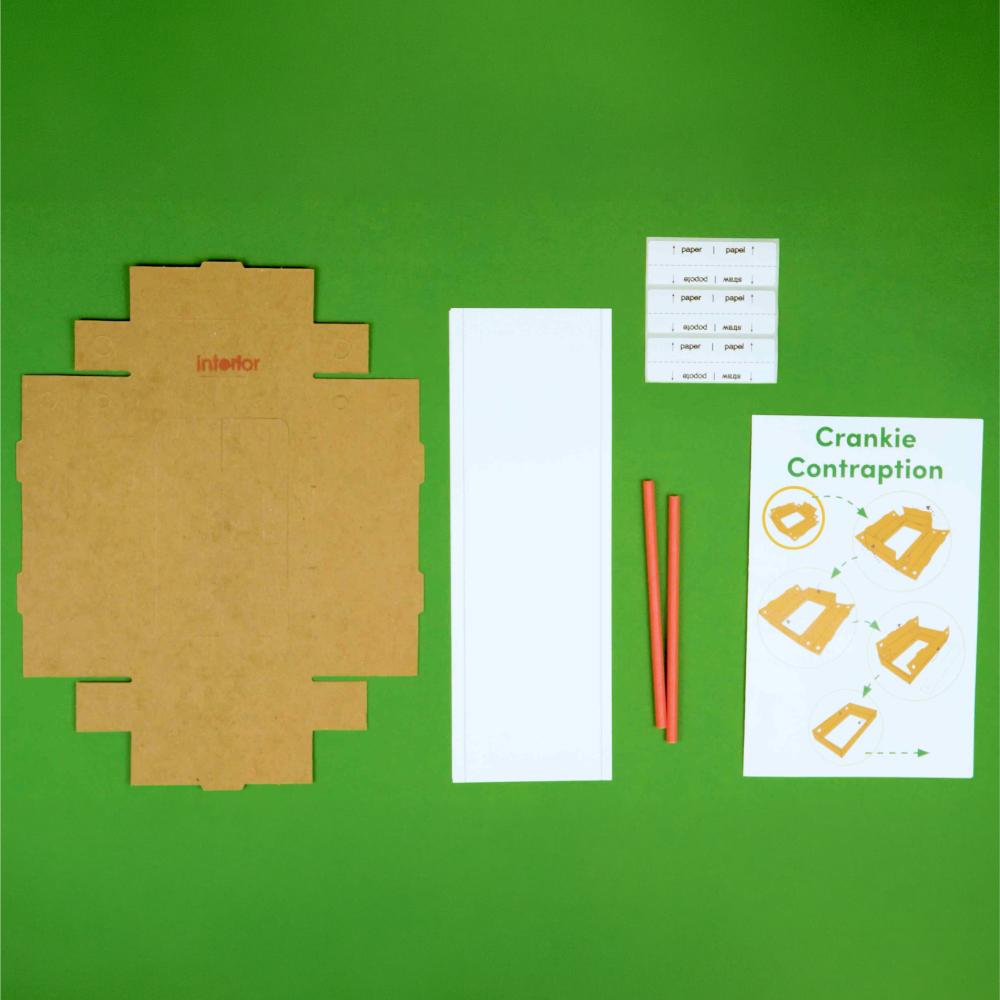
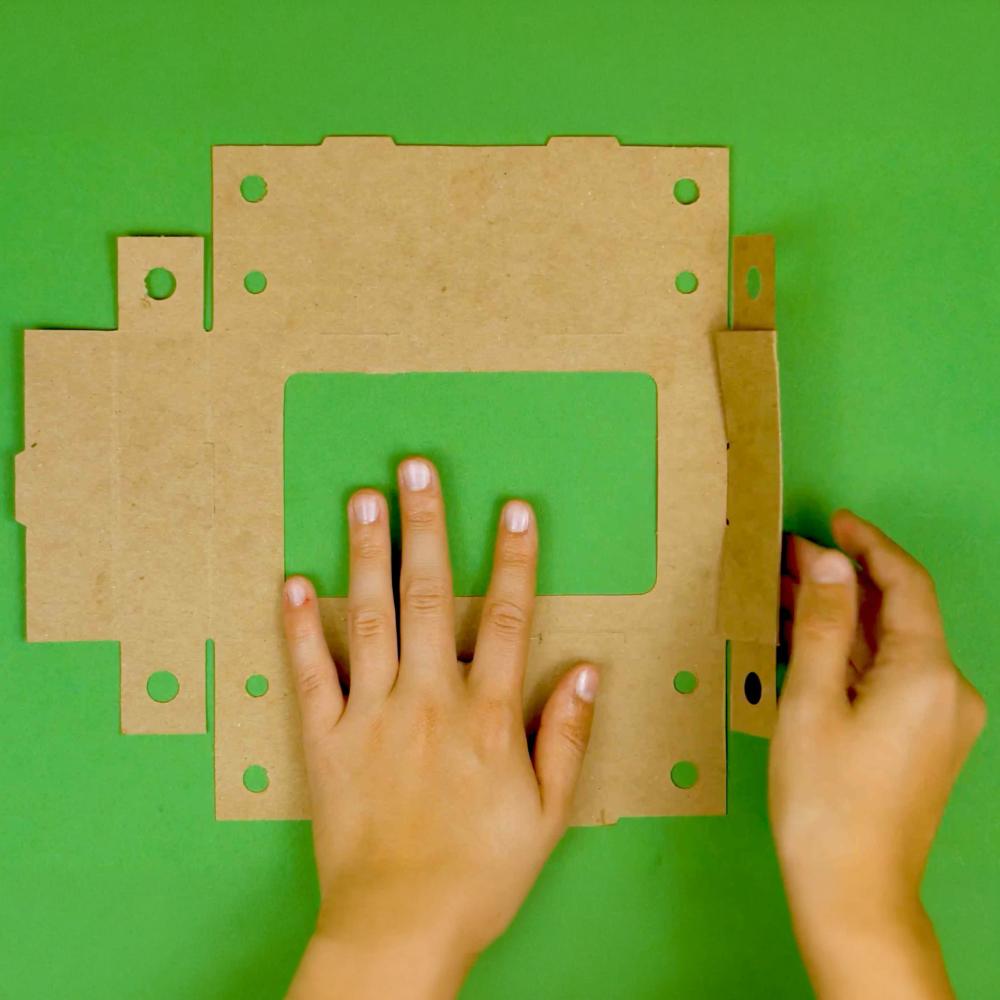
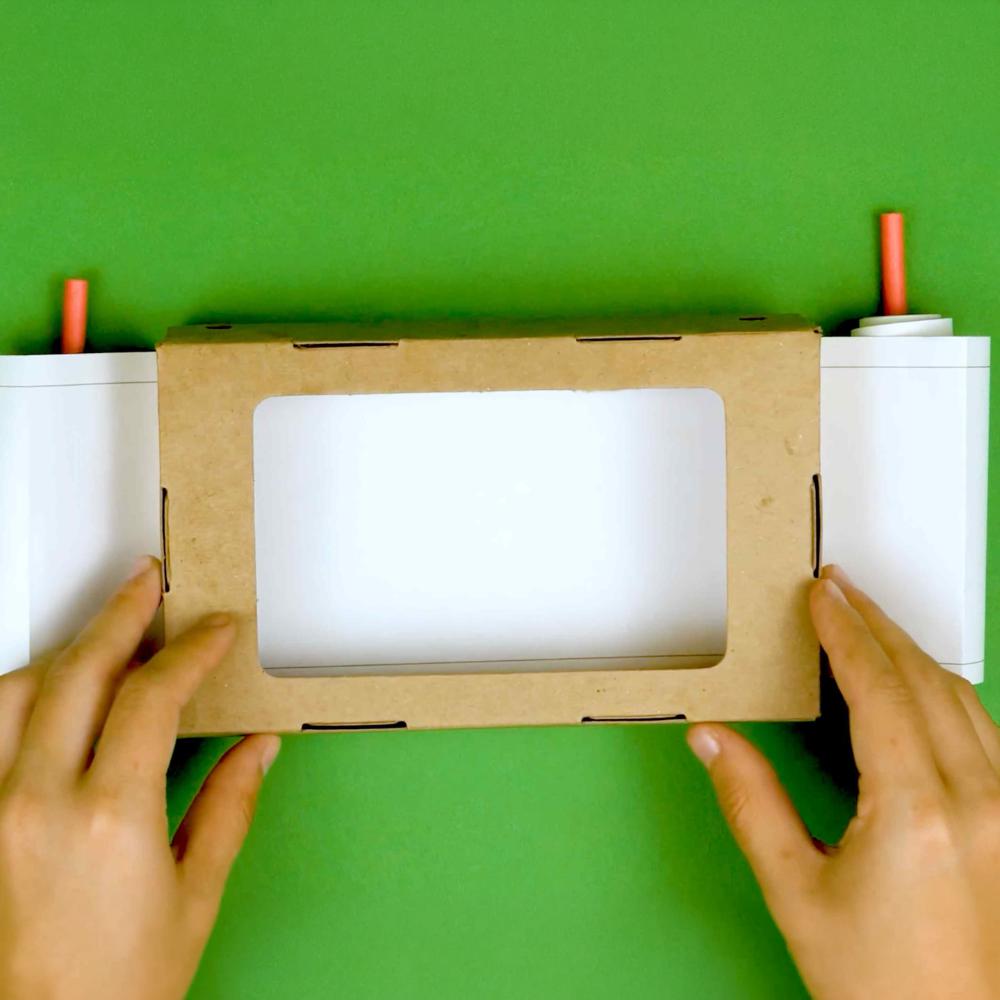
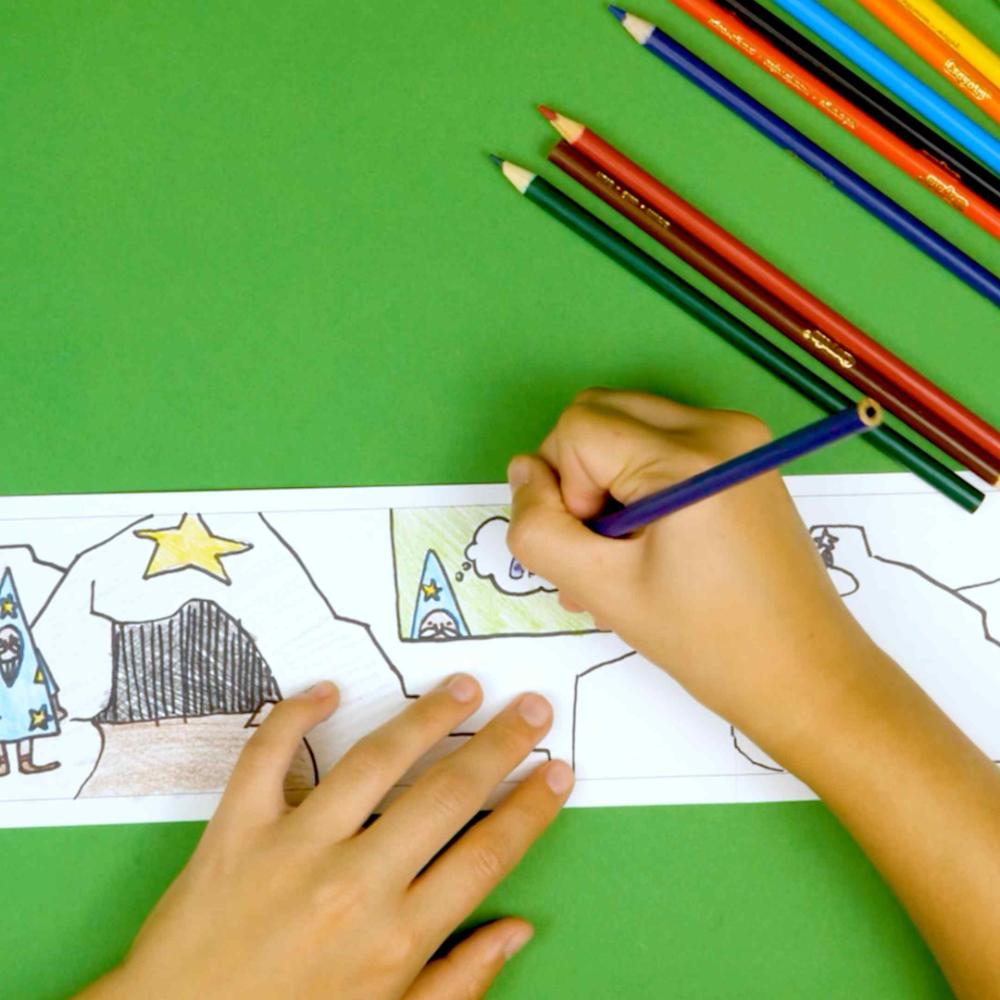
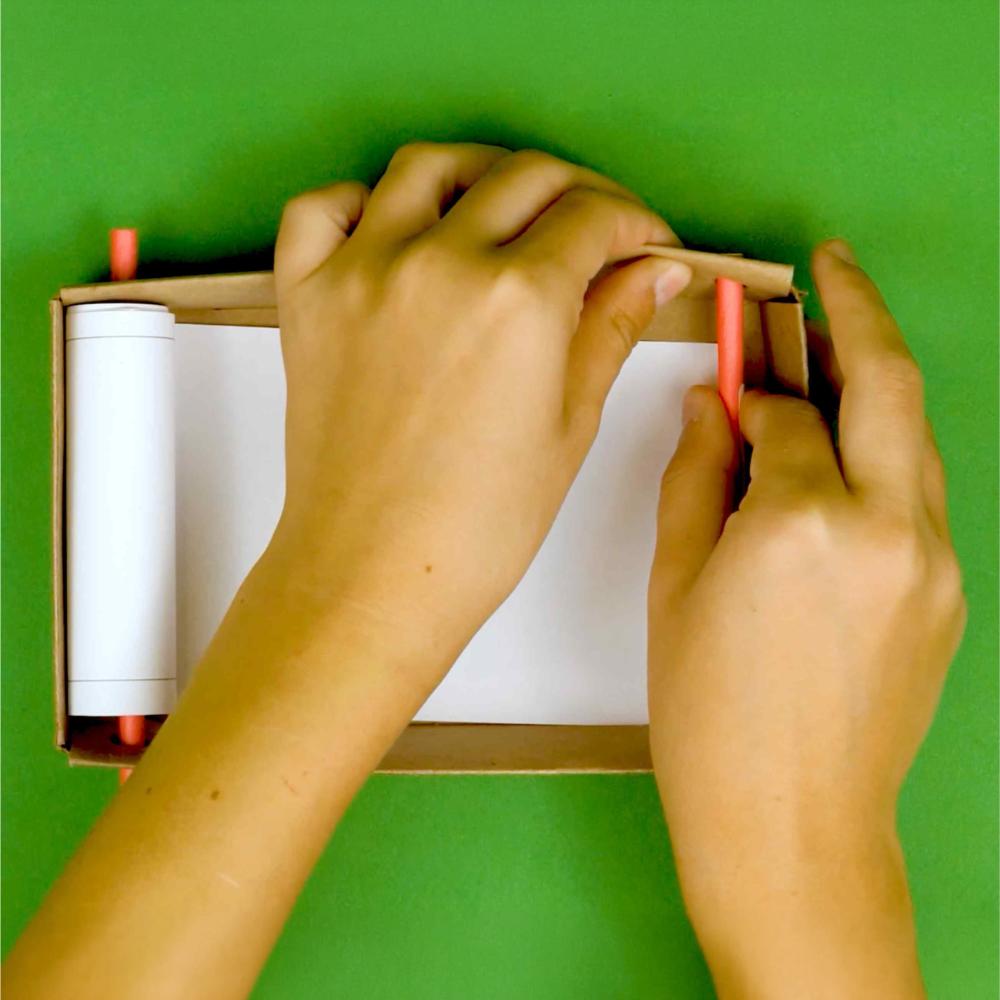
Learners fold a cardboard frame, wind a paper scroll between two straws, then plan and illustrate a story with a beginning, middle, and end. Turning the straws scrolls the story across the screen. It blends engineering, art, and language arts in one project and differentiates easily from early elementary to middle school.
What participants make: A folded cardboard theater with a paper scroll wound between two straws that tells the learner's own illustrated story.
| Pack | Learners | SKU | UPC | Page |
|---|---|---|---|---|
| Small Group Pack | 10 | G2 CRAN 010 | 850061324078 | View |
| Class Pack | 25 | CL CRAN 025 | 850061324085 | View |
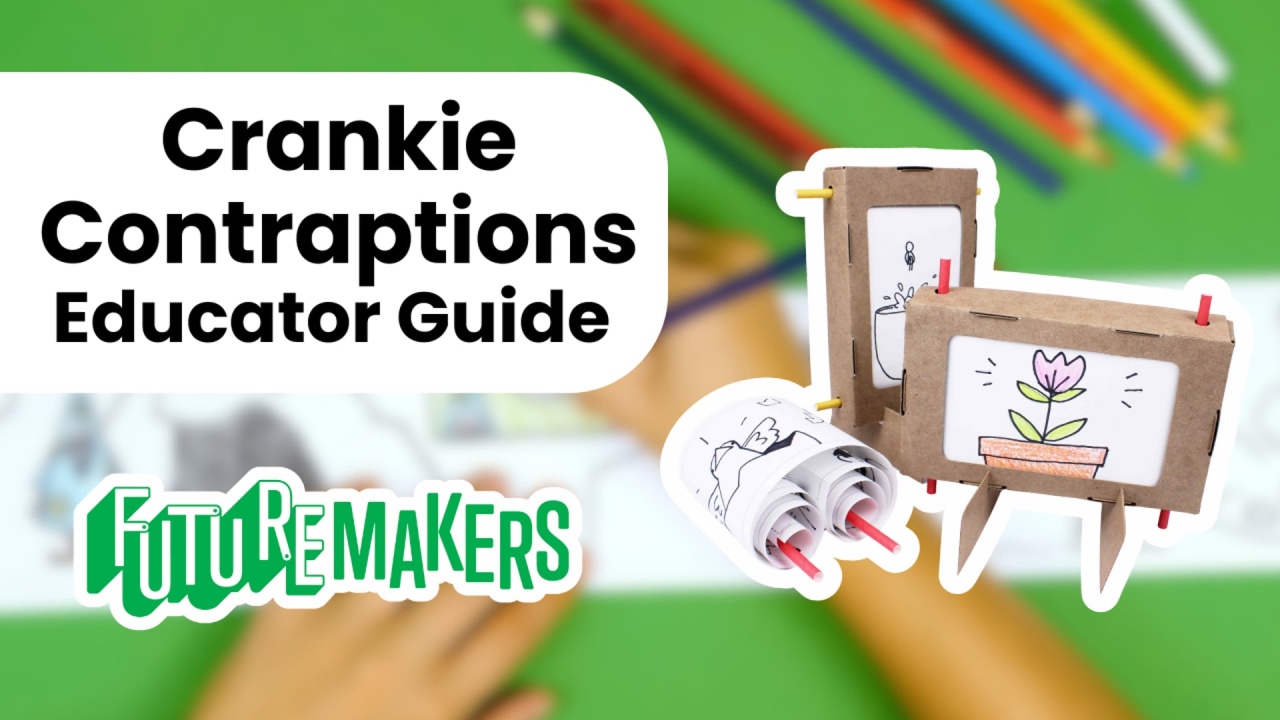 Educator guide video, 8:32
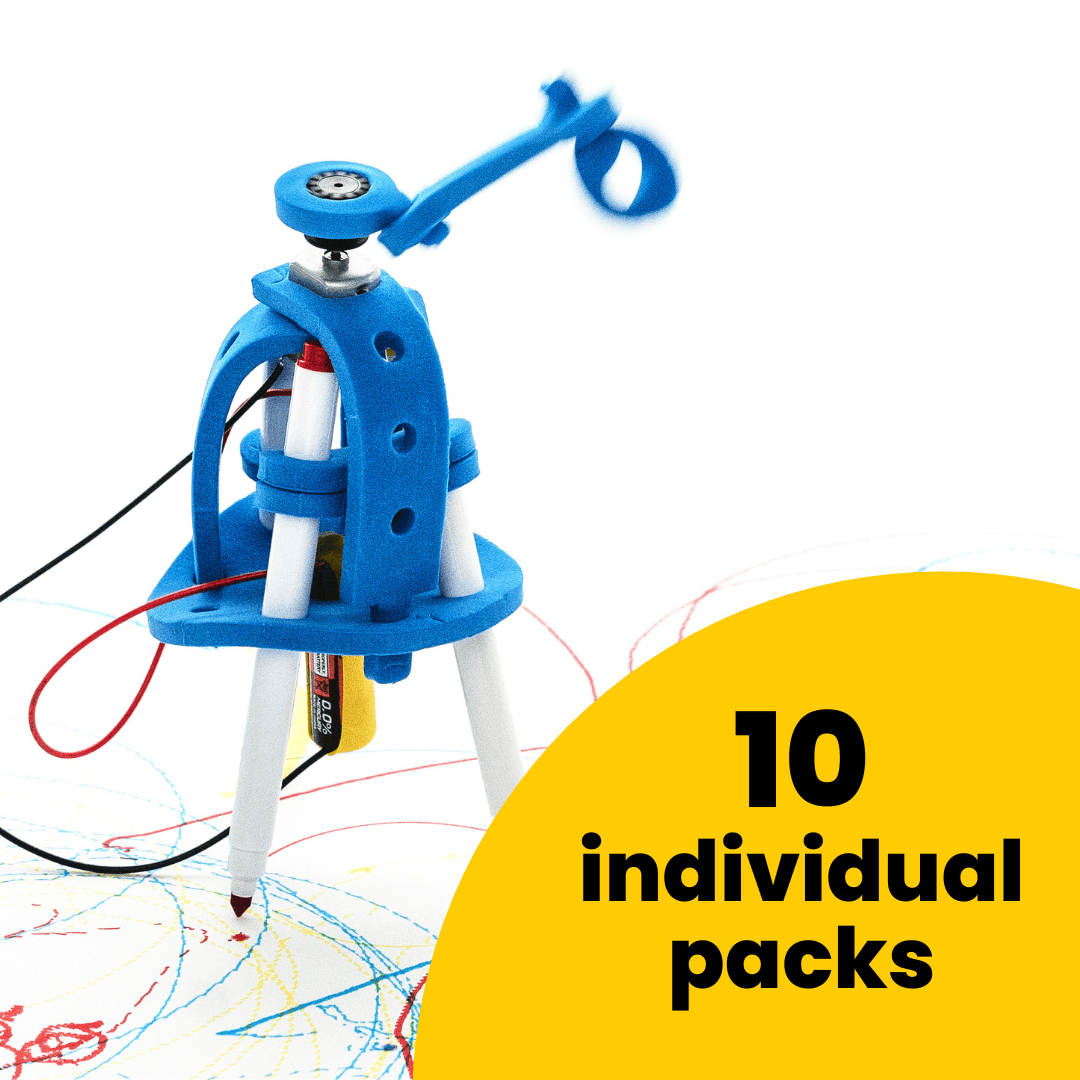
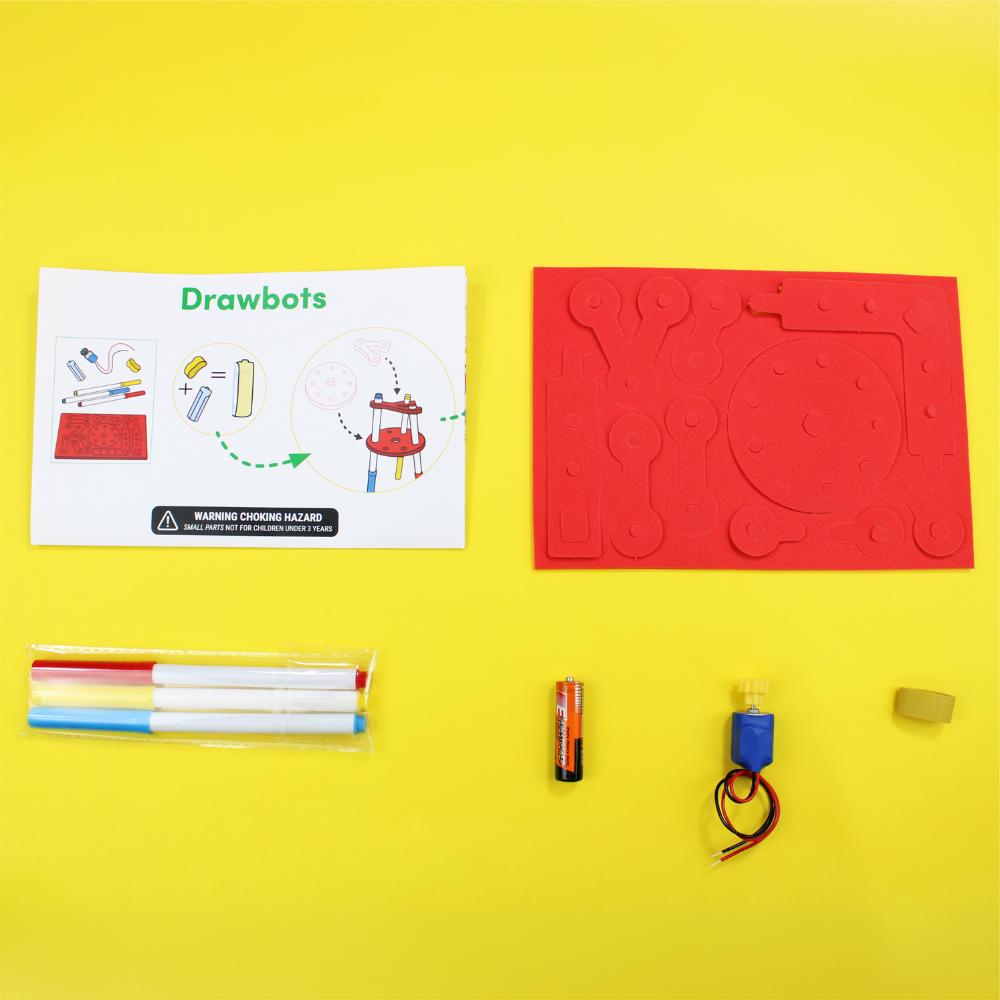
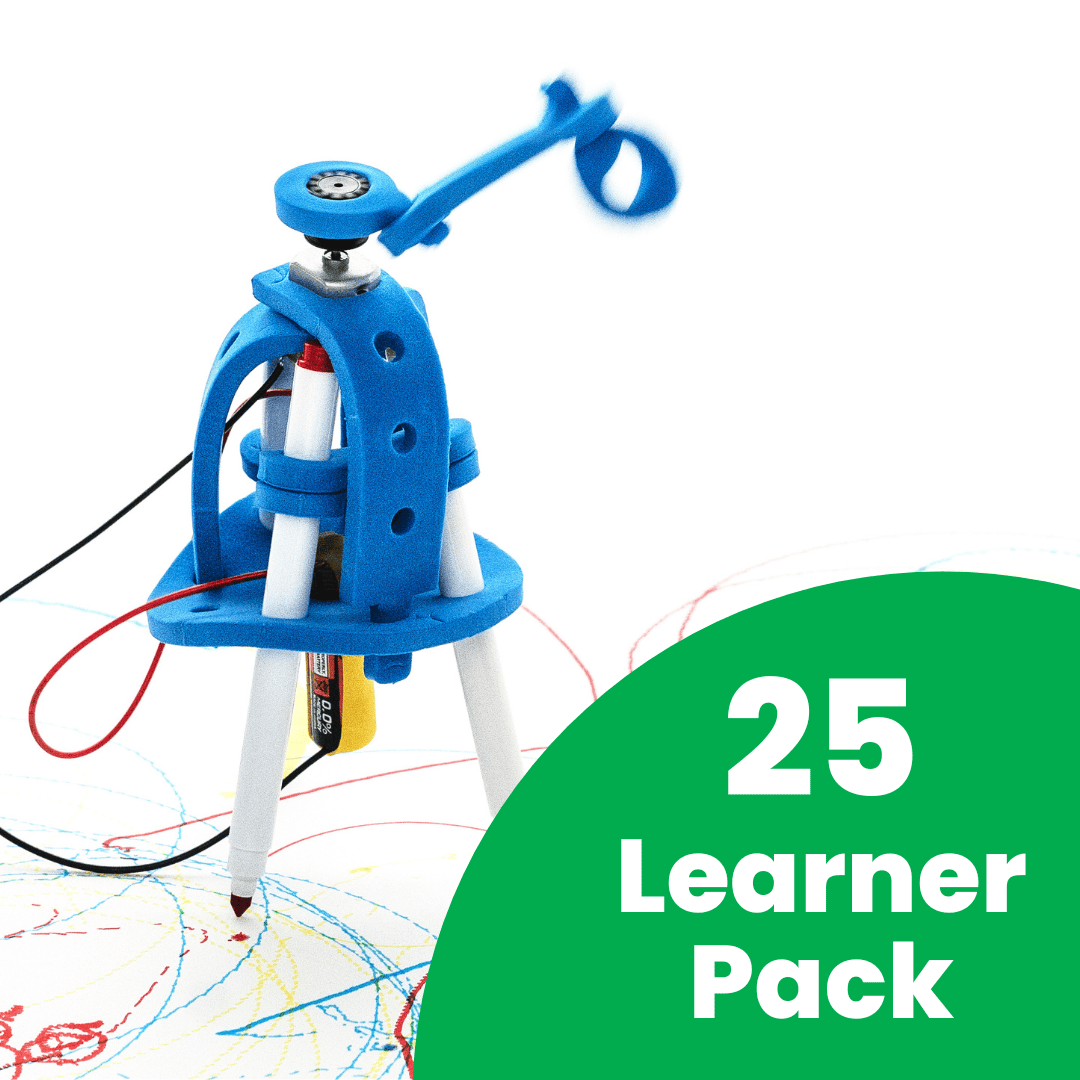
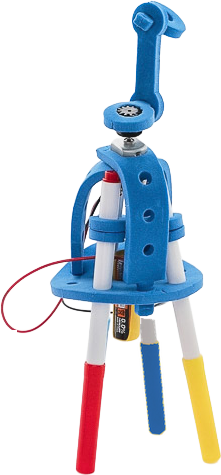
A vibrating machine that scribbles its own art.
Learners build a structure on three marker legs, close a battery and motor circuit, and add an unbalanced weight so the vibration drives the bot to draw. Small changes make big differences, so learners test, take apart, and rebuild to change how their Drawbot moves. It teaches circuits, energy transfer, and iterative design.
What participants make: A battery-powered bot on marker legs that wiggles across paper and draws swirling doodles.
| Pack | Learners | SKU | UPC | Page |
|---|---|---|---|---|
| Small Group Pack | 10 | G2 DRAW 010 | 850061324023 | View |
| Class Pack | 25 | CL DRBT 025 | 850061324092 | View |
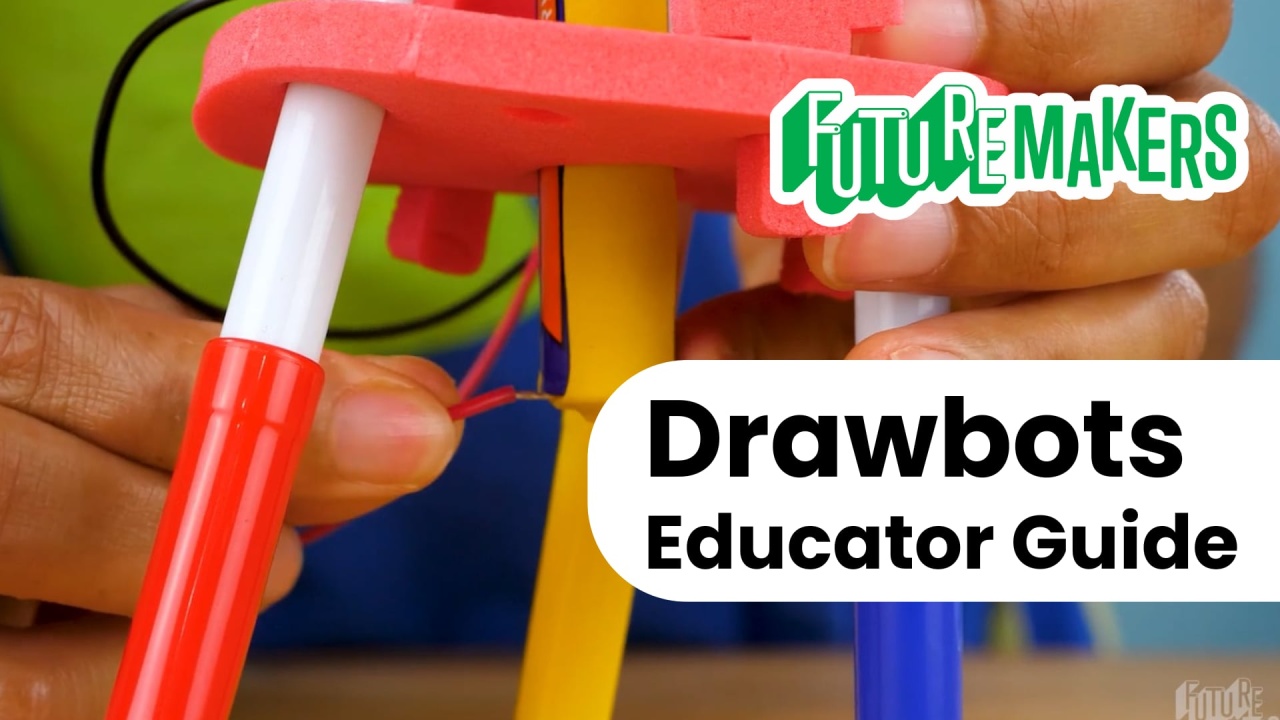 Educator guide video, 8:25
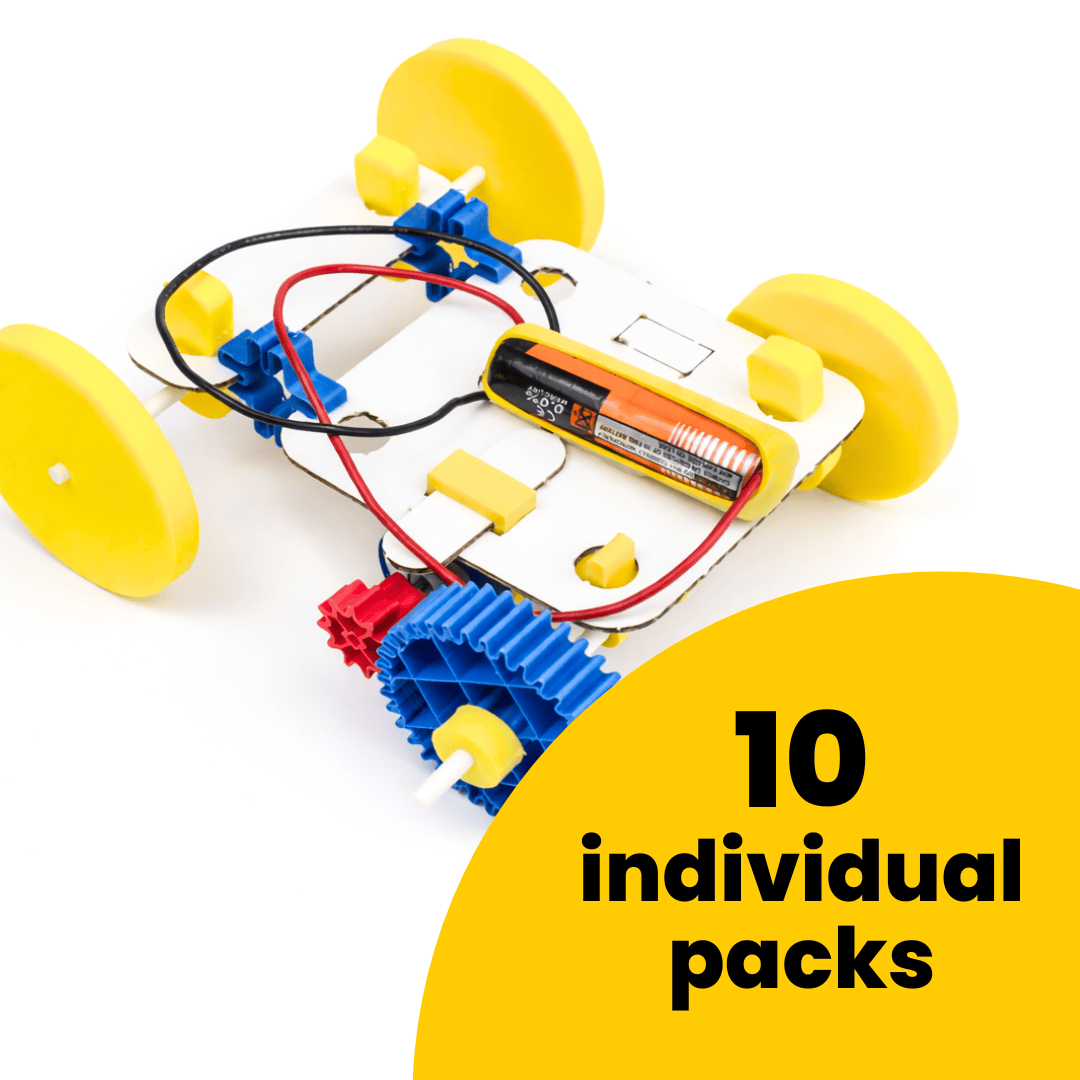
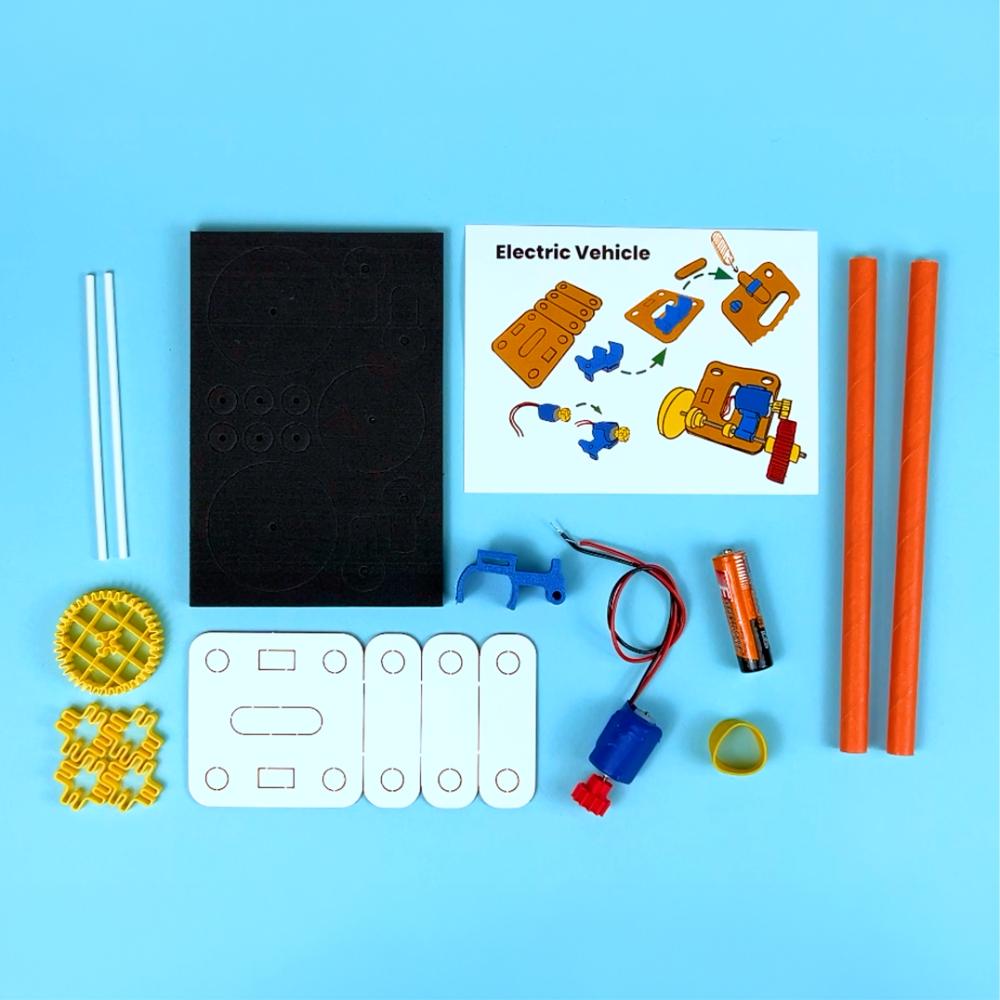
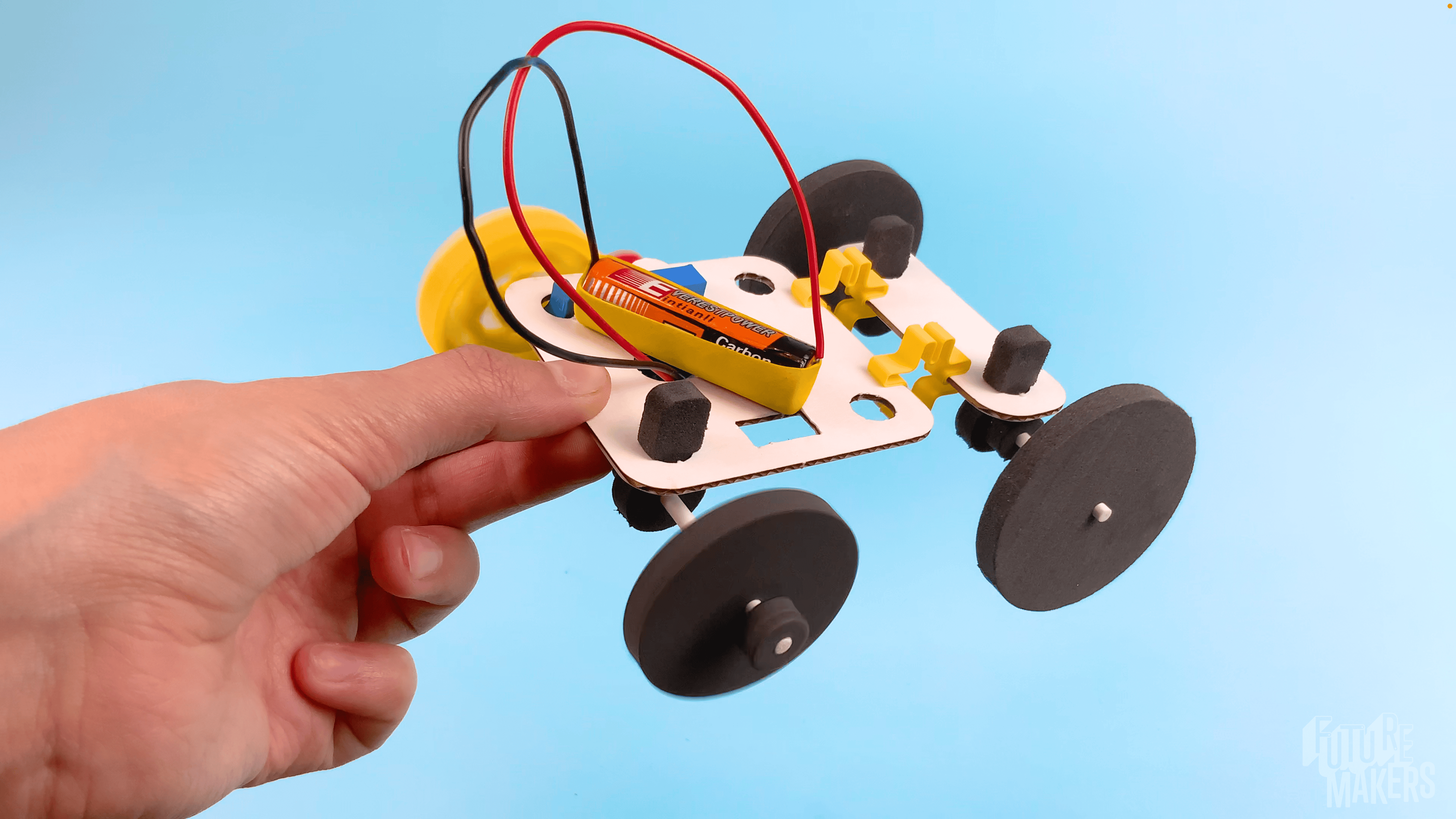
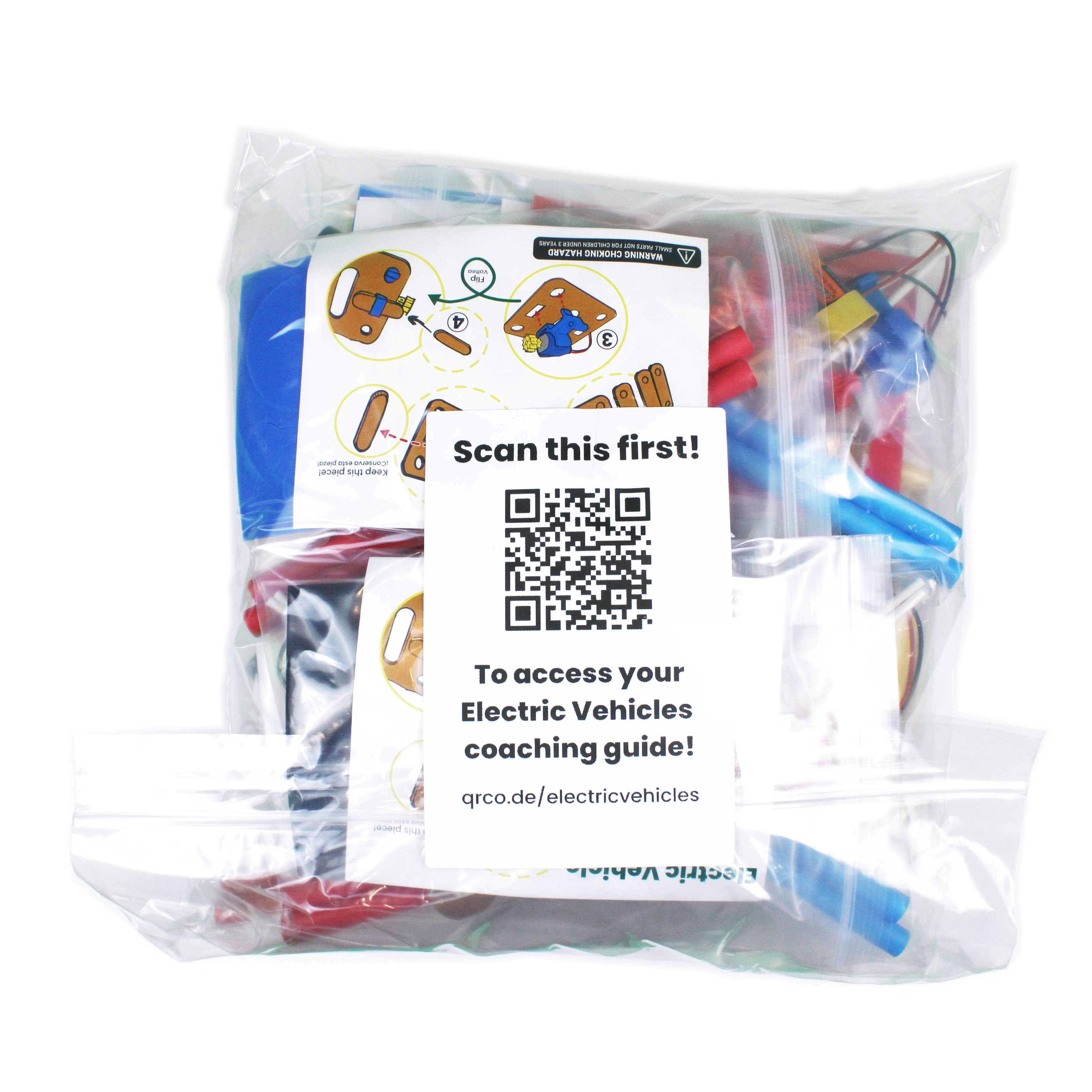
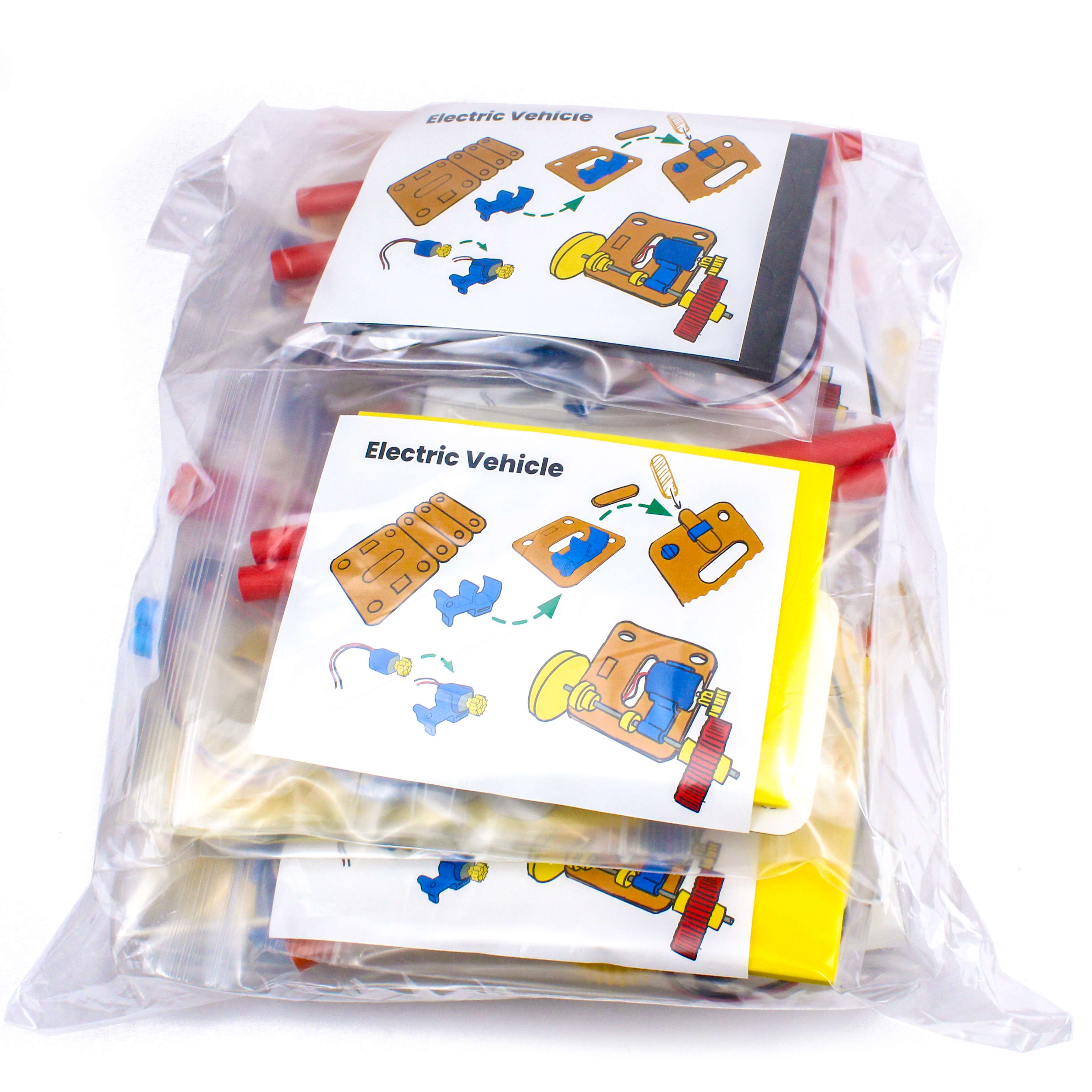
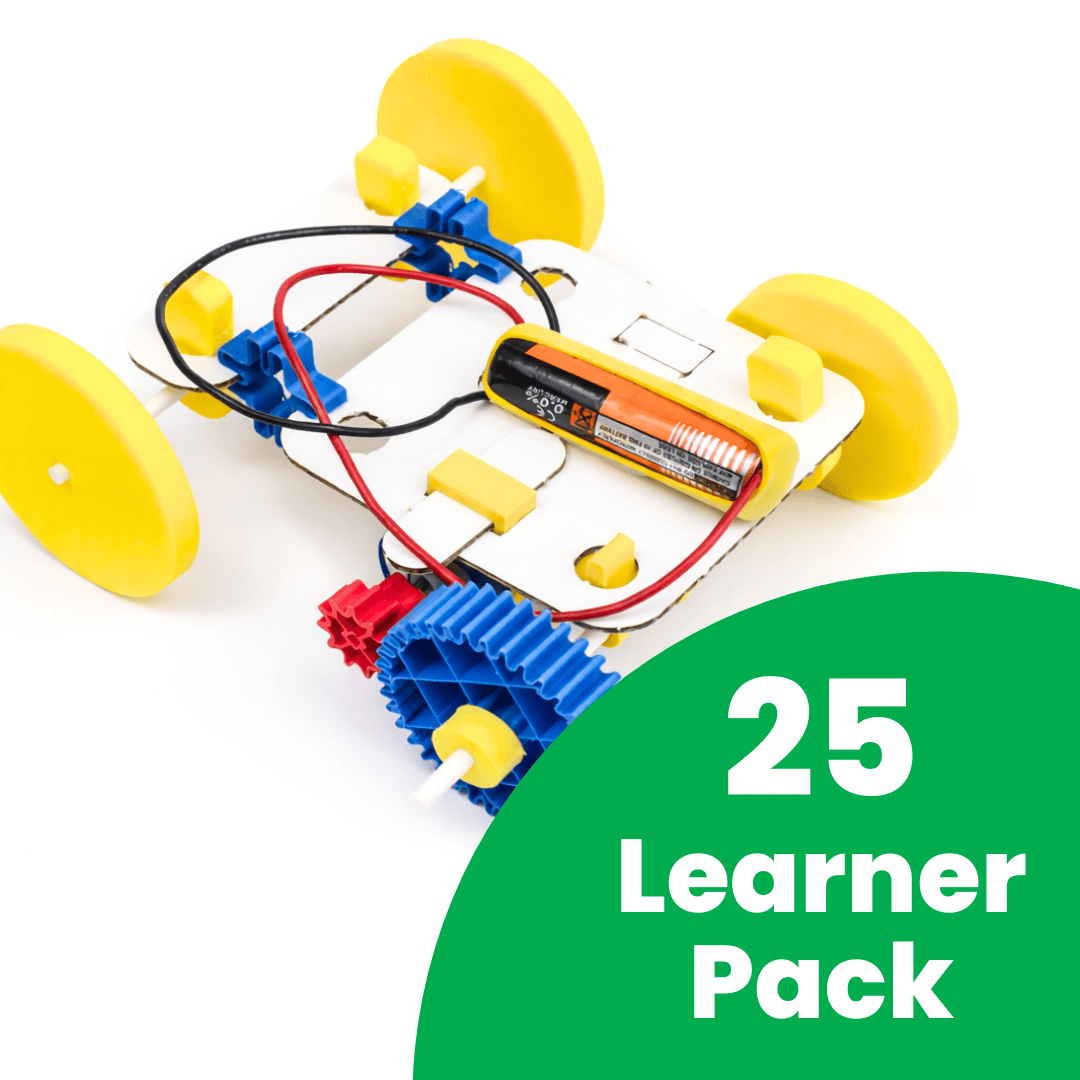
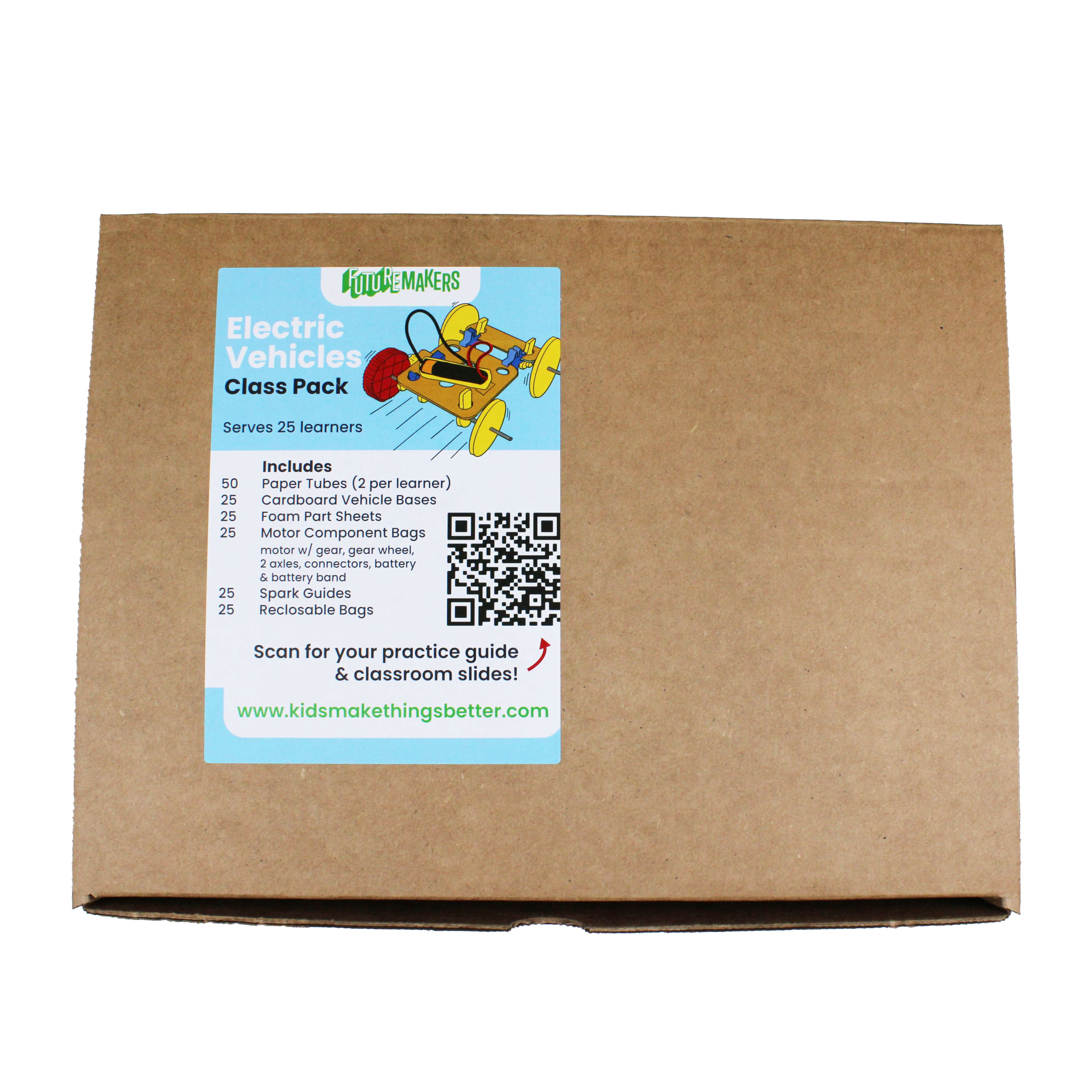
A motorized car with a real gear train.
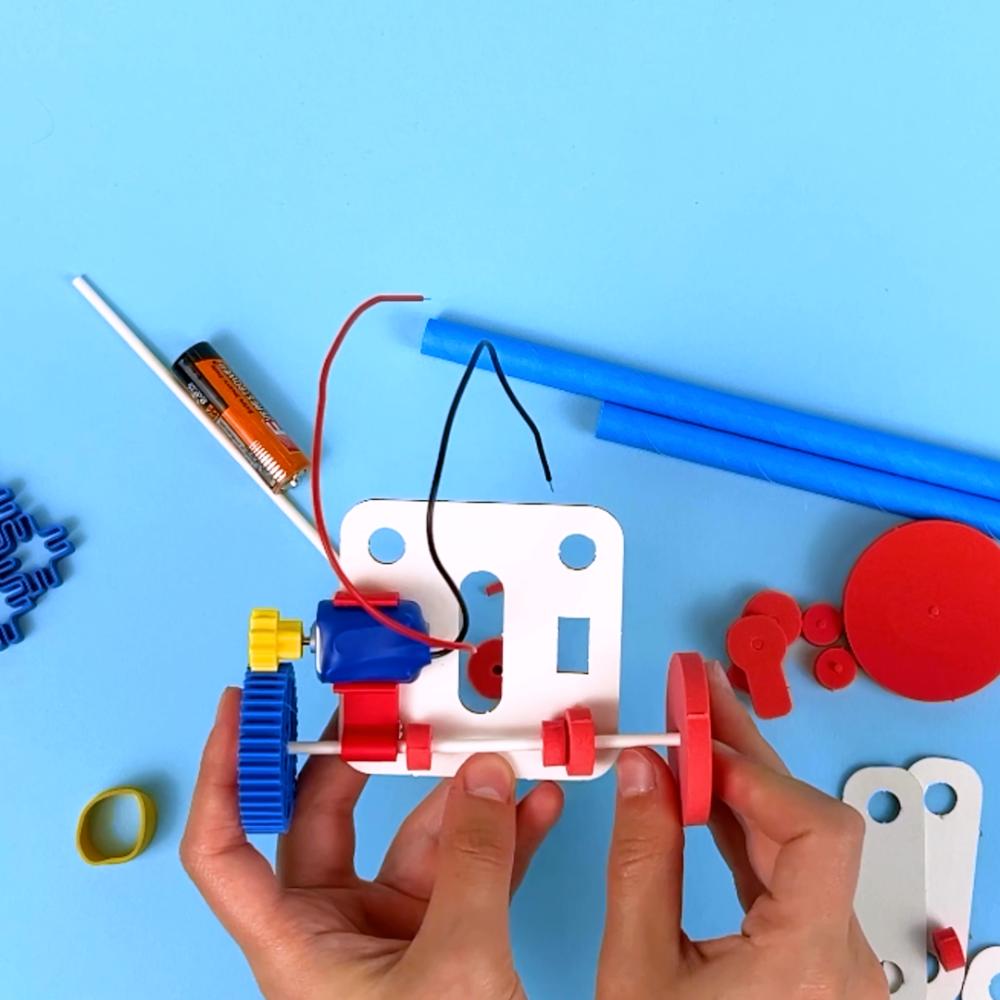
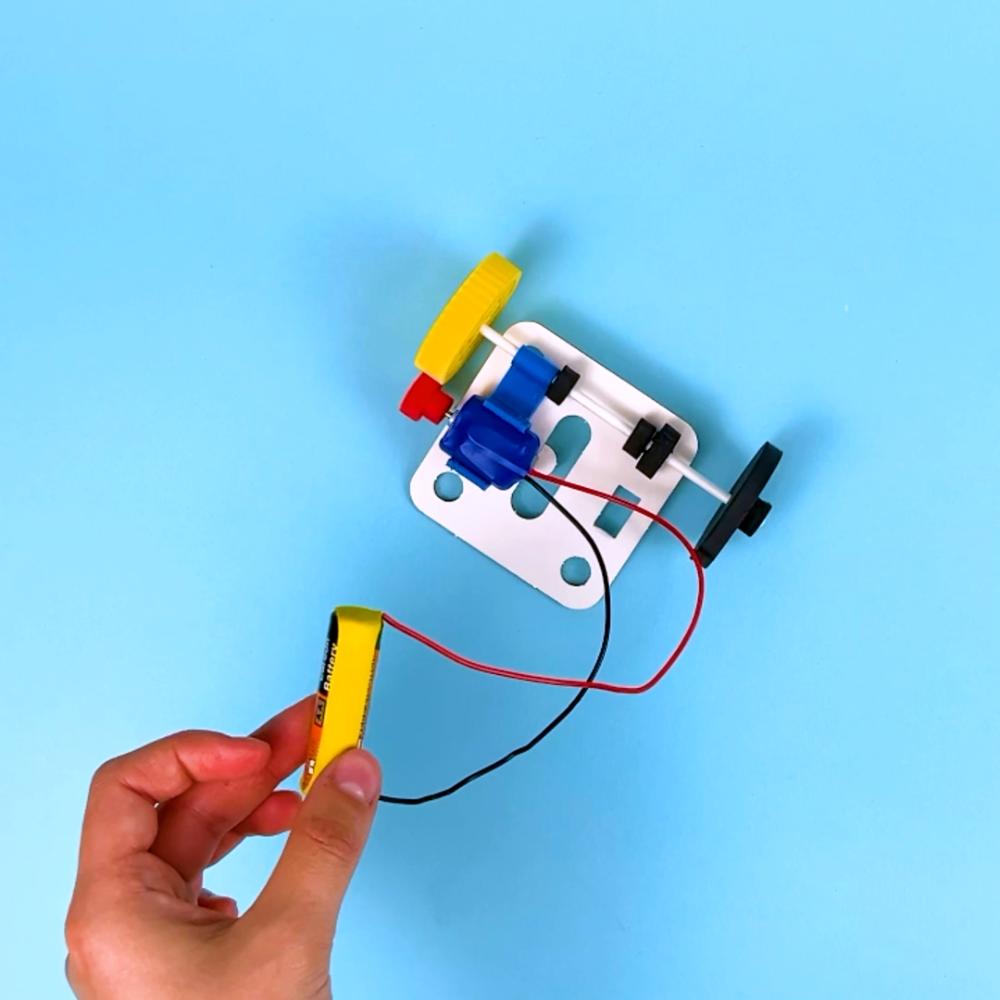
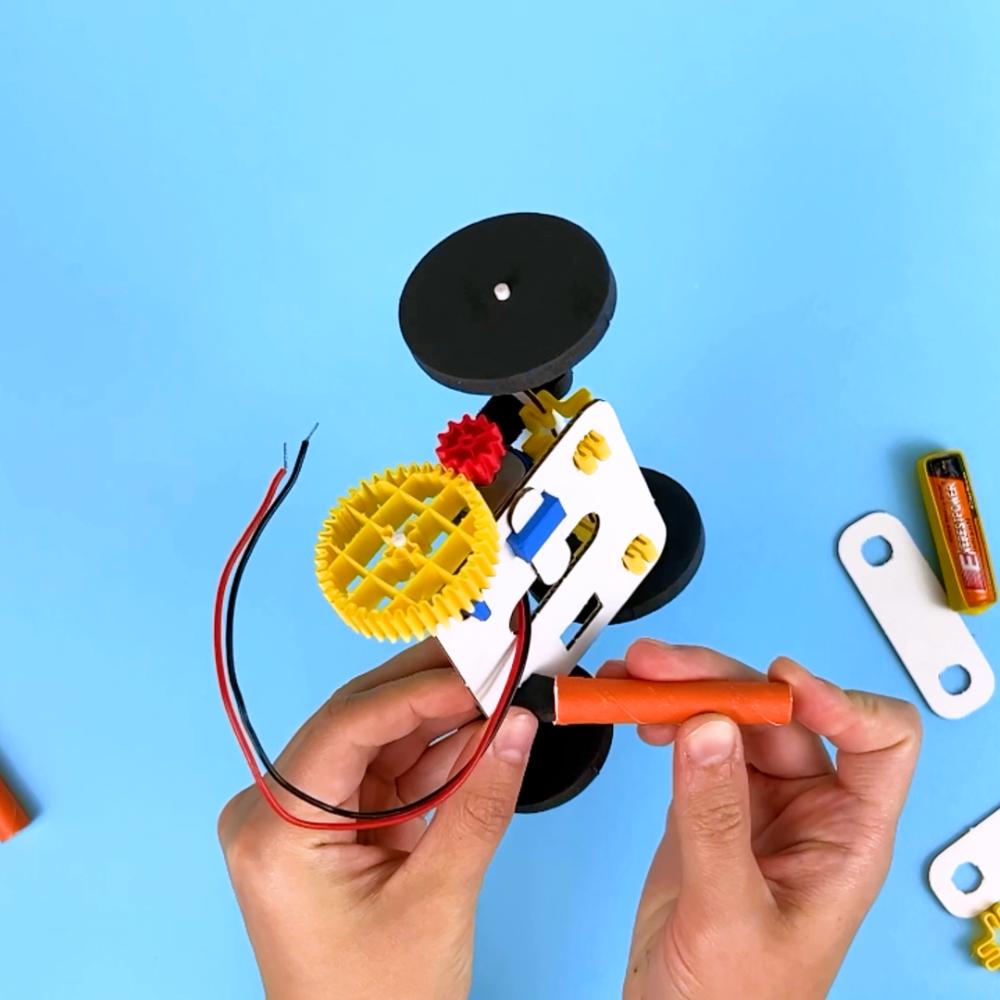
Learners close a circuit between a battery and a motor, mesh a gear to drive the wheels, then flip the wires to discover polarity and send the car in reverse. From there they troubleshoot and redesign. It is a hands-on introduction to circuits, gear trains, and cause and effect for upper elementary and middle school.
What participants make: A battery-powered vehicle with a motor, gear wheel, and axles that learners tune to go faster, straighter, or farther.
| Pack | Learners | SKU | UPC | Page |
|---|---|---|---|---|
| Small Group Pack | 10 | G2 ELEC 010 | 850061324108 | View |
| Class Pack | 25 | CL ELEC 025 | 850061324115 | View |
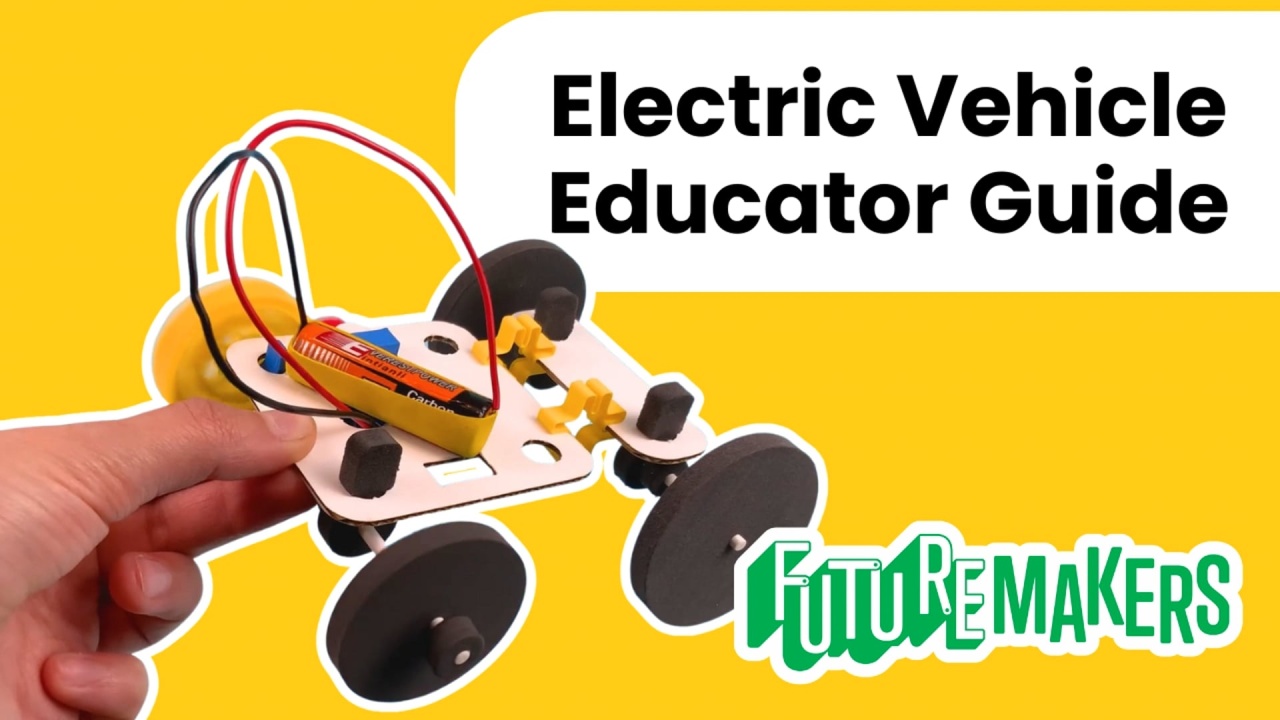 Educator guide video, 8:09
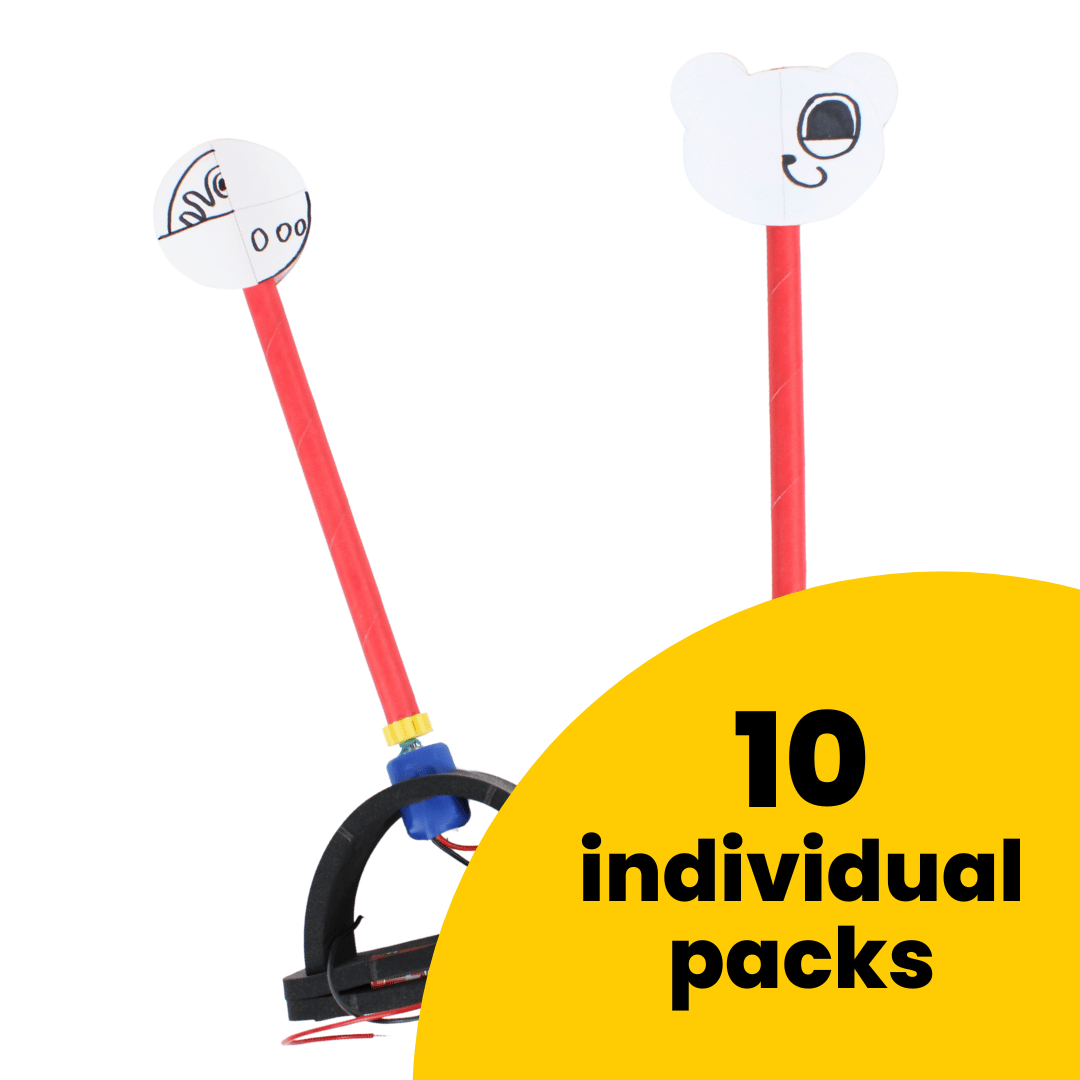
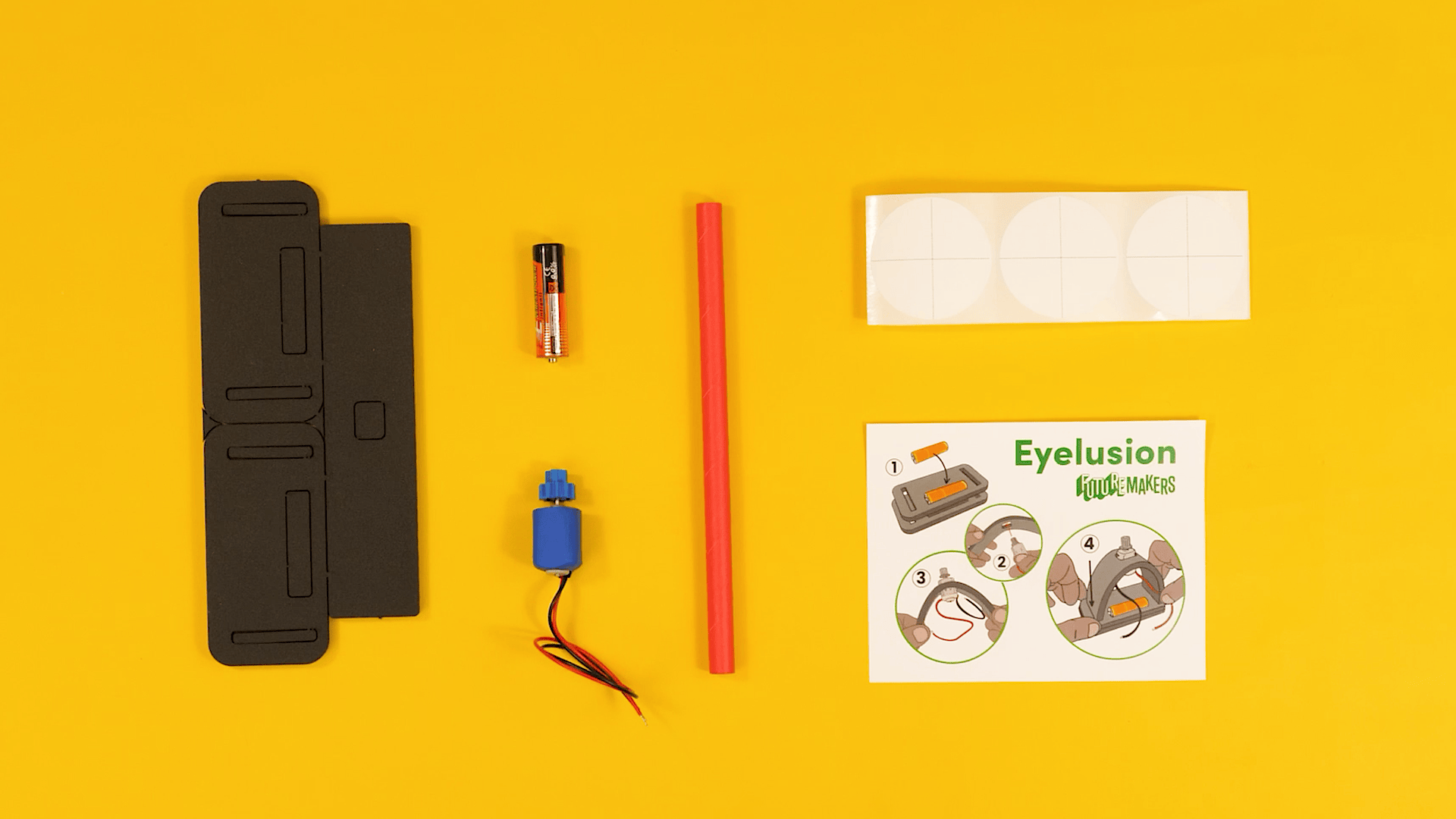
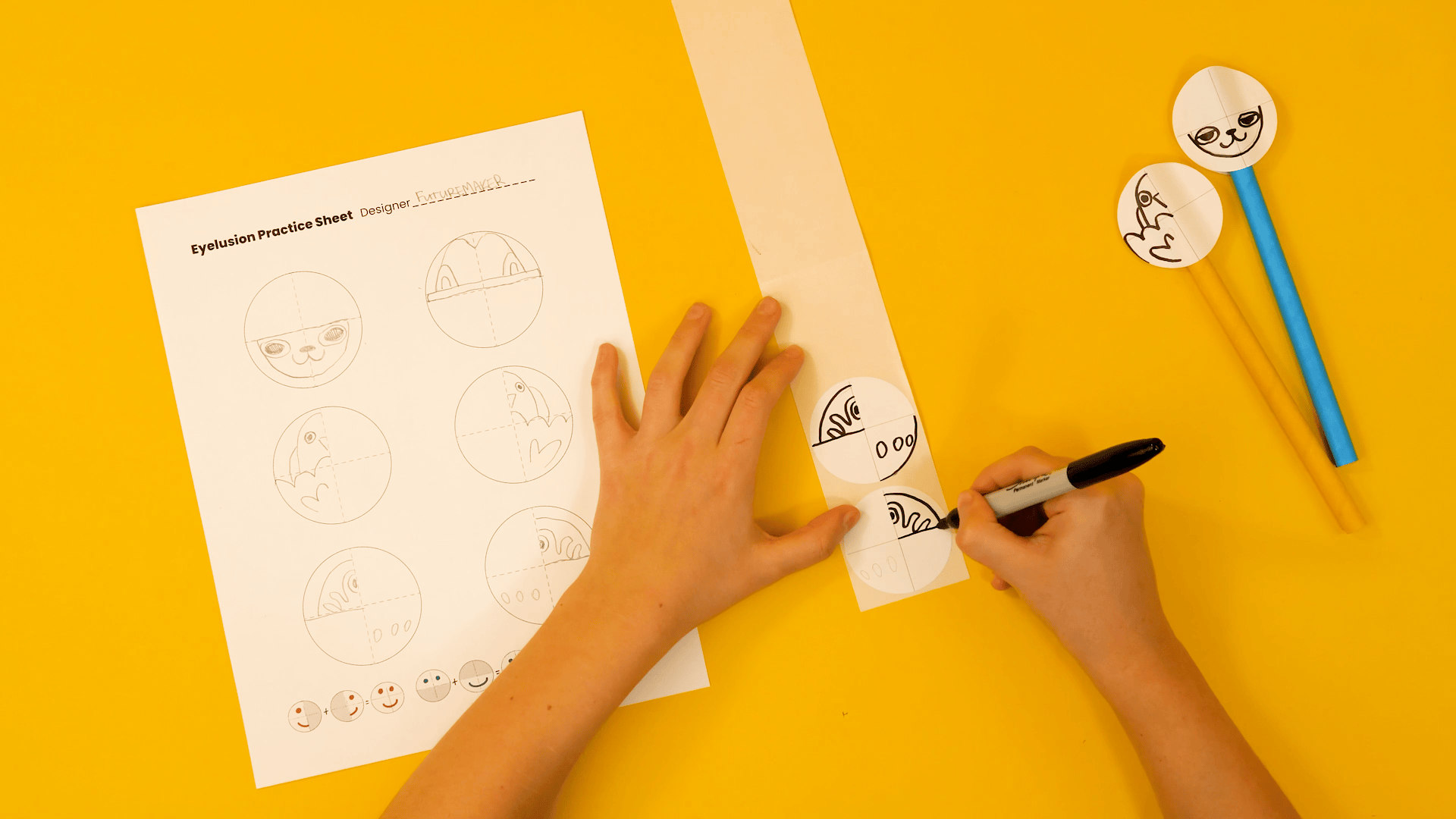
A motorized optical illusion learners draw and build.
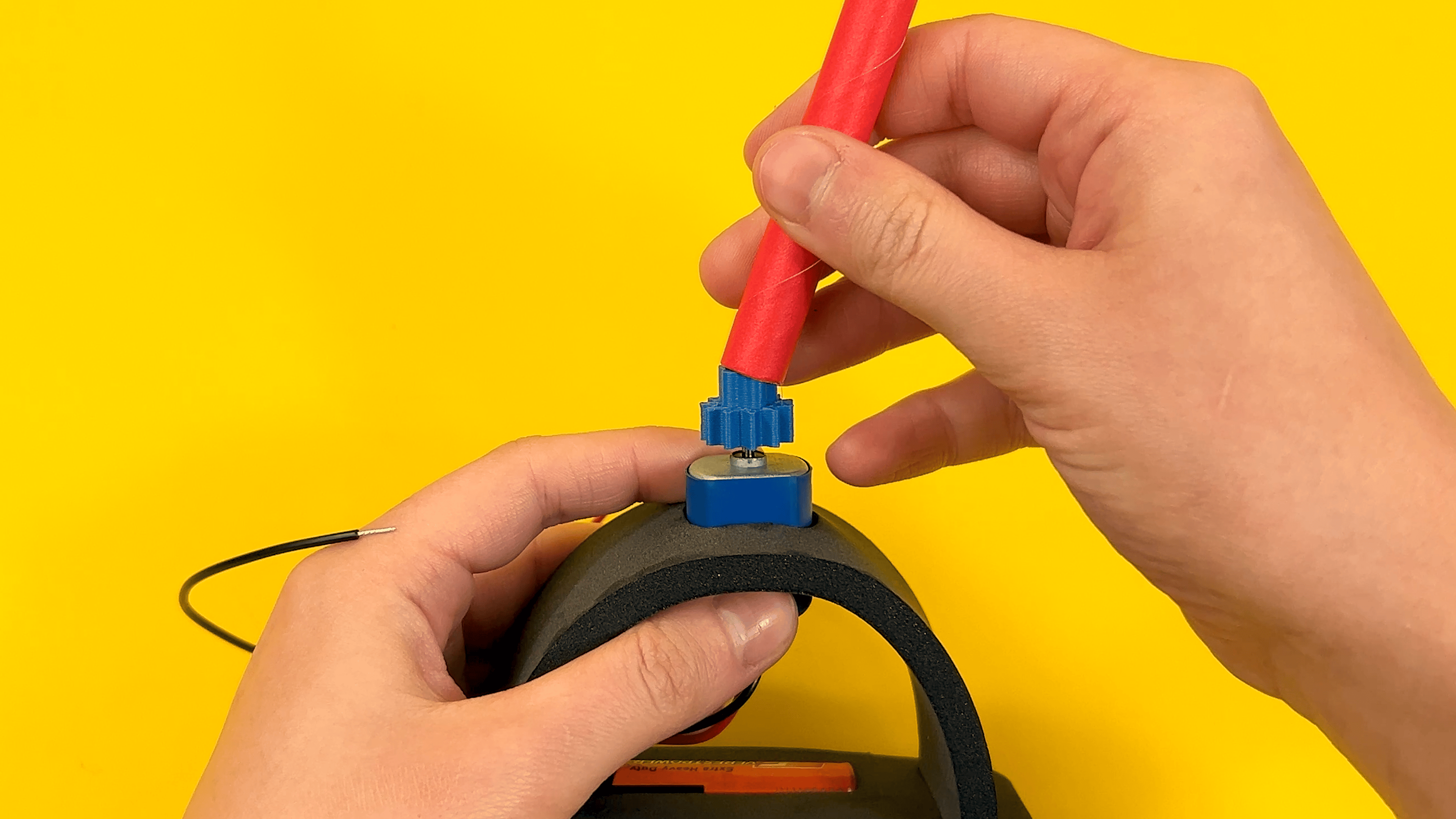
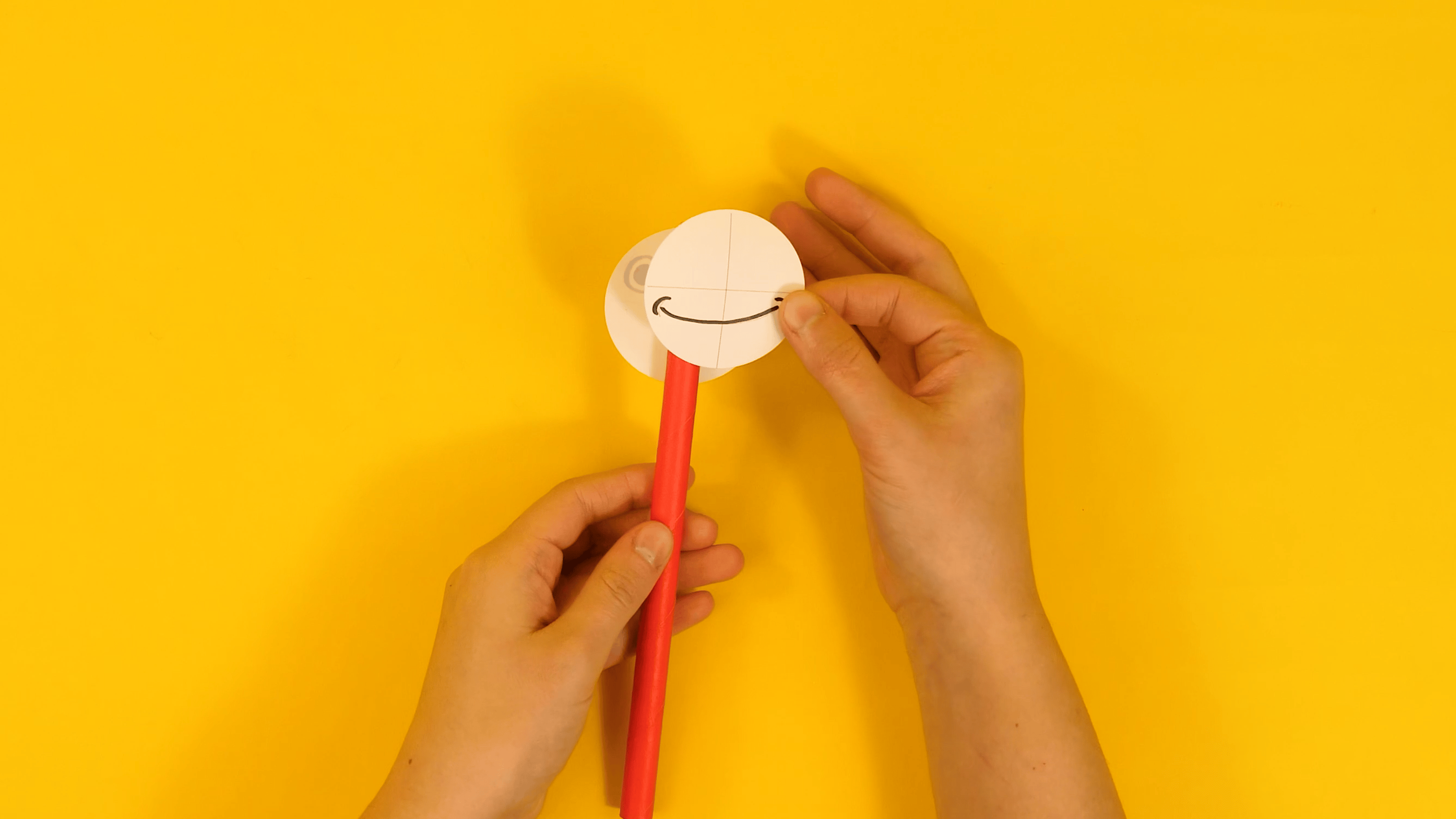
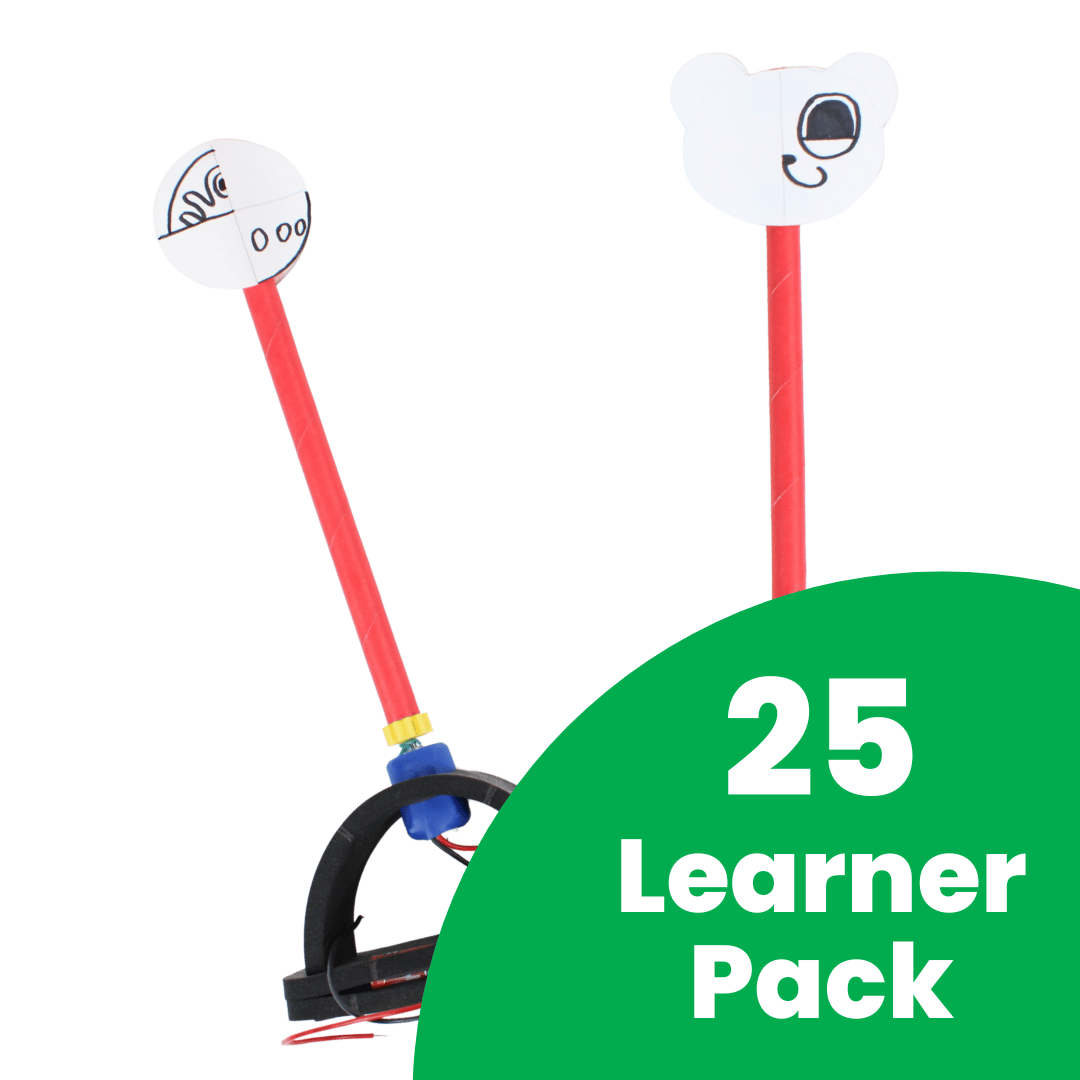
Learners design a pair of split images, press a motor into a foam holder with no glue or screws, and touch the wires to the battery. When the paper tube spins fast enough, the two drawings merge into one illusion. It is a memorable way to explore how the brain sees, plus a first simple circuit.
What participants make: A battery-powered spinner that blends two drawings into one picture through persistence of vision.
| Pack | Learners | SKU | UPC | Page |
|---|---|---|---|---|
| Small Group Pack | 10 | G4 EYEL 010 | 850061324276 | View |
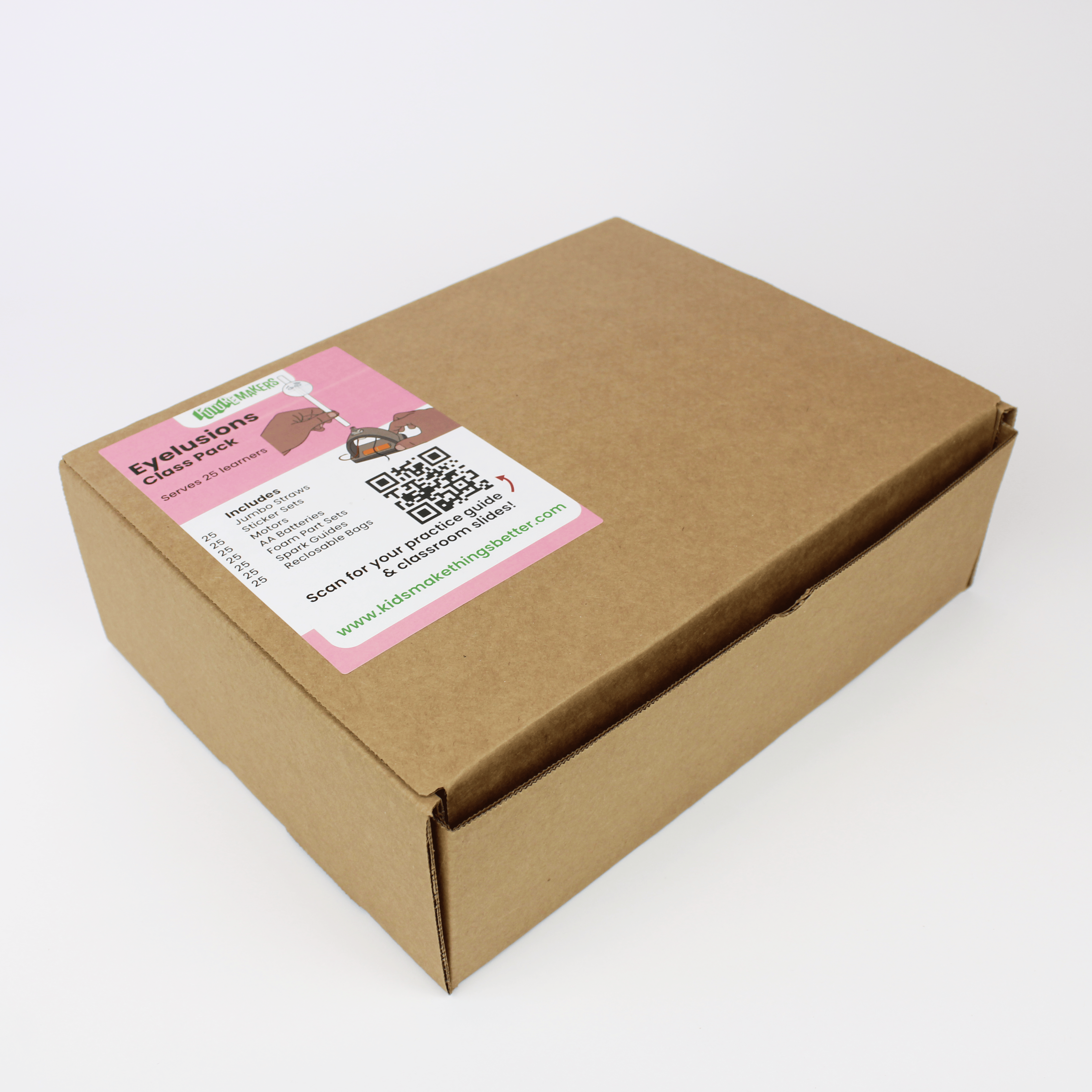
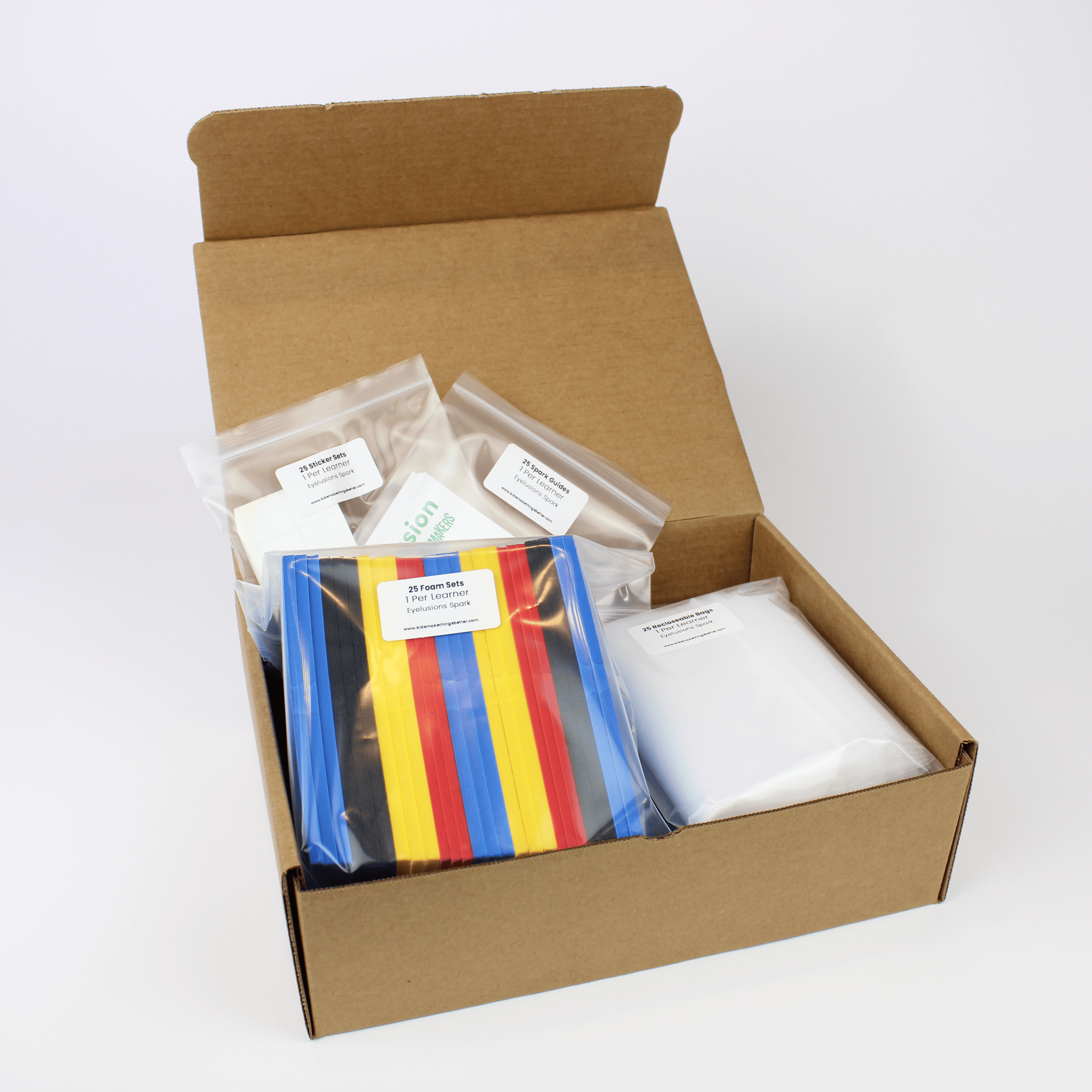
| Class Pack | 25 | CL EYEL 025 | 850061324269 | View |
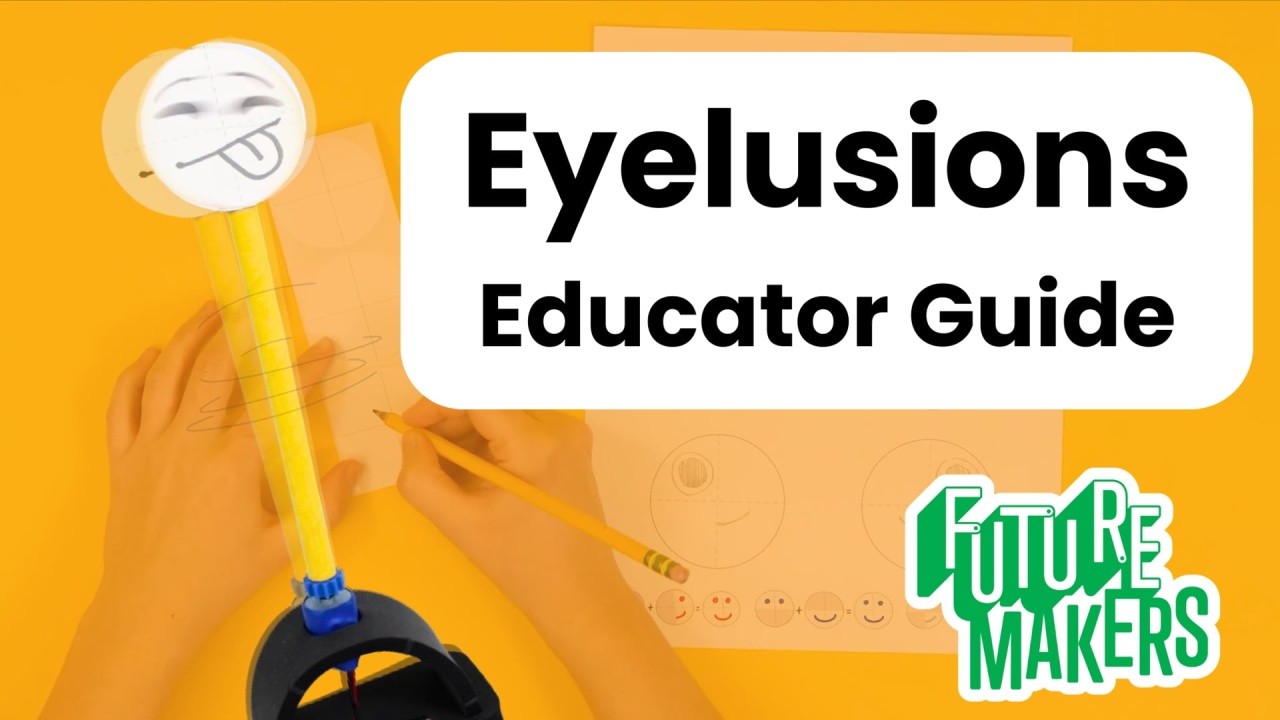 Educator guide video, 7:16
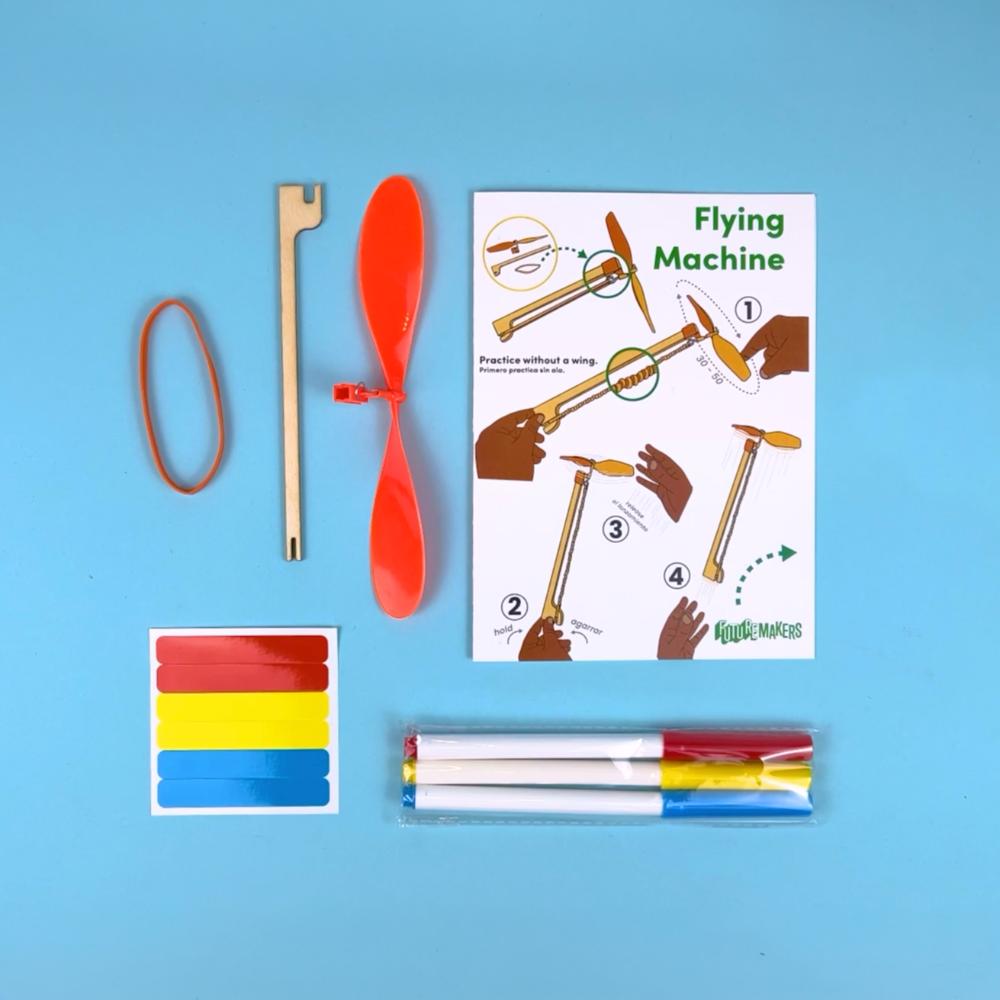
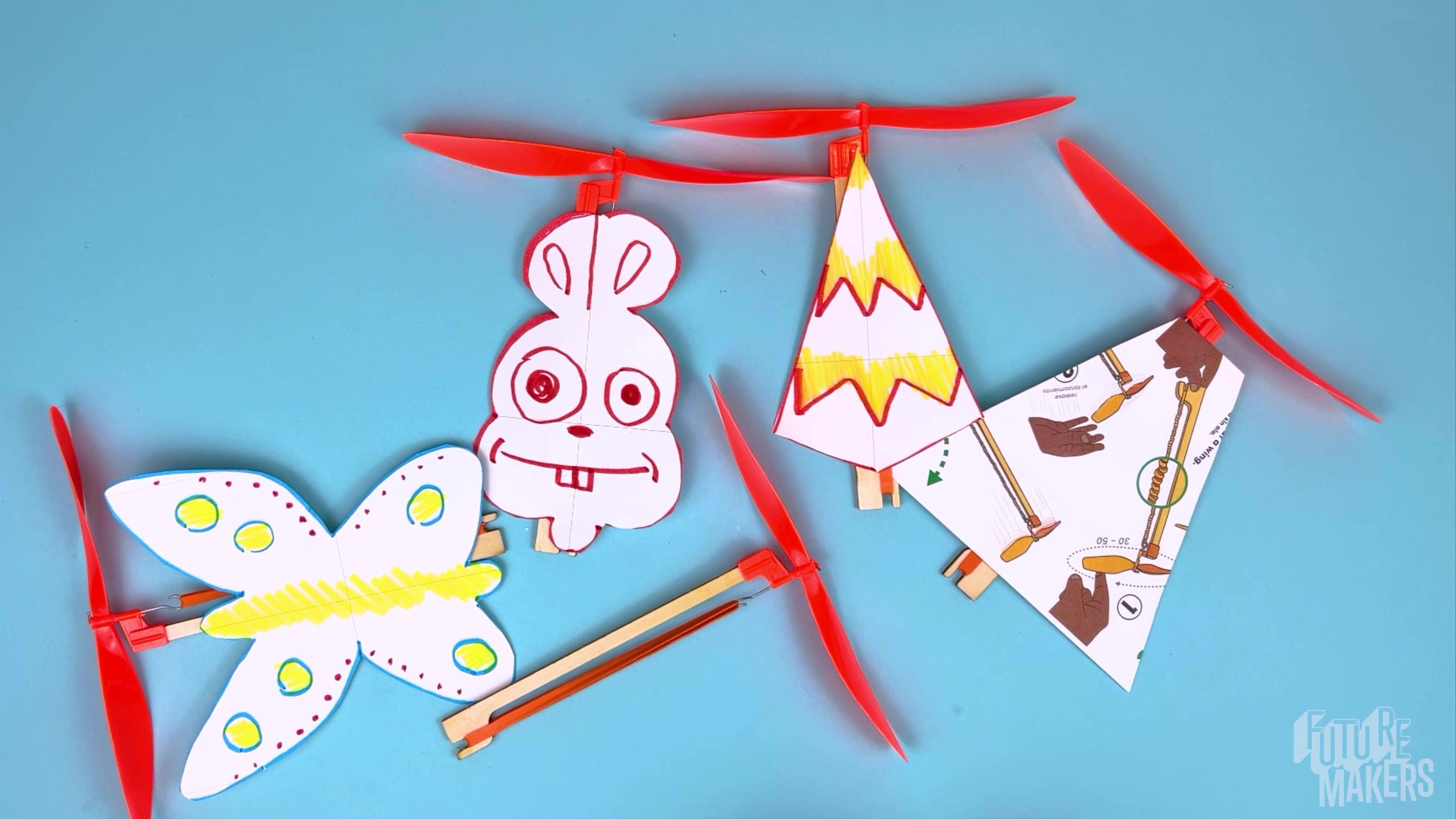
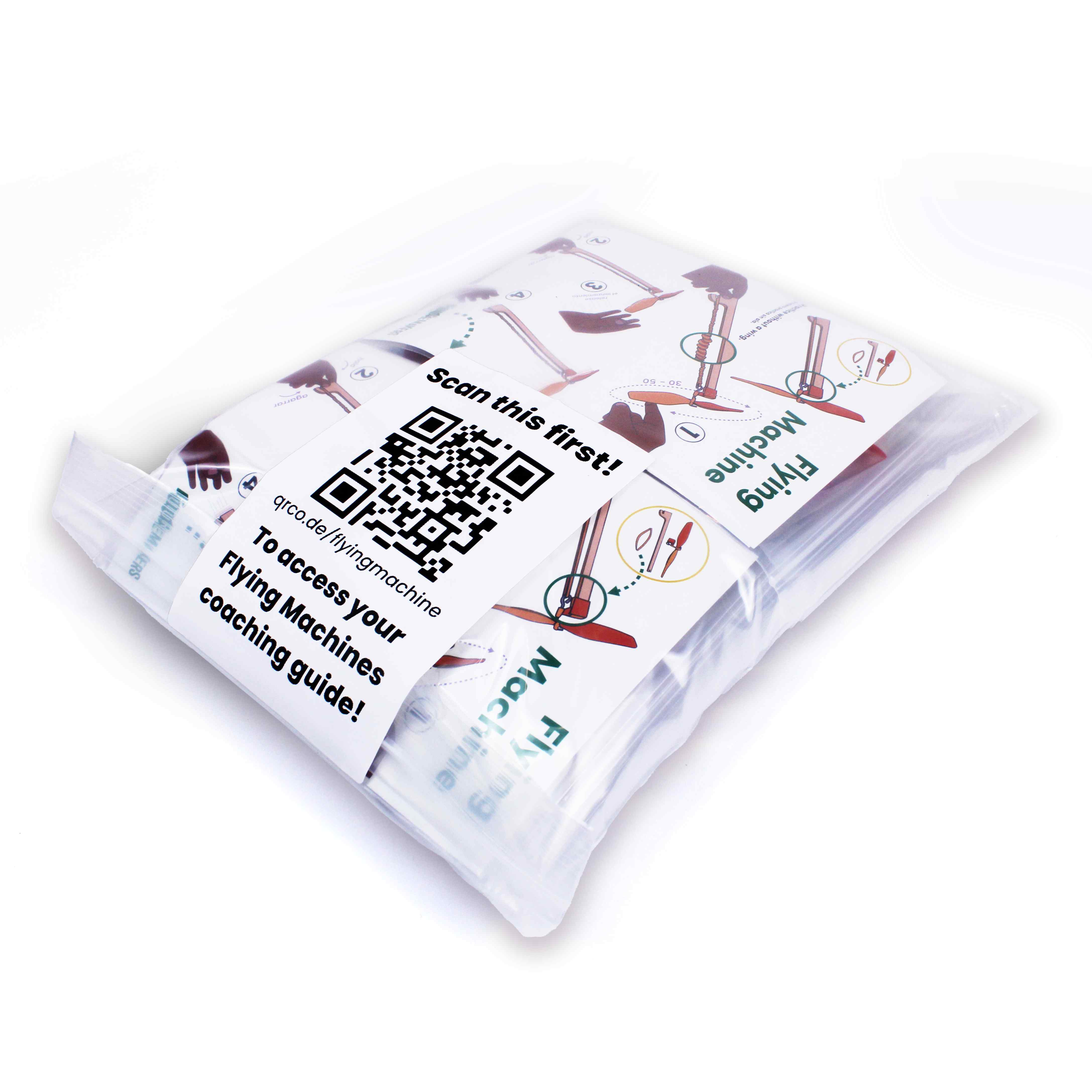
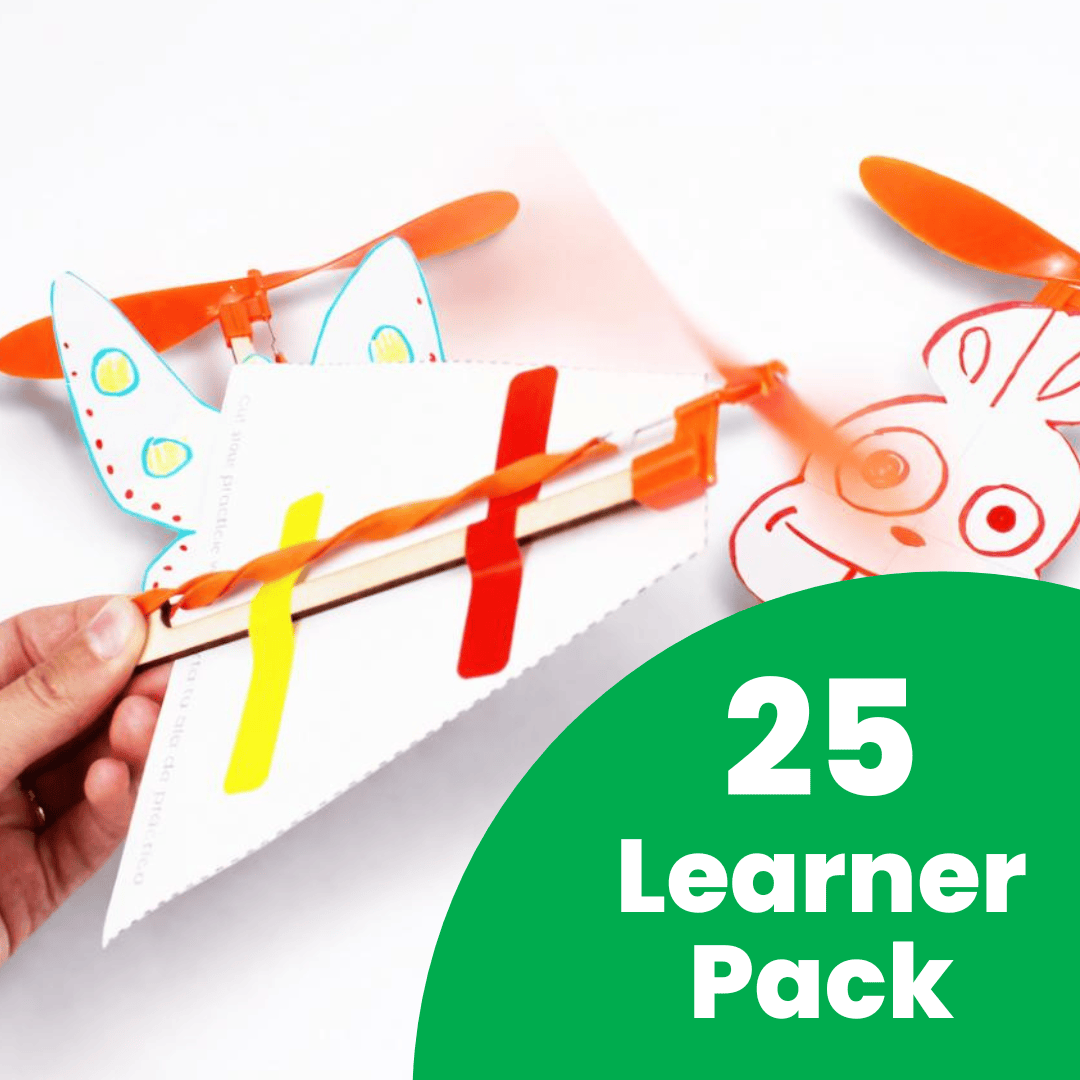
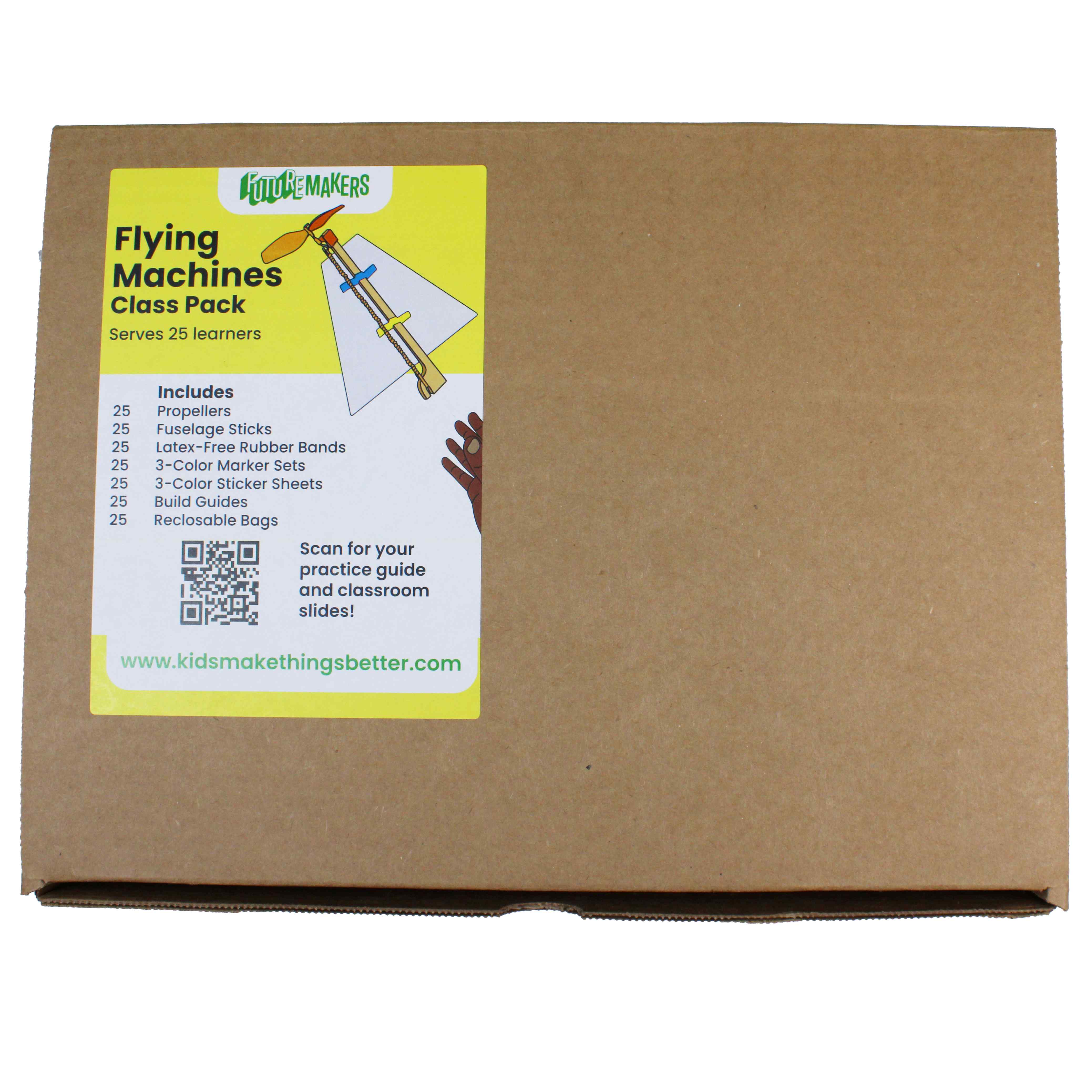
Rubber band-powered flyers that zoom high and far.
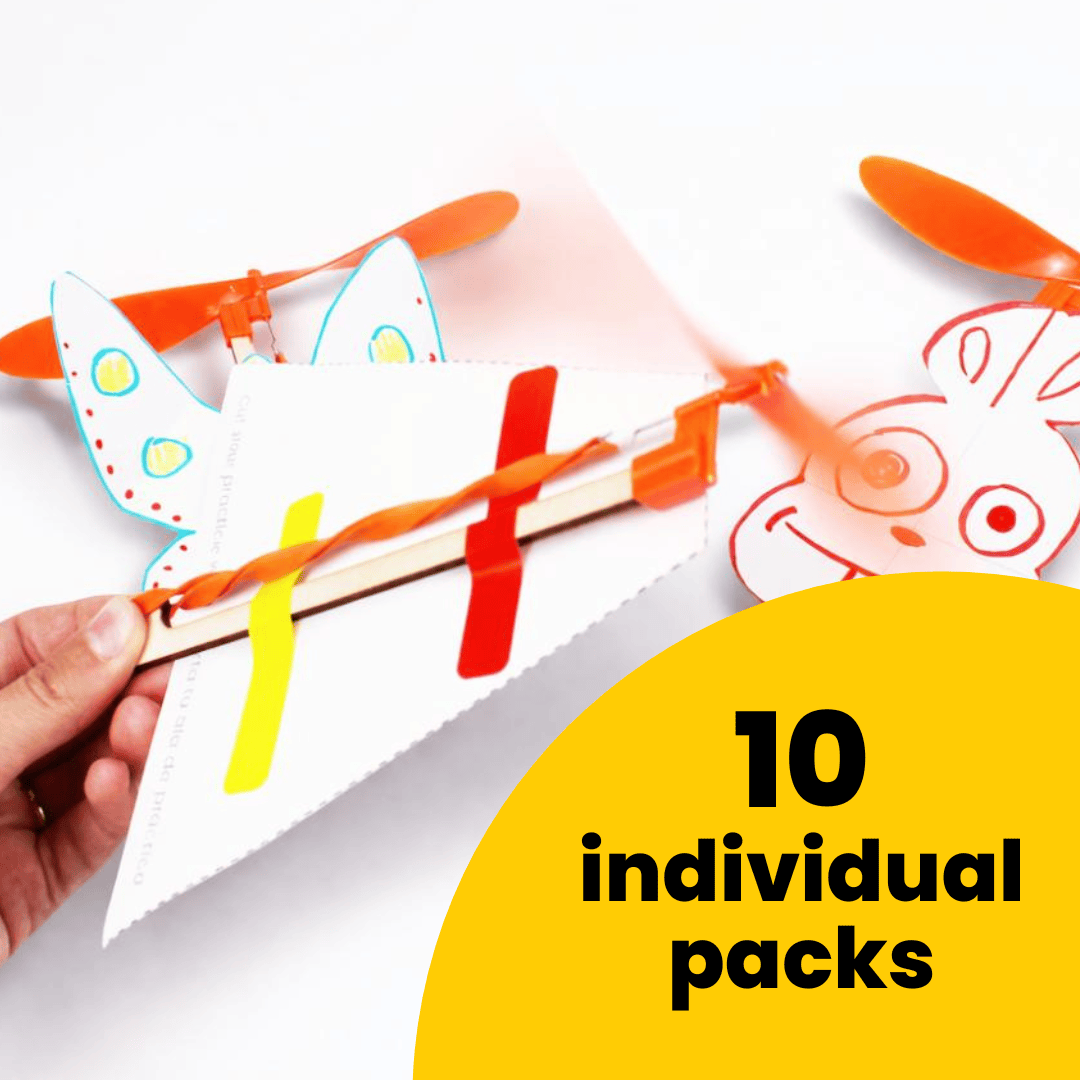
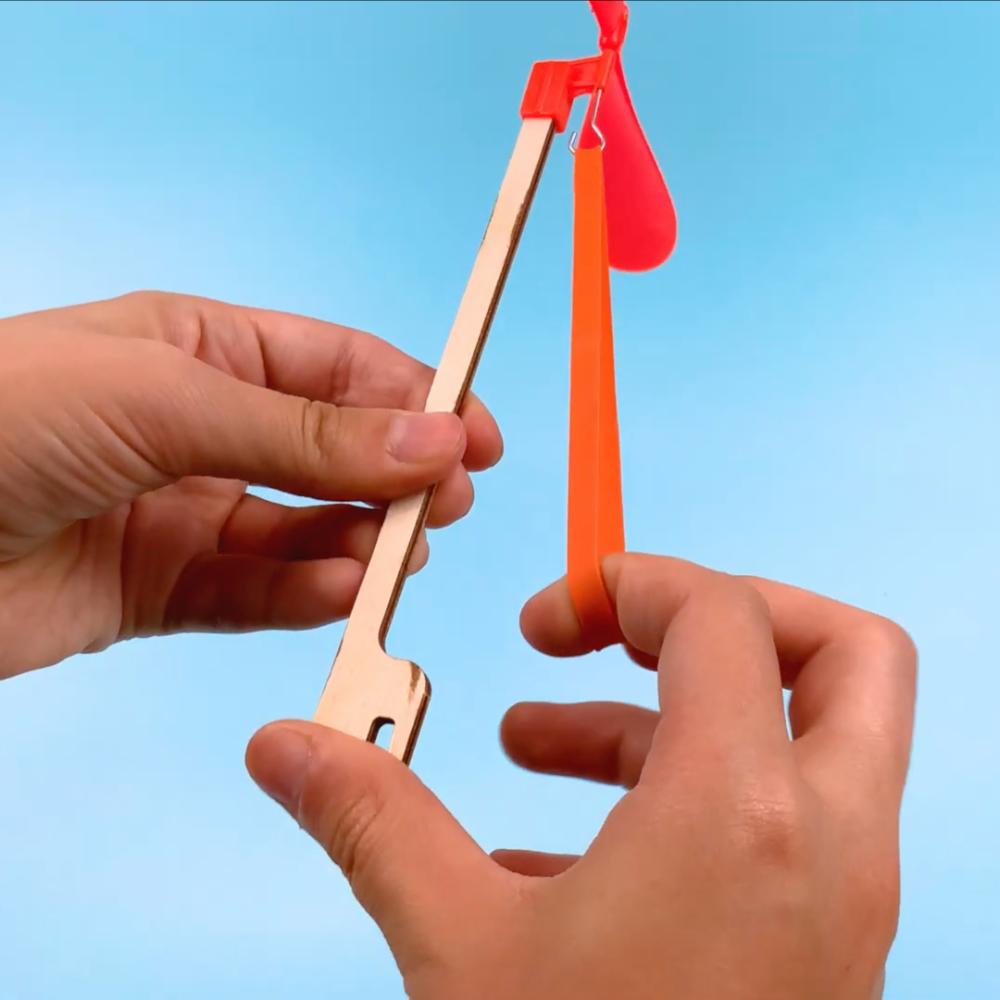
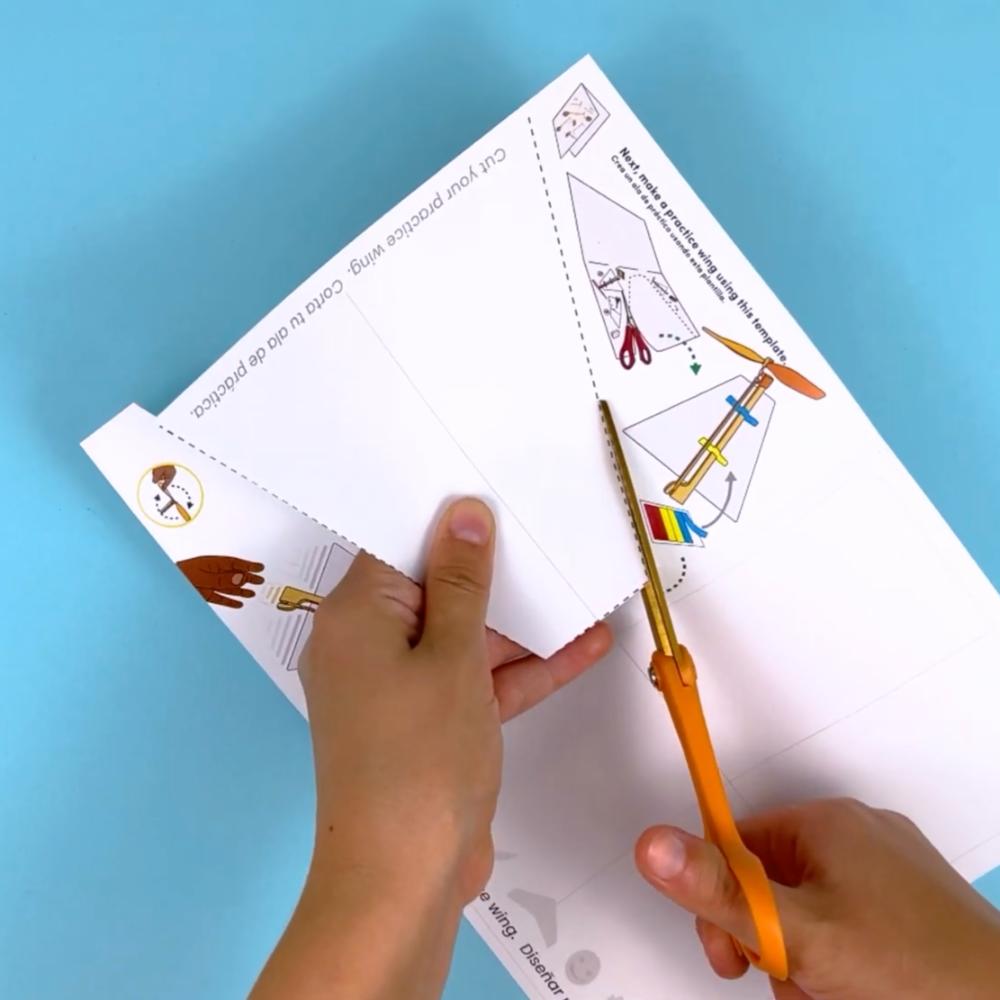
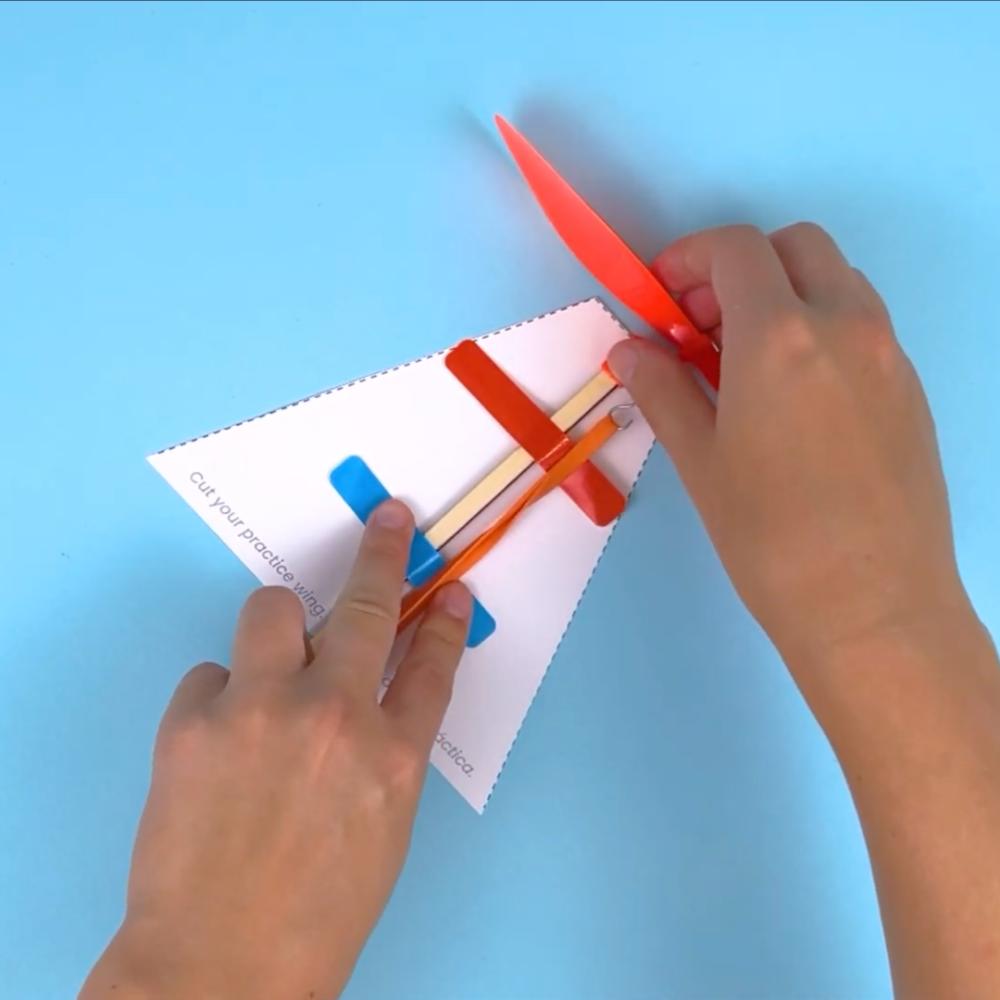
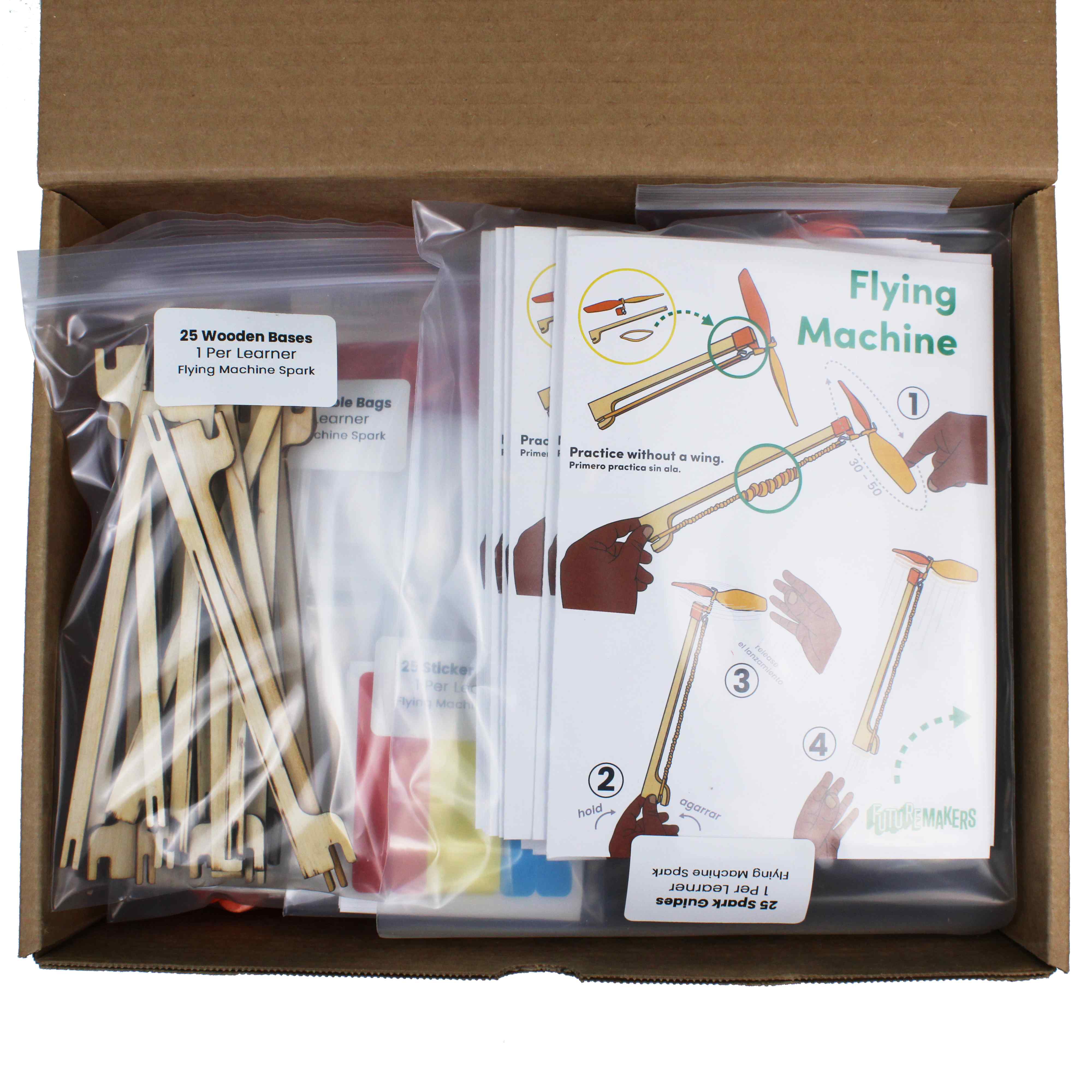
Learners design a symmetrical fuselage and wings, wind a rubber band to store energy, and practice a two-step launch that releases the propeller first for a stable flight. They build three versions and compare how each flies. It covers elastic potential energy, symmetry, and the design process, and makes a lively family-night activity.
What participants make: A reusable propeller-driven flyer, with wings learners design and redesign across three versions.
| Pack | Learners | SKU | UPC | Page |
|---|---|---|---|---|
| Small Group Pack | 10 | G1 FLYM 010 | 850061324122 | View |
| Class Pack | 25 | CL FLYM 025 | 850061324139 | View |
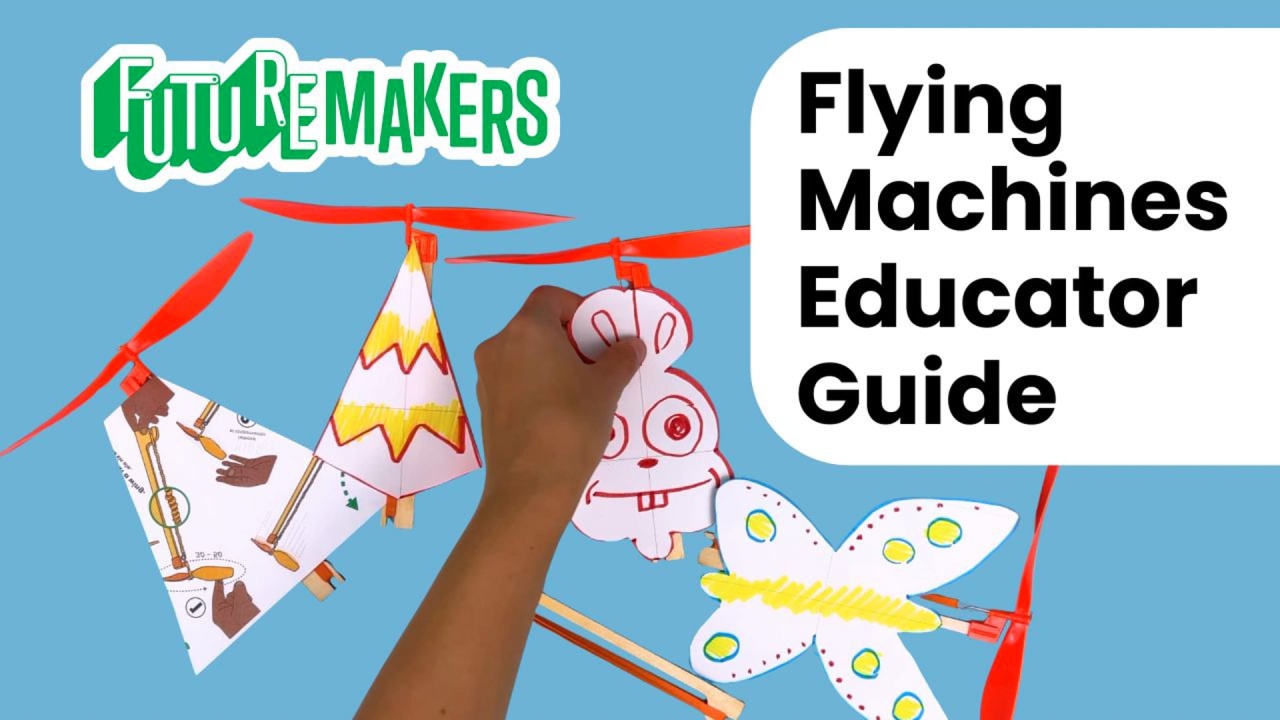 Educator guide video, 6:18
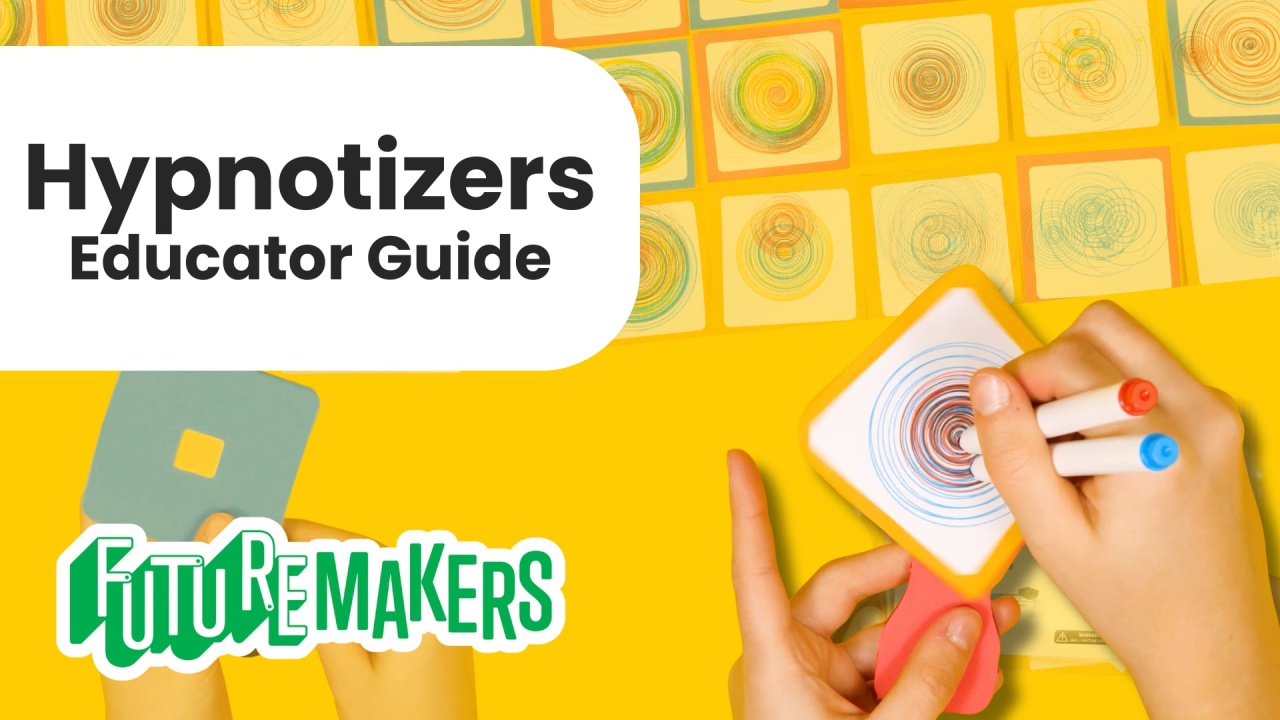
A wind-up machine that draws hypnotic spirals.
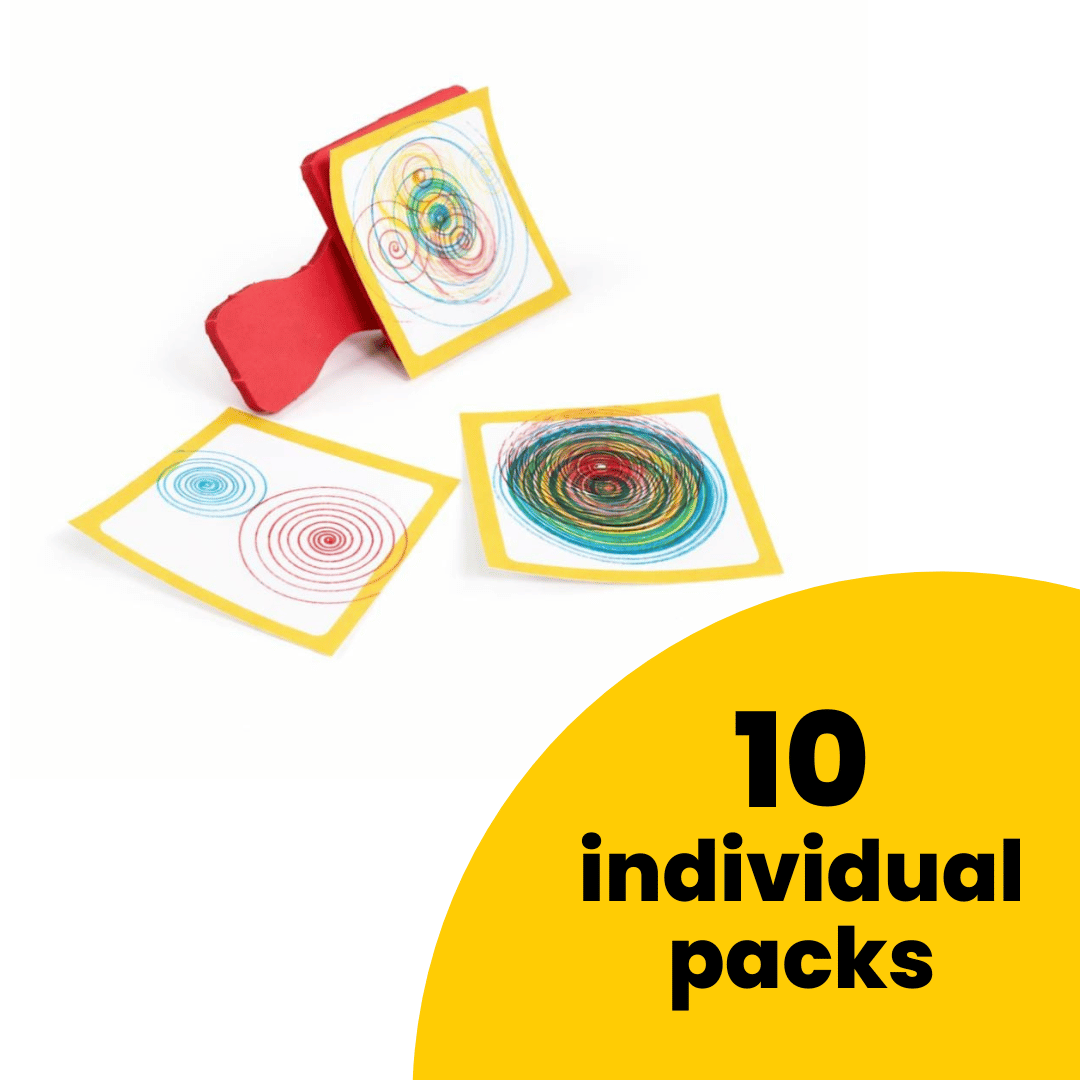
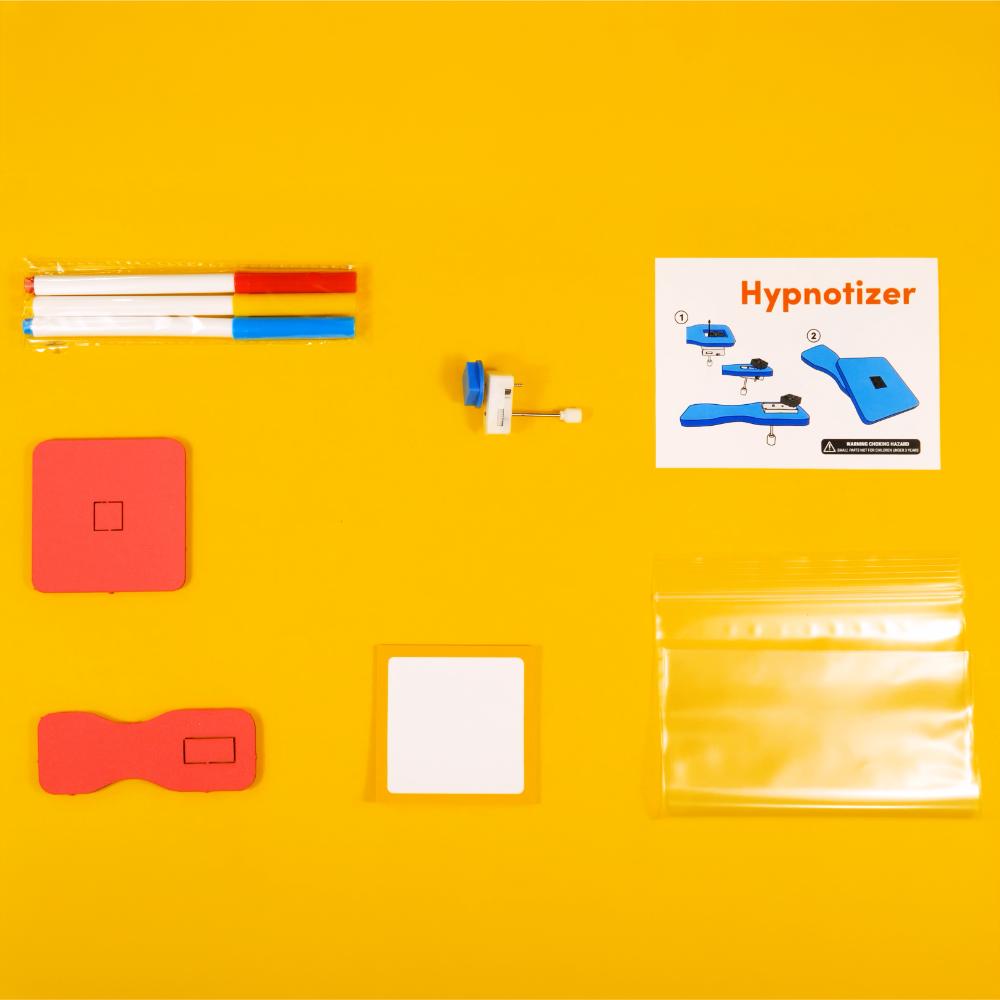
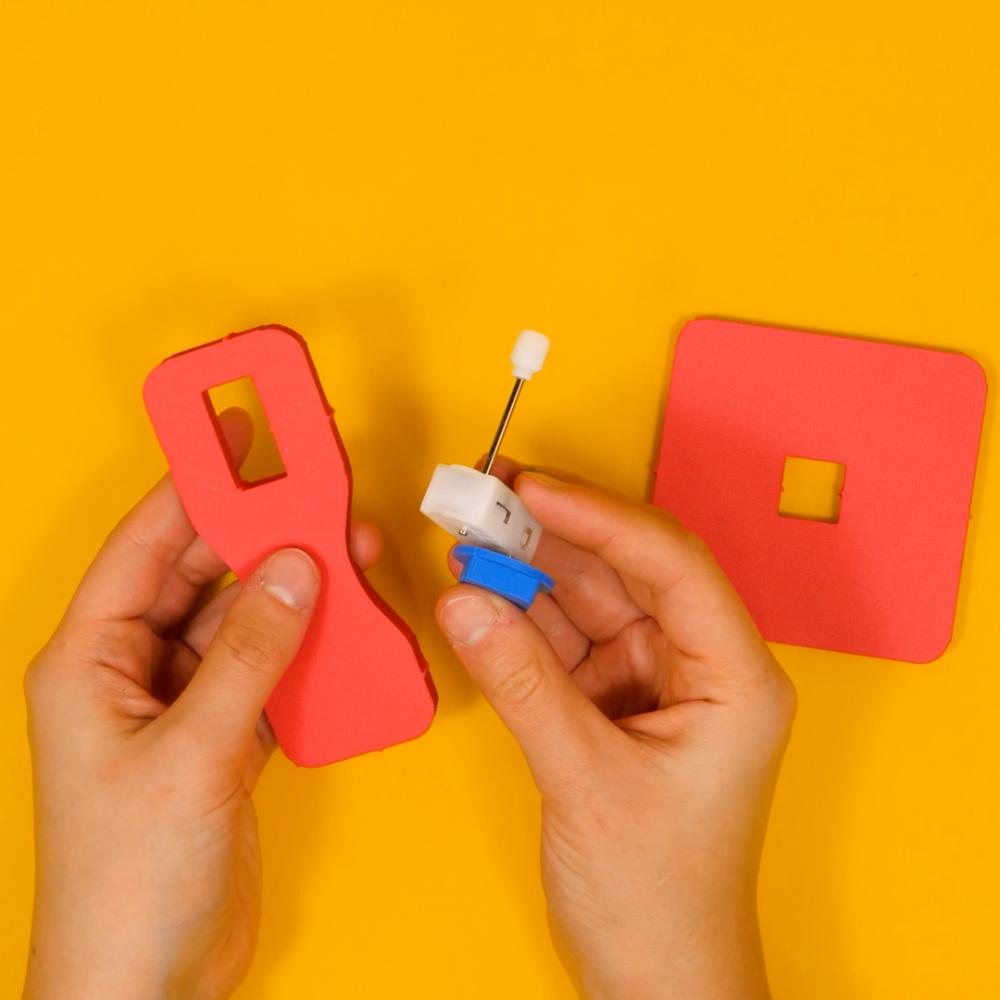
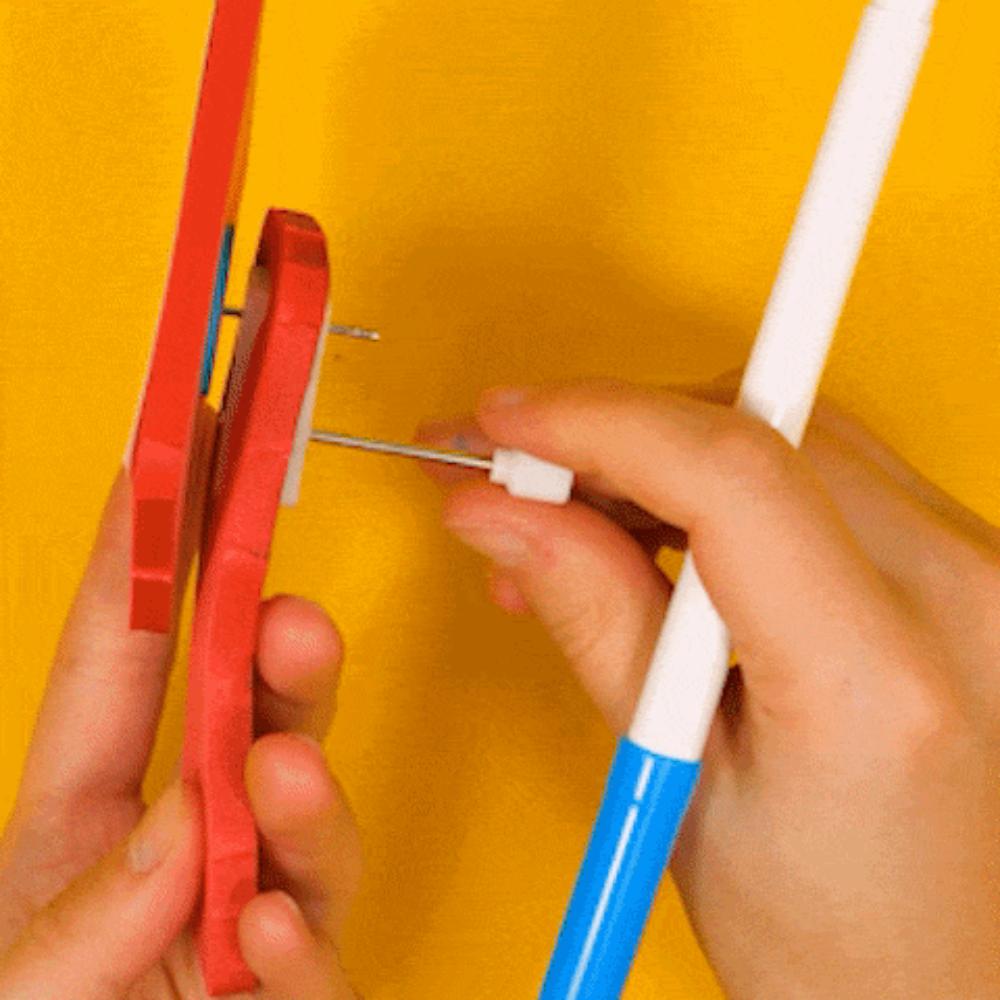
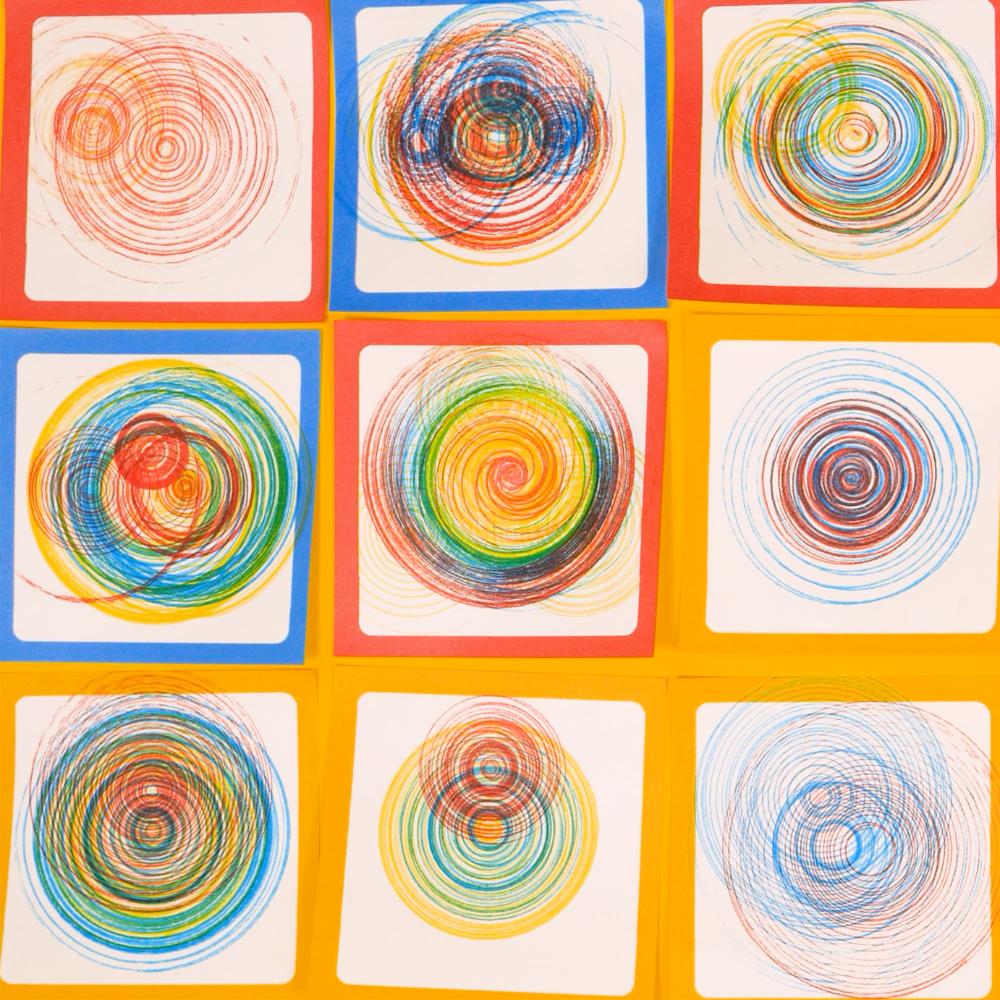
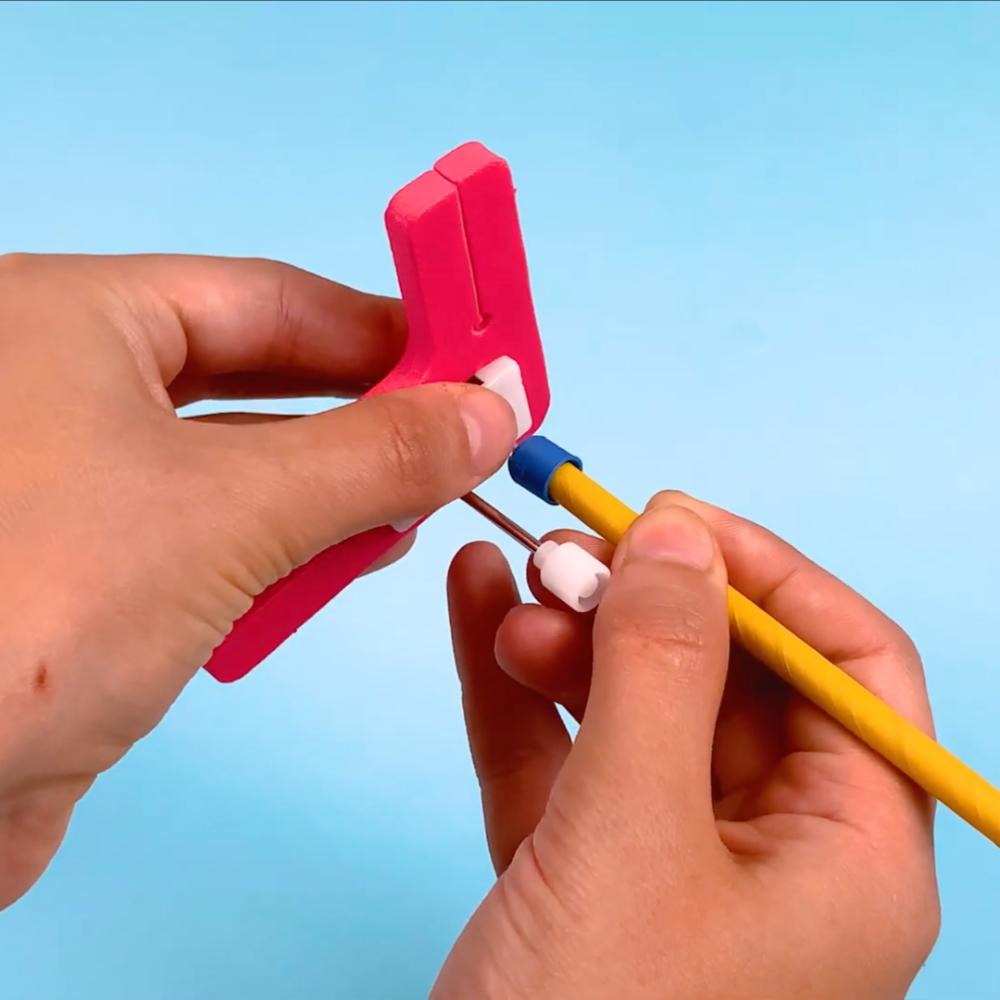
Learners fit a wind-up mechanism into a foam handle, wind the spring, and let the platform spin while they guide a marker across a sticky note. Layering colors and shifting the paper off center reveals hypnotic patterns. You don't draw the picture, you build the machine that draws it. Quick to run, at about 30 minutes.
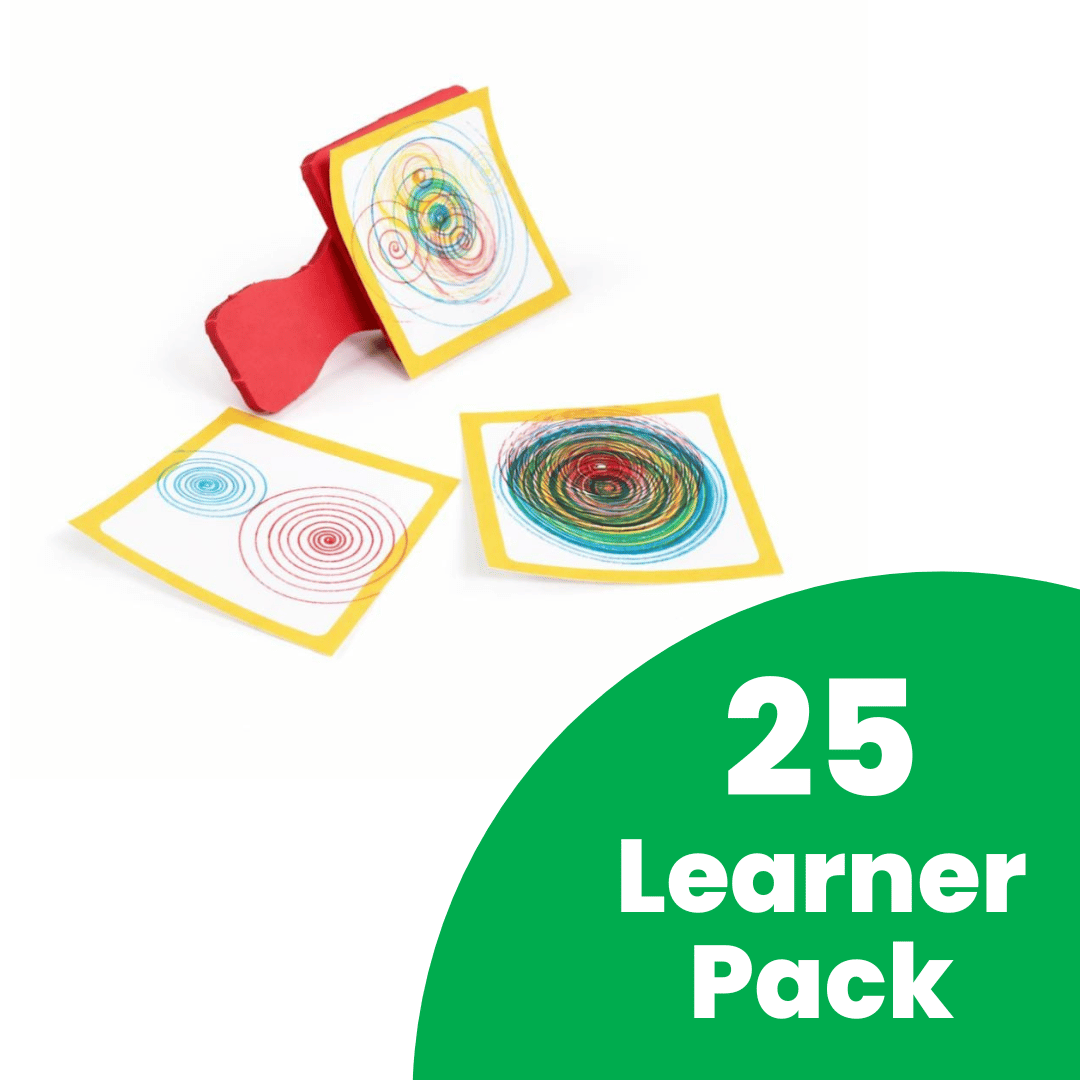
What participants make: A spring-driven spinning platform that turns a marker touch into colorful spirals and Moiré patterns.
| Pack | Learners | SKU | UPC | Page |
|---|---|---|---|---|
| Small Group Pack | 10 | G2 HYPN 010 | 850061324146 | View |
| Class Pack | 25 | CL HYPN 025 | 850061324153 | View |
 Educator guide video, 5:48
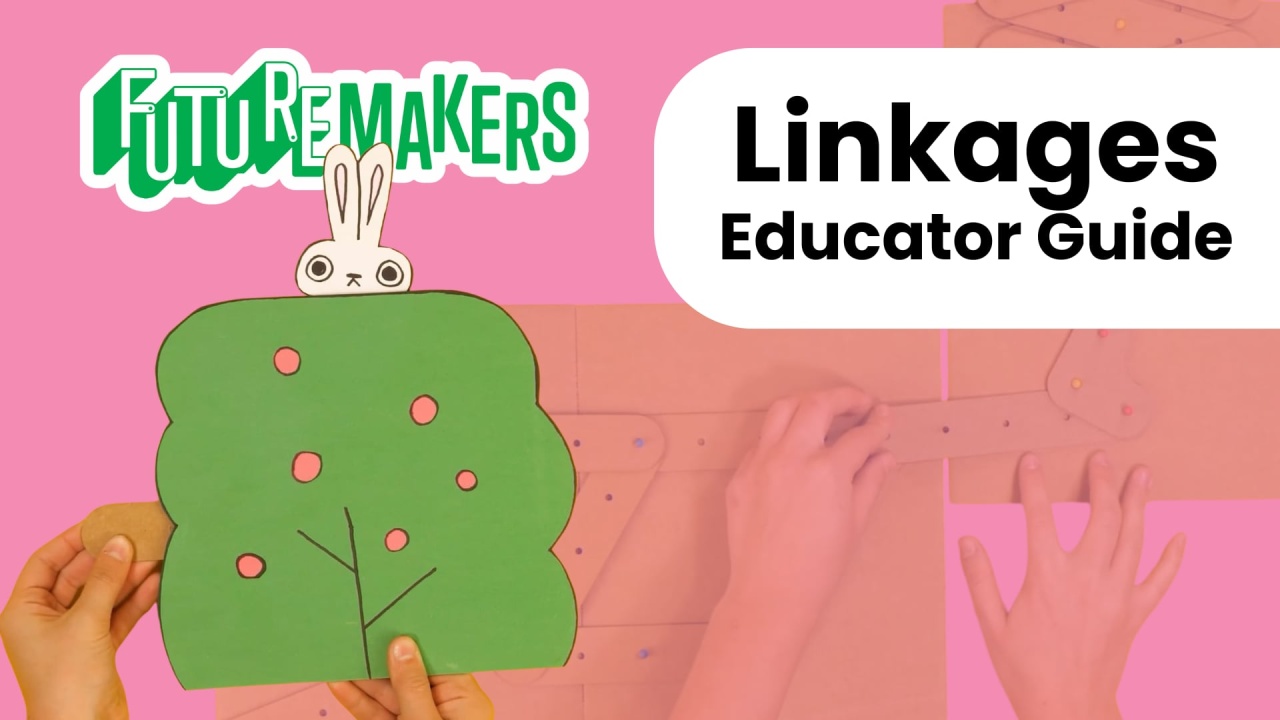
Cardboard levers and pivots that make creatures move.
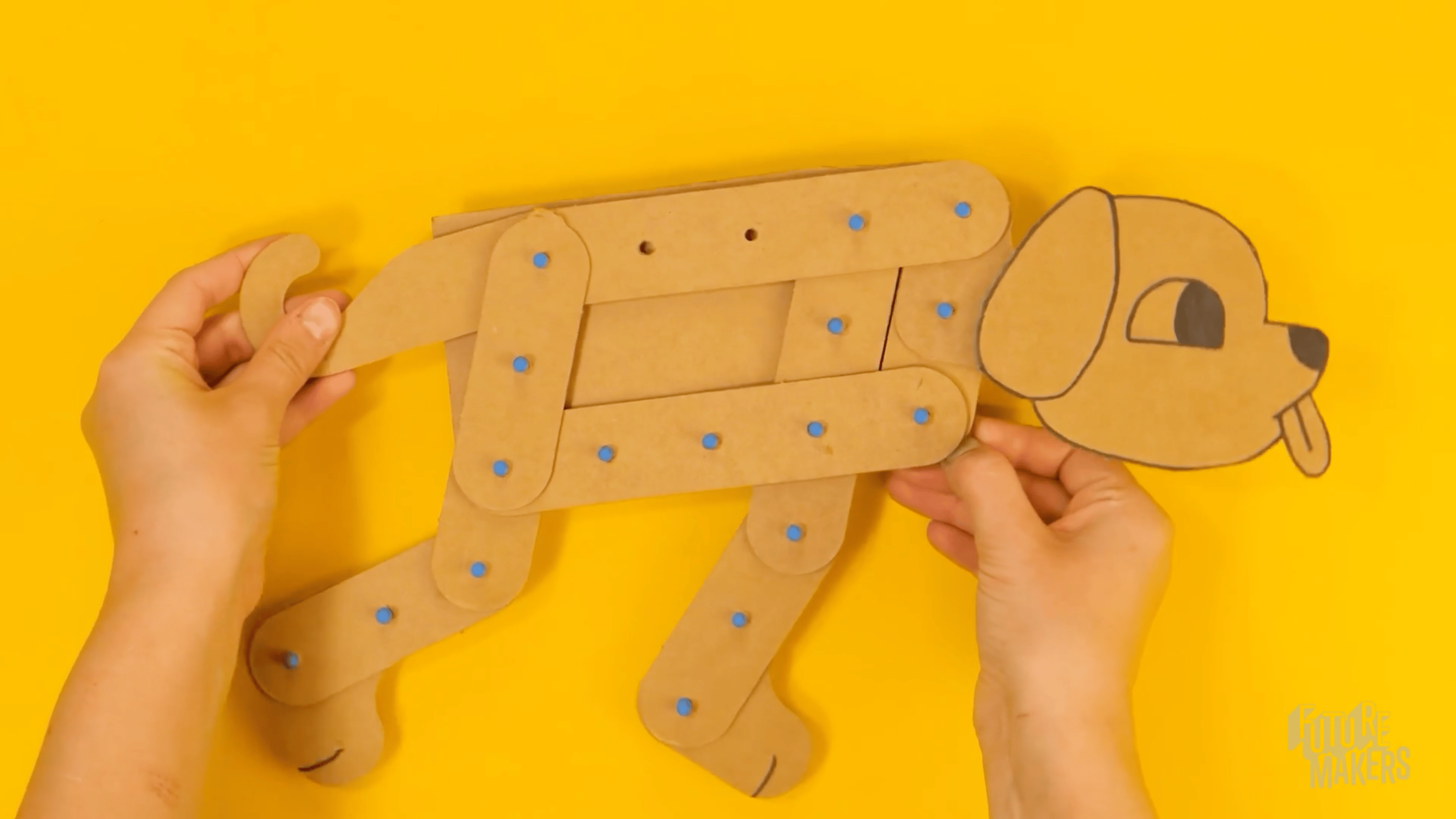
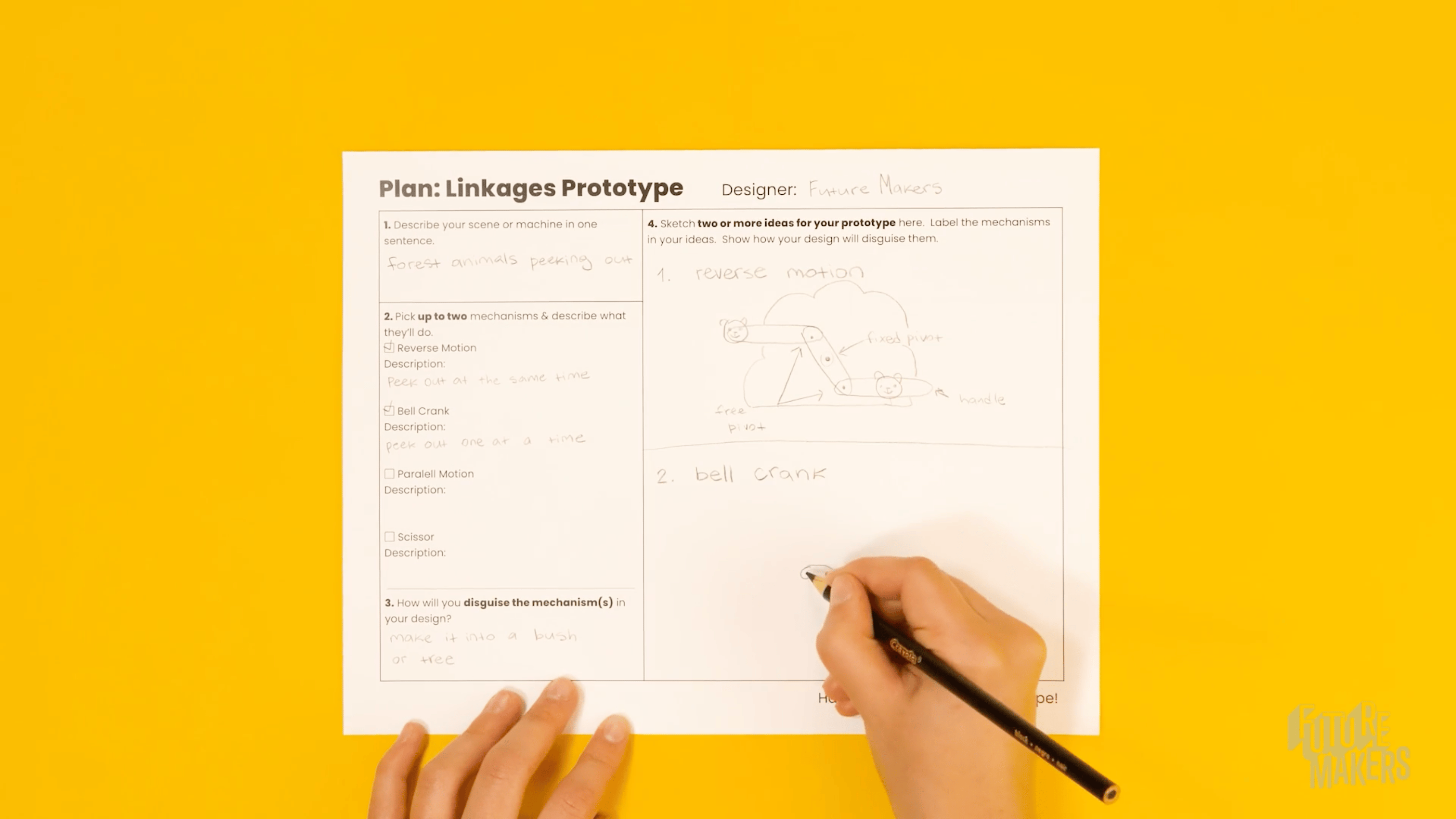
Learners connect cardboard levers with pivot fasteners to build reverse-motion, bell crank, parallel-motion, and scissor linkages. Then they invent arms that extend, claws that grab, or fish that swim, and design a story around the mechanism. It suits kindergarten through middle school.
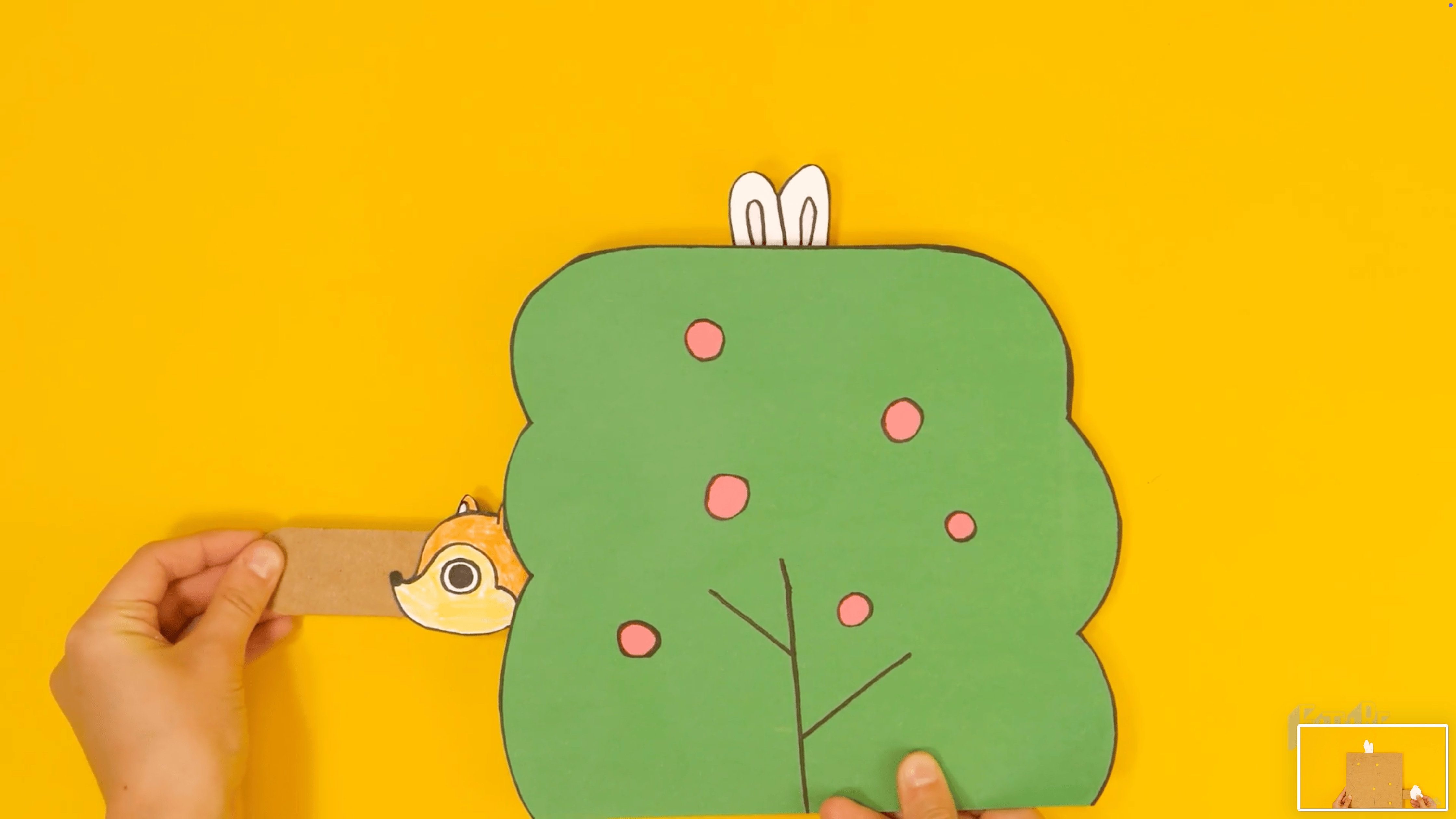
What participants make: A moving cardboard contraption built from four classic linkage types, disguised as an animal or machine.
| Pack | Learners | SKU | UPC | Page |
|---|---|---|---|---|
| Small Group Pack | 10 | G3 LINK 010 | 850061324160 | View |
| Class Pack | 25 | CL LINK 025 | 850061324177 | View |
 Educator guide video, 12:44
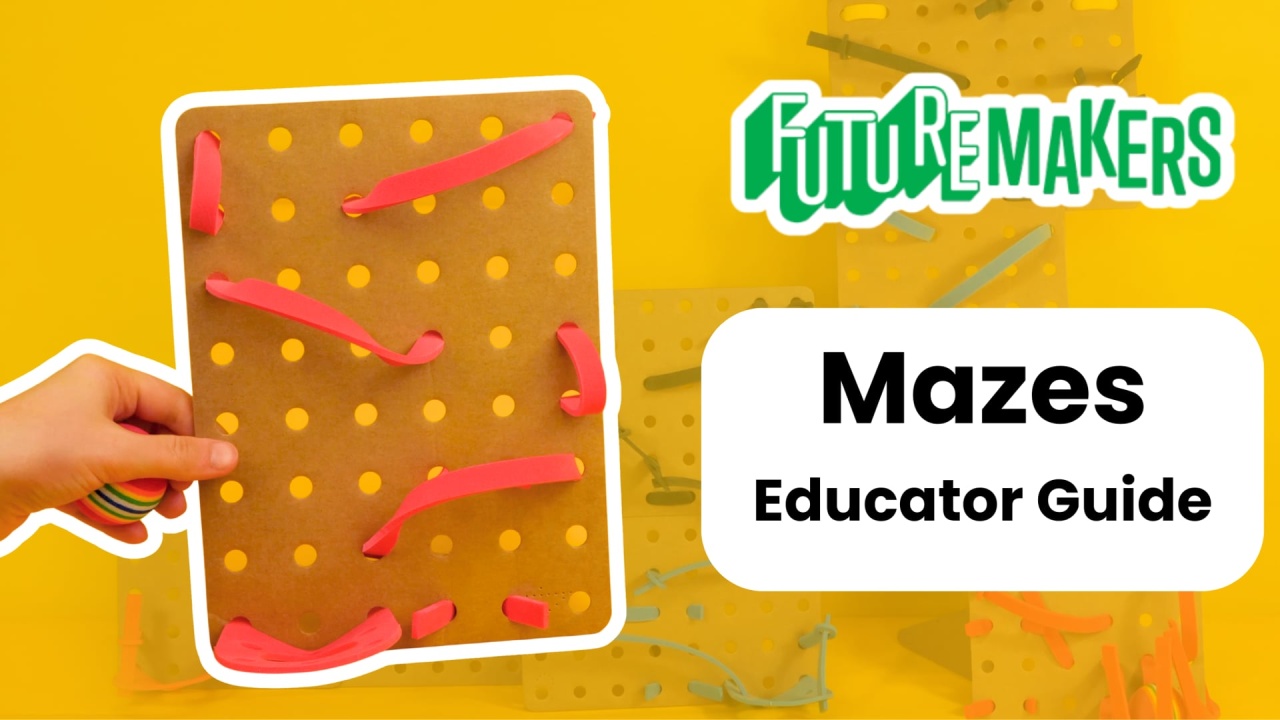
Build a gravity maze backward, then connect with friends.
Learners place the finish hoop first, then work backward, angling foam ramps through die-cut holes so gravity carries a ball from top to bottom. They test and adjust until it runs, then connect boards into a cooperative path. It teaches reverse engineering, ramp angle, and teamwork.
What participants make: An adjustable ball maze of foam ramps on a cardboard wall board that can join other learners' mazes into one shared path.
| Pack | Learners | SKU | UPC | Page |
|---|---|---|---|---|
| Small Group Pack | 10 | G2 MAZE 010 | 850061324184 | View |
| Class Pack | 25 | CL MAZE 025 | 850061324191 | View |
 Educator guide video, 7:09
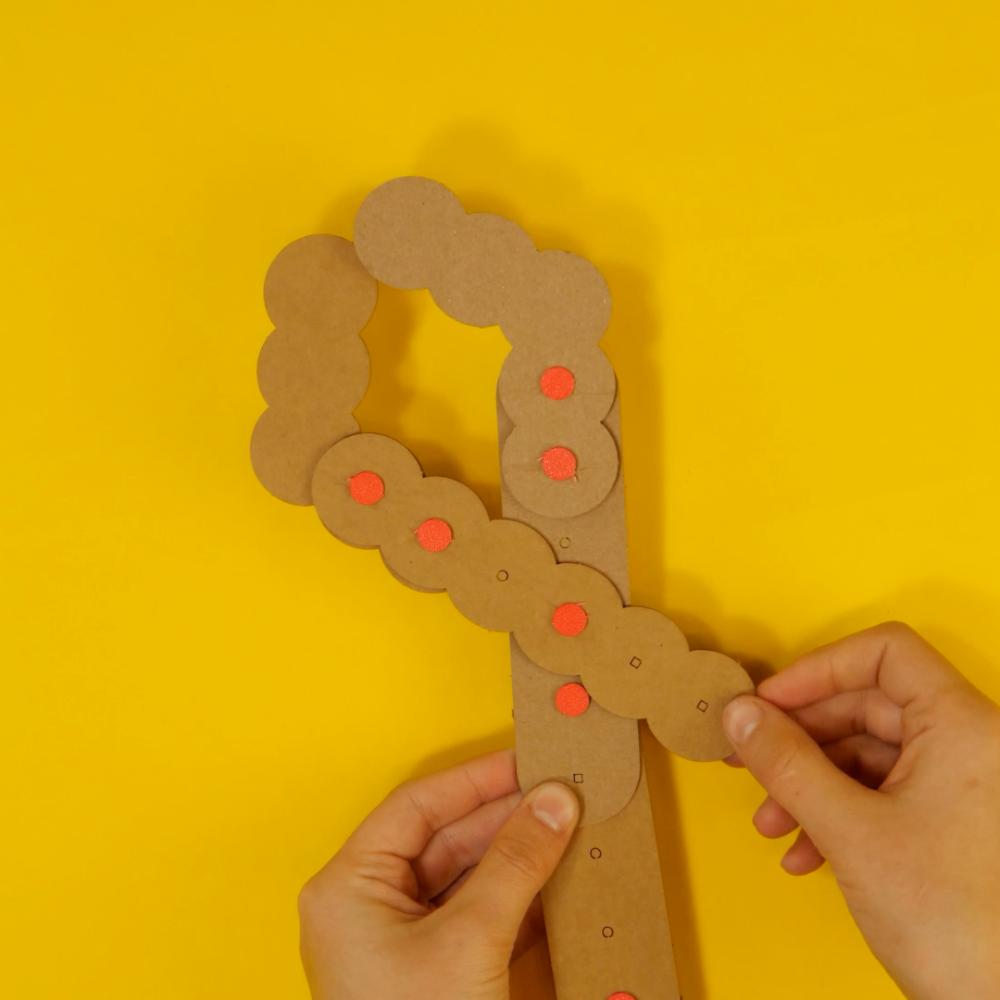
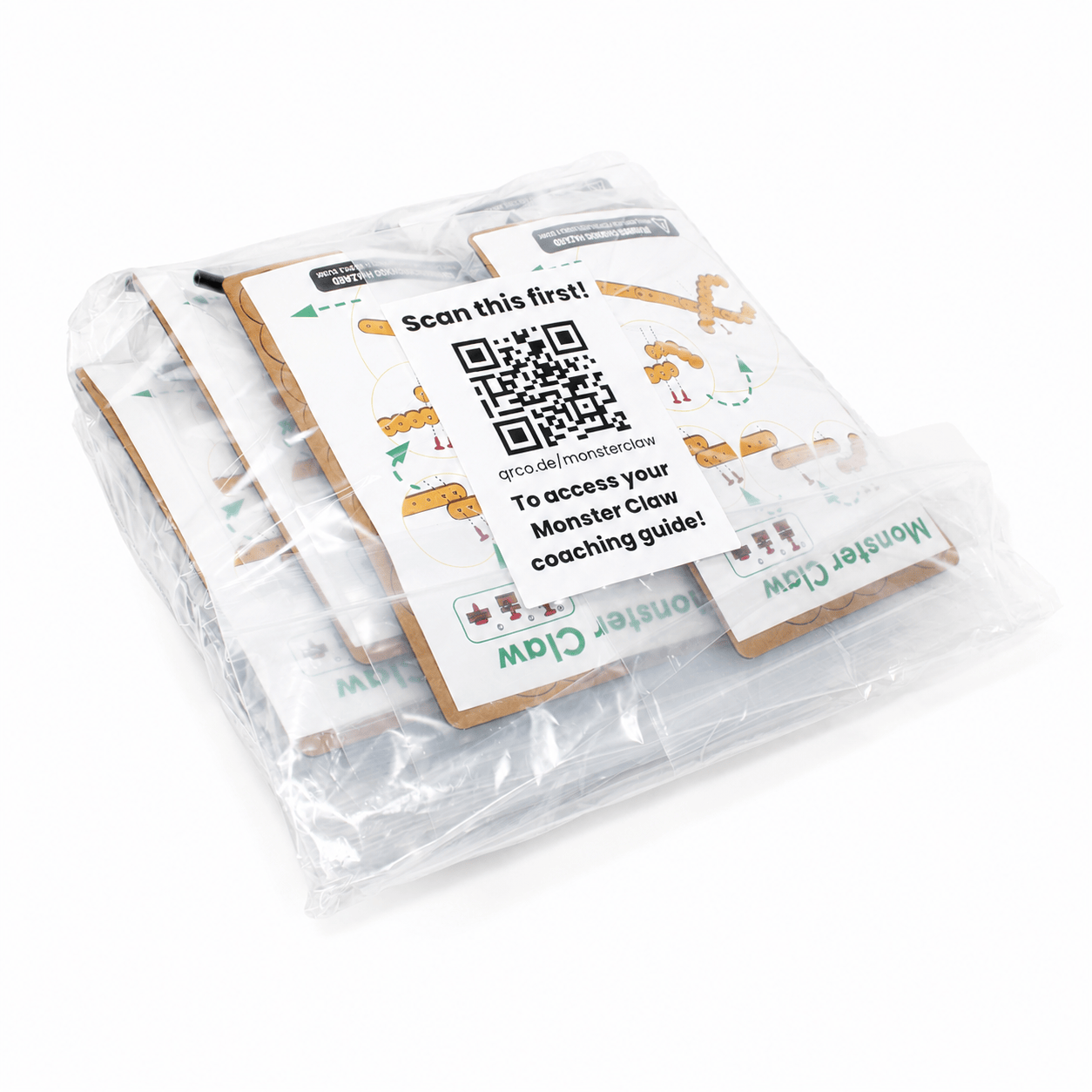
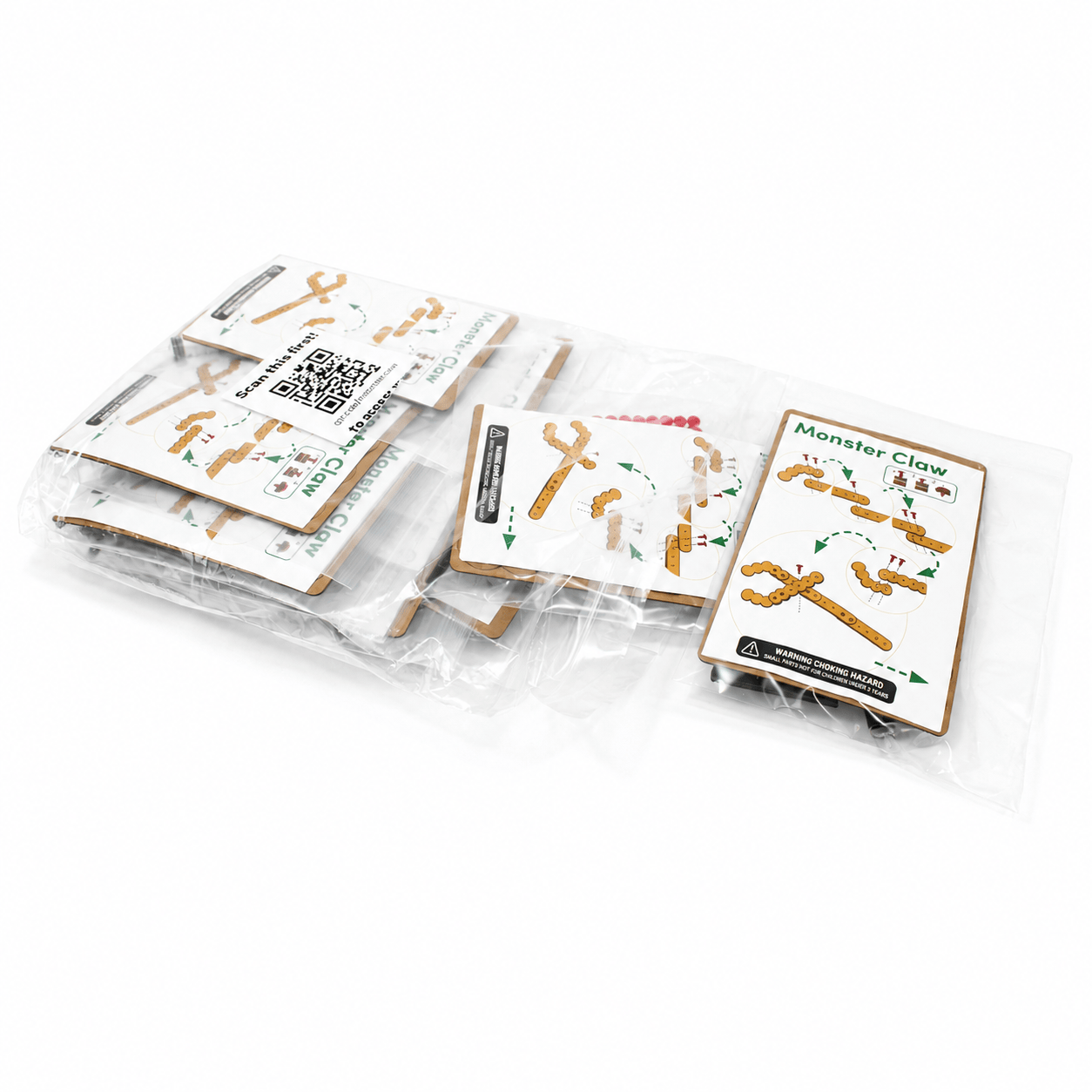
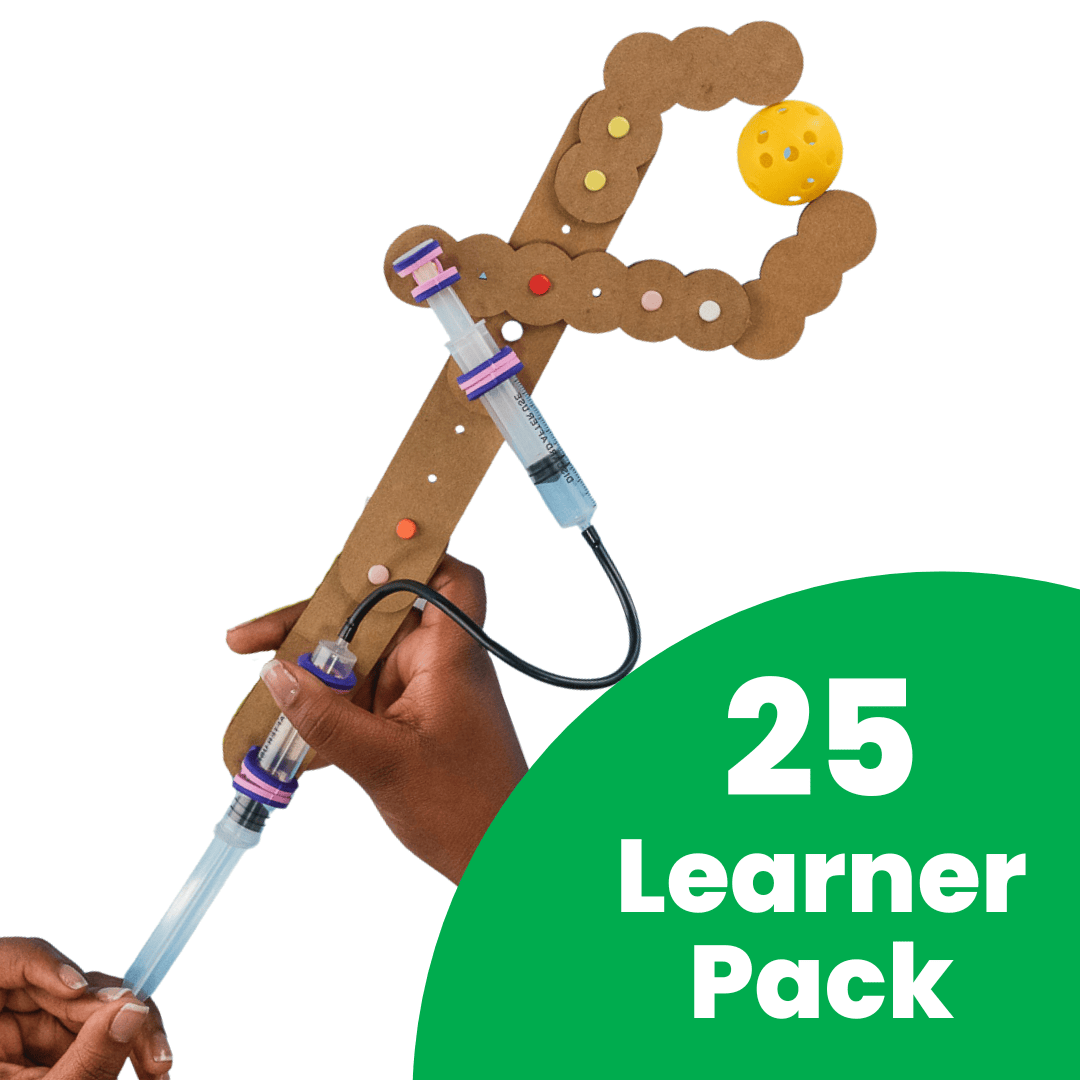
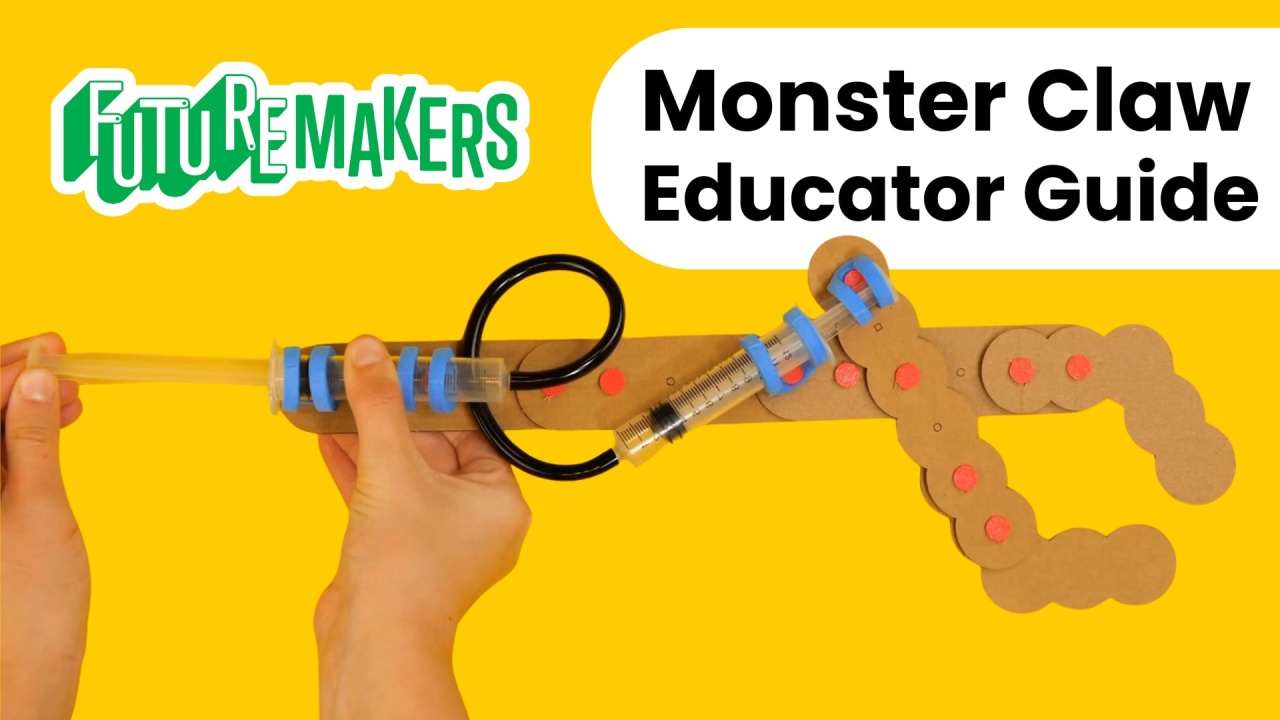
An air-powered grabbing claw.
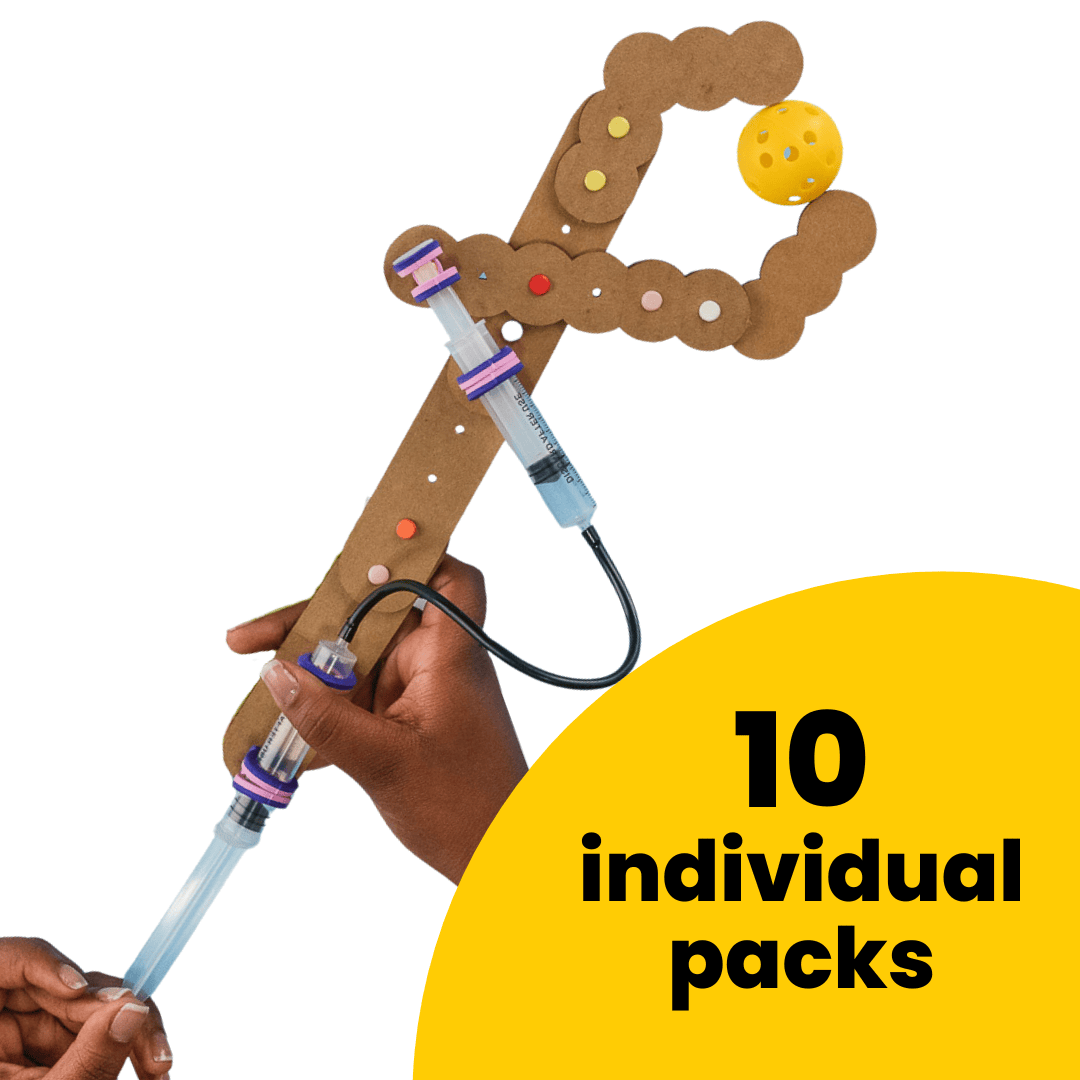
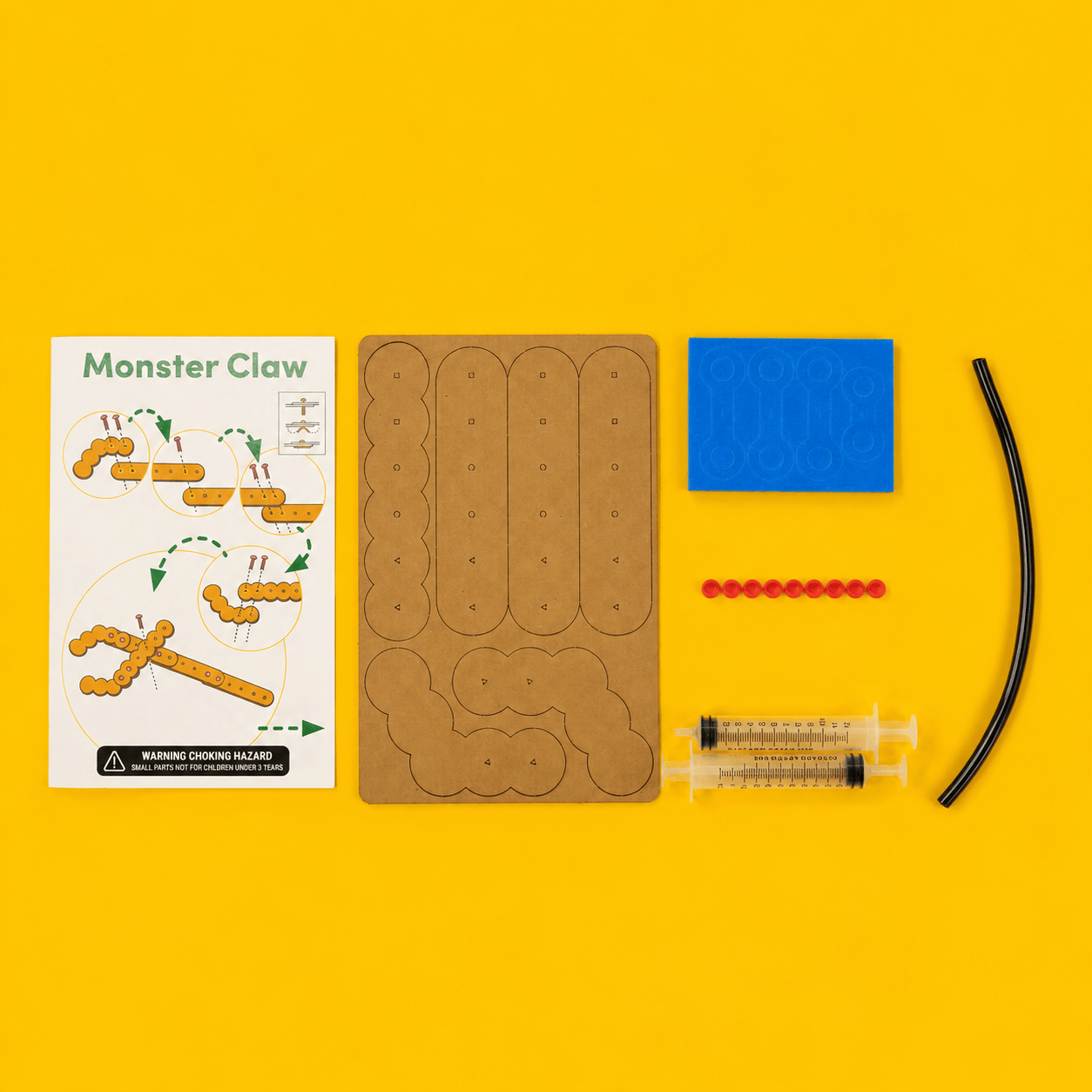
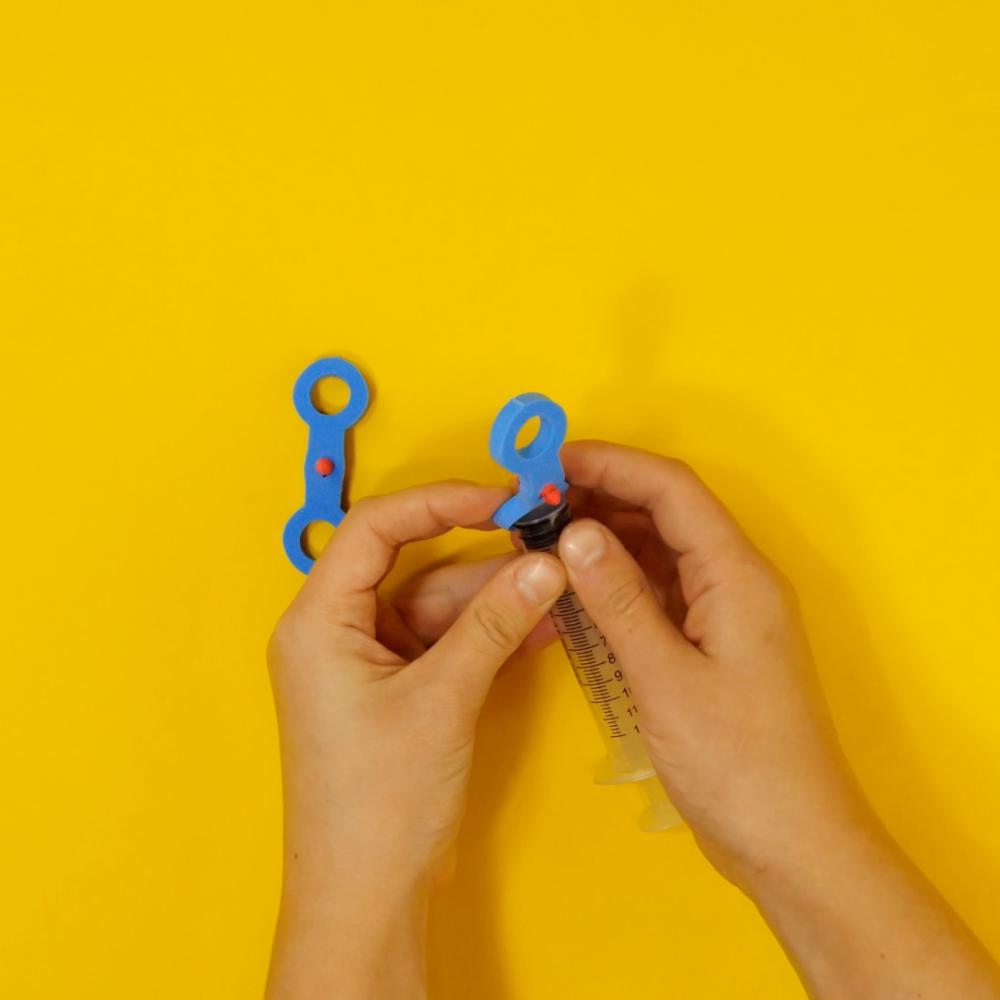
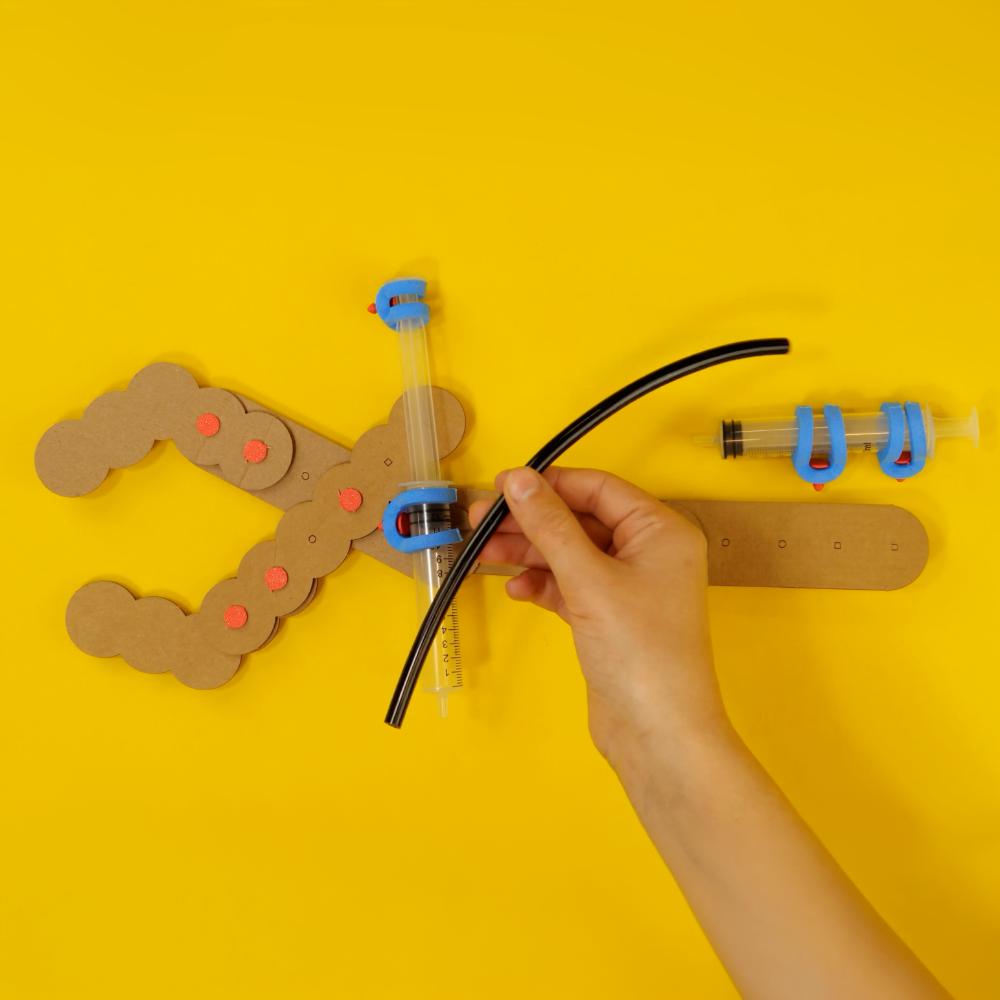
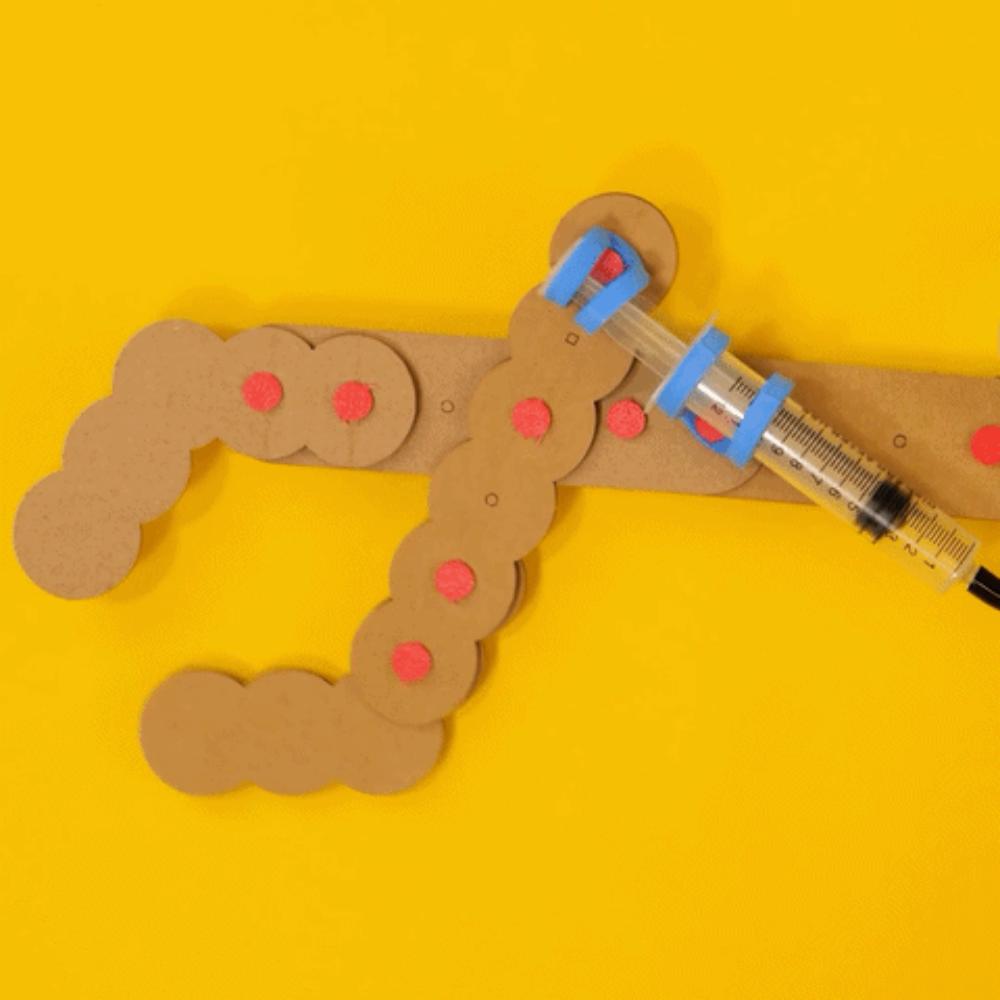
Learners assemble a cardboard claw from six levers, then build a two-piston pneumatic system joined by a tube. Pushing or pulling one handle moves air pressure through the system to work the claw. It is a hands-on look at pneumatics, levers, and troubleshooting, with a natural compare-and-contrast to hydraulics.
What participants make: A multi-lever cardboard claw driven by two pistons and a tube that opens, closes, picks up, and lets go.
| Pack | Learners | SKU | UPC | Page |
|---|---|---|---|---|
| Small Group Pack | 10 | G2 CLAW 010 | 850061324207 | View |
| Class Pack | 25 | CL CLAW 025 | 850061324214 | View |
 Educator guide video, 10:11
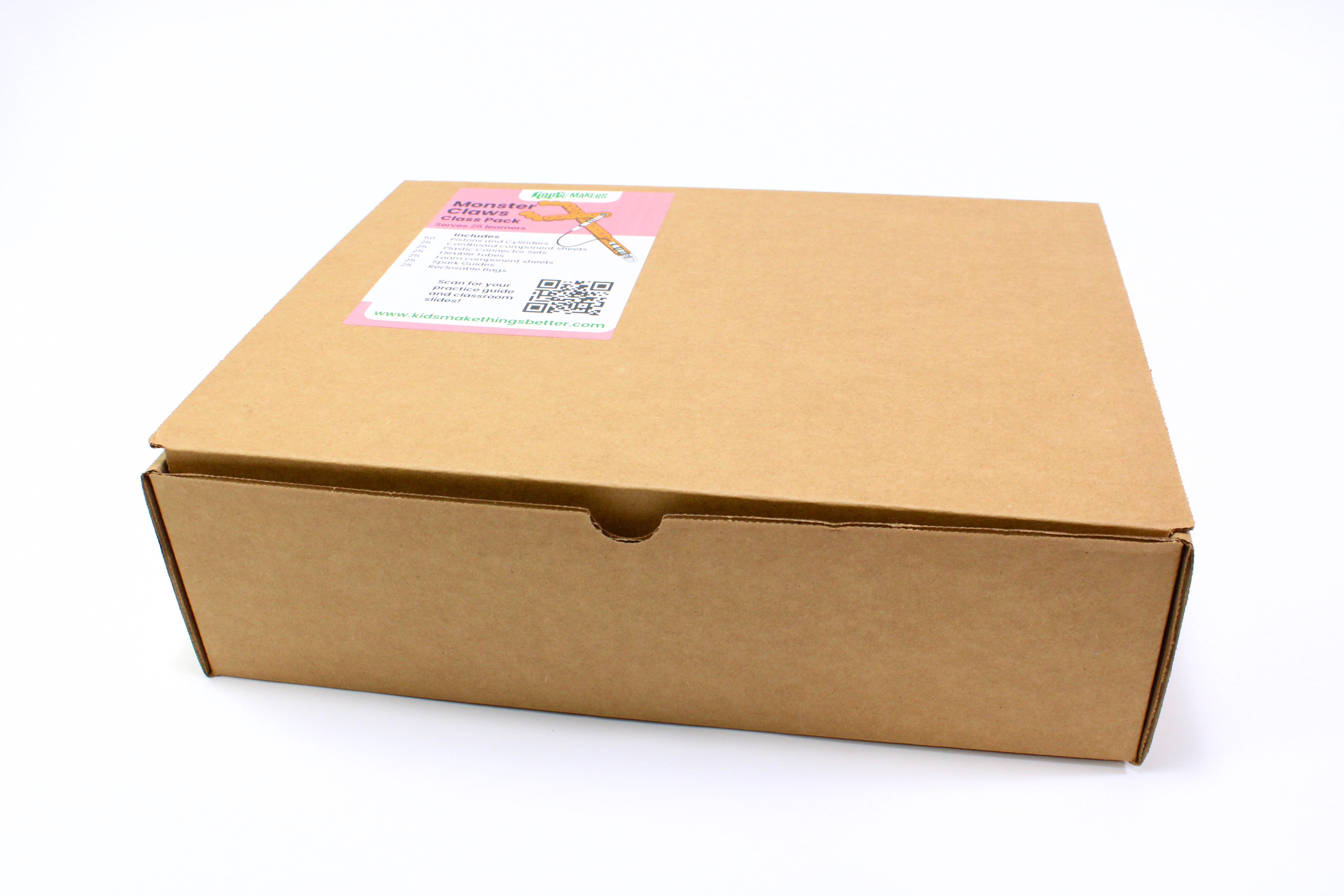
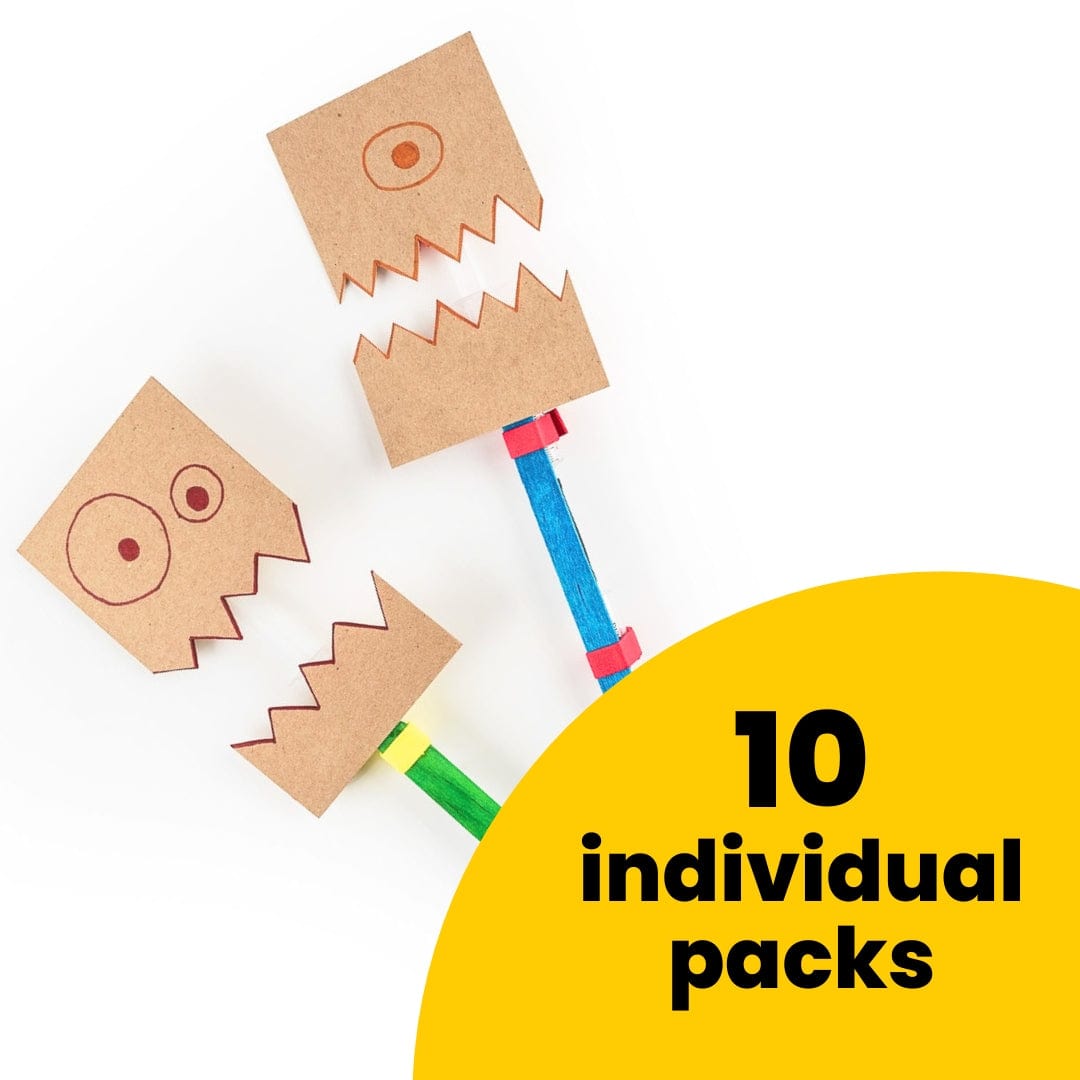
Air-powered monsters with mouths that chomp.
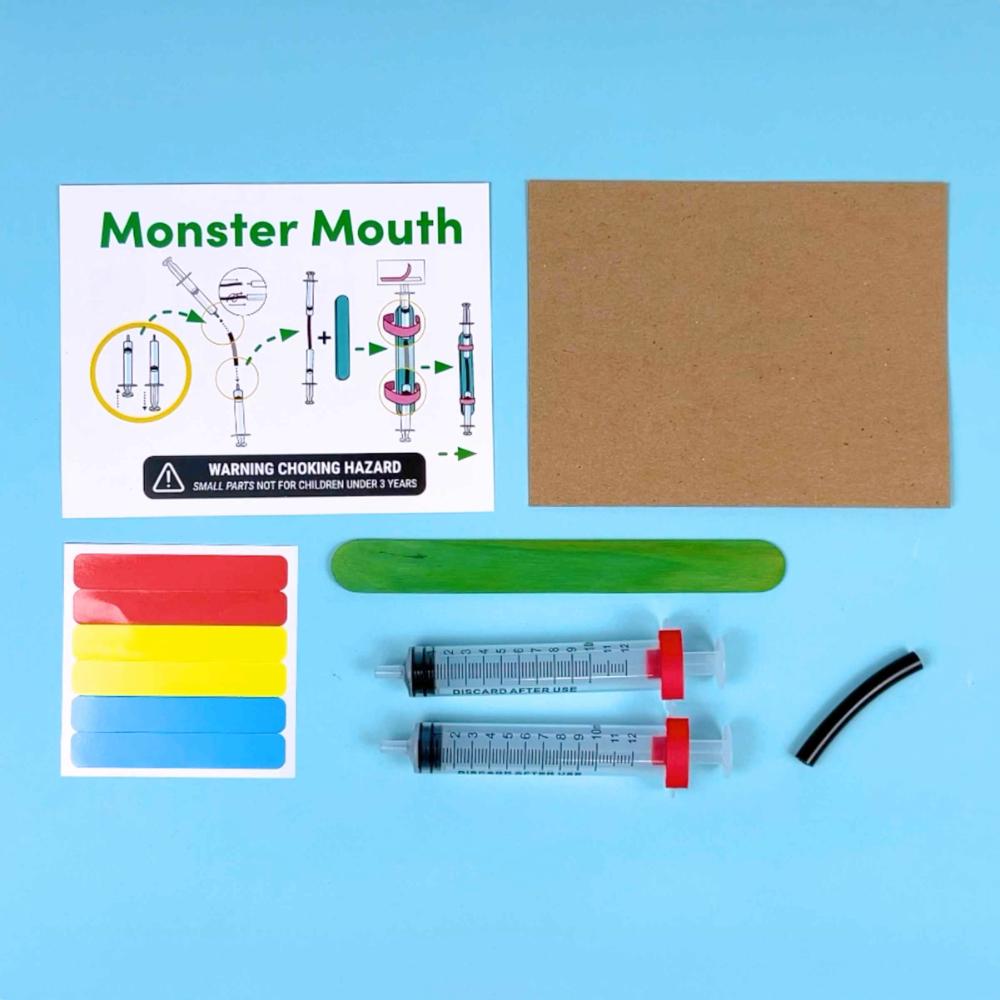
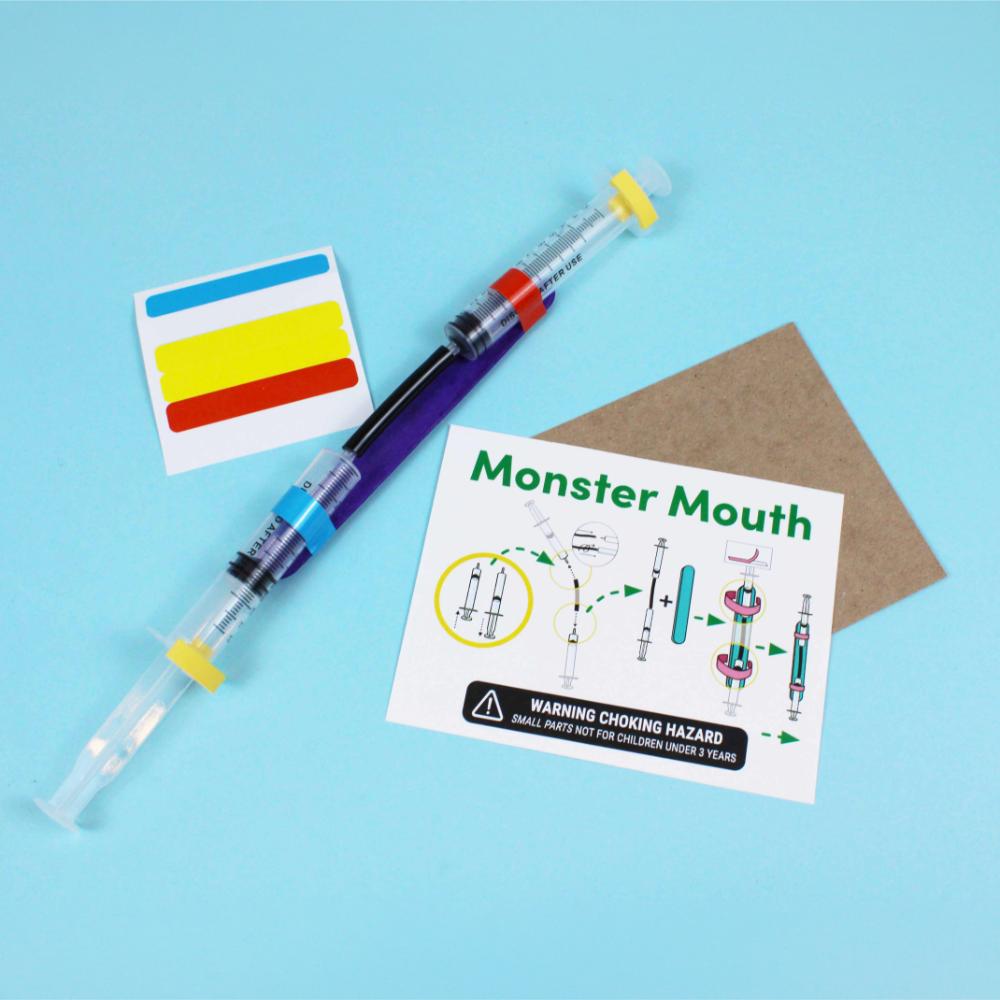
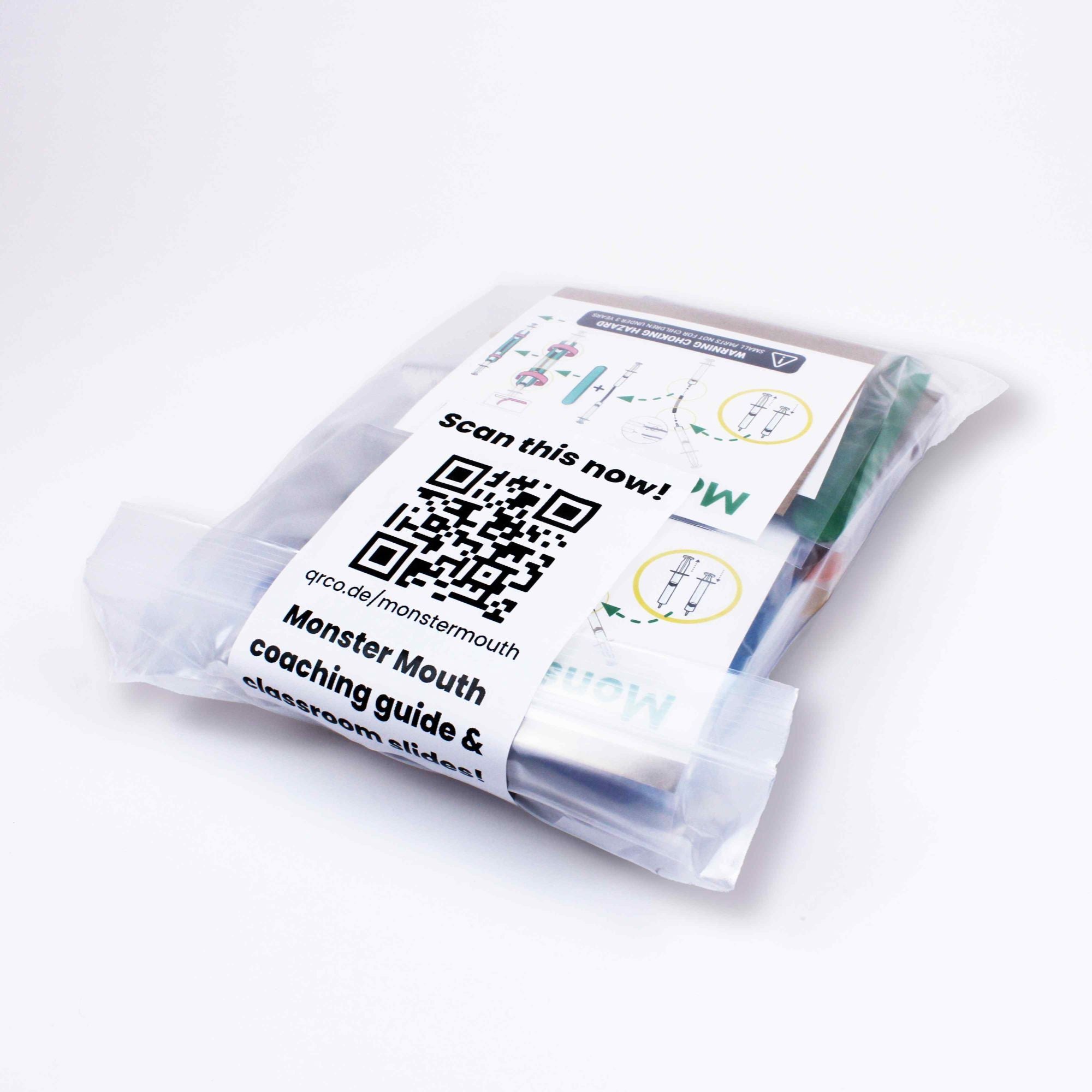
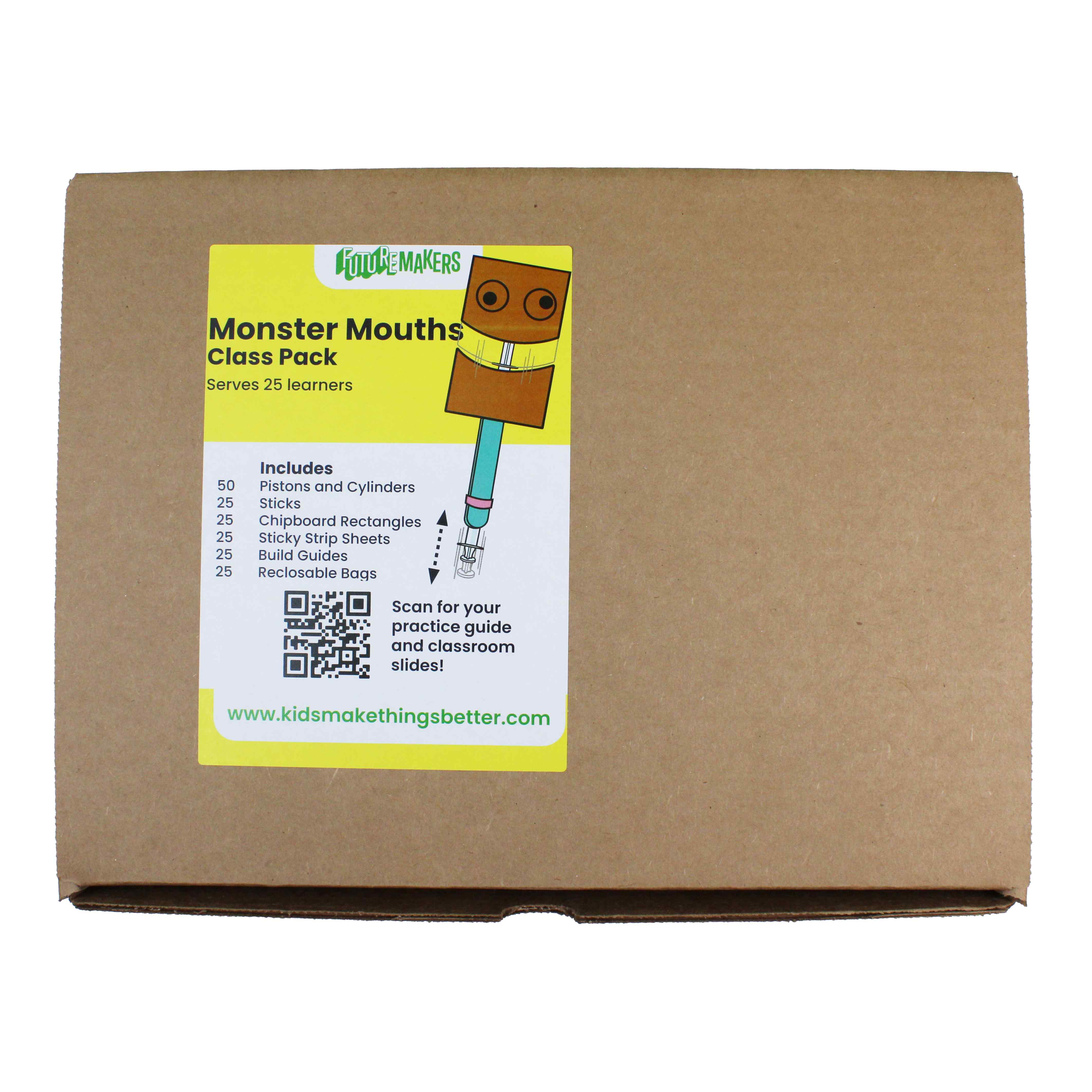
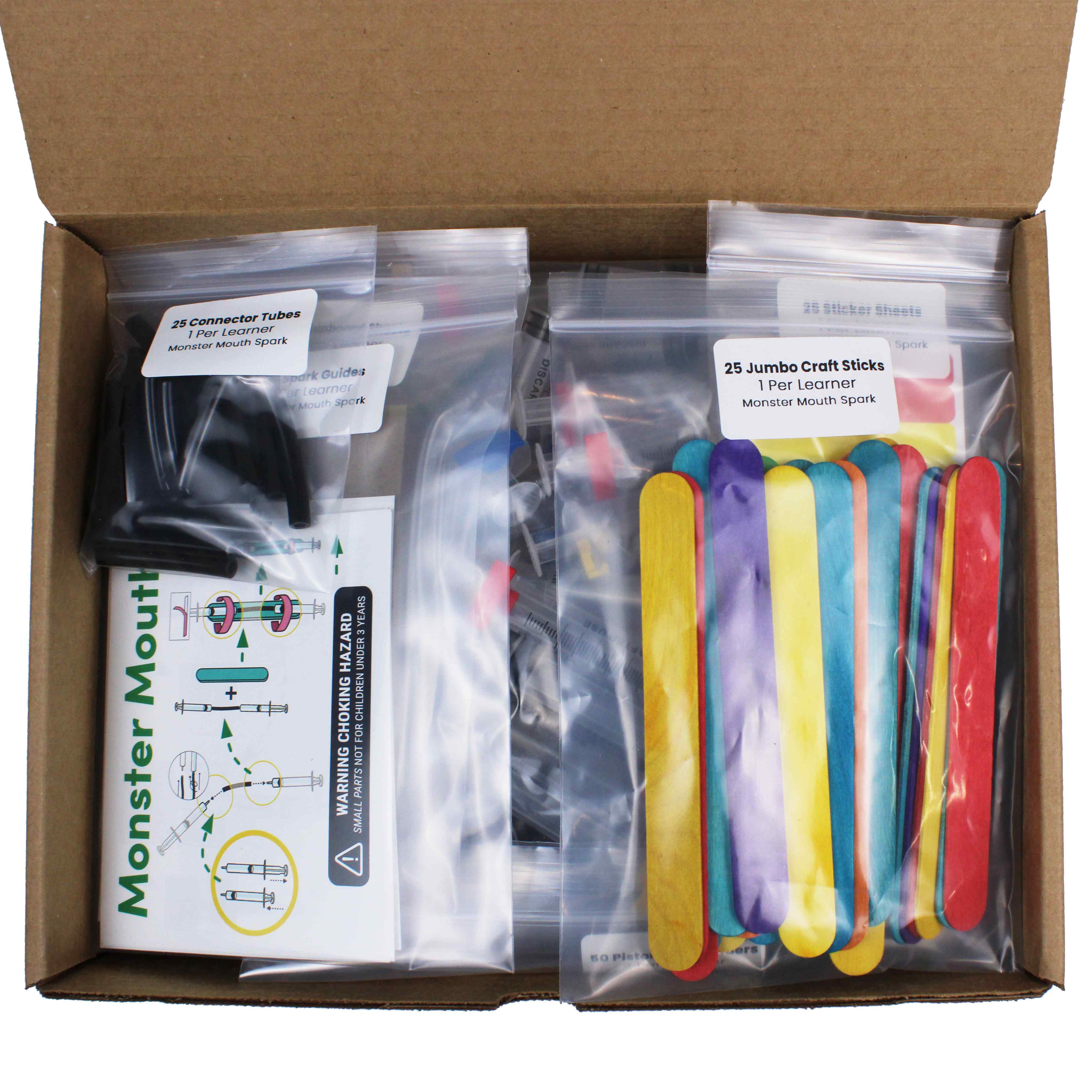
Learners build a two-piston air system connected by a tube, then design a unique monster whose mouth opens and closes as air moves through it. Young learners love the character design, and older ones dig into air pressure and force transfer. Kindergartners do best with a caregiver or educator building alongside.
What participants make: A monster face on a craft stick whose mouth opens and closes when learners push and pull air through two pistons.
| Pack | Learners | SKU | UPC | Page |
|---|---|---|---|---|
| Small Group Pack | 10 | G1 MSTR 010 | 850061324030 | View |
| Class Pack | 25 | CL MSTR 025 | 850061324221 | View |
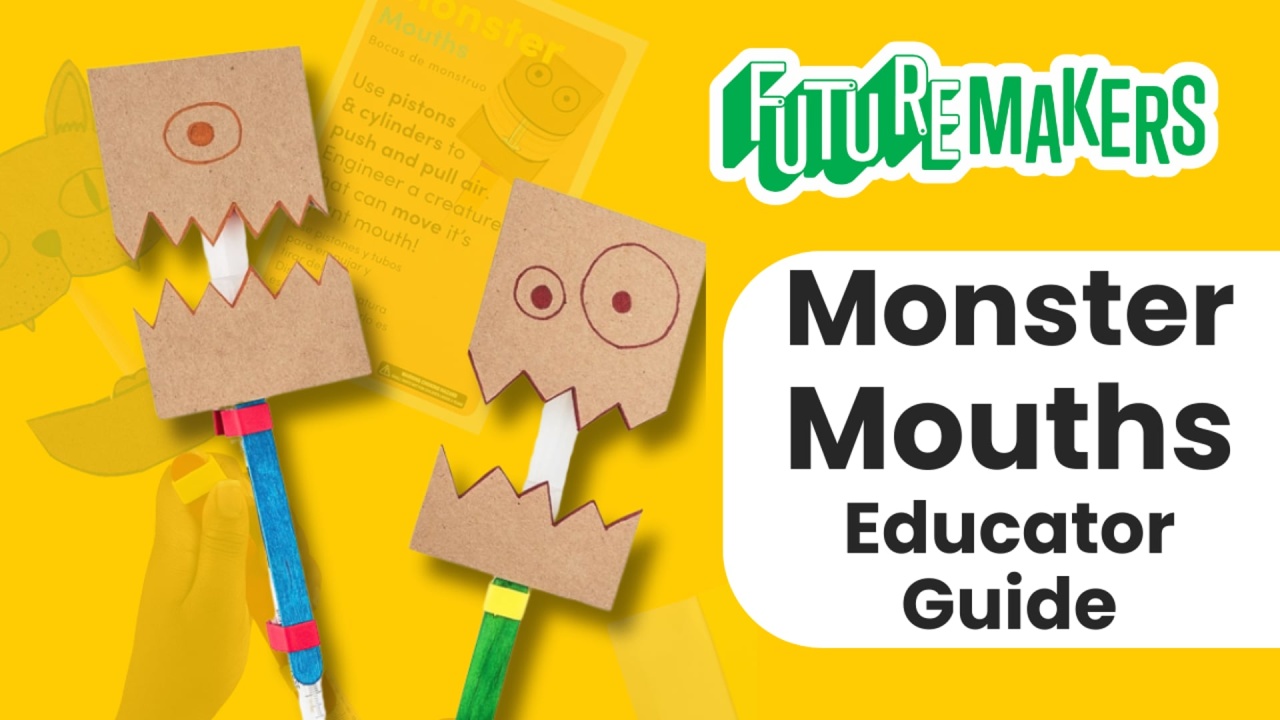 Educator guide video, 7:49
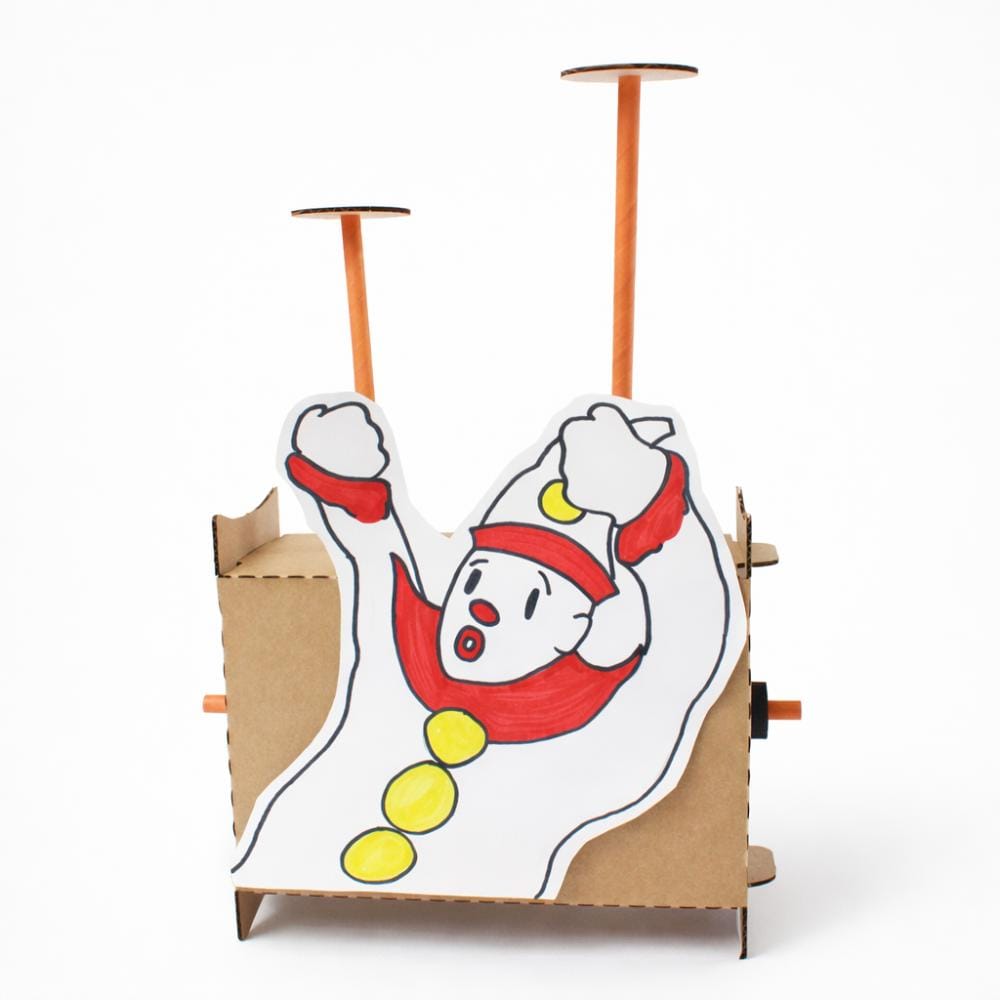
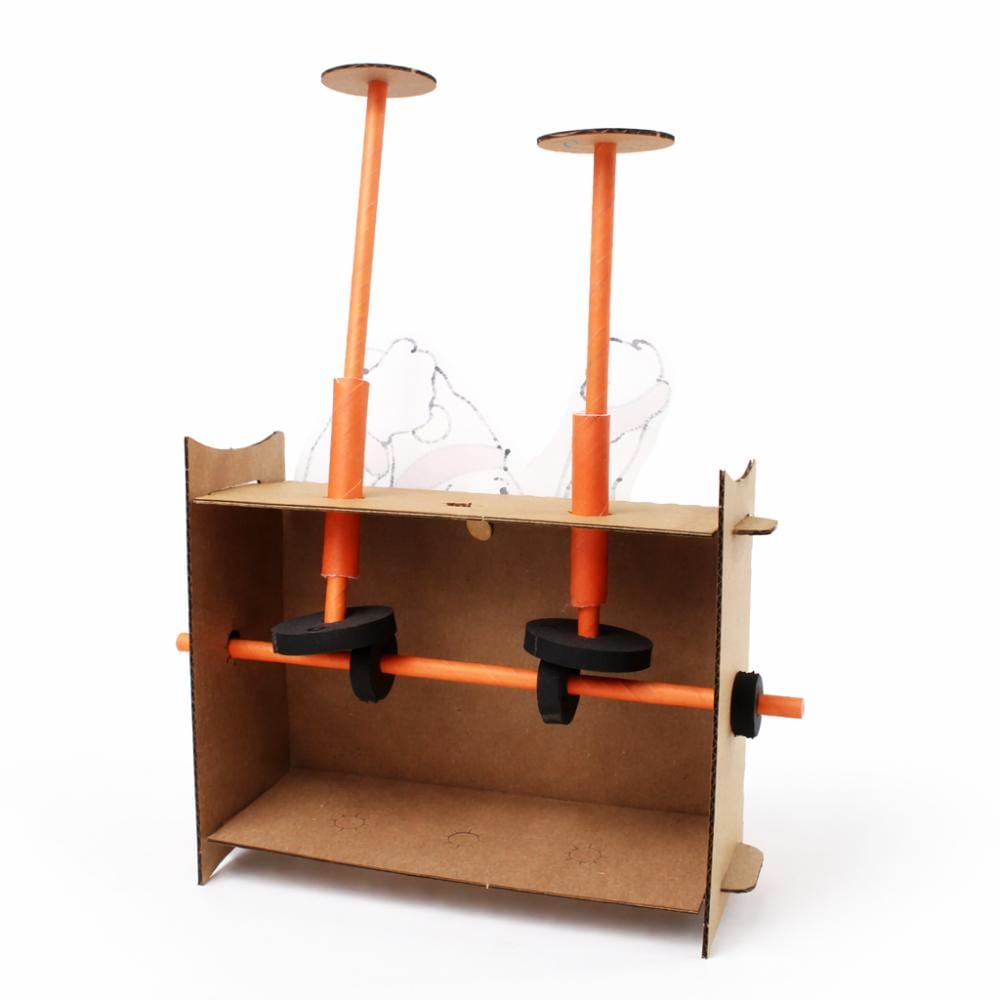
Hand-cranked automata that animate a scene.
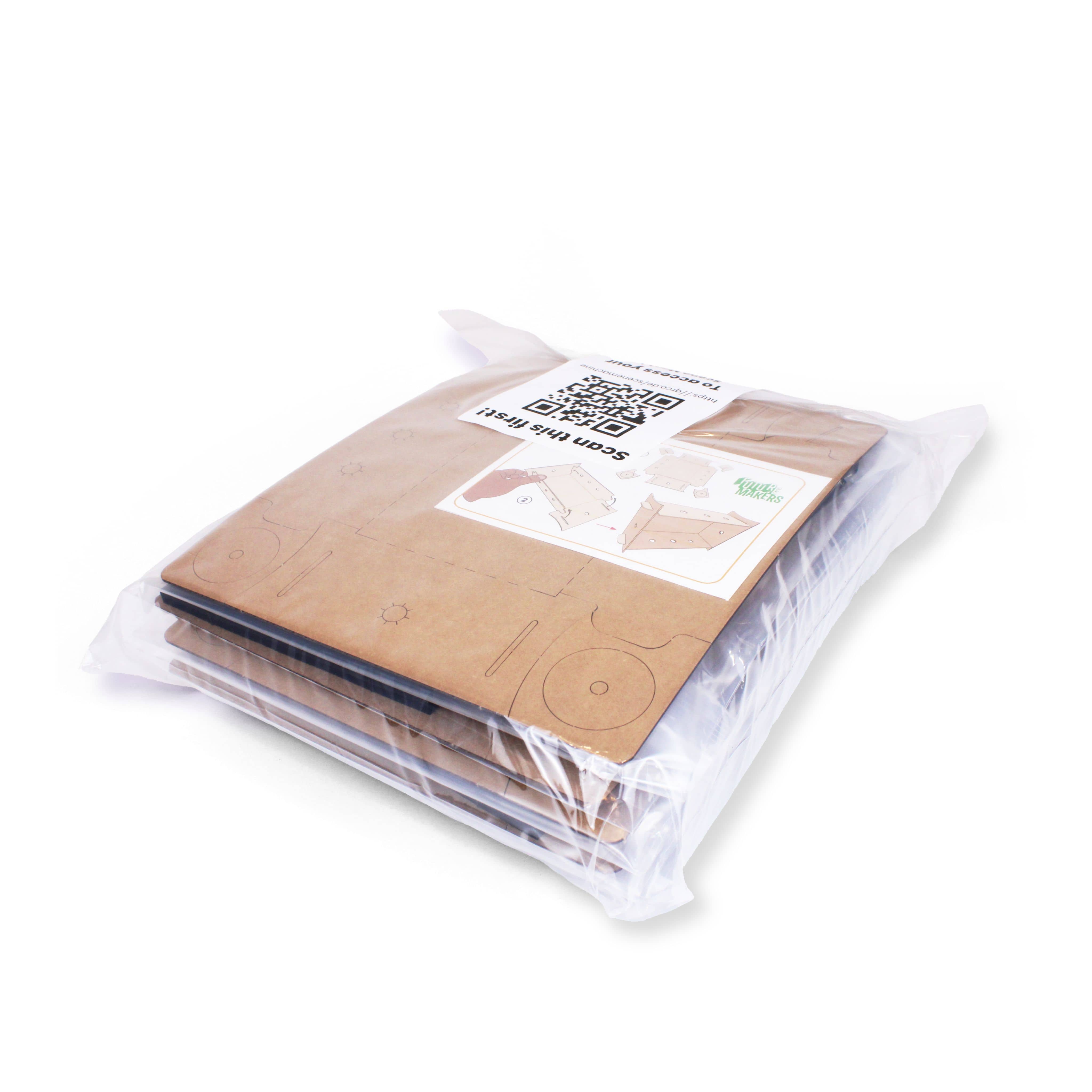
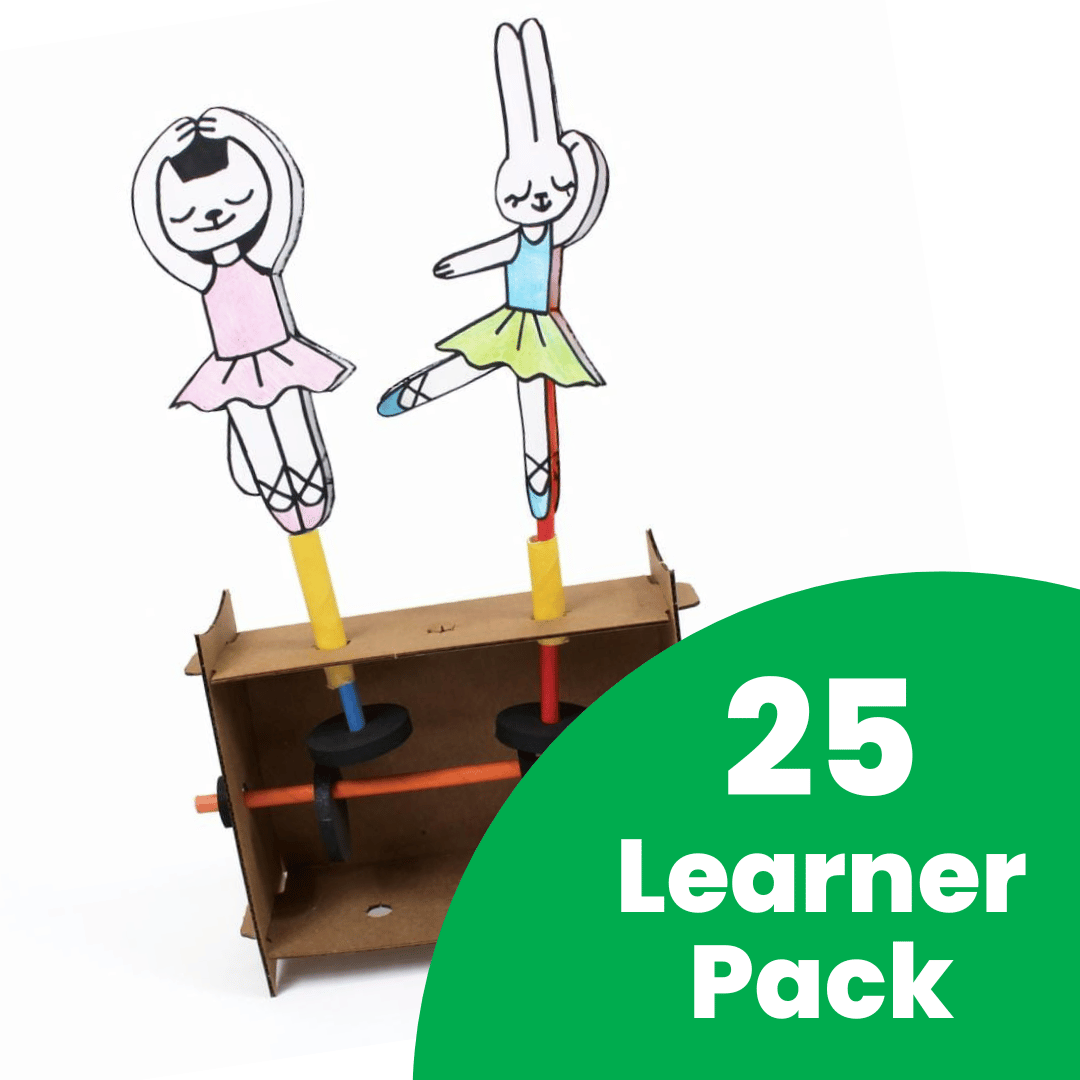
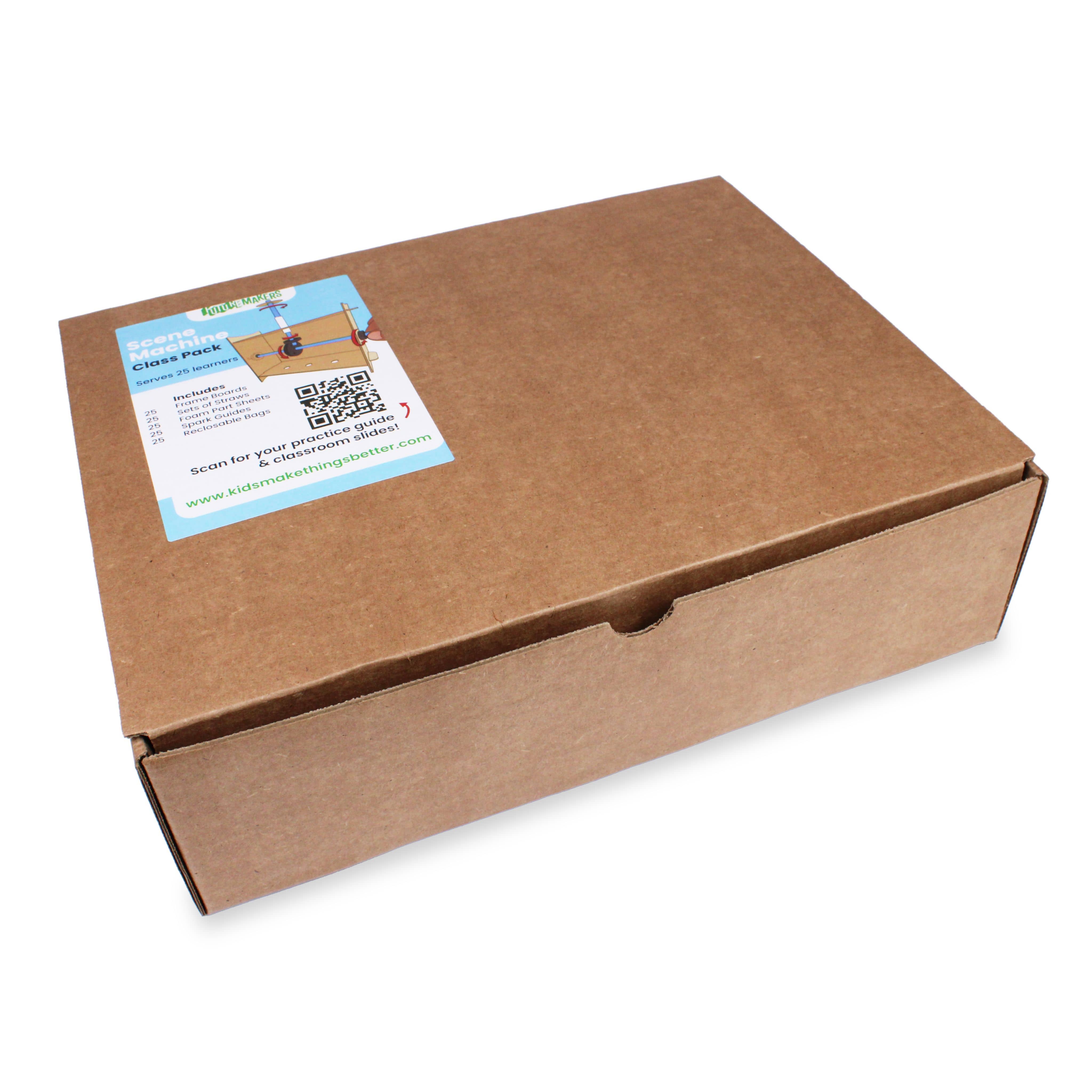
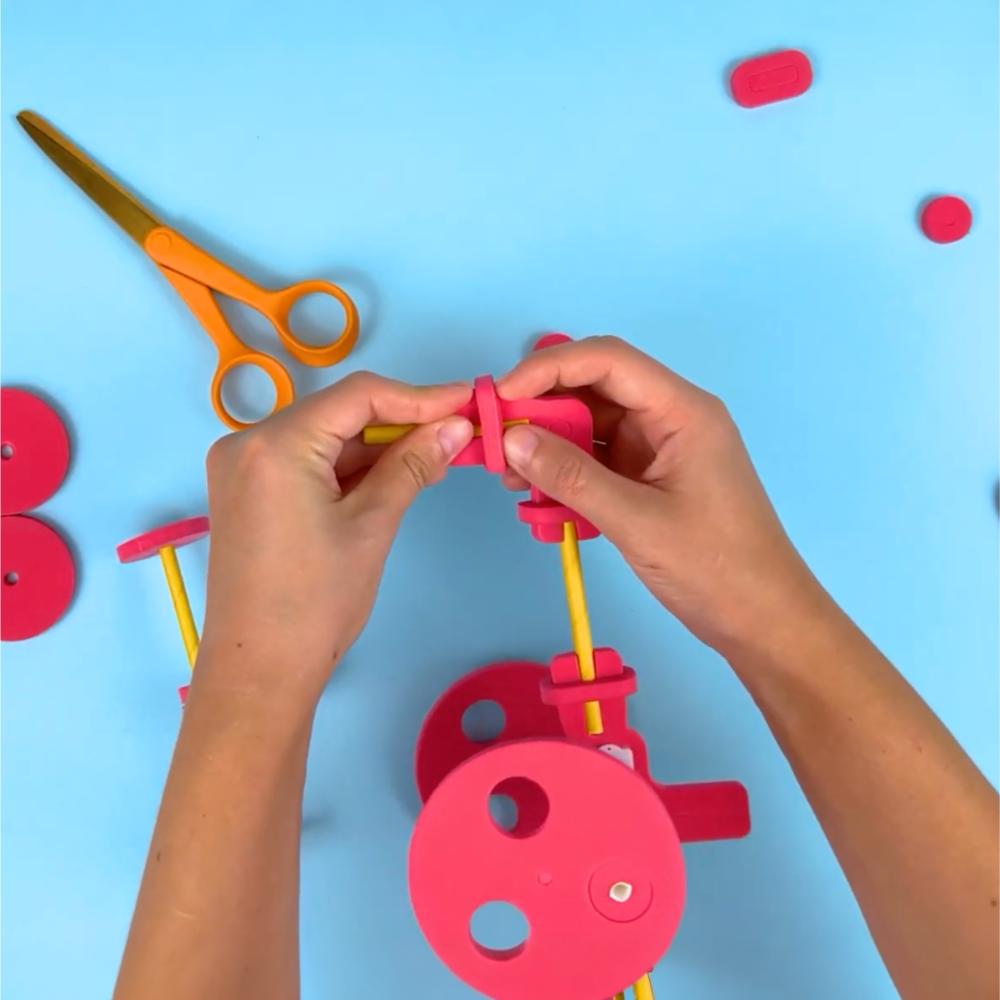
Learners fold a laser-cut cardboard frame and build a cam-and-follower mechanism from paper straws and foam wheels, so turning the crank sets part of the scene in motion. Then they add their own characters, art, and story around the mechanism. It connects rotational motion, mechanism design, and visual storytelling.
What participants make: A folding cardboard automaton with a cam and follower, finished as a one-of-a-kind animated scene.
| Pack | Learners | SKU | UPC | Page |
|---|---|---|---|---|
| Small Group Pack | 10 | G4 SCMC 010 | 850061324290 | View |
| Class Pack | 25 | CL SCMC 025 | 850061324283 | View |
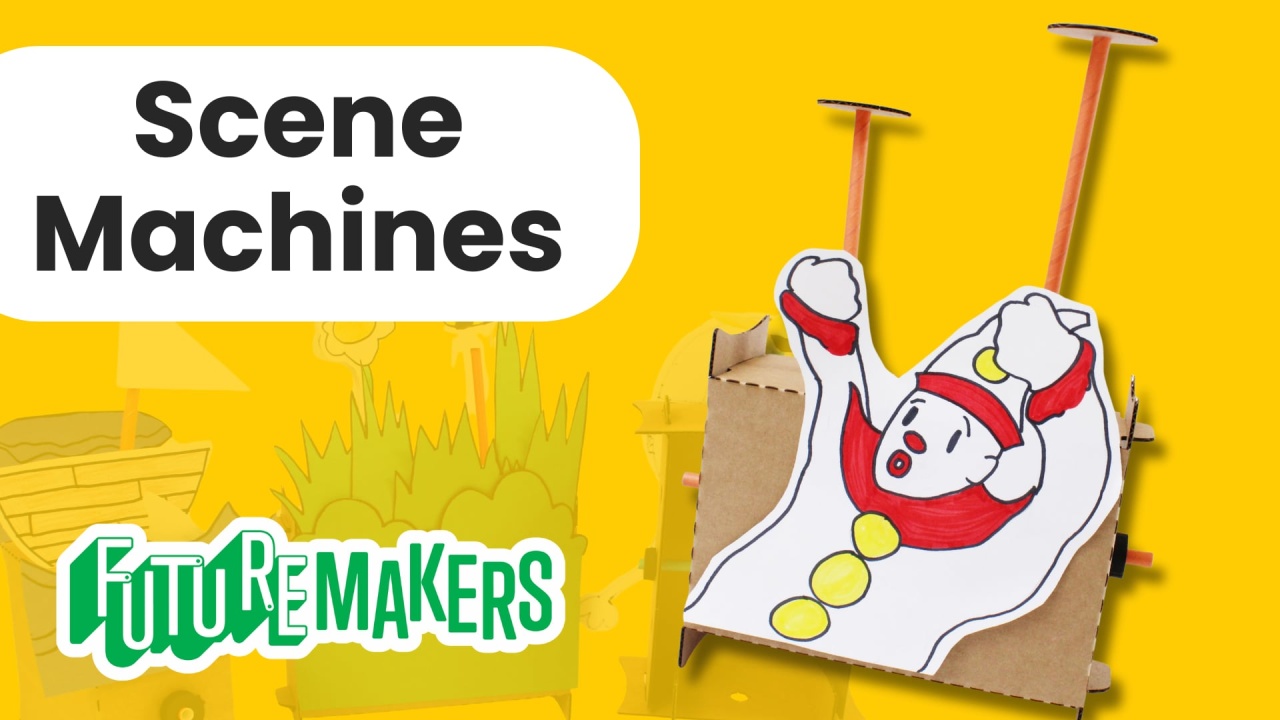 Educator guide video, 12:42
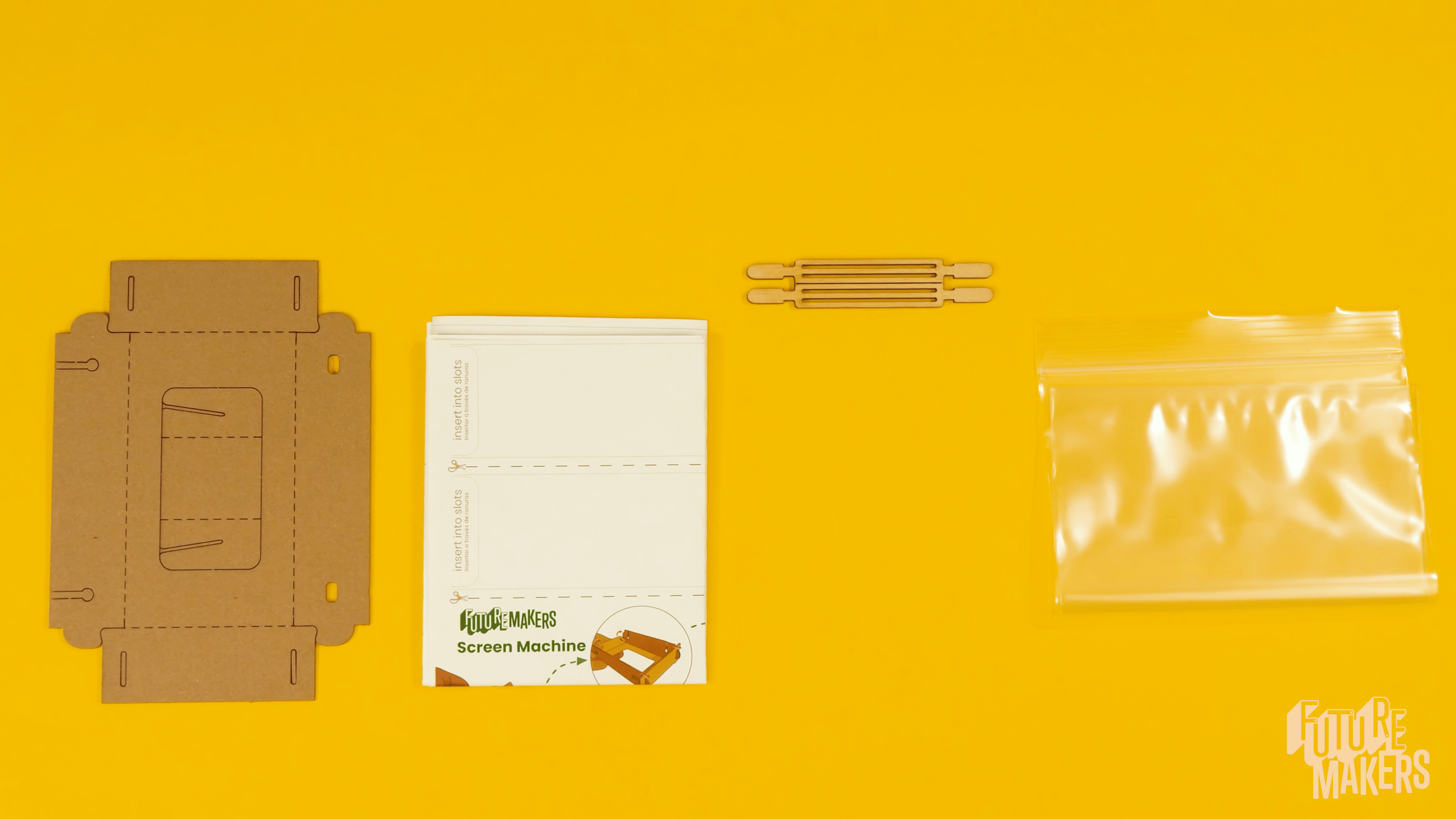
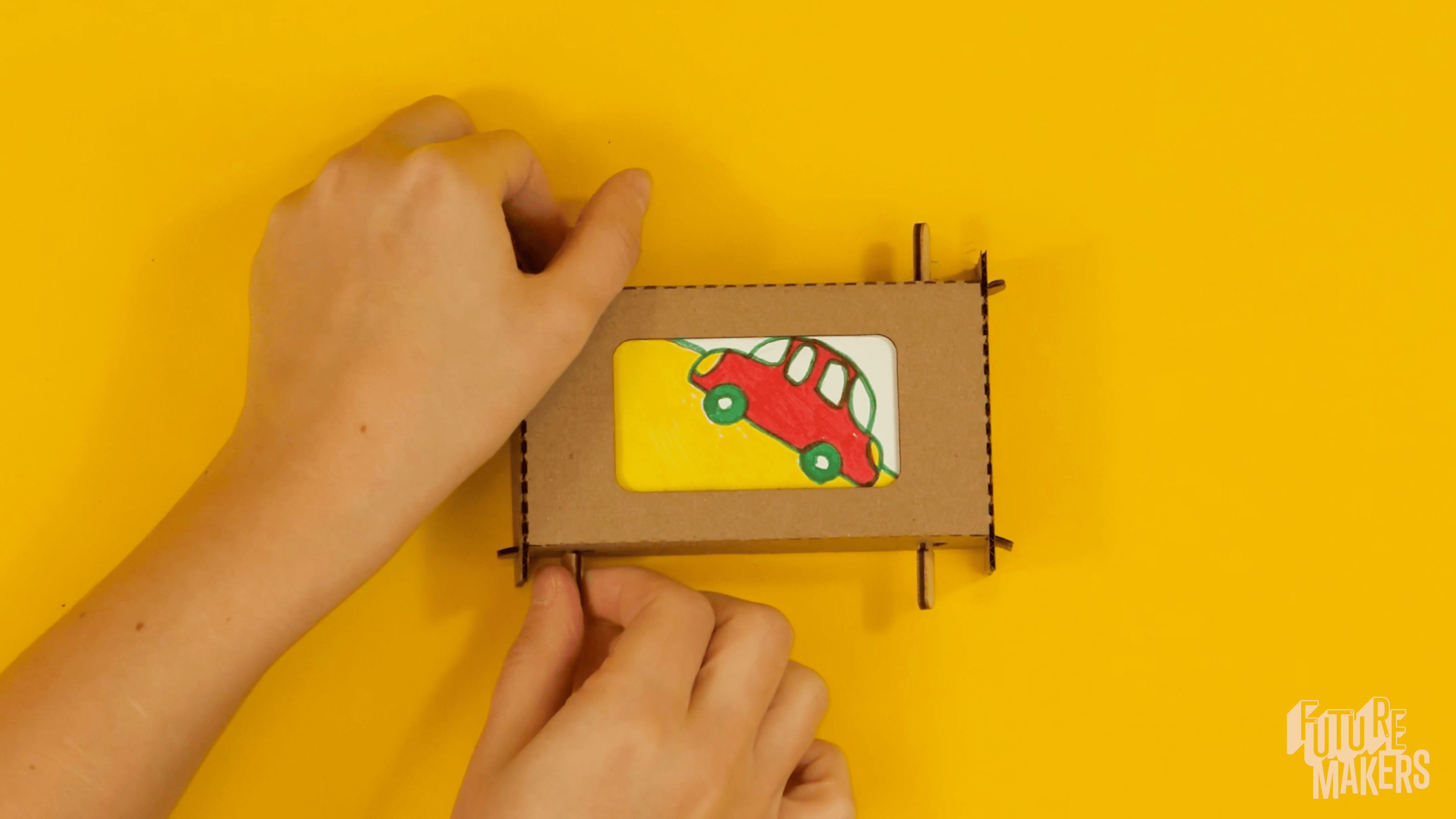
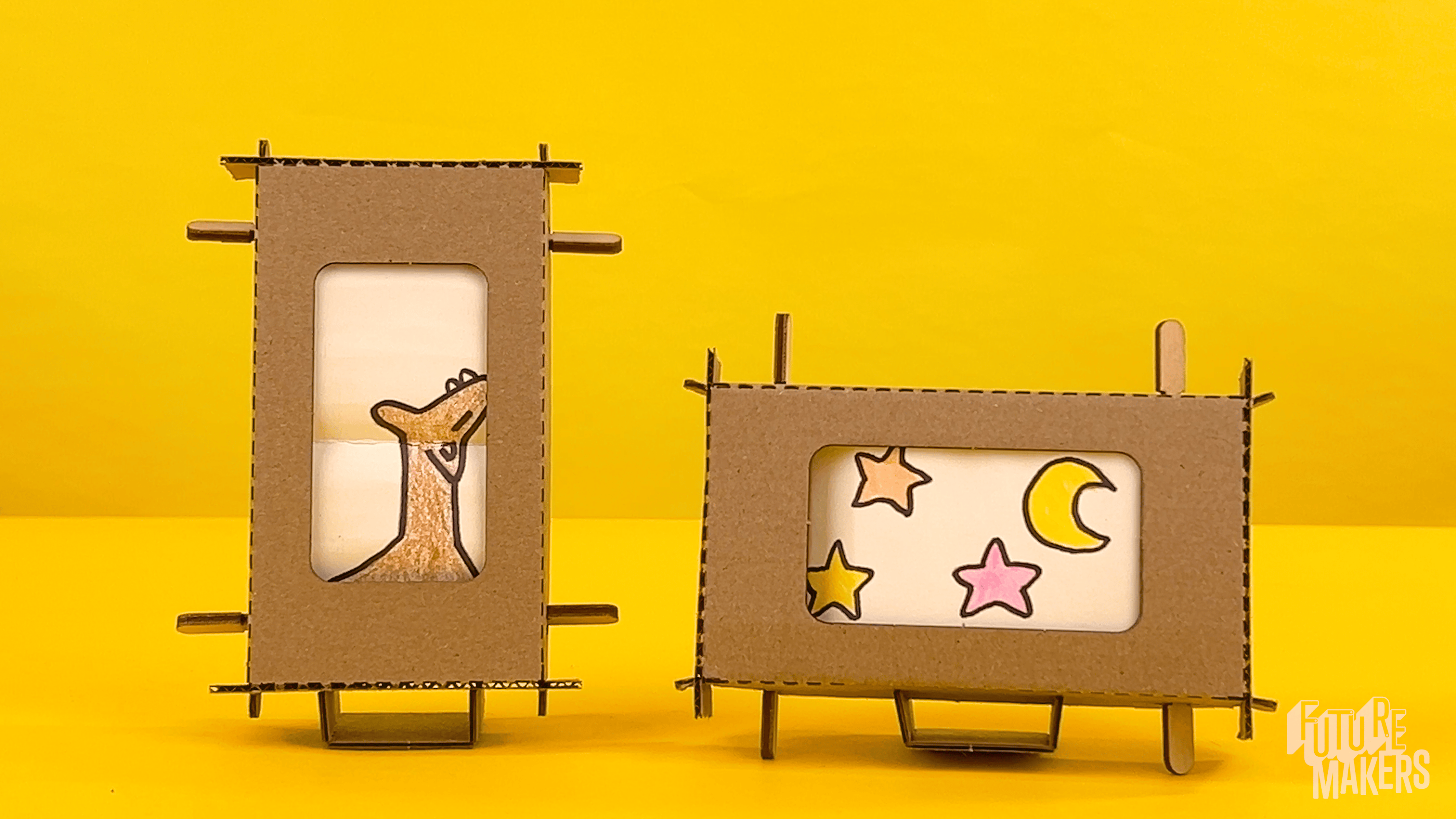
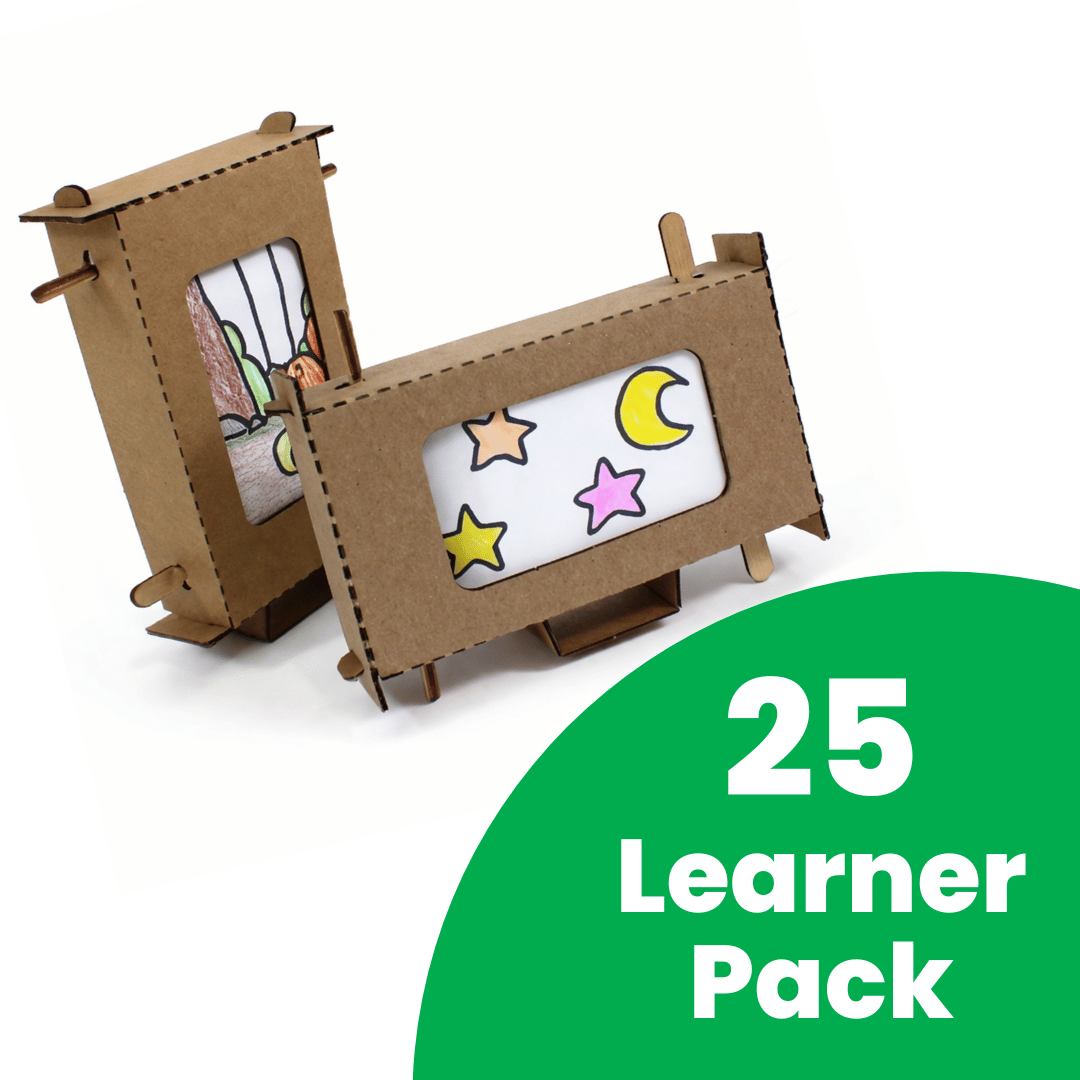
A cardboard movie screen for a learner's own story.
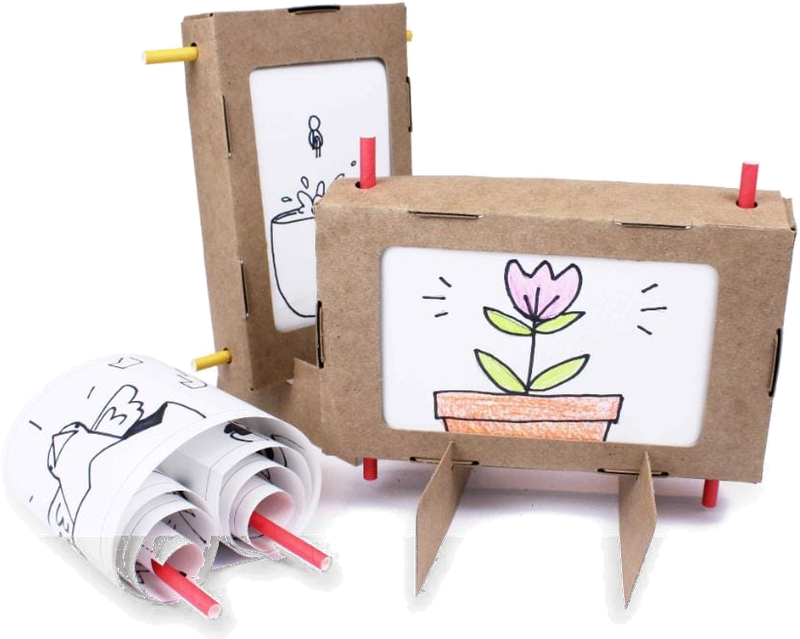
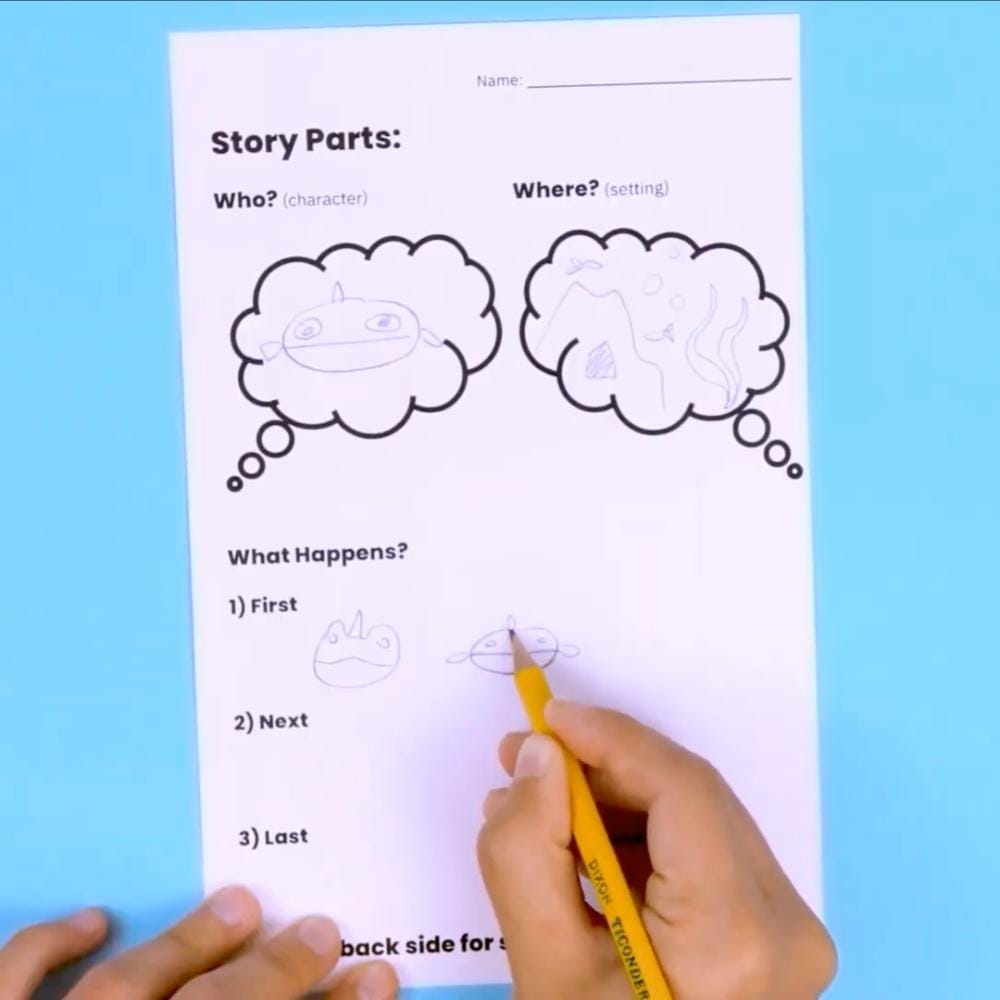
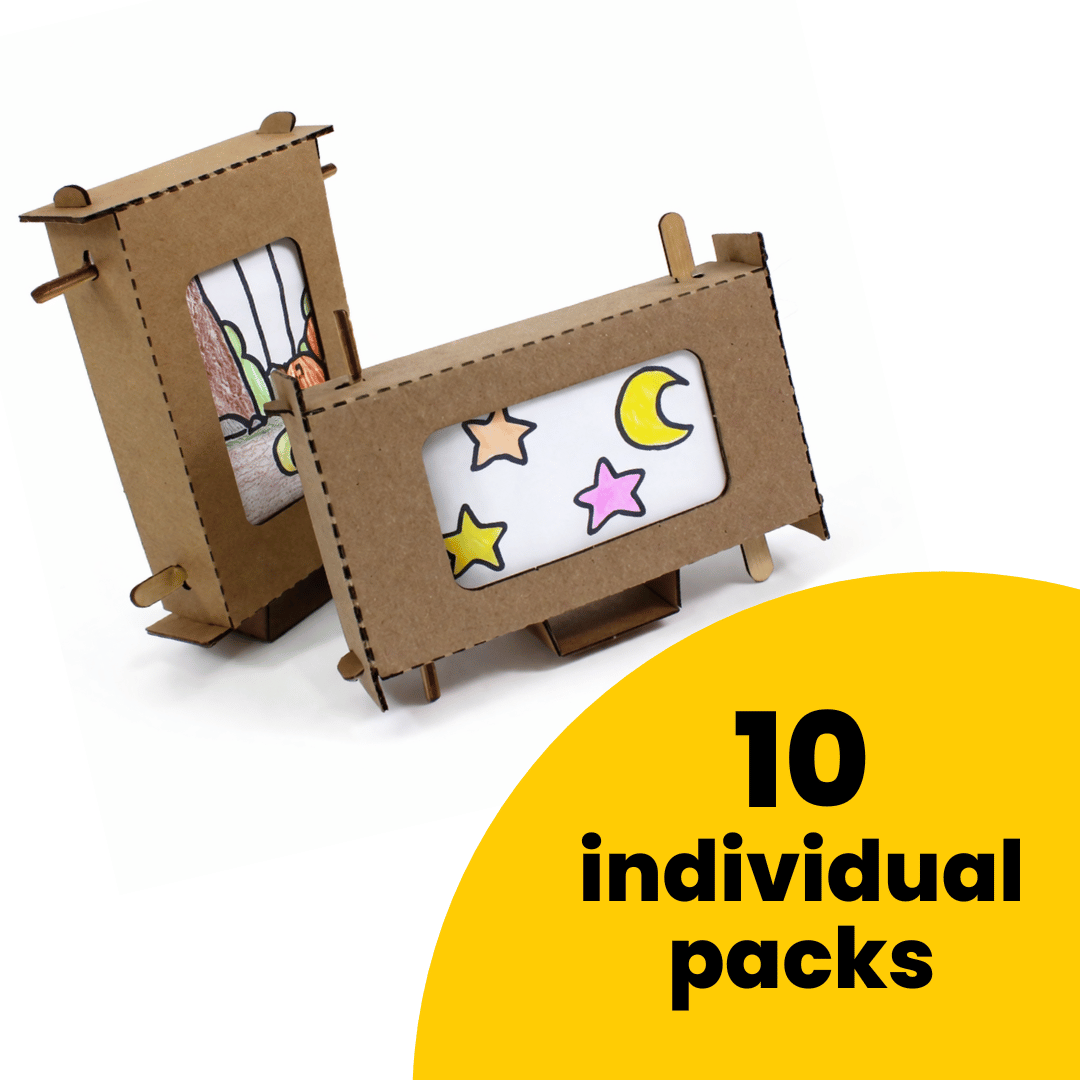
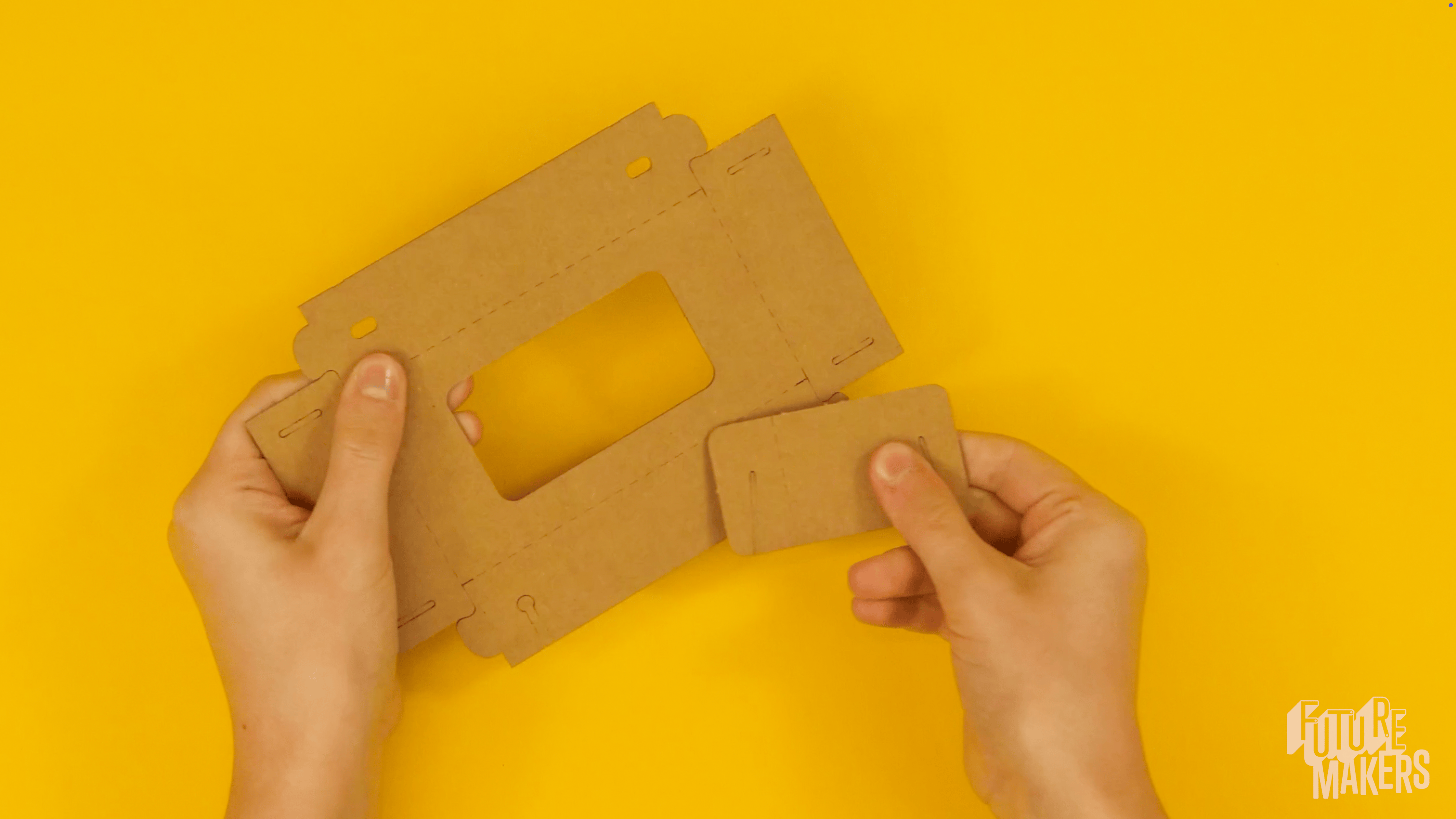
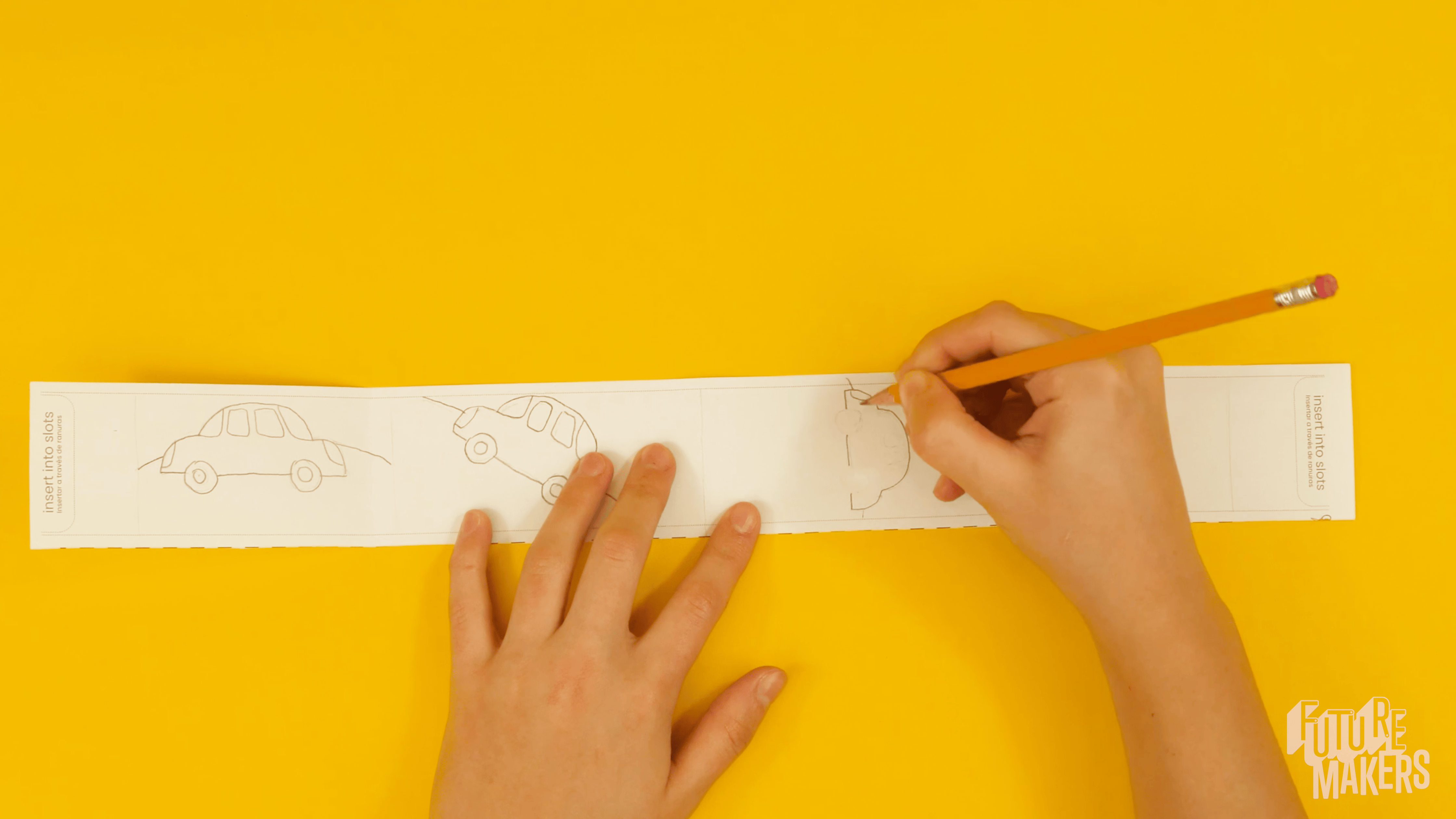
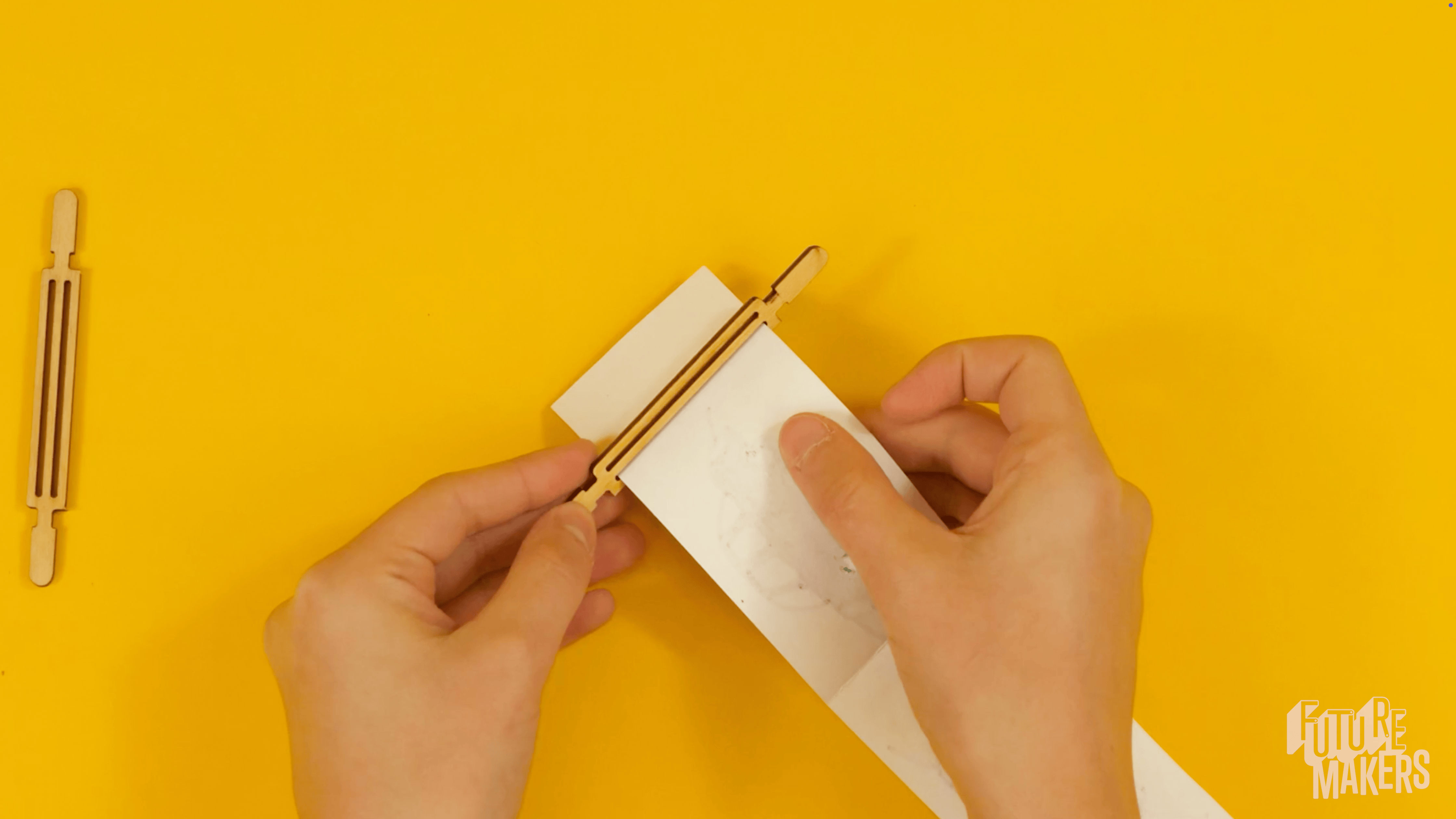
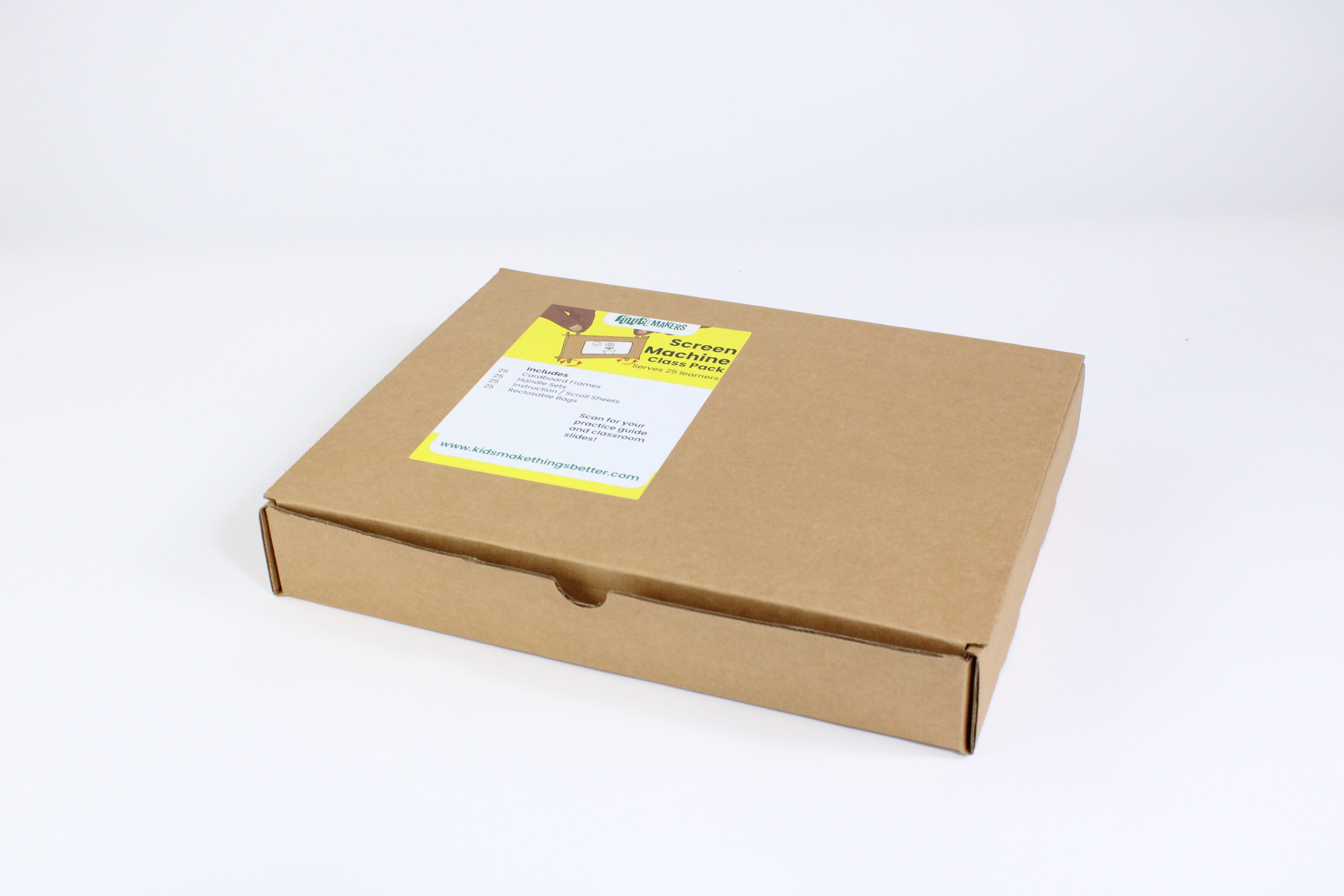
Learners fold a cardboard frame into a rigid screen, plan and draw a who, where, and what story across a paper scroll, then thread it between two wooden handles. Turning a handle reveals the story frame by frame, like a tiny movie. It brings narrative sequencing and measurement into an engineering build.
What participants make: A hand-cranked cardboard screen that reveals an illustrated story strip one frame at a time.
| Pack | Learners | SKU | UPC | Page |
|---|---|---|---|---|
| Small Group Pack | 10 | G4 SCRN 010 | 850061324313 | View |
| Class Pack | 25 | CL SCRN 025 | 850061324306 | View |
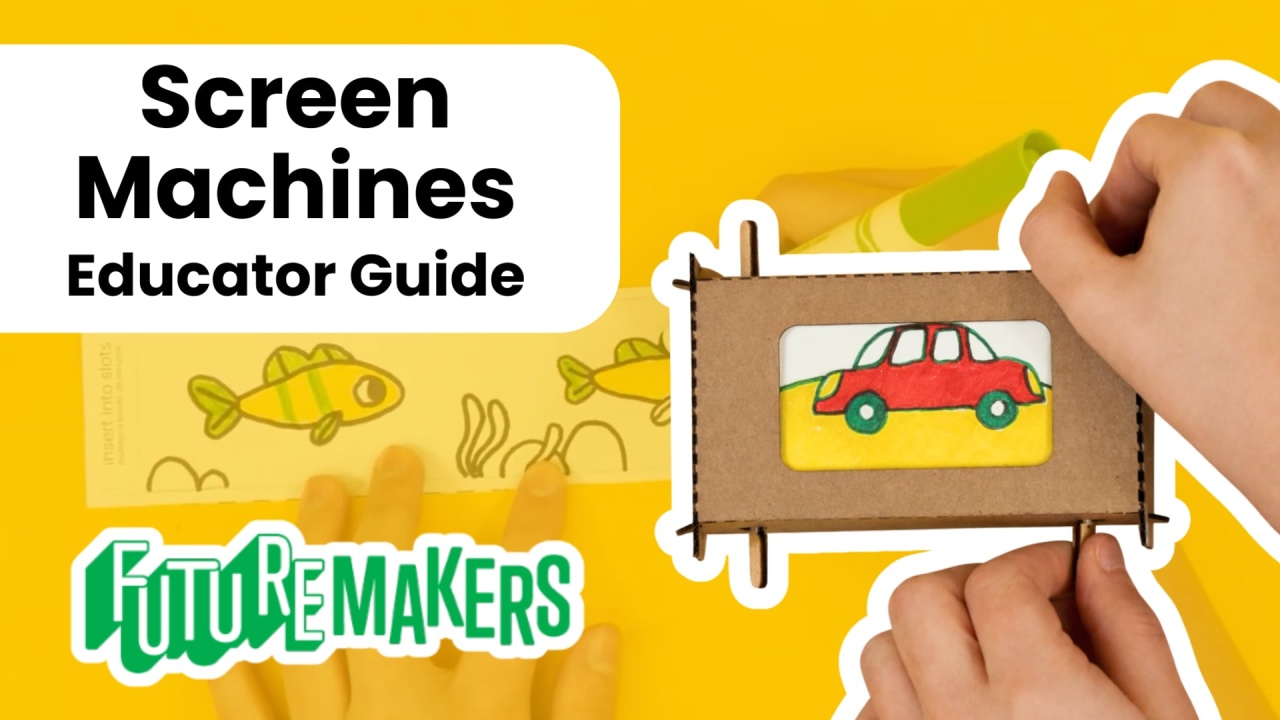 Educator guide video, 7:39
Turn flat shapes into towers as tall as you are.
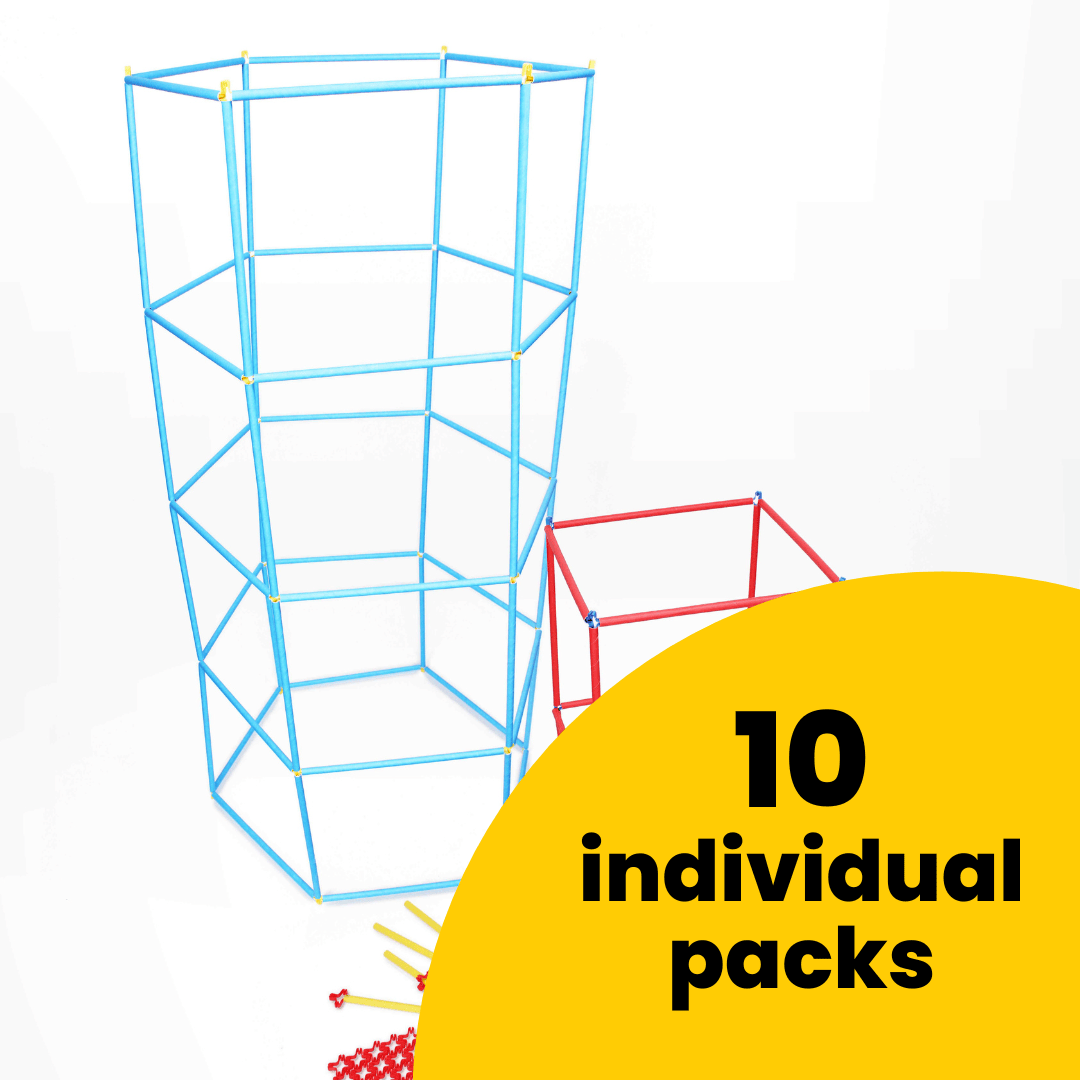
Learners start with flat polygons, turn them into 3D prisms, then reinforce and widen the base to build taller and taller. Working with partners, structures can reach the ceiling. It covers geometry, structural stability, and measurement while building perseverance and teamwork, and it adapts from Pre-K through grade 8.
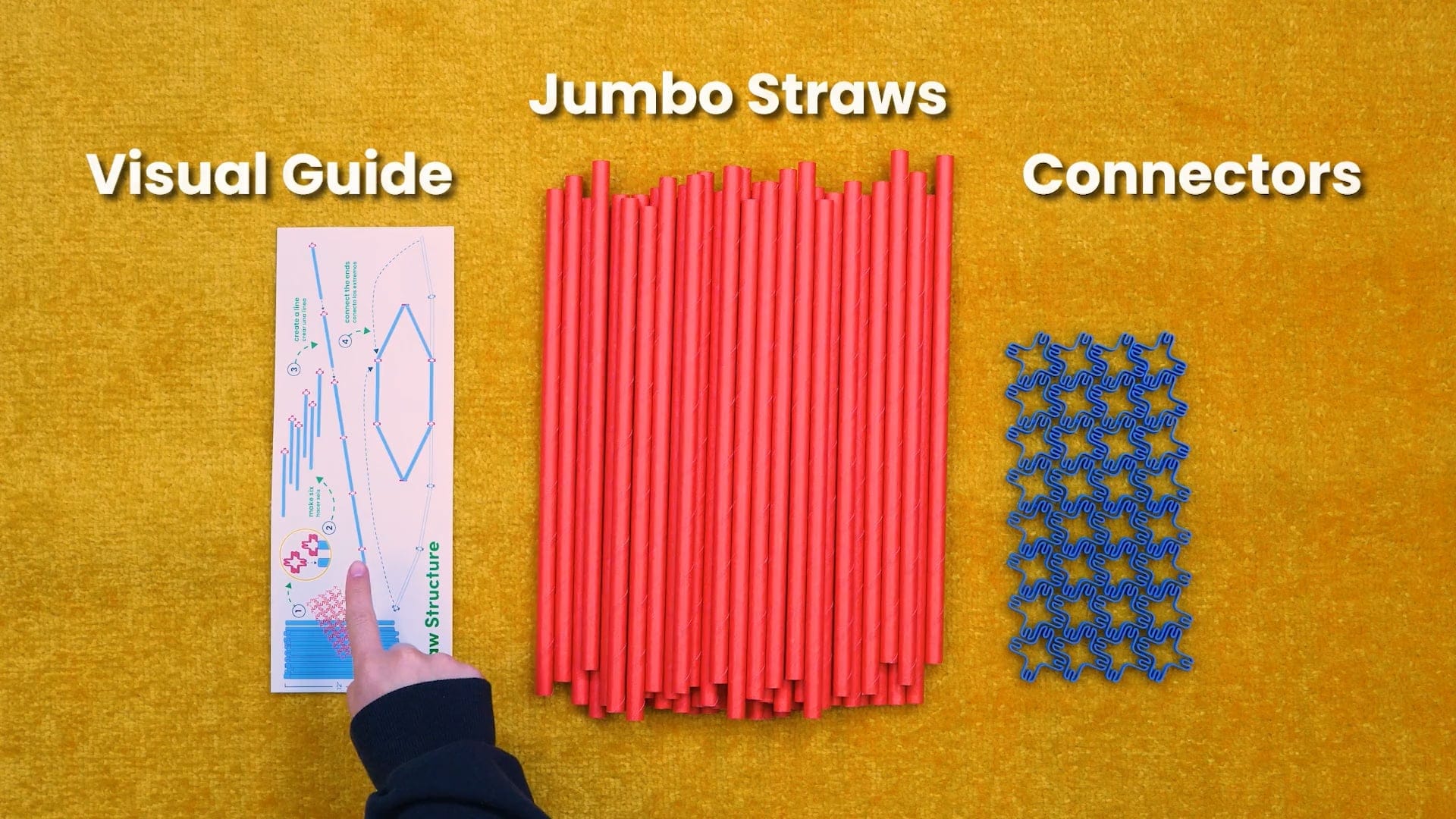
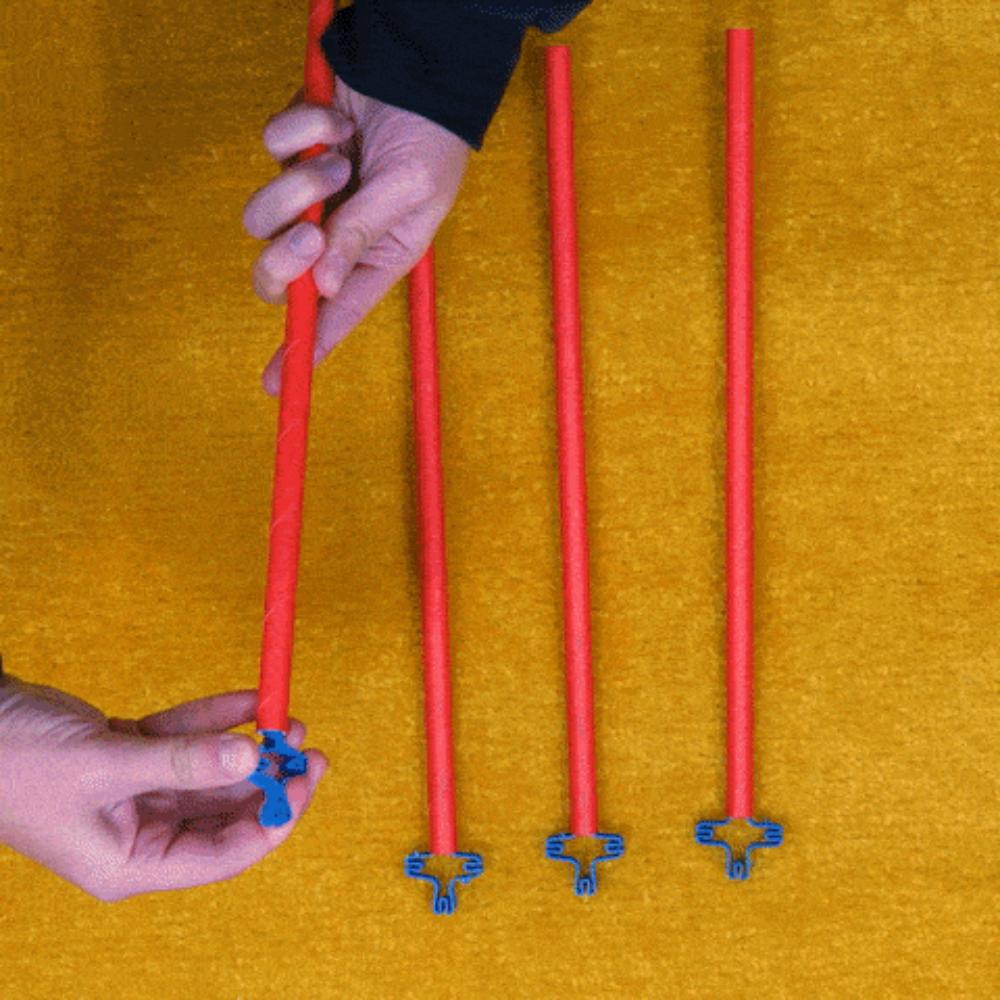
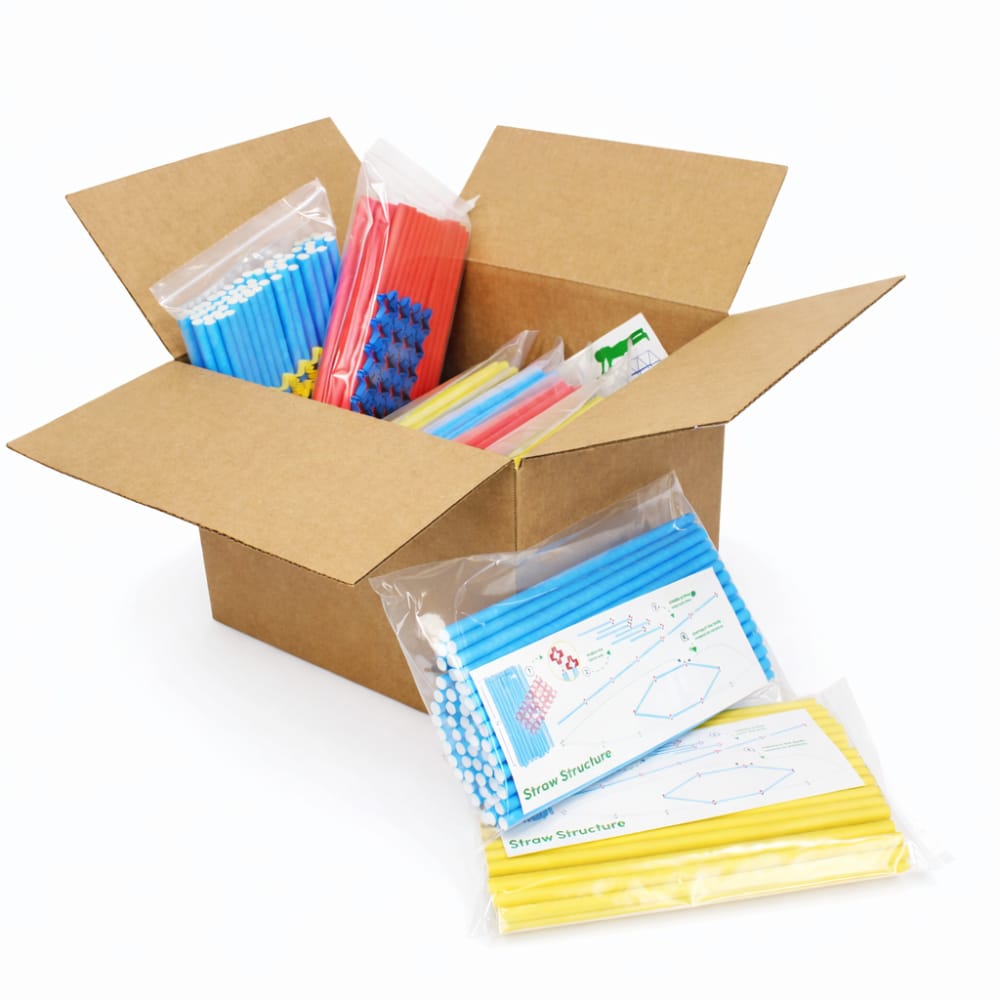
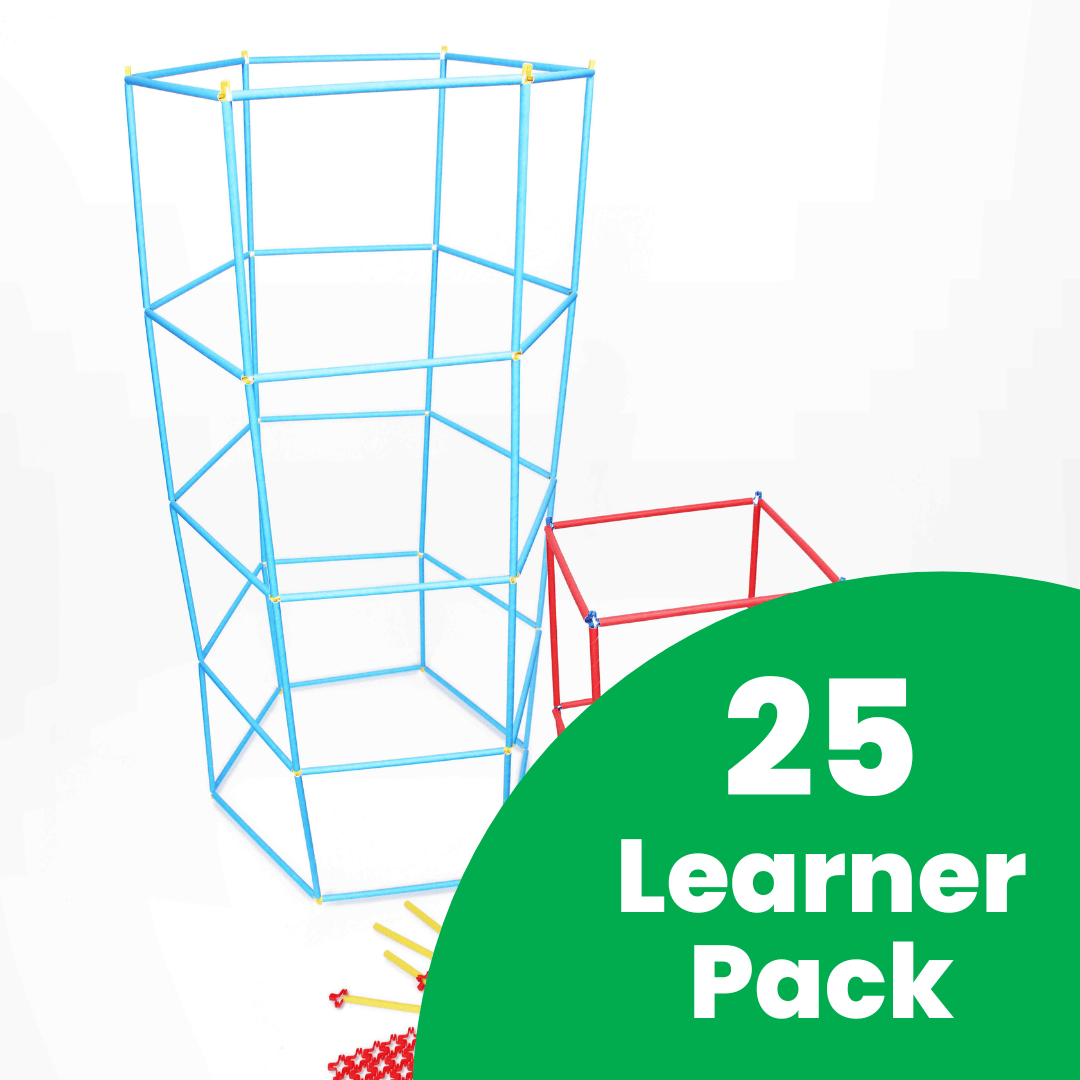
What participants make: Rebuildable 3D structures from 60 jumbo paper straws and flexible connectors, tall enough to reach the ceiling with a partner.
| Pack | Learners | SKU | UPC | Page |
|---|---|---|---|---|
| Small Group Pack | 10 | G1 STRW 010 | 850061324238 | View |
| Class Pack | 25 | CL STRW 025 | 850061324245 | View |
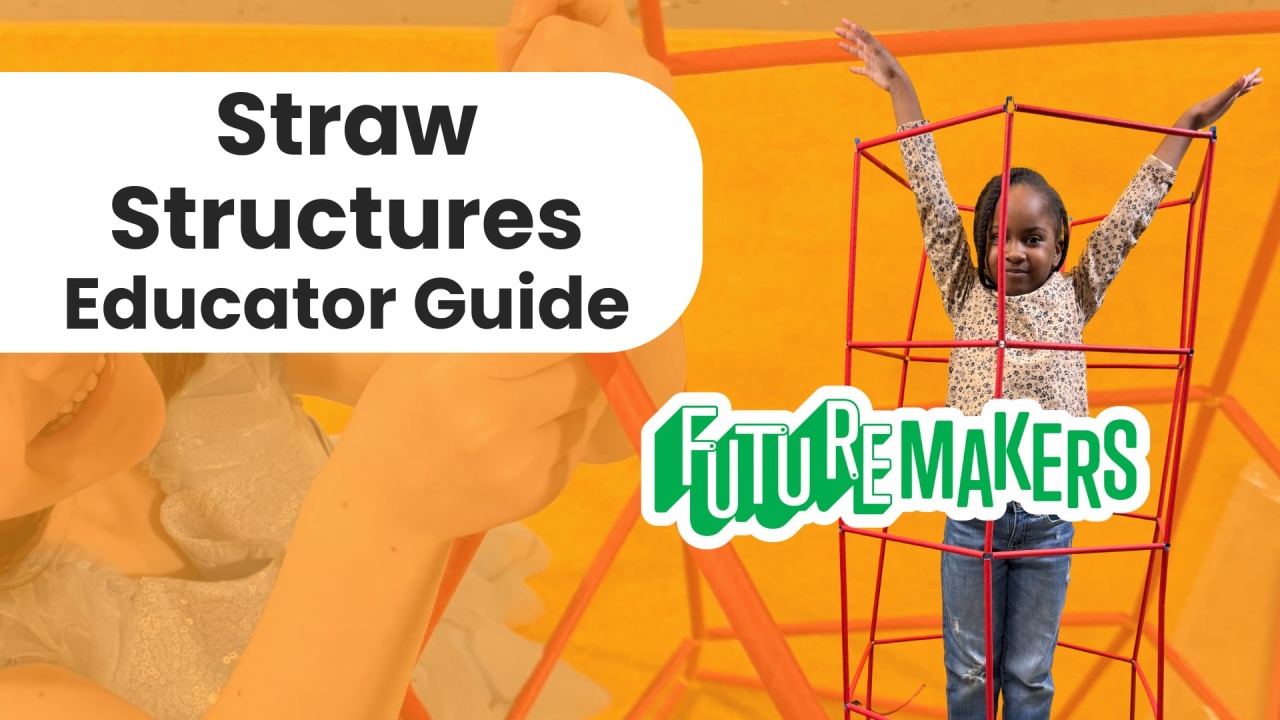 Educator guide video, 8:33
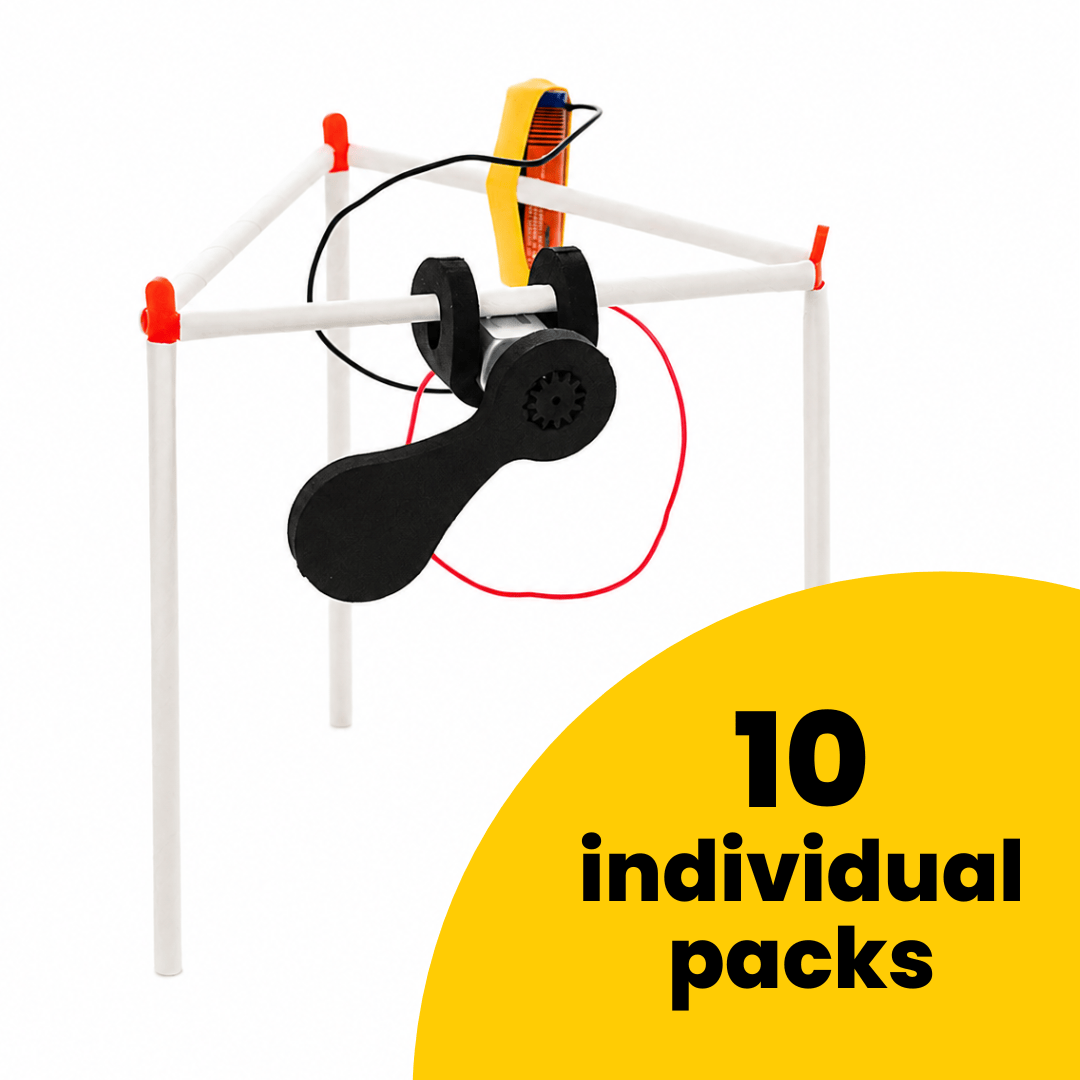
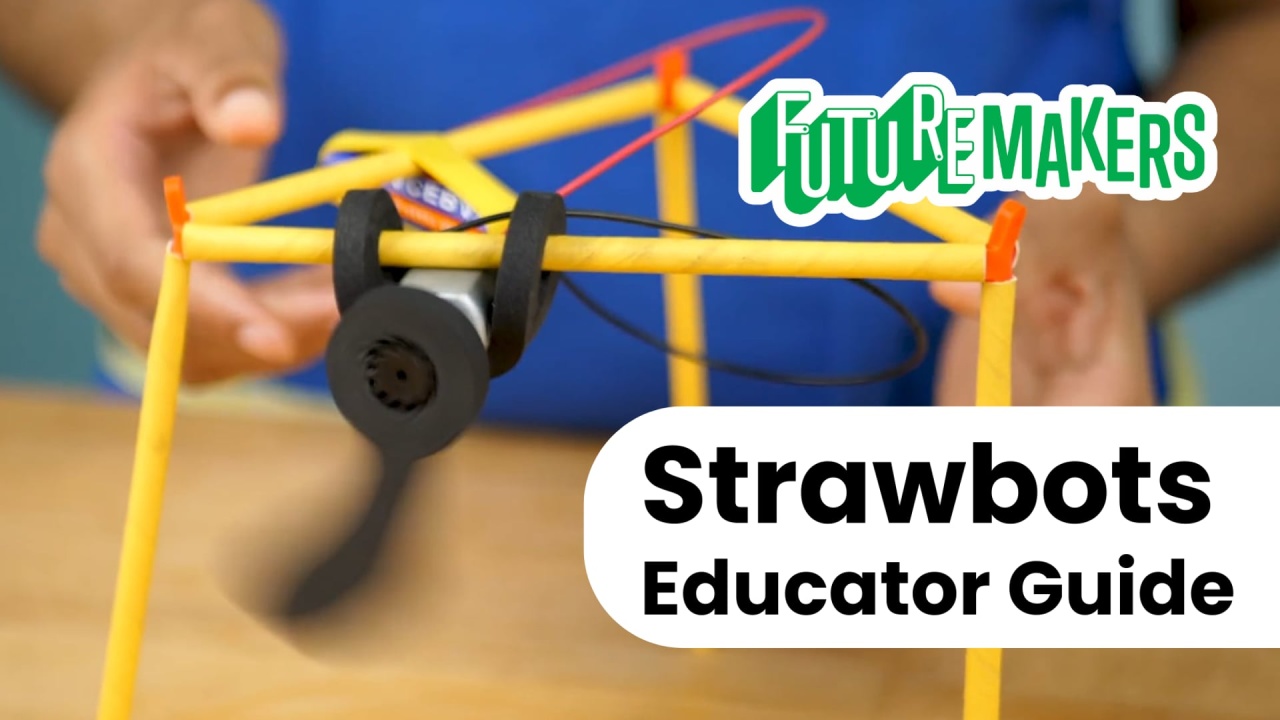
A motorized wiggling machine made of straws.
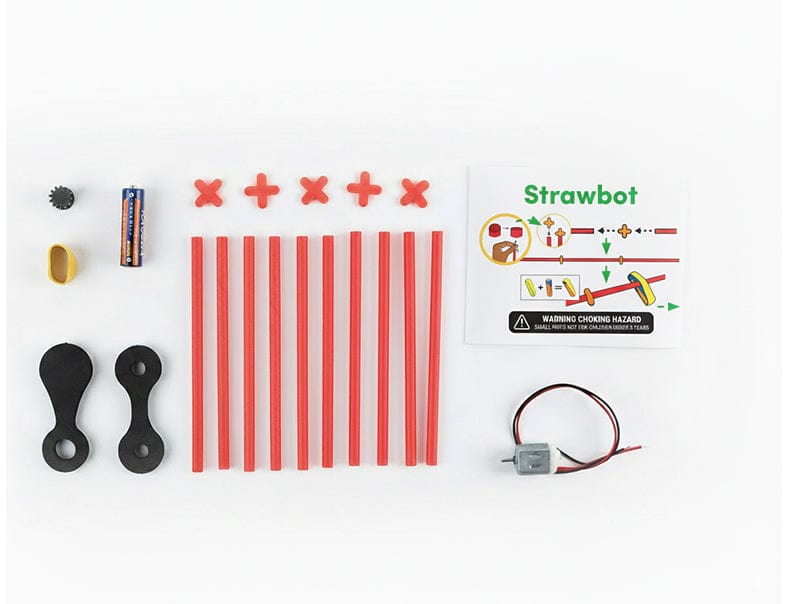
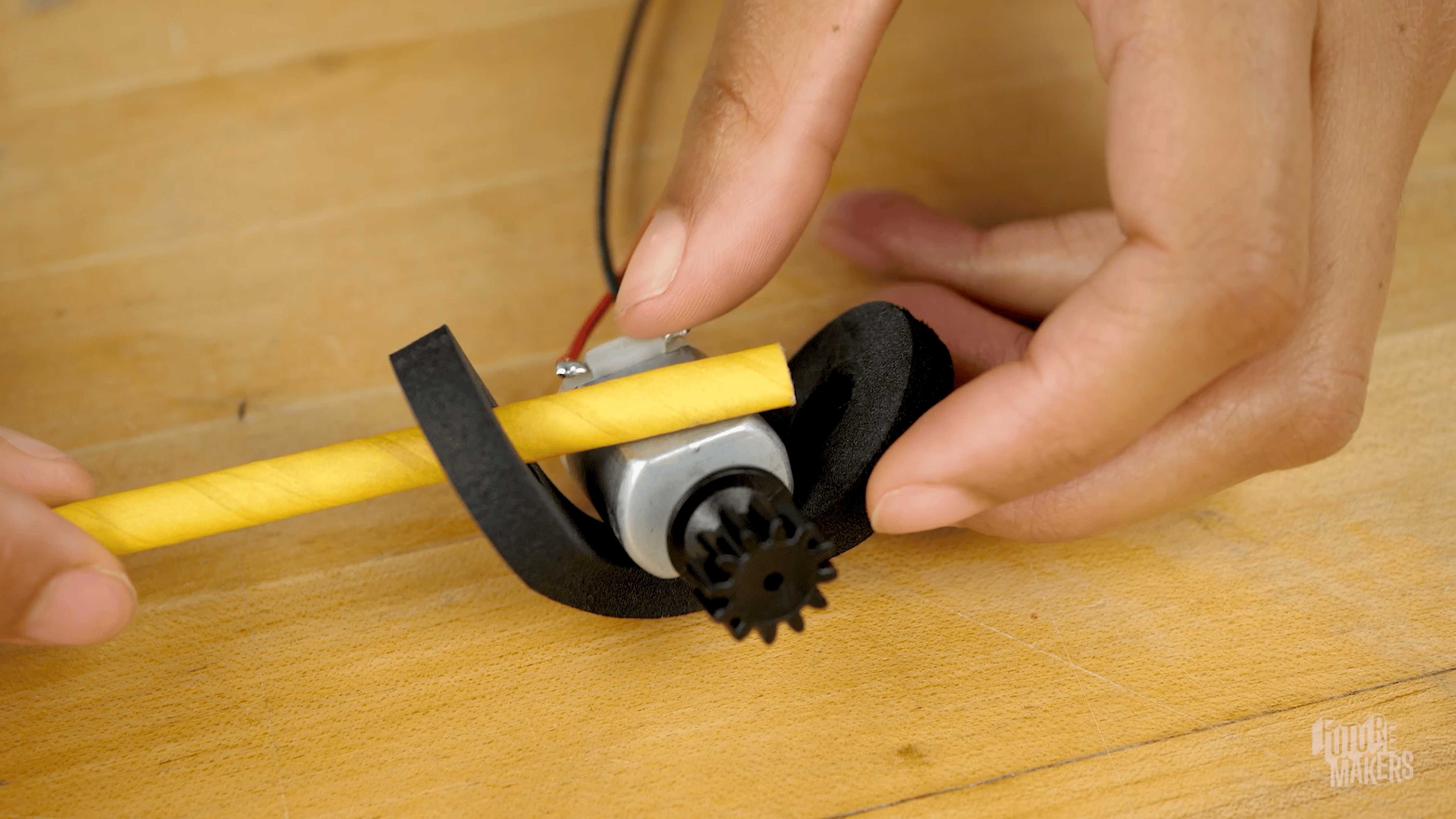
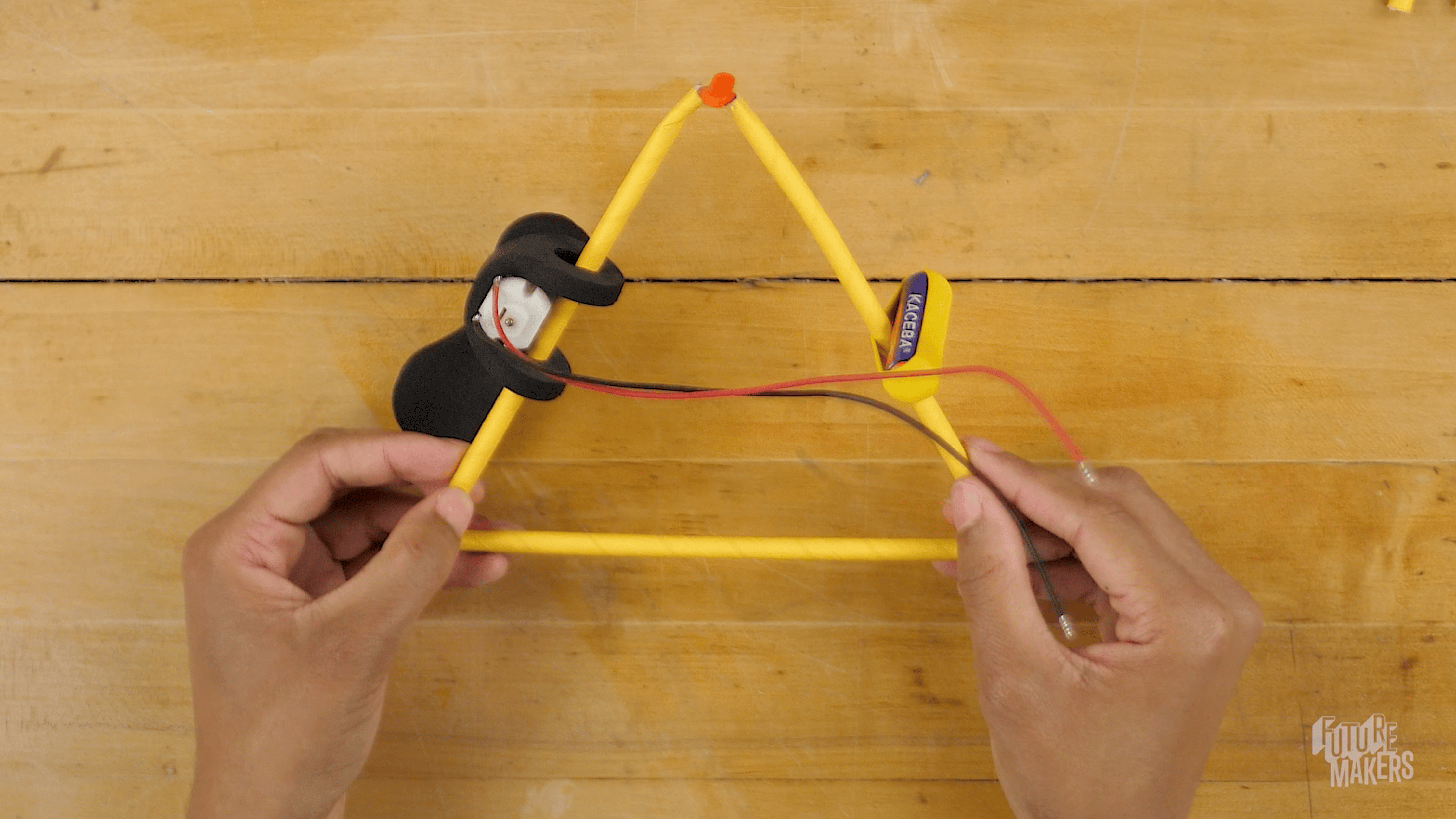
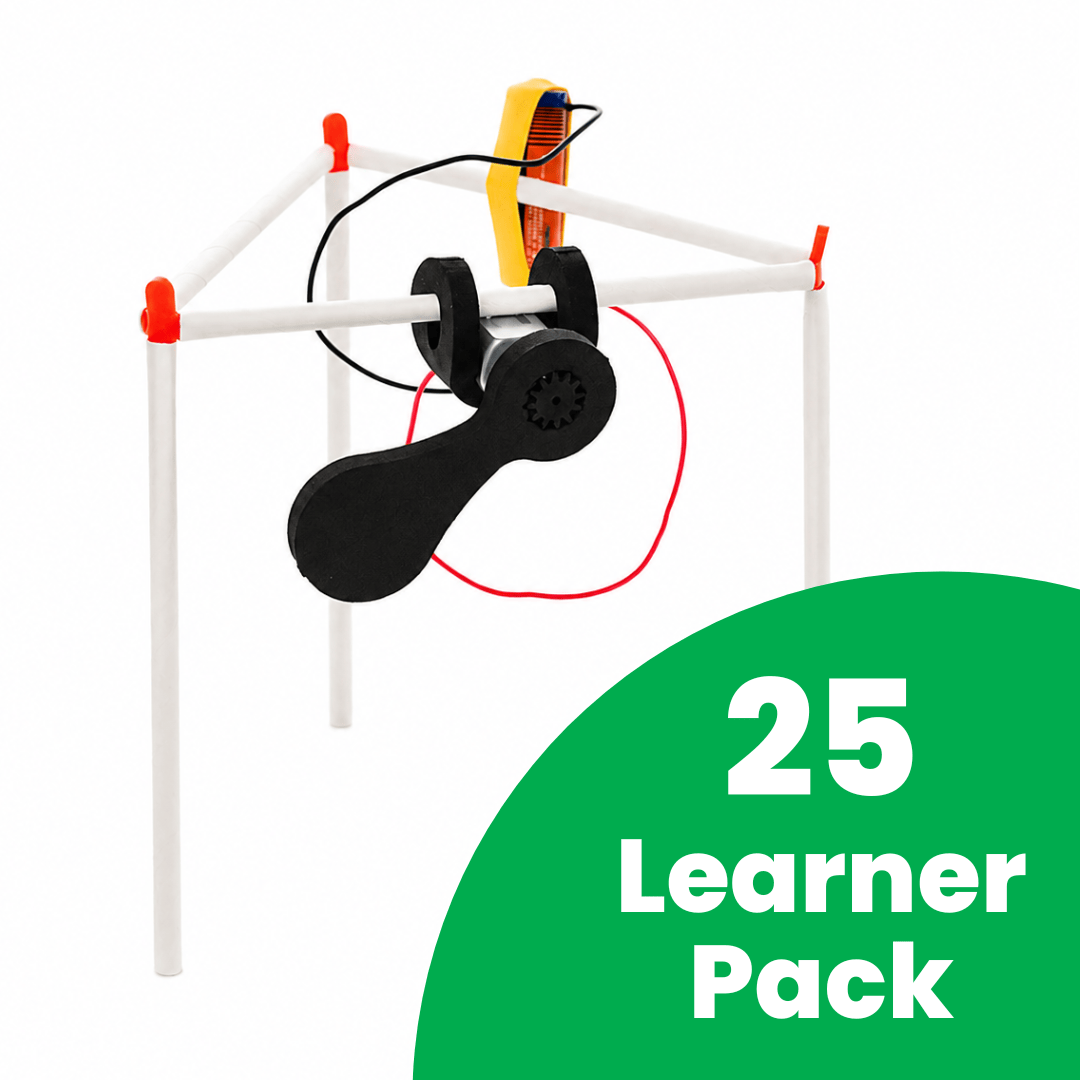
Learners close a battery and motor circuit on a straw frame and discover how an off-center spinning weight creates vibration that makes the bot move. Then they iterate on shape and legs, comparing triangle and square bases, or combine bots into a collaborative mega bot. It explores circuits and balanced and unbalanced forces.
What participants make: A battery-powered straw frame that wiggles across the table, and can join other Strawbots into a mega bot.
| Pack | Learners | SKU | UPC | Page |
|---|---|---|---|---|
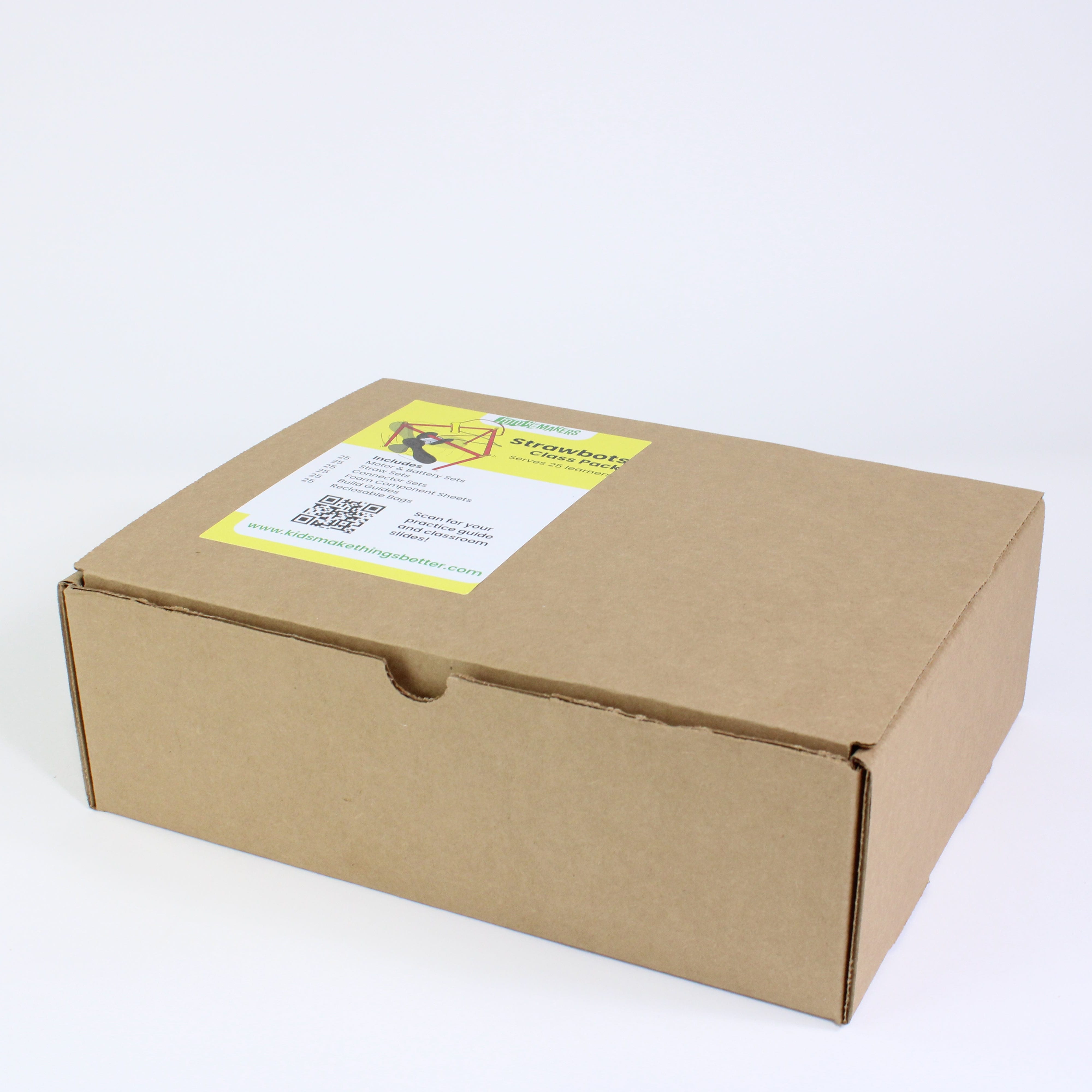
| Small Group Pack | 10 | G3 SBOT 010 | 850061324047 | View |
| Class Pack | 25 | CL SBOT 025 | 850061324252 | View |
 Educator guide video, 7:17
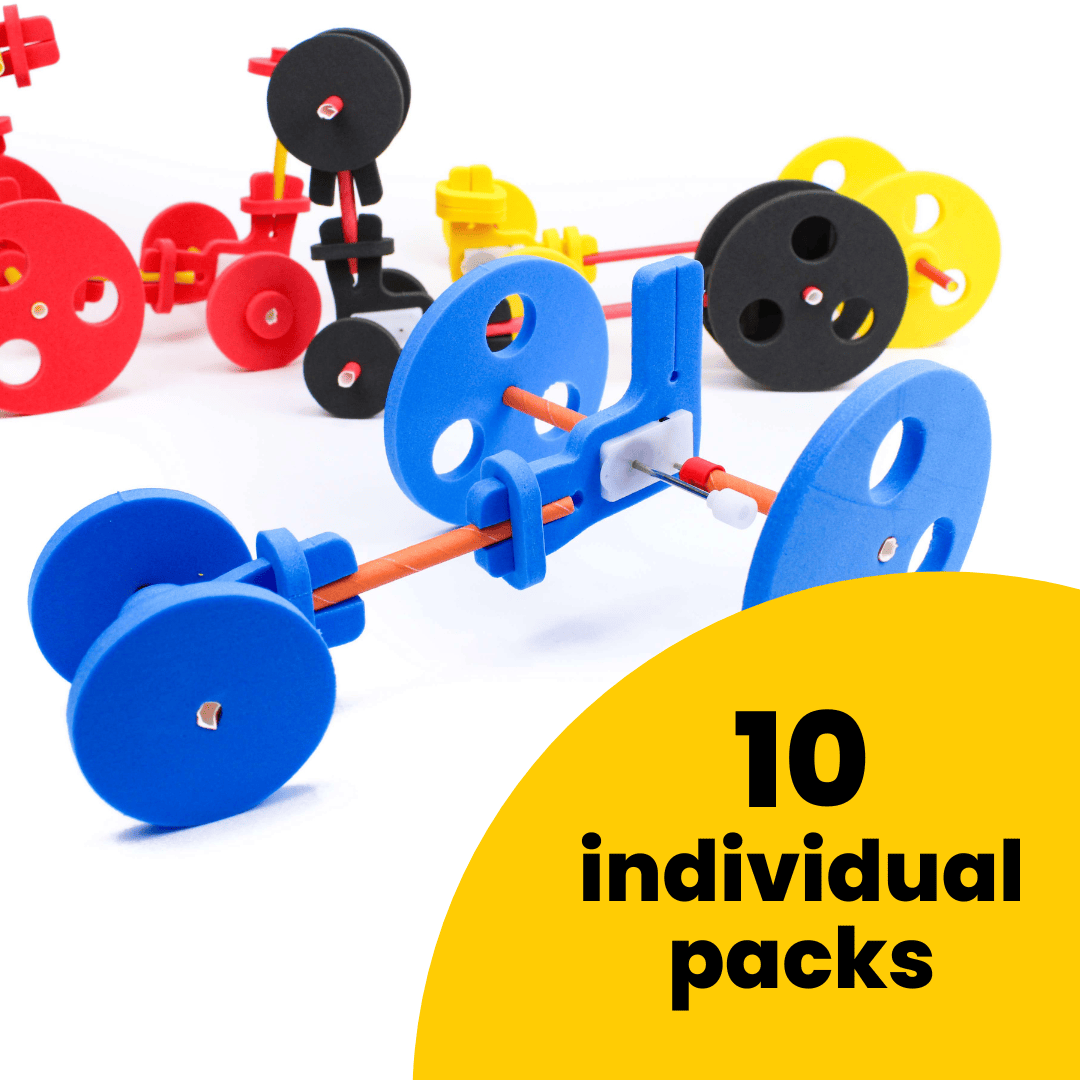
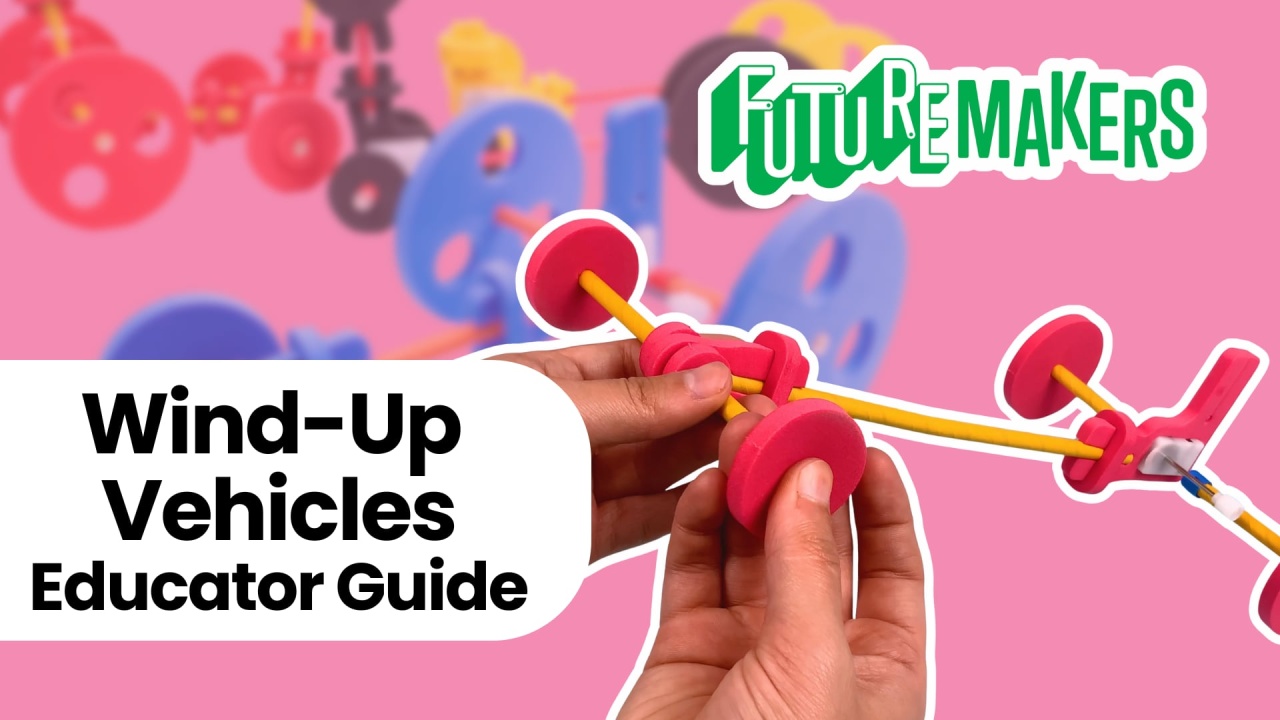
Spring-powered cars learners design and reinvent.
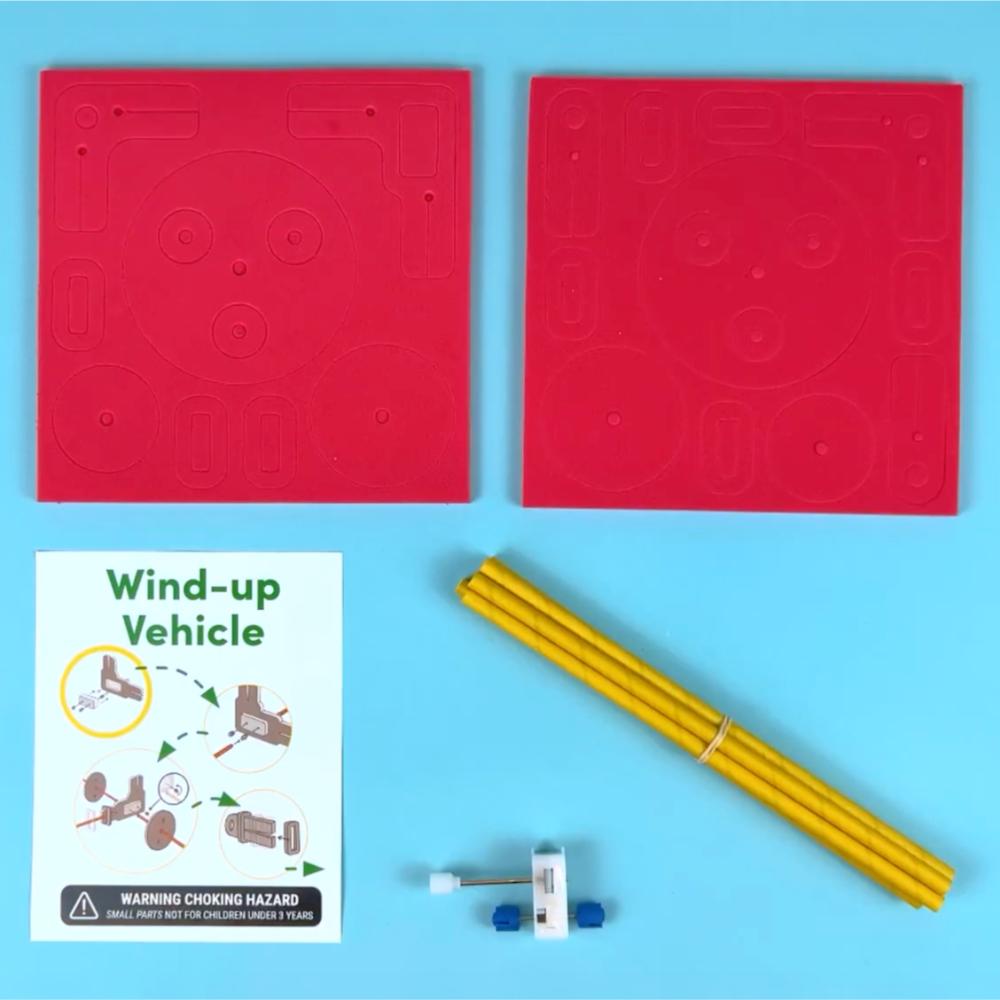
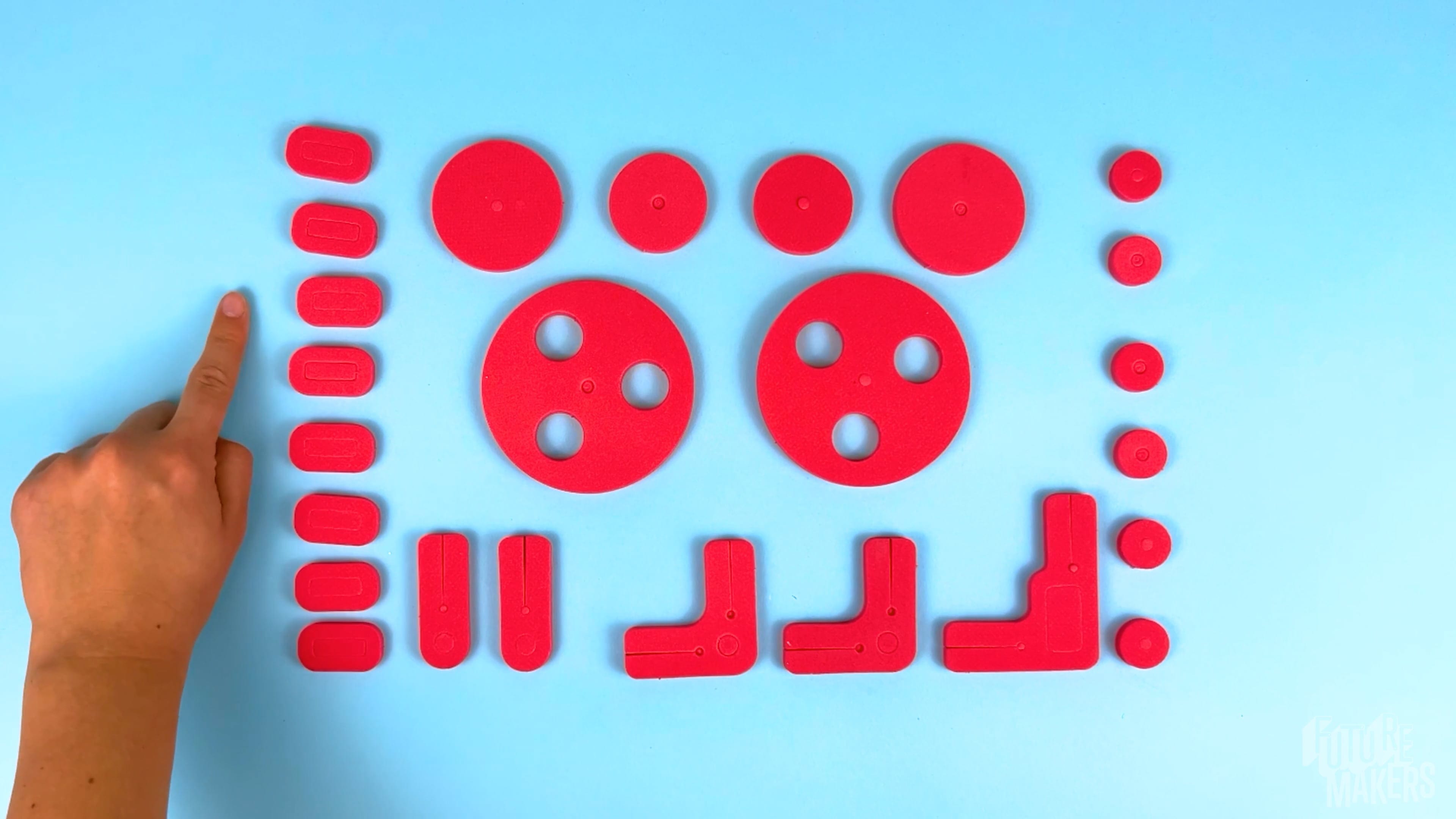
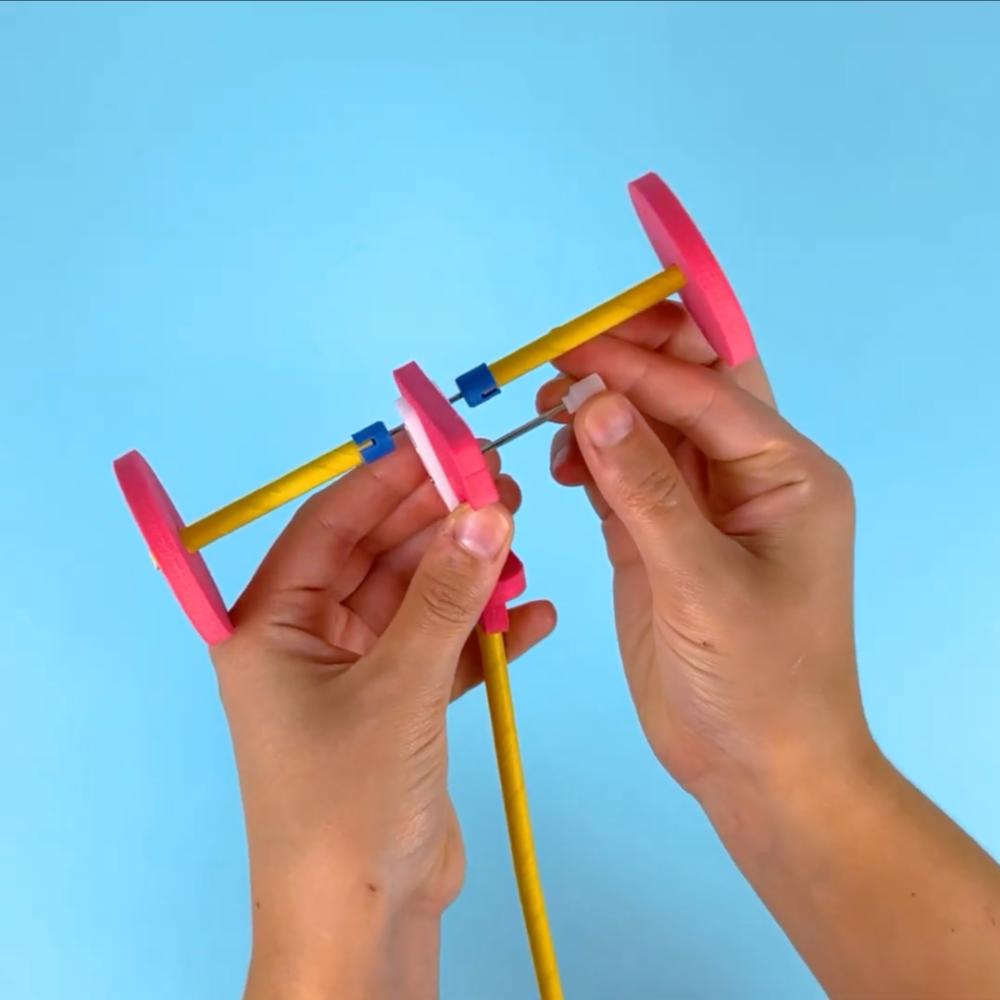
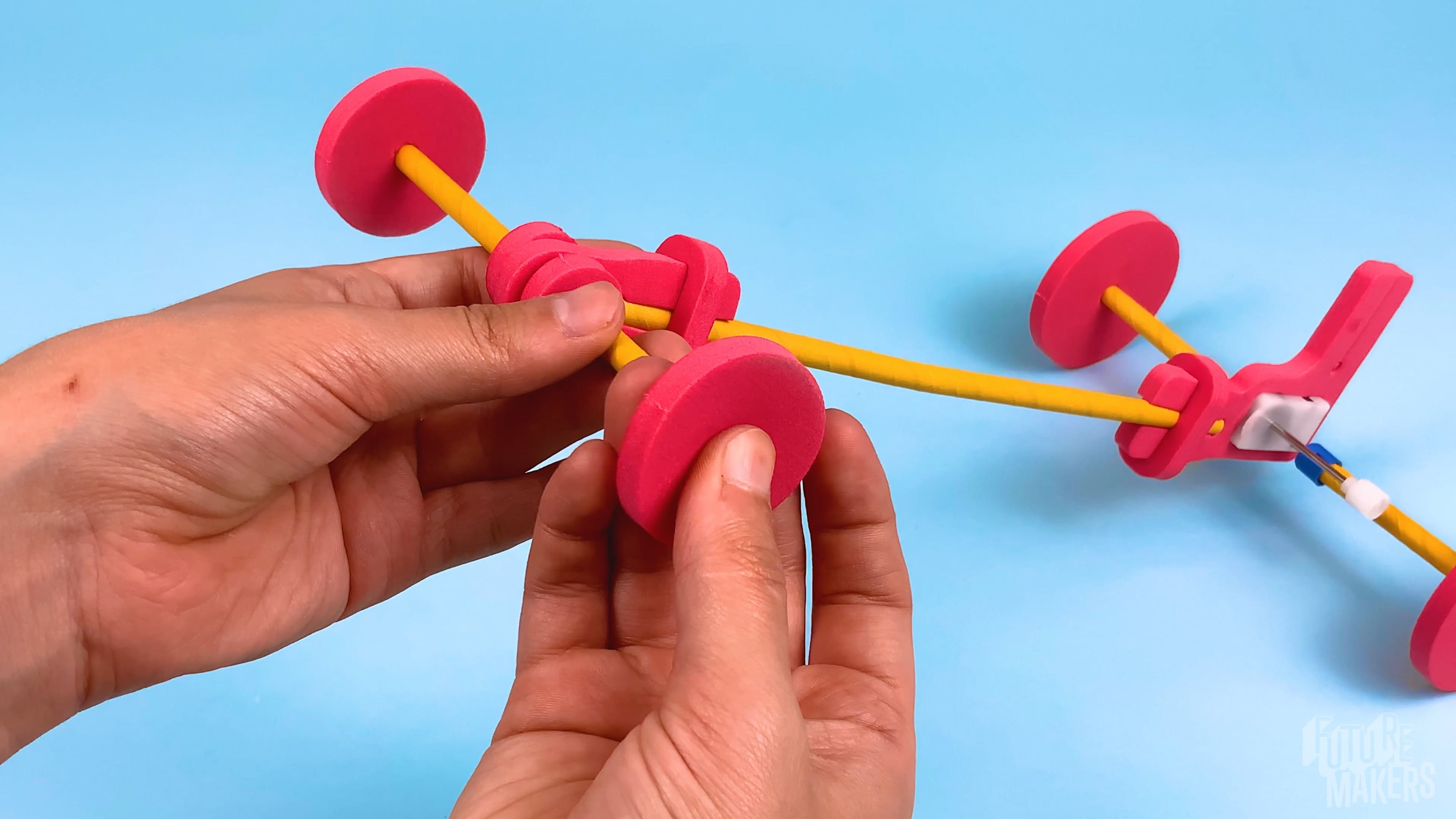
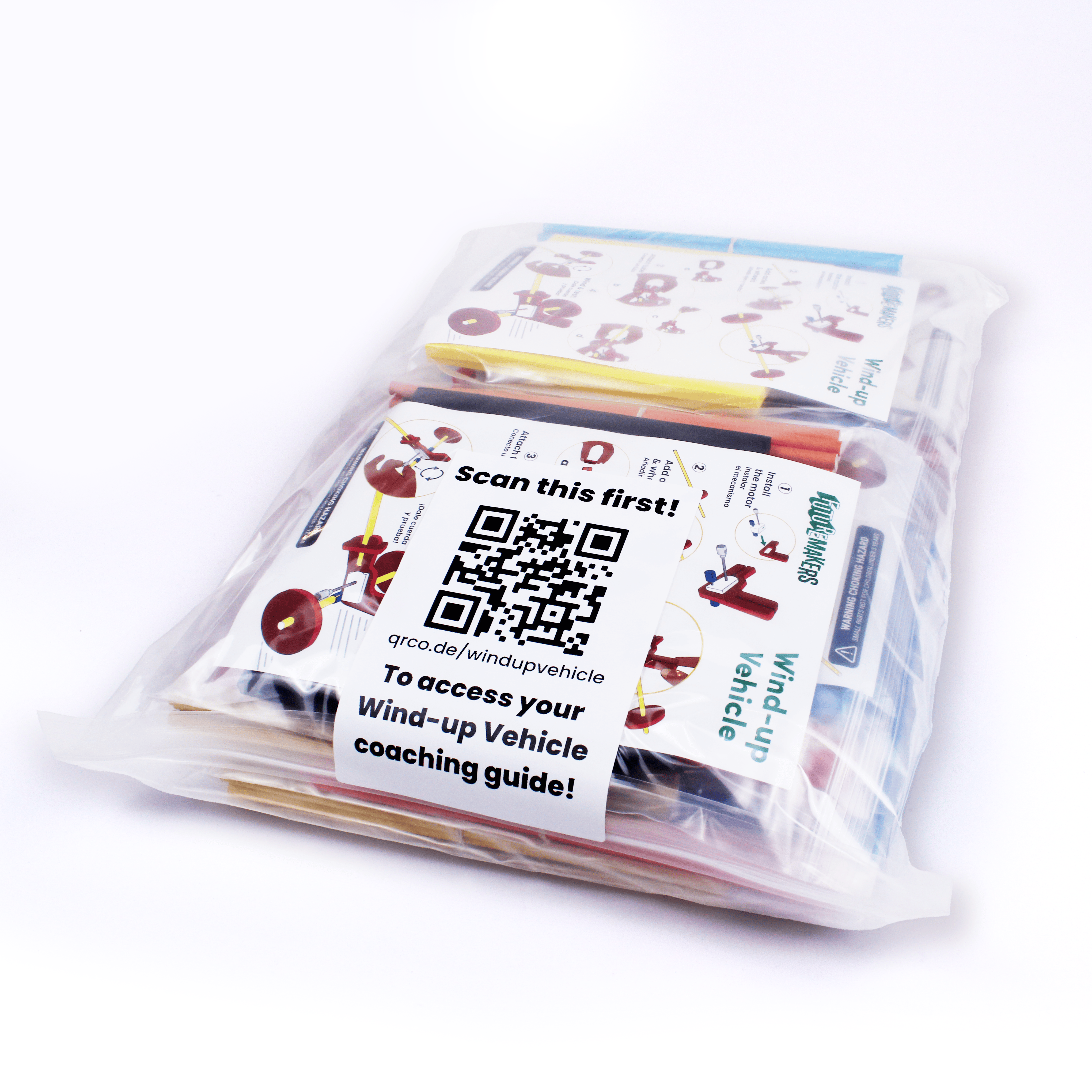
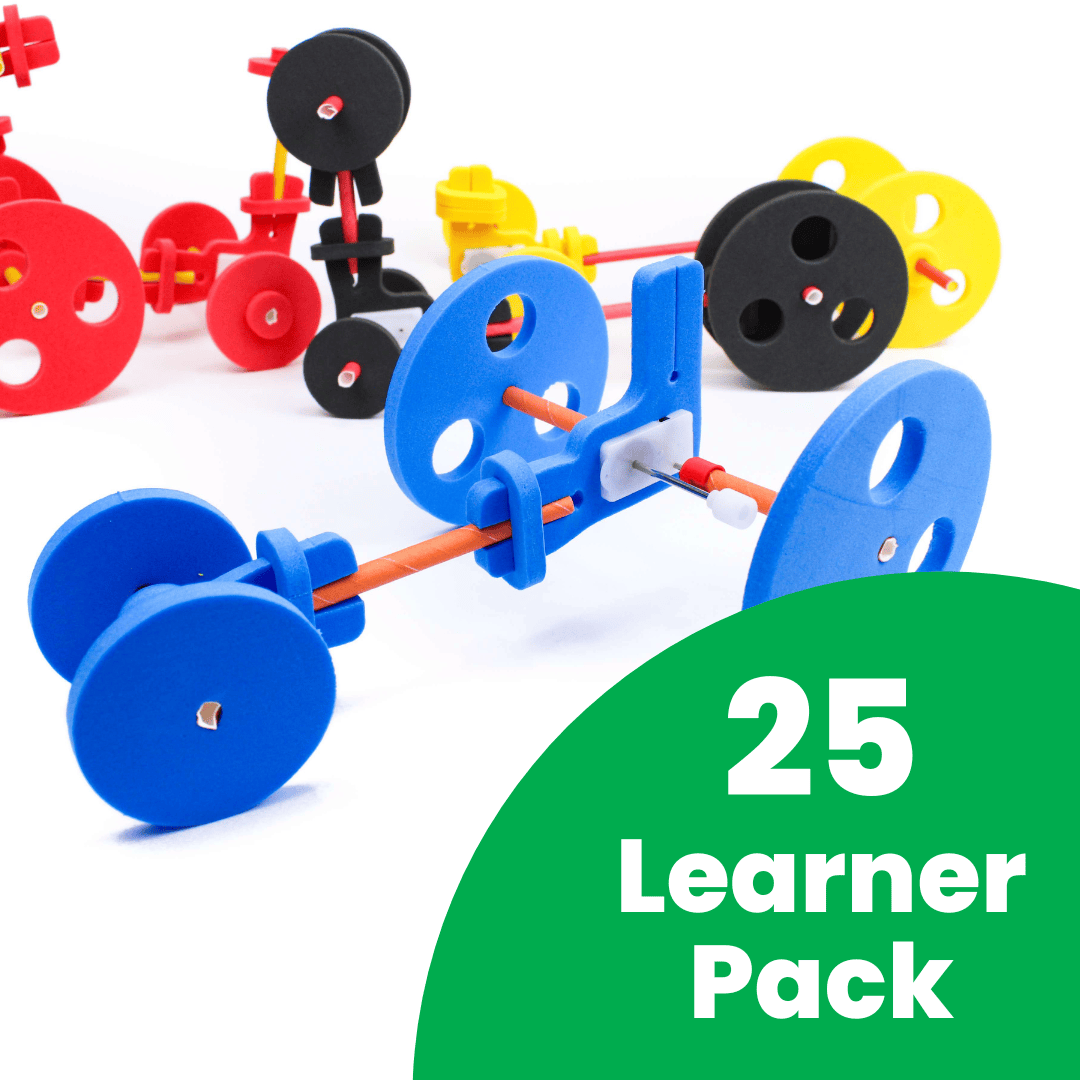
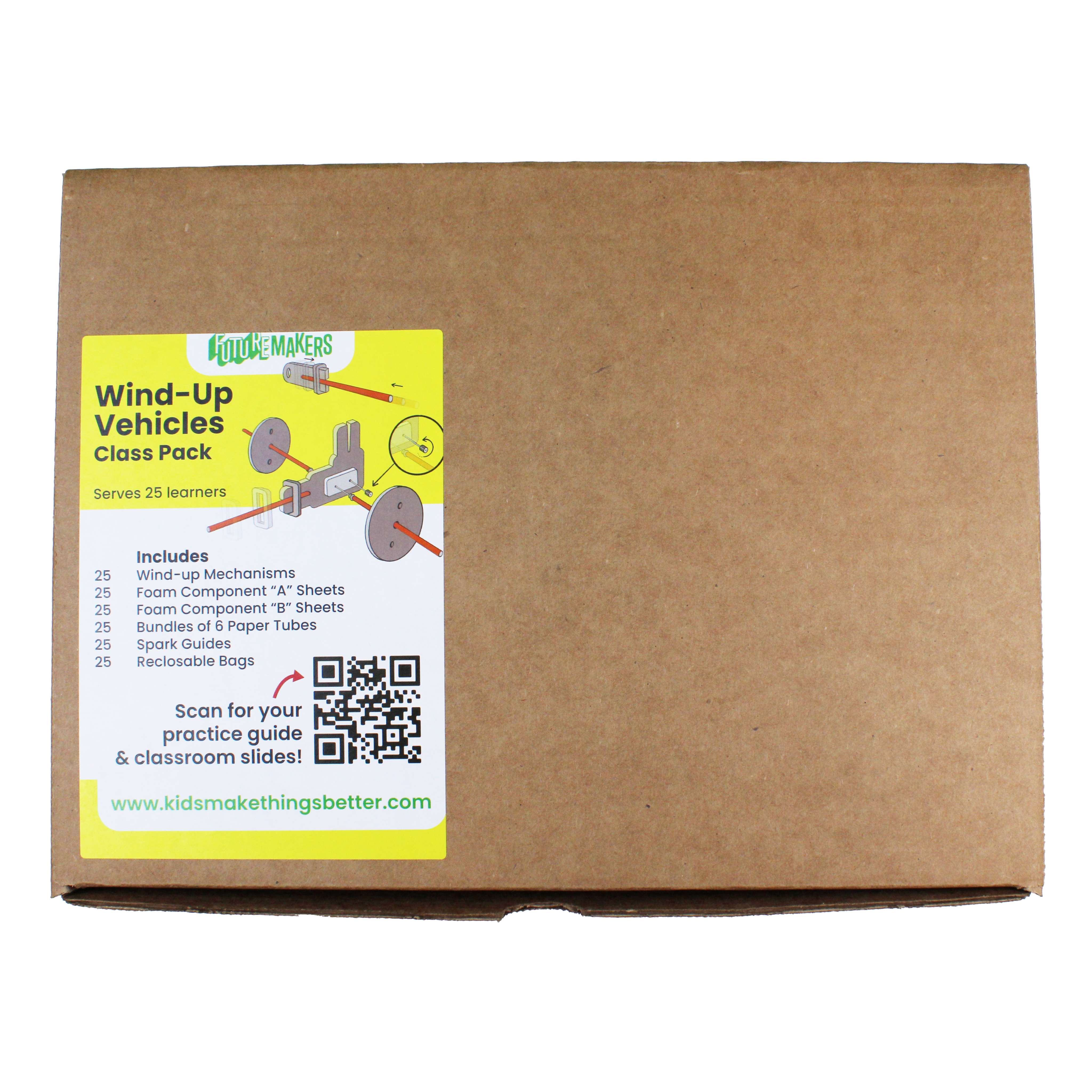
Learners assemble a wind-up drivetrain that turns stored spring energy into rolling motion, then take it apart and reinvent it with their own choice of wheels, axles, and wedges. It is an open-ended way to explore potential and kinetic energy, axles, and troubleshooting.
What participants make: A series of foam-and-straw vehicles that zoom on a wind-up spring motor.
| Pack | Learners | SKU | UPC | Page |
|---|---|---|---|---|
| Small Group Pack | 10 | G4 WUPV 010 | 850061324337 | View |
| Class Pack | 25 | CL WUPV 025 | 850061324320 | View |
 Educator guide video, 6:49
We handle the logistics for you. Pick one way, or use both across different sites.
Central inventory
Bulk to your warehouse
We ship in bulk to your warehouse. You stock it, you ship it: you hold the kits and send them out to your sites, and you handle returns and damages.
Freight is FOB Baltimore, on your freight carrier account. We provide pallet weights, dimensions and freight class, and bring the order dockside for pickup.
Example: Class Pack from $68.25 at 1,000+ campers, about $2.73 per camper.
Larger season orders pay less. See the order levels.
Drop ship
To each site
We ship each order straight to the host site, such as a community college, park district, YMCA or school, under your order. Send the order with each site's ship-to address. Kits never pass through your warehouse.
Freight is quoted per order, and payment terms are confirmed on a call.
Example: Class Pack from $73.50 at 1,000+ campers, about $2.94 per camper.
Larger season orders pay less. See the order levels.
Missing pieces
If a Spark arrives missing a component, send us the details through our Sad Spark Fix-it Form and we ship replacement parts to the end user.
Purchase orders and questions
Email sales@kidsmakethingsbetter.com. Include SKUs and quantities from the price list. Every pack has a SKU and a GS1 UPC barcode, with packed weights and box sizes. Photos, descriptions, flyers and videos are in the What all partners receive.
Since 2011, FutureMakers has grown from a Baltimore-based maker education learning services company into a leading source of hands-on learning products and educator support across the US. Our mission is to spark playful hands-on learning. We help educators bring engineering, tinkering, making, and play into their lessons. We design Sparks with PK-8 learners and educators in all learning environments, with a special focus on urban and rural classrooms, English language learners, and learners with identified learning disabilities. Every Spark has been kid tested in Pre-K to grade 2 classrooms.